Archive for Featured

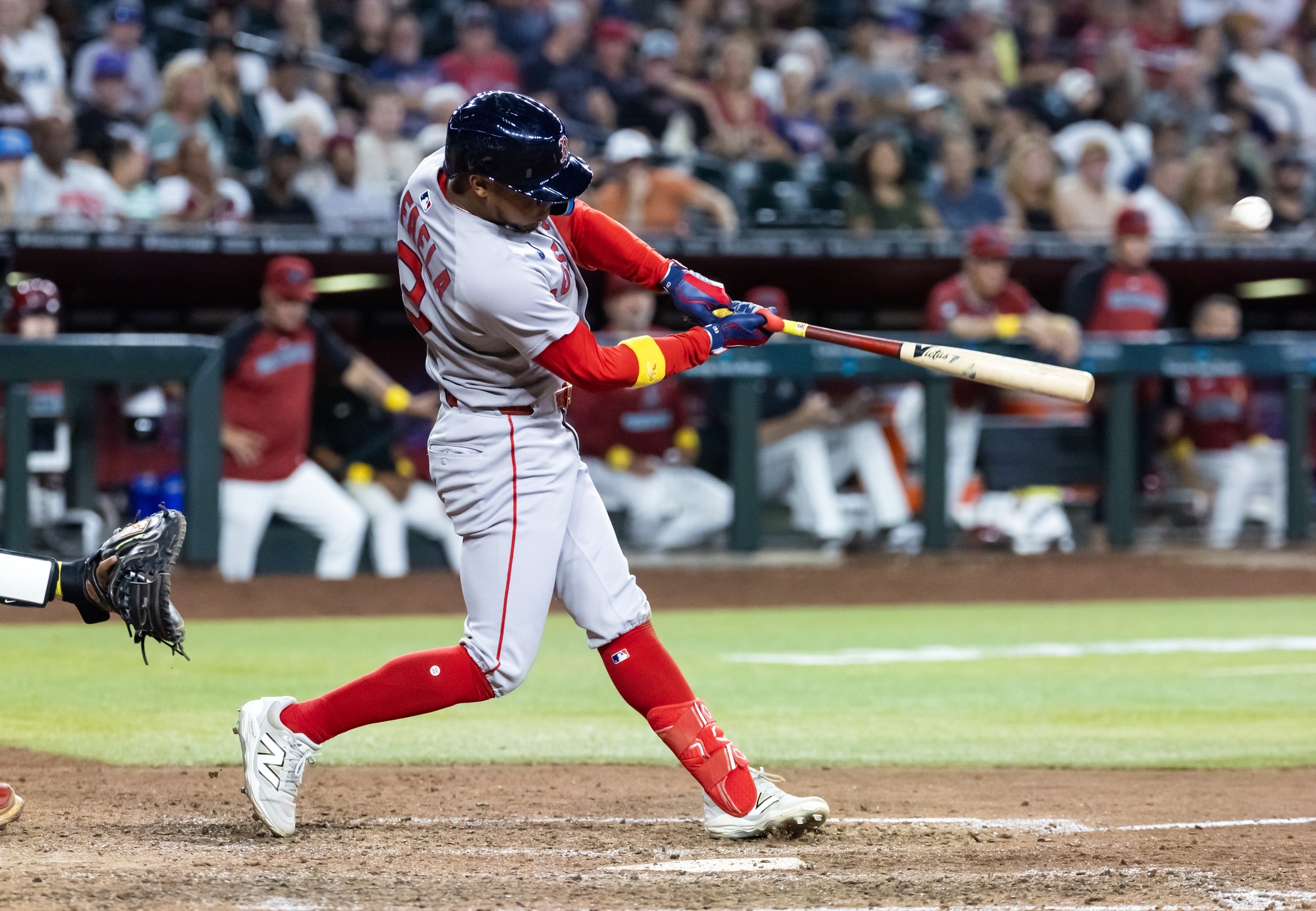
Paul Sporer’s 2026 Bold Predictions

Mark J. Rebilas-Imagn Images

I’ve got 10 coming with one per position at C, 1B, 2B, 3B, SS, RP plus two at both OF and SP. While the first one will be catcher, we’re not going around the horn in that order, rather we’ll get spicier as we go through these in a Hot Ones-esque sort of way. You may have a different spice meter and I’m happy to hear if you think I have one firmly out of place.

C: Will Smith is the #1 Catcher on the Player Rater

How He Gets There: Mostly just by being himself. His career high 153 wRC+ last year came in just 110 games which relegated him to C7. His .345 BABIP seems ripe for regression against a .285 career mark, but he hit the ball much better last year to fuel that surge. It wasn’t just a bunch of bleeders and doinkers driving some extra hits in a sub-500 PA sample. I see him holding at least some of those gains while returning to the >500 PA plateau and easily paying off that C9 pricepoint. The competition is a bigger hurdle for this one than Smith’s skill but that’s also why it’s my opening salvo. They’ll get spicier!

Full Line: .285 AVG-25 HR-78 RBI-84 R-1 SB

Read the rest of this entry »


Mining the News (3/2/26)


Kamil Krzaczynski-Imagn Images

American League

Angels

Mike Trout is feeling better and wants to run fast.

Mike Trout wants to let you know he’s aiming to reach 30 feet per second, which is considered an elite sprint speed by Statcast.

Trout showed that he still has plenty of speed on Saturday, when he reached 29.9 feet per second trying to beat out an infield single against the D-backs. It was Trout’s fastest sprint speed since he first sustained his meniscus tear in his left knee in late April 2024, which he believes is a good sign.

For context, Trout, 34, averaged 27.9 feet per second last year, which ranked in the 62nd percentile and his fastest sprint speed was 29.7 feet per second. It was a drop off for Trout, who averaged 29.5 feet per second in ’23 (96th percentile) and 28.9 in ’24 (90th percentile) and regularly hit 30 feet per second.

But the drop was due to his issues with his left knee, as he tore his meniscus twice and had surgery twice in ’24. He returned last season but sustained a bone bruise in his left knee on April 30 when he stepped awkwardly on the first-base bag in Seattle. His fastest sprint speed of the season also came on that play. He returned May 30 but his speed wasn’t at his usual level.

Read the rest of this entry »


Jordan Rosenblum’s 2026 Bold Predictions

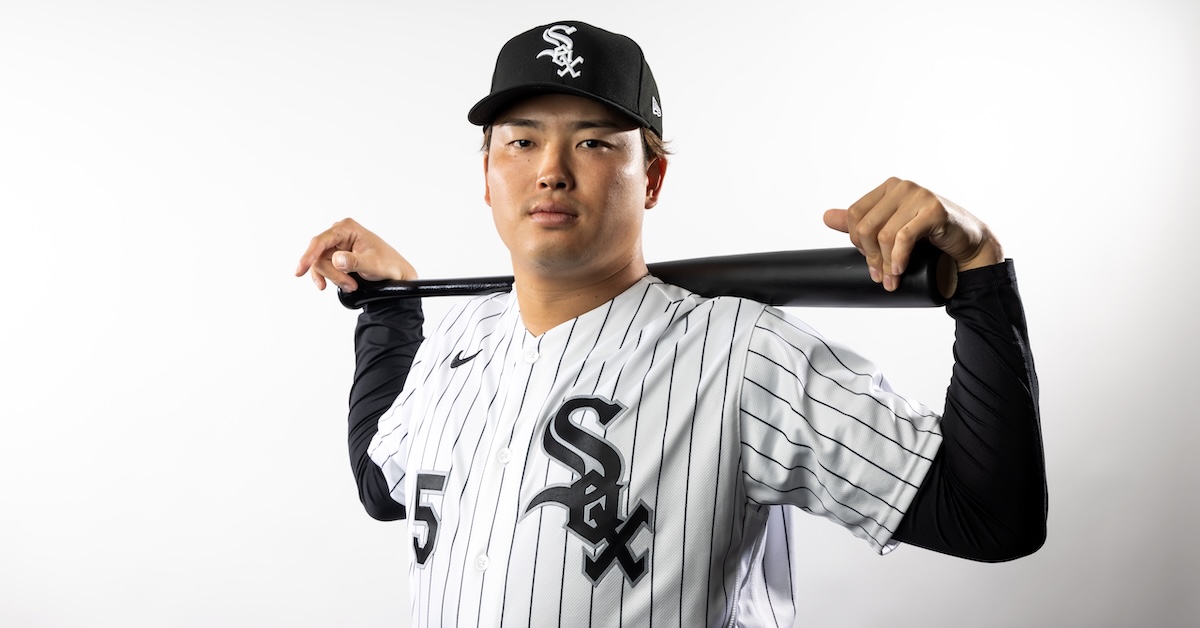
Chicago White Sox infielder Munetaka Murakami poses for a portrait during photo day at Camelback Ranch.
Credit: Mark J. Rebilas-Imagn Images

This article highlights my bold predictions for the 2026 fantasy baseball season. Like last year, I’ll set the over/under at three of these being right, but my goal is more to give the reader ideas than to maximize acccuracy.  As the creator of OOPSY, my bold predictions often lean on OOPSY outlier projections, although I will often cite other projection systems as well. I have listed my bold predictions in approximate order of least to most bold.

Read the rest of this entry »


Justin Mason’s Baseball Chat – March 2, 2026

Here is today’s chat transcript:

Read the rest of this entry »


Mining the News (2/27/26)

Joe Nicholson-Imagn Images

American League

Angels

Robert Stephenson hopes he can manage his thoracic outlet syndrome symptoms.

RHP Robert Stephenson
Injury: Right elbow inflammation
Expected return: 2026
Status: Dealt with a nerve issue and thoracic outlet syndrome symptoms in the offseason after ending last year on the injured list, but believes he can manage it. Has been throwing bullpens with no issues this spring and said on Feb. 23 he expects to be ready for Opening Day.

Read the rest of this entry »


Optimal ADP Clusters: Second Tier Aces

Don’t it always seem to go, you don’t know what you got ‘til it’s gone.”

Joni Mitchell may not be a roto savant, but even she might agree that the best part of the fantasy baseball season is research-and-draft season. Every day, from February until Opening Day, is so incredibly thrilling – nonstop spring training news, draft rankings adjustments, and player pool deep-dives – there’s always some rabbit hole of research to go down. As we continue studying and gaining confidence in the fresh player pool and a new year’s ADP, more questions arise, and the more work there is to be done.

Whether in NFBC or best ball contests, high-volume early drafters subconsciously form bad habits in draft rooms. We get too comfortable targeting and drafting the same players over and over. Conversely, we avoid players who have burned us in previous seasons and those we have some subjective bias against. Rarely do we deep dive and reassess those players because we’ve already made up our minds. That’s why it’s crucial to explore every nook and cranny of a positional tier. We have all fallen victim to draft room paralysis, where a decision between several similarly ranked shortstops or starting pitchers becomes gut-wrenching when we’re on the clock. This preseason column aims to help with those tough calls. We will explore some of the most confusing ADP clusters, by position, beyond the simple “I need to boost my batting average, so I’m taking this guy.”

Let’s dive into these ADP pockets logically and systematically, reviewing four analytical components of the players within each cluster. Since this specific article’s topic is starting pitchers, the components have been slightly adjusted:

  • Health and Durability
  • Skills: Arsenal, Stuff, Velocity, Command, Control
  • Roto Ratio Expectations (ERA, WHIP)
  • Team Context: Defense, Bullpen, Run Support (Wins)

ADP Cluster 3: Starting Pitcher – Tier 2 Ace

ADP from NFBC 12-team Online Championships (OC) from the last 10 days, through 2/26

These stud pitchers are the overall SP10 through SP16, typically drafted in the fourth and fifth rounds of 12-team leagues. They are all viable fantasy rotation anchors, specifically for managers who want to start with 2-3 hitters or who aren’t locked in on an elite ace. There will be managers who prefer early pitcher-heavy builds, so one of these guys might be someone’s SP2. For most, one of these six is likely to be the pitcher we build our staff around.

A strong argument for targeting starting pitchers from this cluster is their projected value relative to arms in the tier just above – let’s call them the Tier 1B’s. Cristopher Sánchez, Bryan Woo, and Hunter Brown have all leapfrogged ahead of this group based on exceptional 2025 results. Logan Gilbert missed several starts with injury for the first time as a pro, and Chris Sale is 36 with one season of 25+ starts since 2018. Yoshinobu Yamamoto threw 211 innings (including playoffs) and is heading right back out there in the WBC. No pitcher is ever inherently “safe” by virtue of what they do, but are we certain the Tier 1B group options are that much more comfortable than this next group that we’re willing to bypass a top 25 hitter for them?

Health and Durability

Max Fried was drafted in 2012, had Tommy John surgery in 2015, and made his major league debut in 2017. He has spent time on the IL for a variety of issues (back spasms, hamstring strains, a forearm strain) and has missed time with finger blisters four times in his career. Fried has earned 28-32 starts in five of seven big league seasons.

Cole Ragans was drafted by the Rangers in 2016, had two Tommy John surgeries (2018, 2019, the second repaired a torn graft), debuted in 2023, had two stellar, healthy seasons before his troubling 2025 season (groin injury and rotator cuff strain).

Jacob deGrom averaged 207.1 innings between 2017 and 2019. He remained healthy and dominant through 2020 and the first half of 2021, then proceeded to toy with the emotions of Mets fans and fantasy managers for the next three years. deGrom returned from Tommy John in September of 2024 (three regular-season starts), then blessed us with 172.2 innings (30 starts) last season.

Hunter Greene is also part of the TJS club (2019), two years after the Reds drafted him second overall. He made his debut in 2022 (125.2 IP, 24 GS) and over the next three seasons, started 22, 26, and 19 games. He missed time in his rookie year with a right shoulder strain, spent 63 days on the IL in 2023 following right hip surgery, missed six weeks in 2024 with right elbow soreness, and was out for a little over two months with a right groin strain last season.

Freddy Peralta has made at least 30 starts over his last three seasons, averaging 173 innings per season. The last time Peralta had health concerns was in 2022, when he missed nearly three months with a strained right lat. He dealt with shoulder discomfort later in the year and shoulder inflammation the previous season. Peralta has long since wiped away his injury risk tag. One concern I pointed out in my SP Tiers piece at FTN is Peralta’s low efficiency rate in his starts – just two of his 33 starts last season lasted more than six innings. In 2024, only two of 32. I’d take the over on two with the Mets in 2026.

There is no pitcher more durable or reliable than Logan Webb. He has averaged 205 innings over the last four seasons. Webb’s 820 since 2022 leads the majors and is 53 more than no. 2 on the list, Framber Valdez. Though Webb has only started two more games than Dylan Cease over that span (132 to 130), Webb has logged over 100 more innings, and is the only qualified pitcher averaging over six innings per start. That’s as durable as it gets.

All six pitchers had healthy offseasons and are gearing up for Opening Day. Here are Jeff Zimmerman’s health grades, from an Eno Sarris article in The Athletic from early February:

  • Logan Webb – 97%
  • Max Fried – 87%
  • Freddy Peralta – 86%
  • Cole Ragans – 78%
  • Hunter Greene – 73%
  • Jacob deGrom – 53%

I don’t know what Jeff’s secret sauce is, but I’d bet the house that it’s all formula-based. Reviewing this group’s injury history more in depth increases my concern about Greene in this price range, and less concern about deGrom, given how he purposely dialed down his velocity last season and made it through unscathed.

Skills: Arsenal, Stuff, Velocity, Command, Control

Hunter Greene and Cole Ragans have filthy, nasty stuff and deGrom-esque upside. Would many be shocked if either were the Cy Young winner, league strikeout leader, or the overall fantasy SP1 this season? No starting pitcher throws harder so consistently than Greene, who’s 124 Stuff+ last season was the highest mark among starters with 100+ innings pitched. Ragans’ 14.6% swinging-strike rate ranks fourth (tied with Dylan Cease) among starters with 250+ innings in the last three seasons. Here are some key stats for this category, from the last two seasons, combined:

Stuff, Velocity, Command, Control: 2024-2025
Name IP Stuff+ vFA SwStr% K-BB%
Hunter Greene 258.0 117 98.4 14.0% 21.1%
Cole Ragans 248.0 110 95.4 14.7% 23%
Jacob deGrom 183.1 111 97.5 14.2% 22.6%
Max Fried 369.2 108 94.5 10.8% 16.3%
Freddy Peralta 350.1 101 94.6 13.0% 18.6%
Logan Webb 411.2 107 92.7 9.6% 17.7%


Jacob deGrom was a master of control yet again, producing a 5.5% walk rate. Greene’s walk rate dropped to 6.2% last season, from 9.3% and 9.6% the previous two seasons. Fried’s career rate is 6.7% (6.4% in 2025), and Webb’s is a pristine 5.7%, though he pitches to contact and serves up more hits than anyone in the majors. Ragans and Peralta have career walk rates over nine percent, 9.1% and 9.3%, respectively.

Stuff-wise, we can rank Greene, Ragans and deGrom as elite, Fried and Peralta as great and Webb, above average. Peralta has three straight seasons of 200+ strikeouts and owns a 29.9% career strikeout rate. Fried punches out about a batter per inning, but that 23-24% strikeout rate is subpar for an ace. He earns his ace status with elite ratios. We can call Webb the guy who’s with this group because he gets extra credit (elite innings/volume) by taking night classes and going to summer school.

Roto Ratio Expectations (ERA, WHIP)

Four from this group produced ERAs under 3.00 in 2025. Ragans’s 4.67 is excluded for now, since he played less than half the season, though he earned a 3.14 ERA in 32 starts in 2024. Webb’s 3.22 last year was nicely supported by a lower SIERA (3.14) and xFIP (2.78). Greene’s was under 3.00 two years in a row, albeit with plenty of missed time. Fried has done it three of the last four seasons, leaving his 3.25 from 2024 his most recent blemish. deGrom has been the sub-3.00 master for over a decade and Peralta brought his under 3.00 (2.70) for the first time since 2021 after three seasons (2022-2024) between 3.58 and 3.86, still respectable, but not ace-like. If my primary goal is to target ERA and find the guy to most likely earn a sub-3.00 rate, I’d draft deGrom.

If looking for the best projected WHIP, deGrom would be a good bet yet again. Webb is on the opposite end of the spectrum, likely netting us in the 1.15-1.25 range. Ragans and Peralta are likely to land in the 1.10-1.20 range, though I’d cast a wider projection net there to 1.02-1.27. Expect Fried in that 1.10-1.18 range as well. If Greene’s walk rate gains carry over into the new season, a sub-1.00 WHIP wouldn’t be surprising.  Many from this cluster are capable of outperforming the ratios of some of the arms in the tier above, though not on the level of The Big 3 (Tarik Skubal, Paul Skenes, Garrett Crochet) or a rejuvenated Zack Wheeler.

Team Context: Defense, Bullpen, Run Support (Wins)

Wins are the toughest roto category to project, but we can more accurately predict more of them for a 150-inning pitcher on the Dodgers than a 150-inning guy on the Nationals. Any of our six Tier 2 Aces can lead this group with 17 wins this season, though Max Fried and Freddy Peralta would have the best odds since they play for teams tied with the second highest projected win totals in MLB, with 90.5. The Royals, Reds, Giants and Rangers all have projected win totals of 7-10 games fewer.

None of their teams boast top rated defenses, though the Mets could be one this season if Bo Bichette figures third base out quickly. Two of their worst offending defenders (Pete Alonso, Brandon Nimmo) are gone, and Marcus Semien and Luis Robert Jr. are both plus defenders.  The Rangers are replacing Semien with weak defensive second baseman, Josh Smith. The main way for this defense to surprise and help with run prevention is to find a way to keep Corey Seager and Josh Jung on the field all season – both are stout defenders at their respective positions.

None of these teams have elite bullpens either. The Yankees’ pen comes close and could be a top five group. The bullpen staff of the Giants has some unique talent and horsepower, but many of them are new to the team and have had volatile careers. Bottom line here is that many of these bullpens will absolutely blow a handful of games for our Tier 2 aces, but it’s not worth trying to factor this element into our decision about whether to spend our fourth-round pick on Fried or Webb. All of the other things matter much more.

Recommendation

Hopefully, this semi-deep dive helps bring clarity to confidently make draft decisions on this cluster of excellent arms. Risk-averse and so-called boring drafters might be more comfortable with Fried, Peralta or Volume King and Jesse Plemons doppelgänger, Logan Webb. Though I’d want an SP1 before Webb or a quick SP2 right after him. If we’re going for the gusto, love roller coasters and don’t mind heartbreak, then we’re riding the train of Greene, Ragans or deGrom. If there are hitters you love in the second and third rounds, go ahead and draft them instead of the Woo/Gilbert mini-tier and focus on our Tier 2 instead. The arms I am most comfortable drafting in this cluster are Ragans and Peralta.




The Declining Value of MPE Hitters

Credit: © Jonathan Dyer-Imagn Images

VCRs, CDs, DVDs, MP3s, and…MPEs.

These are all acronyms for things that have lost value over the last 30 years. The first four are outdated and of little use outside of nostalgic purposes, due to modern technological advances. The latter is a fantasy baseball term that stands for Multiple Position Eligibility.

We all love the hitter with an extra position of eligibility or three. That urge to bump José Caballero (2B, SS, 3B, OF) two rounds ahead of his ADP is strong! He’s that hot bowl of chicken noodle soup, wrapping your roster in a warm blanket of full positional coverage, with some steals on the side. There’s only one problem with MPE hitters in fantasy baseball these days – they aren’t as scarce or valuable as they used to be. Or at least that’s what it’s felt like recently.

For the National Fantasy Baseball Championship (NFBC) in 2026, hitters qualify at a position where they played at least 20 games in 2025 and gain in-season eligibility at a position once they’ve played 10 games there.

Here is some recent data on multi-position eligible hitters from NFBC’s all-time career earner, Phil Dussault:

Among the top 300 hitters per the 2024 NFBC Main Event ADP, 47 started the season with more than one position of eligibility, and 75 ended with it. In 2025, there were 39 at the beginning of the season and 78 by the end. Over the last two seasons (less catchers and UT-only), 17% of the 15-team league player pool had at least two positions of eligibility during draft season, and 29% by the end of the regular season. So, nearly 1 of every 3 hitters provided coverage at another position. Is it possible that we are over-inflating the value of MPE hitters?

There is no doubting the extra value that multi-position-eligible hitters bring, especially in a format like NFBC Roto that has two scoring periods per week for hitters. Roster flexibility is extremely important for avoiding zeroes in our starting lineups. We’ve all fallen victim to the mid-week injury where, if not for a guy like Caballero on our bench, we’d be earning no stats at third base if our starter was Royce Lewis and he hit the IL on a Thursday.

MPE hitters are even more important in the NFBC Cutline, which is a hybrid best ball points format. Since we don’t set lineups and weekly scoring is optimized, the 3-4 round ADP bump for MPE hitters in Cutlines is justified. For example, Caballero has a 168 ADP in Cutlines, compared to 205 in traditional roto contests. In managed leagues, multi-position eligible value is measured by the size of the bench – the fewer bench spots we have, the more we should covet MPE guys. In daily H2H and Points leagues, we must be hyperactive managers who optimize each starting hitter spot every day. Most of the time, MPE hitters hang around our rosters because of their quick coverage capability.

Though I’ve been playing NFBC since 2009, I haven’t been good at maintaining historical data until the past few years. To help prove my theory that the MPE hitter market is oversaturated, other than anecdotally, I needed to see the rate of MPE hitters in the draftable player pool over the last 10-15 years. I have far from a complete picture, but thankfully, my old friend and high-stakes stalwart, Scott Jenstad, shared the NFBC ADP from 2017. It’s just a one-year sample, of course, but the findings were interesting. Only 8% of the 290 hitters drafted started the year with more than one position of eligibility. The only hitters with at least three were Javier Báez (2B, 3B, SS), Matt Carpenter (1B, 2B, 3B), and Jedd Gyorko (2B, 3B, SS). The only catcher with another position that year was Willson Contreras (C, OF).

Despite not having a full picture of the last decade or two, most of us who managed fantasy baseball leagues last season recognize the surplus of MPE options on the waiver wire every week. There was always a Zach McKinstry or a Brooks Lee available. The draw of the MPE hitter lost its allure, as we attempted to reset our focus on a player’s projected fantasy output for the upcoming week, not just peacocking our fancy bench of multi-positional hitters for the sake of it.

Most Valuable Multi-Position Eligibles (MVMPE)

Let’s quickly touch on some of the most valuable types of multi-position-eligible hitters.

The Catcher Who Doesn’t Catch

Ben Rice is the prime example this season. He plays for the Yankees, hits the ball hard, and is eligible at catcher, but will mostly play first base and DH. Just like we didn’t draft Buster Posey in 2018 for the first base eligibility, we’re locking Rice into our catcher slot. Evan Gattis (C, OF) was another fun blast from the past. Willson Contreras fit the bill last season, though he eventually found a way back to his second home, the IL. Iván Herrera may sneak his way back into catcher eligibility, which would make him even more valuable, but it may not happen. The Cardinals may opt to utilize him in left field and at first base. In very deep draft-and-hold leagues, Luis Campusano is an option as a UT-only hitter with a high likelihood of earning catcher eligibility in April. Campusano currently projects as Freddy Fermin’s backup in San Diego.

The Crossover Guy

Arguably, the most important type of MPE hitter is one who earns eligibility outside his MI or CI vertical – the middle infielder adding third base eligibility who we plug in at 2B, SS, MI, 3B, and CI, or the corner infielder who earns middle infield or outfield eligibility. The crossover is especially meaningful if it’s a corner infielder who earns middle infield eligibility and can provide fantasy squads with a much-needed power boost.

Isaac Paredes is a prime example this draft season. The draft market has been lukewarm on Paredes due to his one-dimensionality, trade rumors, and the possibility of platooning. His NFBC ADP has dropped from 188 to 237 since December 1. The 27-year-old hit 31 HR with 98 RBI in 2023 and crushed another 20 bombs in 438 plate appearances last season before suffering a severe hamstring strain in mid-July. Paredes played 89 of 102 games last season at third base, has been earning spring reps at second base, and may mix in at first base as well.

Toronto Blue Jays third baseman Kazuma Okamoto (ADP 221) is another hitter whose price doesn’t properly reflect the added value of potential in-season positional gains – outfield and first base. Okamoto is off to a roaring start in spring training, and his ADP is beginning to creep up into the top 200.

Keystone Versatility

Here is another interesting tidbit from Mr. Dussault’s vault – his percentage chance that a single-position player adds a second position during the season, based on their current position:

  • First Base – 11.9%
  • Second Base – 39.1%
  • Third Base – 27.1%
  • Shortstop – 21.8%
  • Outfield – 5.8%

With only Jazz Chisholm Jr., Ketel Marte, and Brice Turang in the top 100 ADP, second base is easily the weakest position in those early rounds, but it deepens later in drafts. At 39%, it is also the position most likely to gain additional in-season eligibility. Among second basemen drafted in the top 500, 56% (24 of 43) are currently eligible at a position beyond second base. The most popular real-life positional shifts this spring are among fantasy second basemen:

Most of these middle infielders were covered in my ADP Clusters last week, but I must remind you that the market is greatly undervaluing Seattle’s projected leadoff man, Brendan Donovan.

There are a handful of deep league or in-season stream-worthy fantasy second basemen who should also earn a second position of eligibility, though more likely in May than in April:

Since I won’t touch on every player expected to earn new position eligibility, I’ll point out the solid article by Mark Steubinger of Pitcher List that Jeff Zimmerman referenced in his latest Mining the News. Let’s wrap this up with a few final new position gainers.

Bo Bichette, SS – adding 3B

The shortstop position is deep, and it’s important for folks who haven’t been drafting up a storm these last few months to know that you will be tempted to draft a second shortstop earlier than you may like. Those of us locked into a 1.03 pick, earning the pleasure of drafting Bobby Witt Jr., should not cross Bichette off, because he can play third base for us. It’s an especially valuable notion to recall on draft day since third base is the second shallowest position in the top 100 ADP. Just be sure to have another third baseman on the roster to hold down the fort until Bichette qualifies.

Eugenio Suárez, Munetaka Murakami, 3B – adding 1B

These two big boppers should pad our power categories, no matter which corner we start them at. Even the most meticulous planners won’t know for sure where they need these guys until they’re already drafting. Not to mention drafts have a funny way of throwing plans out of alignment. The most important thing is to be mindful of their eventual positional flexibility if one of these guys is a must-have target. Not everything in a draft will go to plan, but the chances of things going our way increase when less new information is introduced to us on the spot.

MPE hitters aren’t the scarce commodity they once were, but are nevertheless a vital element of our draft and in-season strategy, especially in the NFBC Cutline and in leagues with shallower benches. A second position of eligibility can absolutely be a draft pick tiebreaker between two hitters of relative value. Incorporating these projected new positions of eligibility into our player notes, rankings, or draft plans should add another layer of organization and confidence to make optimal decisions in our drafts. When it comes to in-season management, one of our primary assignments to ensure we don’t put ourselves in danger of taking zeroes in our lineup.


Using Points per Game Started to Evaluate Hitters

Boston Red Sox right fielder Wilyer Abreu (52) hits a two run home run during the fourth inning against the Miami Marlins at Fenway Park.
Credit: Bob DeChiara-Imagn Images

Every fantasy format plays a little differently and, as a result, every fantasy formats has a unique way to measure value. In points leagues, we tend to look at points per game (P/G). This seems logical enough. When you draft or add or trade for players and when you set your lineups, you want to pick the guys who will score the most points when they are in the lineup. So you try to max out P/G. Easy peasy.

Except P/G isn’t actually the right measure of player value. You do want a ratio with points scored in the numerator, but the “games” is the wrong denominator. The correct denominator depends on whether you have daily or weekly lineups, and that can have a real impact on who you target in drafts and who you plug into your lineup.

Read the rest of this entry »


Mining the News (2/24/26)


Eakin Howard-Imagn Images

• A solid article from Pitcher List on hitters who will add a new position.

American League

Astros

• The team wants Mike Burrows to throw his sinker and changeup more.

Burrows relied mostly on four pitches last year — four-seamer, changeup, slider and curveball — but the Astros are hoping he can throw his sinking two-seamer more and give him a weapon to right-handers, similar to what Hunter Brown did in 2024. Burrows threw the pitch just 5.6% of the time last season.

“We think it could be really even more effective to right-handers,” Brown said. “He’s got the good changeup. We’ll have him throw his changeup more to righties too at times. So there’s some things that we thought that we could do with him that could even get him to take another step forward.”

Read the rest of this entry »


Justin Mason’s Baseball Chat – February 23, 2026

Here is today’s chat transcript:
Read the rest of this entry »