Archive for Featured

Big Kid Adds (Week 3)


David Frerker-Imagn Images

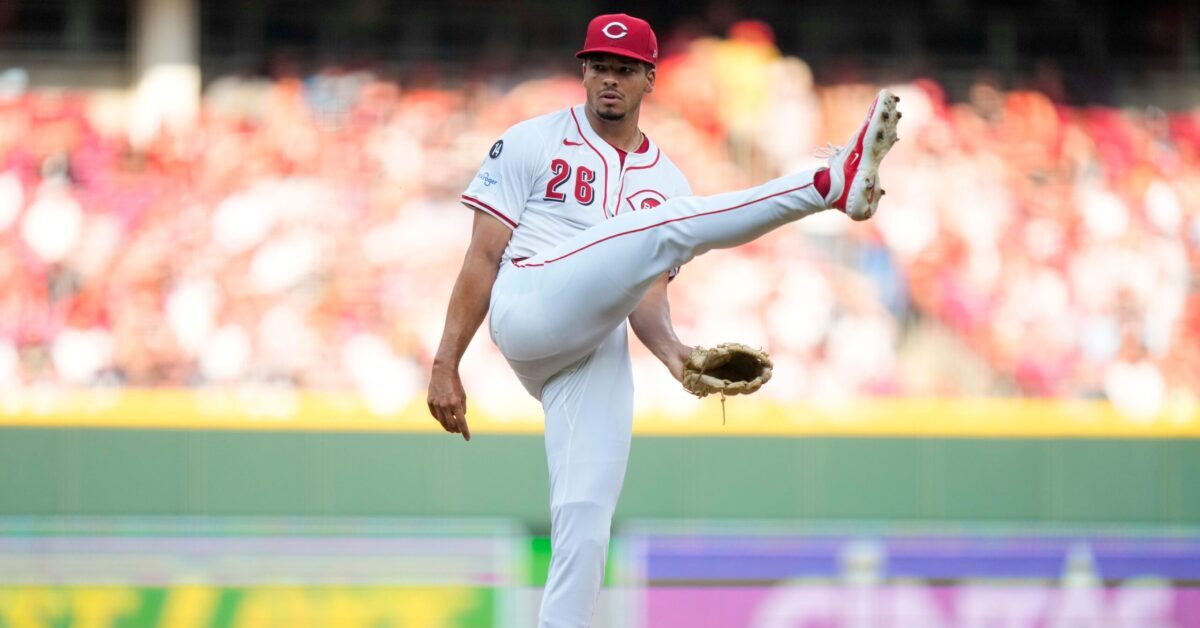
While the NFBC Main Event garners most of the attention, there are a handful of leagues with even larger entry fees ($2.5K to $15K). They are named Elite leagues (previously called High Stakes Leagues), and there are seven of them. With so much money on the line, these fantasy managers try to gain any advantage. Most of the time, these managers will be a week or two ahead of everyone else on their adds. Here are the players and some information on the ones added in five or more leagues. Read the rest of this entry »


Starting Pitcher Chart – April 16th, 2026

Welcome to the Daily SP Chart.

Note: 2026 data is now featured in the chart as of April 13th! We’re still dealing with small samples, but I’ve taken out the 2025 data and you will now see the pitcher’s current numbers and the wOBA rank for their opponent this year so far!

The chart includes their performance for 2026, their opponent’s wOBA versus the pitcher’s handedness, my general start/sit recommendation for 10-team, 12-team, and 15-team (or more) leagues, and then a note about some, most, or all depending on the day. Obviously, there are league sizes beyond those three so it’s essentially a shallow, medium, deep. If a pitcher only has an “x” in 15-team, it doesn’t mean there’s no potential use in 10s and 12s, but it’s a much riskier stream for those spots.

These are general recommendations, and your league situation will carry more weight whether you are protecting ratios or chasing counting numbers. This is for standard 5×5 roto leagues. The thresholds for H2H starts are generally lower, especially in points leagues so I thought there would be more value focusing on roto. I usually won’t have much to write about aces who are locked into our rotations, you don’t really need a shiny stat to be convinced on starting guys like that. If you want to discuss someone further, please feel free to leave a comment and I’ll get you an answer when I can. I try to do a few sweeps of the comments before game time in case there are time-sensitive questions.

Read the rest of this entry »


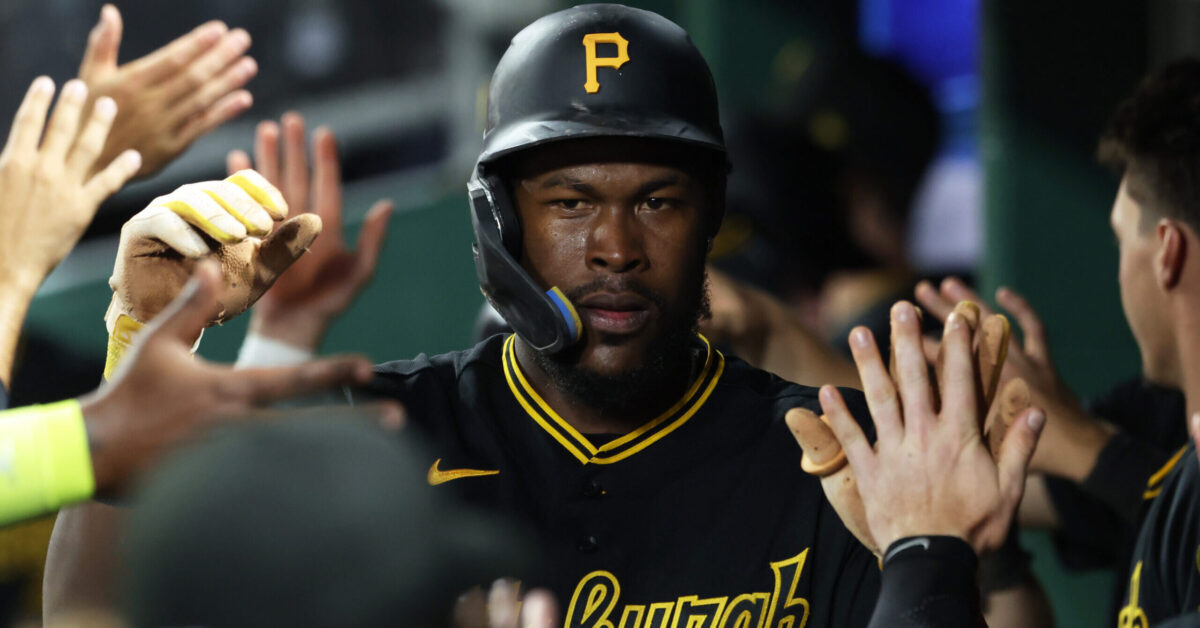
Orrico’s Observations: Has Oneil Cruz Actually Improved This Season?

Charles LeClaire-Imagn Images

Oneil Cruz was one of the most polarizing players throughout the winter draft months. He had his believers, those who were still firmly bought in on his raw skills and the potential for growth. Others (this writer included) weren’t not nearly as sold, and advised people to avoid Cruz in their 2026 drafts considering that he was still priced as a Top 100 player in most leagues.

Well, after ~10% of the season, his detractors aren’t feeling too great about themselves. Entering play on Wednesday, Cruz is the #1 hitter on the FanGraphs player rater, and the #2 player overall behind Jose Soriano.

Read the rest of this entry »


Mining the News (4/15/26)


Tommy Gilligan-Imagn Images

American League

Orioles

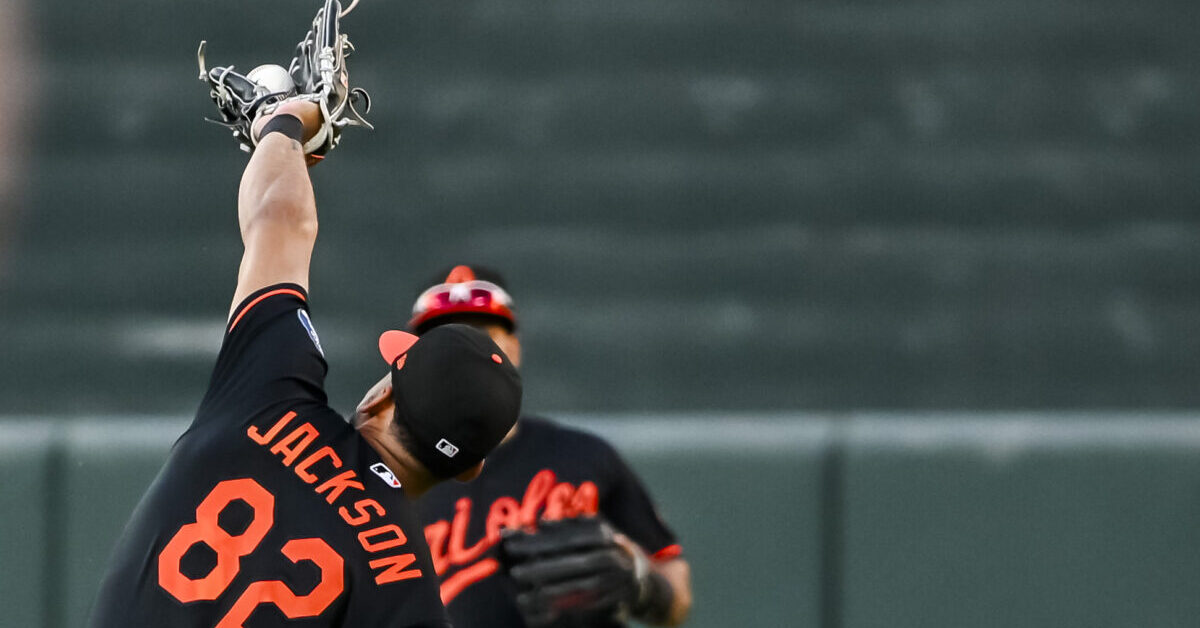
Jackson Holliday was removed from his rehab assignment.

Jackson Holliday recalled from rehab assignment due to wrist soreness.Will be shut down for a few days, then sent back on new rehab assignment.

MLB Daily News (@insidemlbnews.bsky.social) 2026-04-14T18:44:38.719Z

The actionable item here is that Jeremiah Jackson (.318/.326/.545, 3 HR) will continue to start at second base. Read the rest of this entry »


Roto Riteup: April 15, 2026

We may just need a Denzel Clarke section for the Roto Riteup:

Read the rest of this entry »


Starting Pitcher Chart – April 15th, 2026

Eric Canha-Imagn Images

Welcome to the Daily SP Chart.

Note: 2026 data is now featured in the chart as of April 13th! We’re still dealing with small samples, but I’ve taken out the 2025 data and you will now see the pitcher’s current numbers and the wOBA rank for their opponent this year so far!

The chart includes their performance for 2026, their opponent’s wOBA versus the pitcher’s handedness, my general start/sit recommendation for 10-team, 12-team, and 15-team (or more) leagues, and then a note about some, most, or all depending on the day. Obviously, there are league sizes beyond those three so it’s essentially a shallow, medium, deep. If a pitcher only has an “x” in 15-team, it doesn’t mean there’s no potential use in 10s and 12s, but it’s a much riskier stream for those spots.

These are general recommendations, and your league situation will carry more weight whether you are protecting ratios or chasing counting numbers. This is for standard 5×5 roto leagues. The thresholds for H2H starts are generally lower, especially in points leagues so I thought there would be more value focusing on roto. I usually won’t have much to write about aces who are locked into our rotations, you don’t really need a shiny stat to be convinced on starting guys like that. If you want to discuss someone further, please feel free to leave a comment and I’ll get you an answer when I can. I try to do a few sweeps of the comments before game time in case there are time-sensitive questions.

Read the rest of this entry »


The Trade Desk: Short Term Gains

Trades are the lifeblood of fantasy baseball home leagues. The conversations around them help keep us connected and engaged, and make our league more fun.

Striking deals isn’t always easy. There are often hurt feelings around lopsided proposals, league-mates who value players differently, and that one guy who wants to veto everything. We can improve our fantasy squads with the waiver wire, but our collective hit rates are low. Quite often, those pickups backfire in the form of a hitter’s cold streak or a pitcher’s blowup, which inevitably leads to dropping the player. The one facet we have control of in home leagues is trading.

Managers are often emotionally tied to certain players – specifically, missed draft targets or players from their favorite baseball team. Also, we’re not all great at zooming out for a long-term view and not being stuck in the moment. Good analysis can be washed away by recency bias and small sample sizes. No one can force us to make a deal, so it’s the one element of the game we have some control over and can use proper value assessment and negotiation techniques to our advantage.

This column will recommend hitters and pitchers to attempt to sell-high or buy-low, and touch on trade strategies. No two leagues or two managers are the same. You know your league-mates best: what kind of deal they’ll scoff at, which player type they’re willing to deal or acquire, and how good their player and market valuation skills are. I’ll do my best to dig deep and present realistic opportunities.

Trading for Short Term Gains

Streaming hitters and pitchers based on an upcoming week’s set of matchups is a strategy that winning managers have utilized for decades — a two-start pitcher with increased velocity and strong recent outings, or a hot hitter moving up in his team’s batting order with Coors Field and Great American Ball Park on tap. Most fantasy baseball managers are aware that these types of players are ideal free agent or waiver pickups, especially if we have an easy drop. This is easier to execute in shallower (10- and 12-team leagues) because the likelihood of these targets being available is higher due to the larger free agent pool. It’s wise to plan ahead for the upcoming week, perhaps even for the week after that, if feasible.

What if I told you that you can optimize your roster for a longer-term outlook based on the next 3-4 weeks of the schedule? The following strategy can work via waivers/FAAB or trading, but it requires astute analysis and some extra digging. For this week, let’s frame it from the perspective of targeting hitters to buy low on. We can do this in the following manner:

  1. Research each MLB team’s year-to-date pitching stats. I do this via FanGraphs’ TEAM stats.
  2. Identify the outliers — the best and worst pitching rotations and bullpens
  3. Review each MLB team’s set of matchups for the next 3-4 weeks
  4. Match the outliers (5-6 best, 5-6 worst team pitching staffs) to the next 3-4 weeks of the schedule
  5. If a team’s offense is scheduled to face several “bad” pitching staffs, hitters from those offenses are buy or add candidates, and vice versa

The May 2025 Chicago Cubs 

In early May last season, I ran through this process and identified that the Chicago Cubs had an extraordinarily advantageous set of matchups in the second half of the month. We had a small, yet reasonable sample size (first six weeks of the season) and their schedule really stood out like a sore thumb from May 16, 2025 – June 5, 2025: 3 vs. White Sox, 3 at Marlins, 3 at Reds, 3 vs. Rockies, 3 vs. Reds, 3 at Nationals.

Pitchers get better and worse, get promoted and demoted, and they get hurt. Things change, so this isn’t an exact science, but my assessment of a short-term matchup advantage for the hitters proved true. Over that three-week span, the Cubs went 14-4 and led the Majors with 112 runs scored (6.22 runs per game). The next closest were the Dodgers (102 runs) and the median for runs scored over that span was in the mid-70s. Core Cubs hitters were mostly rostered in all formats, but some were available in shallow-league waivers and there were certainly buying opportunities via trade. Five of their hitters batted .325 or higher over those three weeks (Suzuki .343, Tucker .339, Hoerner .338, Busch .333, Shaw .327) and Pete Crow-Armstrong went ham altogether (.293-17-5-23-8 in 80 PA). We may not be able to predict the future accurately, but with a basic understanding of the ‘buy-low/sell-high’ philosophy, perhaps we may have come to the conclusion that Crow-Armstrong could draw a huge (top-25 overall hitter) return in a 1-for-1 trade. Sure, PCA continued to produce at a high level for another month before his post-ASB crash-and-burn (.216-6 HR-8 SB after .265-25-27), but the idea of selling a hot, young player at his likely apex should have at least crossed our minds.

Every single hitter goes through waves and troughs throughout the season. In most cases, we ride these waves (leave them in the lineup), but sometimes we paddle through and sit it out (bench them). Once in a while, we have to trade in our reliable longboard for a newer, sleeker version that makes the ride smoother.

Upcoming Hitter Matchup Outliers

How can we confidently trust a three-week sample of pitching data to determine which team’s pitching will be good or bad over the next 3-4 weeks? A starter or reliever can have a bad outing at any time, and a team’s staff can over or underperform for a stretch, but certain things we can accept as true. Such as, the Mariners, Yankees, Rangers, Phillies, Dodgers and Braves have good pitching and are generally tough matchups in a series. Or that the Nationals, Angels, Rockies and Cardinals are among the league’s worst and are generally plus matchups for opposing hitters in a series. Then there are slight adjustments we can make based on ballpark: Coors Field (Rockies) or Sutter Health Park (Athletics) are good for hitters; T-Mobile Park (Mariners) and Oracle Park (Giants) are not.

We can then go to the FanGraphs team pitching stats, sort through and do some digging. Do the Mariners still look like an elite staff and bullpen? Fourth-best WAR, best ERA, top-five xFIP, lowest walk rate: check. Do Nationals pitchers still appear to be a strong group to target hitters against? See for yourself:

Team Pitching YTD by WAR
Rank Team TG G K/9 BB/9 BABIP ERA xFIP E-F WAR
1 NYY 16 74 9.2 2.5 0.299 2.99 3.31 -0.32 4
2 PHI 16 74 10.3 2.5 0.344 4.34 2.95 1.39 3.5
3 SEA 17 67 8.7 2.2 0.283 2.95 3.57 -0.62 3.2
4 SDP 16 72 9.4 3.1 0.305 3.41 3.51 -0.10 3.1
5 NYM 17 66 9.0 3.4 0.293 3.64 3.55 0.09 2.5
6 LAD 16 68 8.2 3.5 0.246 3.40 4.14 -0.74 2
9 MIN 17 74 8.2 3.8 0.313 4.29 4.62 -0.33 1.9
8 BAL 16 69 8.8 3.6 0.301 3.82 4.14 -0.32 1.9
7 PIT 16 74 9.7 4.6 0.286 3.34 4.05 -0.71 1.9
10 DET 16 59 8.3 4.1 0.280 3.66 4.24 -0.58 1.8
11 TEX 16 72 9.8 3.1 0.281 3.30 3.71 -0.41 1.8
12 ATL 17 68 7.9 2.8 0.249 2.86 4.01 -1.15 1.7
13 MIA 17 65 9.1 4.1 0.259 3.87 4.21 -0.34 1.6
15 TOR 15 77 11.1 3.6 0.310 4.81 3.34 1.47 1.5
14 SFG 16 71 8.9 3.9 0.308 4.28 3.76 0.52 1.5
17 CHW 16 76 8.2 4.4 0.290 4.70 4.66 0.04 1.4
16 CLE 17 72 10.0 3.7 0.291 3.99 3.77 0.22 1.4
18 TBR 15 63 8.1 3.3 0.255 4.66 4.31 0.35 1.2
19 MIL 15 67 9.7 4.3 0.304 4.16 4.02 0.14 1.2
20 CIN 16 77 8.0 4.8 0.273 4.03 4.73 -0.70 1.1
21 KCR 16 64 9.1 4.0 0.283 3.90 4.10 -0.20 1.1
25 LAA 17 69 9.2 5.6 0.282 4.56 4.57 -0.01 0.9
24 ATH 16 72 8.2 5.3 0.285 4.44 4.71 -0.27 0.9
23 ARI 17 78 7.7 3.1 0.264 4.10 4.18 -0.08 0.9
22 CHC 16 65 8.6 3.4 0.264 3.99 4.08 -0.09 0.9
26 COL 16 66 7.2 3.4 0.284 4.27 4.43 -0.16 0.6
27 BOS 16 68 8.2 4.0 0.274 4.39 4.19 0.20 0.2
28 STL 16 75 6.0 4.1 0.294 5.15 4.99 0.16 0.1
29 HOU 17 71 9.7 6.0 0.329 6.50 4.87 1.63 -0.6
30 WSN 16 74 7.6 5.1 0.278 6.21 5.09 1.12 -2.2

Feel free to sort this table by different categories, click on various Stat Presets (Advanced, Batted Ball, Statcast) to review other metrics, split between starters and relievers (under Positional Split), or review 2025’s data.

Are the Astros (6.50 ERA, 6.0 BB/9) going to have the worst staff and be a target to stream hitters against in the short term? Probably. They’re down Hunter Brown, Tatsuya Imai, Cristian Javier (which isn’t saying much) and Josh Hader. Mike Burrows and Bryan Abreu have been horrendous, and they’ve recently added Cody Bolton, Colton Gordon and J.P. France into the mix. It might be a prettier picture in August, but for the next 3-4 weeks, it’s fair to consider them a “bad” staff. If Garrett Crochet isn’t hurt and bounces back, as most of us expect, we likely won’t see Red Sox pitchers among the bottom-five in two months from now.

Most of the pitching staffs closer to average are a “push” — they don’t move the needle to help identify outlier-good or outlier-bad matchups. We’re looking for a string of extremes. Here are a couple:

Great Matchups, next 3.5 weeks (Friday, April, 17 – Sunday, May 10)

Chicago White Sox

  • 3 at Athletics
  • 3 at Diamondbacks, 3 vs. Nationals
  • 3 vs. Angels, 3 at Padres
  • 3 at Angels, 3 vs. Mariners

Except for the Padres and Mariners, facing ATH, ARZ, WSN, LAA (x2) is as good as it gets. Perhaps slow-starter Miguel Vargas (1 HR, 180 BA, .222 BABIP, 14.5% BB) is a worthwhile trade target who can be acquired for a cheap return. Or perhaps we’re on the precipice of another Munetaka Murakami power heater. Chase Meidroth and Edgar Quero are getting dropped in many deeper formats.

New York Mets

  • 3 at Cubs
  • 3 vs Twins, 3 vs. Rockies
  • 3 vs. Nationals, 3 at Angels
  • 3 at Rockies, 3 at Diamondbacks

If this six-series stretch after this weekend’s Cubs series doesn’t fix the Mets’ offense, probably nothing will (or at least until Juan Soto returns). As of today, every hitter except for Luis Robert Jr. and Francisco Alvarez is a potential buy-low candidate. You don’t have to be in the room to know your league-mate who drafted Francisco Lindor and Bo Bichette is panicking.

Not-Great Matchups, next 3.5 weeks

St. Louis Cardinals

  • 3 at Astros
  • 3 at Marlins, 3 vs. Mariners
  • 4 at Pirates, 3 vs. Dodgers
  • 3 vs. Brewers, 4 at Padres

In exactly three weeks, there will be oodles of “I told you Jordan Walker stinks” tweets. The reality is that Walker is not as good as he’s been these first three weeks and isn’t as bad as he might be the next three weeks. Walker and his teammates will be facing some of the toughest rotations and bullpens in baseball — if he somehow doesn’t cool off, it would be a surprise. We’re not selling high on Walker just because of the next three weeks of matchups, but we should absolutely test the trade waters to see what we can get in return because this is the ideal window. Two weeks ago or two weeks from now, a Walker-for-Lindor offer would be scoffed at. Right now, the other manager might take it.

So, that’s a snapshot of one of the strategies I’ve used over the years for trades and free agent acquisitions. We often assess too much in terms of rest-of-season or the upcoming week. Going the extra mile to review metrics and preview schedules for extreme matchup outliers in a 3-4 week window can prove fruitful and provides small victories that can help add up into a fantasy league title come October.


Roto Riteup: April 14, 2026

NO SOUP FOR YOU!

Read the rest of this entry »


Starting Pitcher Chart – April 14th, 2026

Mark J. Rebilas-USA TODAY Sports

Welcome to the Daily SP Chart.

Note: 2026 data is now featured in the chart as of April 13th! We’re still dealing with small samples, but I’ve taken out the 2025 data and you will now see the pitcher’s current numbers and the wOBA rank for their opponent this year so far!

The chart includes their performance for 2026, their opponent’s wOBA versus the pitcher’s handedness, my general start/sit recommendation for 10-team, 12-team, and 15-team (or more) leagues, and then a note about some, most, or all depending on the day. Obviously, there are league sizes beyond those three so it’s essentially a shallow, medium, deep. If a pitcher only has an “x” in 15-team, it doesn’t mean there’s no potential use in 10s and 12s, but it’s a much riskier stream for those spots.

These are general recommendations, and your league situation will carry more weight whether you are protecting ratios or chasing counting numbers. This is for standard 5×5 roto leagues. The thresholds for H2H starts are generally lower, especially in points leagues so I thought there would be more value focusing on roto. I usually won’t have much to write about aces who are locked into our rotations, you don’t really need a shiny stat to be convinced on starting guys like that. If you want to discuss someone further, please feel free to leave a comment and I’ll get you an answer when I can. I try to do a few sweeps of the comments before game time in case there are time-sensitive questions.

Read the rest of this entry »


FAAB Frenzy and Waivers Wild: Week 4

Every Monday, this column will break down the most popular waiver wire and free agent acquisitions of the weekend.

Fantasy baseball managers know that our game is the ultimate test of grit, grind, tenacity, and patience. Unlike fantasy football, where league titles can be won with minimal in-season activity, fantasy baseball leagues require incessant attention and activity. Particularly when it comes to free agent adds and drops. Real-life baseball managers are constantly adjusting batting orders, players are frequently optioned to and promoted from the Minor Leagues, and injuries occur almost daily. There’s no resting on our laurels. We must always stay vigilant with league news and notes and remain active on the waiver wire if we want to win our leagues.

Every week, I’ll dig into the top adds on the ever-popular Fantrax and in the NFBC Online Championship (OC), a national mid-stakes contest with 240 total leagues of 12 and a six-figure grand prize. Reviewing player adds between the two should provide us with a well-rounded perspective and barometer of the fantasy baseball marketplace.

Week 3 Overview

Cardinals outfielder Jordan Walker smashed five dingers last week and now leads the Majors in home runs (seven).

Oneil Cruz and Jakob Marsee each stole three bases in Week 3 games. Cruz swiped six total bags last week and enters Week 4 tied with Drake Baldwin atop the FanGraphs 12-team Player Rater ($41.7).

James Wood earned 12 hits and walked six times (only 4 Ks) in 28 plate appearances. He slashed .545/.655/1.091 last week. The Nationals are scheduled to play seven games in each of the next two weeks.

A few hitters with rough weeks: Mark Vientos (0-17), Michael Busch (1-20), Munetaka Murakami (1-20, 9 Ks), Adolis García (1-20, 8 Ks), and Josh Naylor (1-19), whose batting average is down to .102 and has no extra-base hits.

Last week’s saves leaders (three apiece) were Lucas Erceg and popular waiver add, Jakob Junis. Last week’s popular add, Bryan Baker, earned two saves but served up three earned runs in three innings.

Starting pitchers Max Scherzer and Ryan Feltner gave up the most earned runs (10 each), though Scherzer pitched 4.1 innings and Feltner 9.1. Sandy Alcantara was roughed up by the Tigers (10 H, 7 ER in 6 IP) after three consecutive gems.

Of the 31 pitchers who drew two starts last week, five earned wins in both of their starts: Joe Ryan, Germán Márquez, Taj Bradley, Michael Wacha and José Soriano.

As we did last week, let’s review the top trending acquisitions for Fantrax (waivers) and the NFBC 12-team OC (blind bid FAAB), but let’s add in Yahoo’s top adds as well. Soriano is the early fantasy MVP and the top overall player on the Player Rater ($51.5).

Fantrax – Most Popular Player Adds (+/-)
Player Team Position Ros +/-
Angel Martínez CLE 2B,OF 57% 42%
Jakob Junis TEX RP 54% 39%
Jeffrey Springs ATH SP 85% 29%
Jorge Soler LAA OF 68% 25%
Josh Bell MIN 1B 71% 25%
Javier Assad CHC SP 38% 23%
Mauricio Dubón ATL 2B,3B,SS,OF 77% 22%
Troy Johnston COL 1B,OF 44% 21%
Noah Schultz CHW SP 73% 20%
Cole Winn TEX RP 29% 20%
Riley O’Brien STL RP 85% 17%
Davis Martin CHW SP 58% 16%
Steven Matz TB SP 51% 16%

Roster % is the current percentage of leagues rostering the player; +/-  is the percentage of leagues the player was added in the previous week

Jorge Soler was added in 25% of Fantrax leagues. His roster percentage is only up to 68%, which seems low. A healthy Soler is a great source of power, though he’ll certainly do his part to drain our batting averages.

Yahoo’s data leans heavily on their daily contest. That’s why the top adds list is heavy with SPs drawing starts today and tomorrow. Grant Holmes (vs. MIA) and Will Warren (vs. LAA) are home favorites today. Joey Cantillo pitches in St. Louis tomorrow then is back at home against the Orioles on the weekend.
NFBC Online Championship – Top Average Winning Bids
Player Team Position % Lgs Added AWB
Jakob Junis TEX RP 99% $104
Jorge Soler LAA OF 38% $62
Bryan Baker TB RP 17% $61
Didier Fuentes ATL SP 18% $52
Jeffrey Springs ATH SP 76% $42
Landen Roupp SF SP 44% $36
Bryce Elder ATL SP 26% $35
Tyler Mahle SF SP 17% $35
Nasim Nuñez WSN 2B 20% $32
TJ Rumfield COL 1B 15% $31
Mark Vientos NYM 3B 29% $28
Mitch Keller PIT SP 17% $28
Angel Martínez CLE 2B,OF 81% $26
Mick Abel MIN SP 38% $25
Josh Bell MIN 1B 50% $23
Joel Kuhnel ATH RP 23% $23
Jose Fernandez ARZ SS 22% $22
Eduardo Rodriguez ARZ SP 35% $21
Foster Griffin WSN SP 28% $21
Mauricio Dubón ATL 2B,3B,SS,OF 50% $20

% Added is the percentage of leagues that added the player; AWB stands for average winning bid

Braves pitcher Didier Fuentes was awesome in spring training (13 IP, 1 ER, 18:1 K:BB) and has 15 strikeouts with five walks and one run allowed in two Triple-A starts. He drew the highest average winning bid among SPs in NFBC OCs ($52) though is still available in 3% of leagues. With Reynaldo Lopez’s suspension shortened and him slated to start on Tuesday, the Braves won’t need another starter until the following week. Those who acquired Fuentes hope that he joins the rotation then.

Relievers

Jakob Junis was the top target among relievers this weekend. He popped onto our radars on Monday when he earned a save. He did it again on Tuesday and once more Sunday, just a few hours ahead of Sunday evening’s FAAB deadline. Robert Garcia and Chris Martin were supposed to be the ninth-inning co-committee, but they played themselves out of future opportunities, at least for now. Righty Cole Winn and lefty Jacob Latz (converted reliever) have moved up in the hierarchy as late-inning setup men. Winn locked down his first career save on Wednesday and a hold on Sunday. Winn hasn’t allowed a run in eight appearances and sports a 14.8% swinging-strike rate. He has better stuff than Junis, but Junis has superb control (6% career walk rate) and is a dependable veteran who appears to be extending job security in this new role. He spent the bulk of his career as a starter. Over the last two seasons, as a reliever with the Giants and Guardians, Junis owns a 2.83 ERA, 1.04 WHIP, 20.1% K and 4.9% BB.

Riley O’Brien (added in 17% of Fantrax leagues) has been stellar this season — 4 SV, 1 W, 1.41 ERA (2.05 xFIP), 8 K with no walks or earned runs allowed in eight appearances.

Joel Kuhnel is a new face in the fantasy sphere and is potentially in the mix for save chances with the Athletics. He closed out Sunday’s contest (1-0 over the Mets), his second save of the season. Mark Leiter Jr. (Tuesday, March 31) and Hogan Harris (Thursday, April 9) are the only other relievers to earn saves for the A’s so far. Kuhnel is 31 years old and a big guy (6’5”, 290) who has one full season in the Majors (6.36 ERA in 58 IP with the Reds in 2022), but has otherwise toiled in the Minors for different organizations. Kuhnel and Harris (the bullpen’s only lefty) will likely share save opps in the short term. Justin Sterner is their most consistent reliever since 2025 (his rookie season) and could get into the mix of save chances soon. Kuhnel has more fantasy value in 15-team leagues and can be ignored in 10/12-teamers for now, especially with the A’s playing at home all week.

Starting Pitchers

Jeffrey Springs is almost three years removed from his Tommy John surgery. A converted starter, Springs had a dominant 2022 season (2.46 ERA, 1.07 WHIP, 26%K, 5.6% BB in 135.1 IP) before his 2023 season ended abruptly. He joined the A’s in 2025 and managed a 4.11 ERA (4.60 SIERA) in 171 innings, though his strikeout rate dipped under 20% for the first time. His arsenal isn’t overpowering, but his changeup is top-notch and he has always exhibited above-average control. Springs has pitched well through three starts (1.47, 0.76) though it won’t be all sunshine and rainbows this season. Springs has been lucky (.170 BABIP, 3.91 xFIP, 3.97 SIERA) and negative regression will undoubtedly rear its ugly head — specifically, in the 100+ degree Sacramento weather this summer. Springs hasn’t allowed a home run yet this season (1.47 HR/9 last season). He is slated to make his second and third home starts of the season this week, against the Rangers and White Sox. Springs could be a mainstay on 12-team rosters and maintain a sub-4.00 ERA for the season.

Joey Cantillo’s breakout doesn’t seem to be appreciated by the Yahoo community (only 38% rostered). The crafty lefty with the occasional case of the location yips has 20 strikeouts and seven walks through his first three starts (14.2 IP). His cutter and changeup are plus offerings. I don’t foresee Cantillo having issues maintaining his rotation spot with the Guardians, but I can’t say the same about a sub-10% walk rate.

Giants starter Landen Roupp is off to a nice start, and perhaps even a bit unlucky (.304 BABIP, 3.24 ERA vs. 2.67 xFIP, 2.95 SIERA). It’s unlikely that Roupp will end the season with an ERA better than 3.50, but it’s certainly possible. Roupp often issued too many free passes in his starts last season, so it’s nice to see his walk rate down (from 9.5% to 7.2%), albeit just three starts. He will likely have his hands full in the next two weeks. He is expected to face the Reds in Great American Ball Park on Wednesday and is lined up in the following week to face the Dodgers, at home.

Javier Assad may be one-and-done after this start in Philadelphia if Matthew Boyd remains on track to return this weekend.

Hitters

Nasim Nuñez is all speed and nothing else. Make sure you only add him on squads where you don’t already have Chandler Simpson or José Caballero.

Angel Martínez had an incredible week — 13-42, 7 R, 1 HR, 6 RBI, 4 SB, .310/.383/.452. He mostly starts and bats first or second against left-handed pitchers, but earned a start against a righty on Friday. Not sure we can call him an everyday player yet, so let’s see if he earns some starts against righties this week. When we added Martínez over the weekend, the Guardians were slated to face up 4 LHPs. That has since changed with the Orioles optioning lefty starter Cade Povich in favor of ol’ gascan righty, Dean Kremer. The Guardians may only square off against two lefty starters now.

Diamondbacks rookie Jose Fernandez has started six straight games, at first base, third base, and designated hitter. He has earned playing time with somewhat steady production and because of injuries to Pavin Smith and Carlos Santana. By the way, Fernandez was seven years old when Santana made him Major League debut.

Drop of the Week

It may be time to move on from Astros interim closer Bryan Abreu. Abreu did not allow a run in his appearance on Sunday, the first time in seven tries. His velocity drop is worrisome, lefty Bryan King has been exceptional, and Josh Hader may be back before the end of the month.