It’s been nearly a month since I took my last look at batter xwOBA underperformers and overperformers, and a lot could change during that time. So let’s revisit the hitters who have underperformed and overperformed the most, determine whether it’s been a consistent trend, and decide if the hitter is due to perform closer to his xwOBA the rest of the way.
Since 2021, Vladimir Guerrero Jr. has been one of the best hitters in the league. As we enter June, he has just three home runs and his worst power numbers for several years. At this pace, he will finish with nine homers — the same as he managed in the shortened 60-game season in 2020. His top-20 average ADP has resulted in returns that barely put him in the top 20 at first base, and that poses the question: Can this regression be explained?
If you want to get a hit, trying to square up the ball is a great place to start. But not all squared up hits are created equal. Squaring up your grounders and line drives will likely help your batting average, but won’t do much in the home run department. Squaring up your flyballs, especially at the ideal launch angle, should help get the ball out of the yard.
If you look at the surface level Savant lollipops, you will see a “Squared-Up%” metric, which is represented on FanGraphs by “SqUpCon%”. This describes a batted ball event where at least 80% of the possible exit velocity on a pitch was obtained, given the swing and pitch characteristics, which typically means a ball that was hit on the sweet spot of the bat, according to Statcast.
As explored by Fangraphs’ Davy Andrews, even before we look at the launch angle of a squared up ball, we should acknowledge that not all of these swings result in a ball that’s hit even remotely hard, because a ridiculously slow swing that hits the ball on the barrel can still technically be squared up by the Statcast definition. But for the most part, hitters are swinging relatively hard. And we have ways to see just how fast they swing and how often they unleash their fast swings now, thanks again to Statcast.
With all of this in mind, check out the Fangraphs Squared-Up Explorer. This tool helps you see how often a hitter is squaring up the ball at different launch angles, highlighting the ideal launch angle for home runs and visualizing a given hitter’s profile compared to league average.
Using this tool, you can compare a given hitter’s profile against other hitters and during different periods of time. You can compare Gunnar Henderson’s hot start in 2024 to his 2025 and to his start to this season, as I did last week.
Today, I’ll run through a few examples that demonstrate the possible ways to use the Squared-Up Explorer and try to show you that you can and should use this tool yourself as a starting point for analyzing hitters, whether it be struggling bats you may want to cut or hot streak hitters you’re looking for an excuse to believe in. For the hitters I look into, I’ll provide some recommendations, but really want to invite you to use this exceptionally user-friendly tool yourself.
Before I get into analyzing what I think may be a relatively broken hitter, I have something to admit. This admission may sound familiar to you. Especially if you are at all impulsive. Or love to trade.
A few weeks back, after trading Corey Seager for Dylan Cease in what felt like an absolute coup, I got a bit ahead of my skis. Without looking at a single Fangraphs or Baseball Savant page, I fired an offer into the ether. I dealt away Michael King, Cade Cavalli, and Bo Bichette for Gunnar Henderson, in what felt like a classic buy low-sell high, where Henderson represented the low and King the high.
The point of this article is not to discuss King’s less than rosy peripherals. Nor is it to shame me for dealing Bichette before he seemingly started heating up. It is, at least in part, a cautionary tale, though I’d say it’s a hopeful one.
Last Monday, I discussed Fernando Tatis Jr.’s odd season and the possibility that his missing power output is related to a stance change that hasn’t had the intended effect. I noted the natural next question at the end: what other players have made stance changes and what are we seeing from them? We’ll dig into that today.
Come with me, for a moment, down into the clubhouse of your favorite MLB team. Walk through the concrete halls and into the press room. Take a seat and wait for the manager to come in. Listen, you can hear it. Pencils, pens, iPad taps, all preparing to ask questions that press the manager, while also making the person asking them sound cool and trustworthy, like, “You can talk to me, it’s me! I’m cool. I’m not like these other press passers.” Here it comes, the classic question:
Press: What did you see out there with your starting pitcher today?
Welcome to another installment of fastball velocity risers and fallers. For reference, here are a few articles that explain both the process and the importance of increased or decreased velocity when predicting future success:
The data for this article reflects games played through April 15th (but may include a Spring Training start for any pitcher who has yet to reach three starts) and only displays Statcast’s four-seam fastball (FF) velocity. Read the rest of this entry »
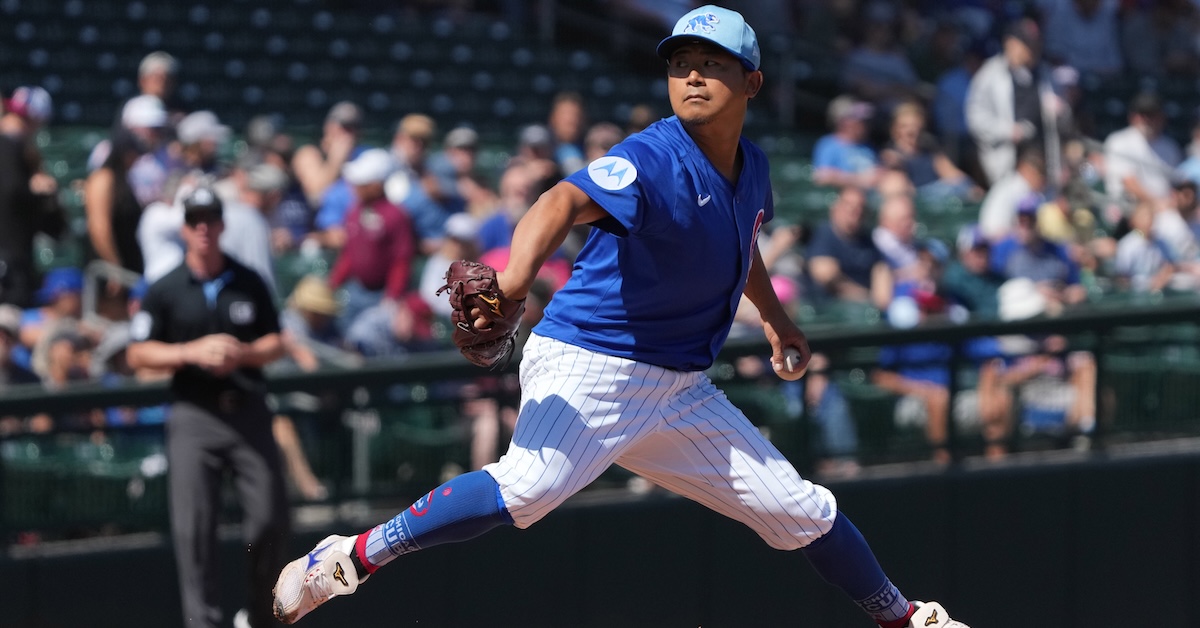
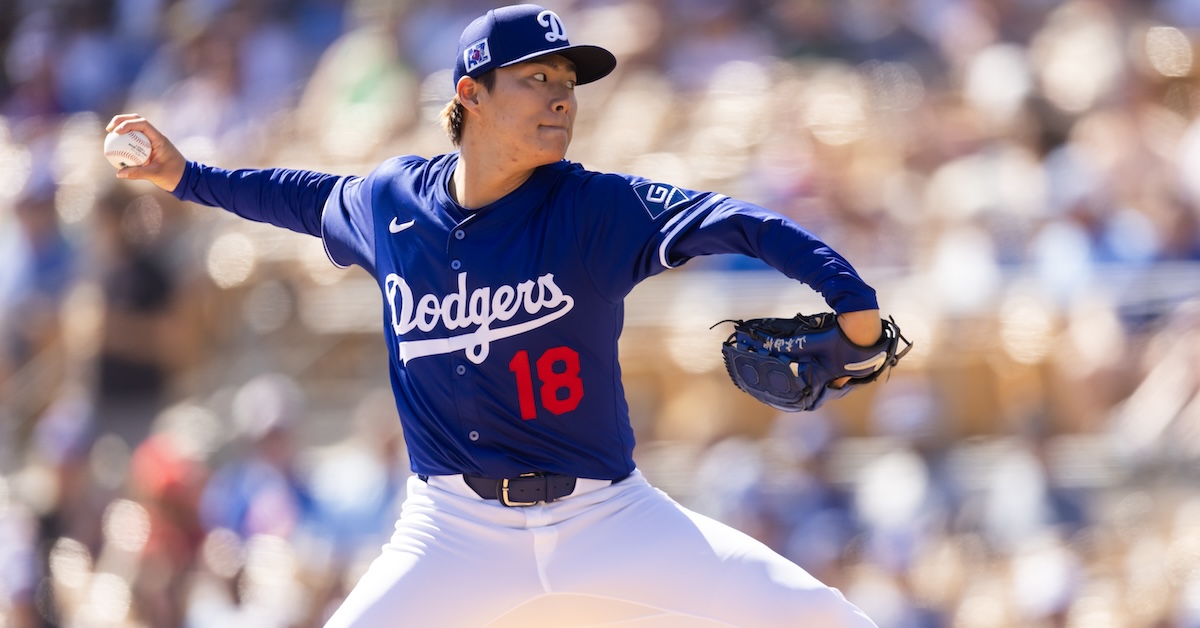
The splitter’s usage among starting pitchers reached a 14-year high in the 2024 season when it hit a 3.2% usage league-wide. In the past four seasons, no qualified pitcher has taken the top splitter usage trophy away from Kevin Gausman who averaged around 36% usage from 2021 to 2024. Taijuan Walker came close in 2023 when he threw his splitter 33.2% of the time, yet it wasn’t enough to top the king. 2025 seems like the year in which Gausman will lose his crown. Roki Sasaki will be one of the most-watched pitchers in 2025 and according to some, will showcase one of the best splitters in the world. How often he’ll use that pitch remains to be seen. Shota Imanaga (30.6% usage) came close to King Gausman’s mark in 2024. In Yoshinobu Yamamoto’s 90 innings pitched in 2024, he threw his splitter 24.2% of the time. What will happen in 2025? Dare I suggest the league-wide splitter usage continues its growth and finishes at 4.1%? It’s possible. Only 12 qualified pitchers threw splitters in 2024. In this edition of “Know Your Averages”, I’ll bring in any pitcher who threw at least 45 splitters and compare their plate discipline metrics.
Are you a hitter who can’t time up the fastball? Feeling over-powered? Not having your best day? Just wait it out, the hook will come eventually. Keep that weight back and search for that little bump, that little loop, as the pitch comes towards the plate. Wait on it, wait on it, wait on it….strike! It’s not as easy as it sounds. Of the 115 starting pitchers who threw at least 100 innings in 2024, 76 threw a curveball. Some of them got blasted; Miles Mikolas, Pablo López, Jameson Taillon. Some of them did the blasting; Framber Valdez, Seth Lugo, Max Fried. Take a look at some finer details below and see if you can find a few pitchers with positive curveball metrics for the back end of your fantasy rotation.
Fastball! Fastball! Inside-fastball!….changeup. It’s almost soothing, isn’t it? The hitter gets some relief from the loud, scary, onslaught of heat to a nice, easy, soft-dropping cambio. But don’t be fooled, that soft-cuddly change of pace can be absolutely devastating. It can send you right back to the dugout looking, and that’s if you’re lucky. If you’re unlucky, you just whiffed so hard a little snot came out of your nose, you made a loud grunting noise and possibly pulled a muscle in your lower back. Some pitchers utilize the changeup by only throwing it to opposite-handed hitters when they need it. Some throw it with regularity, lulling hitters to sleep. There’s no perfect way to use it, but a decent changeup in a pitcher’s arsenal can be a difference-maker. Let’s continue the “Know Your Averages” series with a pitch that’s thrown in the zone less often, rarely called for a strike, and chased like a rat terrier going after a….well…let’s just get to it.