Archive for Statcast

Know Your Averages 2024, Slider Edition

<a href=
Credit: Kim Klement Neitzel-Imagn Images

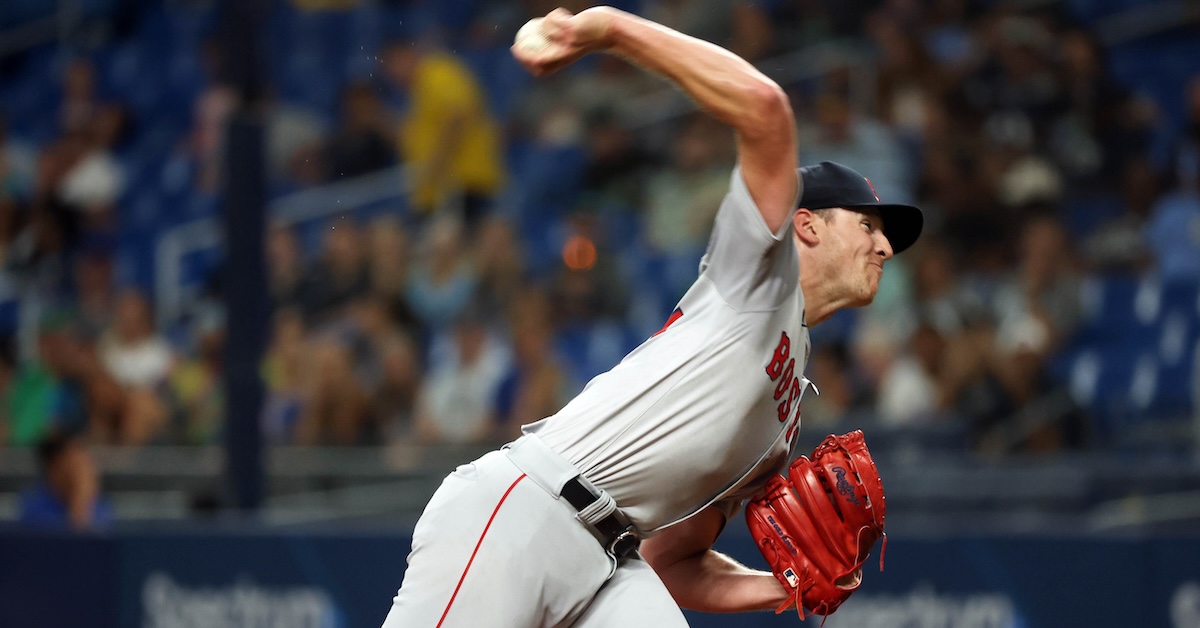
Toward the end of the 2024 season, I aggregated fastball performance metrics with “Know Your Averages 2024” and wrote about the pitchers near the minimum, the maximum, and the average. For example, Aroldis Chapman’s sinker still rules the SwStr% category (maximum, 17.8%), while Jake Woodford couldn’t buy a swinging strike (minimum, 0.9%) and George Kirby was perfectly average (6.0%). Below, you can find links to those posts. You may find them useful when contextualizing the statistical vomit coming from any baseball podcaster’s repertoire. I needed to do it for myself:

Fastballs: Four-seamers | Sinkers | Cutters

But now we move beyond the fastballs and attempt to digest all those other pitches. There are tremendous differences in the fastball swinging strike rates around and below 10% and the 15%’ers of sliders and splitters. We’ll begin with sliders.

Breaking and Offspeed Pitches: Sliders | Changeups | Curveballs | Splitters | Sweepers
Read the rest of this entry »


The HardHit% Age Curve

Kevin Jairaj-Imagn Images

Many indicators are pointing to Adolis García’s power declining. If so, his fantasy value may be careening down a cliff. Read the rest of this entry »


Never Ne-ver Hang a Sli-der

Chadd Cady-Imagn Images

You can feel it in the pit of your stomach. Symptoms of watching a slider hang in the zone from your favorite pitcher include but are not limited to jaw-clenching, toe-curling, fist balling, hot-flashes, “we’ll never make the playoffs” thoughts, and of course, a bubbling sensation in the lower abdomen region. Dylan Cease fans beware, the following GIF may conjure up some of the previously listed symptoms. Read the rest of this entry »


Know Your Averages 2024, Cutter Edition

What is different about the cutter? Scroll down to the bar chart below to see that it is in the zone the least of the three fastballs (four-seamer, sinker, cutter) analyzed in this series. In the zone the least, yet swung on the most. Heck, it’s even chased out of the zone by hitters the most. That’s the cutter. When executed correctly, it cuts in on a batter’s hands or it tails away from the barrel. How else does it compare to the four-seamer and sinker? In this article, we conclude the “Know Your Averages” series with a jammed hitter, a broken bat, and a sore palm.

Four-seamers | Sinkers | Cutters
Read the rest of this entry »


Know Your Averages 2024, Sinker Edition

When you have a pitch that can be thrown in the zone, induce weak contact, and get called strikes, you throw it and you throw it often. However, last season (2023) the sinker’s usage hit its lowest point within the Statcast era among starting pitchers, down to 13.9%. A slight resurgence this season has brought its usage up to 15.0%. Compared to a 22.8% usage in 2015, the start of the statcast era, the sinker no longer sits at the popular kid’s lunch table.

However, if we change the split to view the sinkers utilization by relievers, we see the resurgence started earlier and with a little more gusto:

Sinker Usage Comparison (SP/RP) 2015-2024

Relievers have been doing crazy things with their sinkers when you look at the data. The obvious ones like throwing it faster with more movement are apparent, but throwing it in unusual locations seems to be a thing. While all those small changes are occurring, we can still rely on what is happening on average to help us make quick comparisons. For example, a swinging strike rate of 10% on a four-seam fastball is average. A 10% swinging strike rate on a sinker is really good. This post serves to help navigate benchmark statistics on the sinker.

Four-seamers | Sinkers | Cutters
Read the rest of this entry »


A Quick Look into Minor League Statcast for Hitters

Nathan Ray Seebeck-USA TODAY Sports

How can Statcast improve hitting prospect valuations? This article examines the predictive power of prominent Statcast metrics at the Triple-A level.

With Statcast data now publicly available for every Triple-A game since 2023, I wanted to look at how much it helps us evaluate hitting prospects compared to more traditional data. Specifically, this article considers how well several Triple-A metrics from the full 2023 season — wOBAcon (wOBA on contact), xwOBAcon, barrel rate per batted ball event, and 90th percentile exit velocity — predict MLB wOBAcon in 2024 (MLB wOBAcon through the games of July 26th, as I have been working on this piece for a little while now).

Read the rest of this entry »


Thoughts on Pulling the Ball

There have been two things somewhat stuck in my head that feel contradictory but maybe aren’t. One is that hitters should pull the ball more to get to more power. The other is that “using all fields” is a time-honored phrase for hitters who benefit by spraying the ball around the park.

Read the rest of this entry »


The Statcast Era’s Home Run Derby

In the past few weeks, guests on the Baseball Tonight Podcast with Buster Olney have gone through the exercise of creating their all-time home run derby list. Obvious finalists such as Babe Ruth, Josh Gibson, Ken Griffey Jr., and Mark McGwire have filled the theoretical brackets. As another season’s All-Star break is upon us, we’ll be graced with a few hours of this year’s big boppers attempting to hit baseballs as far as humanly possible. Though it may be a new format, the goal is the same; hit home runs!

Read the rest of this entry »


Know Your Averages 2024, Four-Seam Fastball Edition

It can be difficult to remember all these numbers. You hear phrases like “Garrett Crochet‘s four-seam fastball has a 15.7% swinging strike rate this season” or “Batters are chasing Cristopher Sánchez’s cutter 50% of the time!” Doing anything in baseball 50% of the time is typically standout behavior. Still, these quick statistical callouts can be hard to process without the baseline, or the average, ingrained in your mind. Luckily, sweet corners of the internet give us the data we need to process the things all these smart baseball people say without having to constantly hit the “-10 sec” button on our podcast episodes.

Read the rest of this entry »


A Way-Too-Early Look at the Importance of Bat Speed

This article takes a look at some of the new bat tracking metrics published this week at Baseball Savant. It aims to help readers incorporate the new metrics into their analysis toolkit.

Bat tracking metrics have now been published for 2024, starting on April 3rd. Last year, Baseball America published a test version of average bat speed as well. The operationalization of the bat tracking metrics has been tweaked since the Baseball America version was published, but so far, this is the data we have to work with.

Read the rest of this entry »