Archive for Meta Analysis

Playing Through an Injury Hurts Future Performance

I was wrong. About seven years ago, I wrote on how hitters may overperform their projections since they played through an injury. The injury hampered their production in the season in question, lowered the future projection, and created a buying opportunity. For years, I believed this steadily until last season when I re-ran the numbers and found “jack squat”.

Earlier this week, I examined some of this past season’s hitters who fought through the pain and felt a deeper analysis was needed. I dove in and the results were backwards. I found no bounceback should be expected from hitters who played through injuries, but there is more. For those hitters who play through the discomfort, their future production will take a major hit.

The key to uncovering the following results was getting a usable dataset which is easier said than done. Many of the injuries I’m using for the analysis aren’t well documented, if at all. Real men play baseball and they play hurt because that is what real men do and most importantly, they don’t complain about. Besides the machismo, a player has every right to keep his medical data to himself so vagueness thrives. Simply, there is no good available data. Even with the hurdles, I dug into each of the hitters who were reported to have played through an injury the past three seasons (2017, 2018, 2019).

Read the rest of this entry »


Who Might Outperform Mike Trout?

On Monday, I laid out my thought process for selecting Mike Trout first overall in 2020. To summarize, we have several legitimate choices. Absent secret information, they’re all a shrug away from the same, albeit in slightly different shapes. Trout stands out because he’s been so consistently good for so long. The alternatives all have shorter track records or a chance to fall out of the top 30 players – even without an injury. By comparison, we know a healthy Trout is a monster fish.

Today we’ll take a peek at all the players you could reasonably select over Trout on draft day. Let’s toss them into a few buckets. ADPs are from NFBC.

Read the rest of this entry »


Projection Altering Hitter Injuries

I’ve had a semi-fixation on hitters playing through injuries and how the diminished production could hamper the next season’s projection. At first, I found some correlation. Then, I didn’t. One possible answer to there being no bounceback is that the injury becomes chronic and the hitter never improves. Or the dataset could be too small.

I want to dive further into the subject, but the information around injuries is sketchy at best. Most of the time, there are no usable details. The lack of an answer means that I should stop coming back to the subject but I’m stubborn.

Very.

I’m going to go through this past season’s hitters. The dive has a couple of goals. One is to create a better dataset for future reference. The second is to understand why some hitters may have struggled when creating a profile. And just maybe, I’ll find out if I can put to rest the notion that hitters who played through injuries are under projected.
Read the rest of this entry »


With The First Pick, You Select…

There’s a debate going around Twitter. If you want some cheap likes and retweets, try dropping this poll:

Who would you pick first overall?

Mike Trout

Christian Yelich

Ronald Acuna

Other

Read the rest of this entry »


2019 Statcast Park Factors (and the Importance of Spray Angle)

Last year, I took a stab at developing what might be loosely defined as park factors using Statcast data. (I called them park “impacts” because they lacked the requisite rigor to be true factors, although it’s all semantics, truly.) I sought to use Statcast’s expected wOBA (xwOBA) metric, specifically on batted ball events (BBEs), such that we would have a measure of xwOBA on contact (or xwOBAcon). This metric accounts for exit velocity (EV), launch angle (LA), and little else — which makes it perfect for this purpose.

The difference between actual and expected wOBA on contact indicates the amount of luck, whether good or bad, a hitter might have incurred on a particular batted ball event. In other words, given ‘X’ exit velocity and ‘Y’ launch angle, what is the most common wOBA outcome, and how much did the actual wOBA outcome differ from it?

The beautiful part about xwOBAcon is it strips away all other context. It removes elements that confound other park factor calculations, such as hitter and pitcher quality or even sequencing (vis-à-vis run-scoring). Except for fielding. Can’t control for fielding, unfortunately.

With this approach, we have the exit velocity. We have the launch angle. We have historical results for that particular combination of EV and LA to use as a benchmark. And then we compare.

Read the rest of this entry »


Projection Busting Research Updated

Over the years, I’ve been working on how to fine-tune my player evaluation process. The following are six datasets that I’ve found useful I’ll not go into detail on any of them since I provide a link to the original article. The following is basically a referenceable data dump.

Note: I know there is a lot of content and when questions arise, make sure the area in question is obvious in the comment. Also, I’ll only answer questions here and not in the original articles.

Voit/Muncy All-Stars (link)

These are older AAA hitters who have shown signs of a breakout.

Voit/Muncy All-Stars
Name Position Age Team PA BB% K% GB% ISO
Adam Engel OF 27 White Sox 277 8% 22% 43% .194
Addison Russell SS 25 Cubs 119 12% 21% 38% .281
Andy Ibanez 2B/3B 26 Rangers 529 10% 17% 37% .197
Austin Dean OF 25 Marlins 282 10% 18% 39% .298
Billy McKinney OF 24 Blue Jays 154 14% 16% 35% .217
Breyvic Valera 2B 27 Yankees 348 10% 10% 34% .200
Bryan Reynolds OF 24 Pirates 57 12% 19% 38% .367
Cavan Biggio 2B 24 Blue Jays 174 20% 16% 30% .203
Chance Sisco C 24 Orioles 196 10% 22% 42% .238
Chas McCormick OF 24 Astros 225 12% 15% 37% .204
Cheslor Cuthbert 3B 26 Royals 219 8% 21% 39% .218
Connor Joe 1B/3B 26 Dodgers 446 16% 18% 42% .203
Cristhian Adames SS 27 Giants 165 12% 19% 42% .234
Daniel Pinero 3B/SS 25 Tigers 110 16% 23% 32% .220
DJ Stewart OF 25 Orioles 277 14% 18% 41% .257
Donnie Dewees OF 25 Cubs 419 10% 15% 41% .207
Esteban Quiroz 2B/SS 27 Padres 366 14% 22% 38% .268
Harrison Bader OF 25 Cardinals 75 11% 21% 26% .381
Jason Vosler 3B 25 Padres 426 11% 24% 37% .232
Jaylin Davis OF 24 Giants 117 12% 24% 40% .353
Jeimer Candelario 3B 25 Tigers 178 12% 20% 42% .268
Johan Camargo SS 25 Braves 64 8% 19% 35% .207
Jonah Heim C 24 Athletics 119 9% 15% 34% .198
Jose Rojas 3B 26 Angels 578 10% 23% 31% .283
Josh VanMeter 2B/3B 24 Reds 211 11% 18% 38% .320
Kevin Cron 1B 26 Diamondbacks 377 16% 20% 26% .446
Mark Payton OF 27 Athletics 447 10% 17% 35% .319
Matt Thaiss 1B 24 Angels 372 16% 17% 42% .203
Michael Brosseau 3B 25 Rays 315 11% 18% 40% .263
Michael Perez C 26 Rays 216 13% 24% 36% .250
Mike Ford 1B 26 Yankees 349 13% 16% 40% .303
Nick Dini C 25 Royals 213 10% 14% 33% .269
Nick Tanielu 2B/3B 26 Astros 503 9% 17% 36% .225
Oscar Mercado SS/OF 24 Indians 140 11% 23% 40% .202
P.J. Higgins C 26 Cubs 140 12% 21% 40% .231
Phillip Ervin OF 26 Reds 172 11% 20% 31% .193
Roberto Pena C 27 Angels 155 11% 19% 32% .196
Ronald Guzman 1B 24 Rangers 135 13% 23% 39% .197
Rowdy Tellez 1B 24 Blue Jays 109 13% 23% 34% .323
Ryan McBroom 1B 27 Yankees 482 12% 21% 38% .259
Ryan O’Hearn 1B 25 Royals 149 11% 21% 39% .302
Taylor Jones 1B 25 Astros 531 13% 21% 37% .210
Taylor Ward C/3B 25 Angels 512 16% 20% 38% .278
Ty France 1B/3B 24 Padres 348 9% 15% 31% .372
Will Smith C 24 Dodgers 270 15% 18% 28% .335
Willie Calhoun 2B/OF 24 Rangers 172 19% 14% 33% .232
Yermin Mercedes C 26 White Sox 220 11% 19% 28% .337

Read the rest of this entry »


Risk, Uncertainty, and Fantasy Baseball

Gred Gigerenzer (yes that’s his real name) has been a leading advocate on how to correctly measure and articulate risk. I’d highly recommend his book Risk Savvy: How to Make Good Decisions, but today, I’m going to focus on some passages from another book of his, Calculated Risk, which focuses on risks in the medical profession. Some of the passages seem to resonate with me about the fantasy expert community, especially this question: what should be the intent and expectations of touts?

One point Gigerenzer hopes to get across is the difference between Risk and Uncertainty. For him, Risk is measurable such as pitcher X as a 40% chance of going on the IL based on his age and past injury history. Uncertainty involves values that can’t be (or aren’t) measured like player Y is going through a divorce so his production is down.
Read the rest of this entry »


Let’s Talk About Launch Angle Generally

Edit: Further investigation has brought to my attention that the results presented below are slightly askew, although not incorrect. All discussion below regarding hit frequency (BABIP) and contact quality (expected wOBA on contact, or xwOBAcon) should have been framed specifically in the context of non-home run batted ball events. This is significant, because home runs are a big deal, but it’s also insignificant. Allow me to explain.

When we re-include home runs, the relationship between launch angle tightness (stdev[LA]) and contact quality weakens dramatically. I think it comes down to the graph shown in the middle of the post below. Removing home runs narrows the range of productive launch angles, thus making a tighter range of launch angles (confined primarily to line drives) more appealing. When you include home runs, it expands the range of productive launch angles to include productive fly balls in addition to productive line drives. There’s literally more margin for error when we reconsider home runs, making a tighter range of launch angles was valuable.

That doesn’t mean launch angle tightness isn’t important! If anything, removing home runs was a nifty way to demonstrate this fact.

Anyway, I have updated this post with red text to clarify that references to contact quality exclude home runs — and that the findings from this post are technically correct, just through a certain lens.

* * *

Last week, I published some work regarding launch angle “tightness,” aka a hitter’s ability to replicate his average angle as closely as possible as often as possible. Effectively a measure of consistency, I found launch angle tightness (consistency, variance, whatever you want to call it) bore a moderately strong relationship with batting average on balls in play (BABIP).

Truth be told, I began to question my finding almost immediately for reasons I’ll discuss shortly. After inquiries from The Athletic’s Eno Sarris, FantasyPros/PitcherList’s Nick Gerli, and even Cody Asche (this is the mildest of brags) that echoed my internal self-doubting dialogue, I dove into the question further.

Ultimately, the best explanation for the importance of launch angle consistency is to simply elaborate upon launch angle generally. So, consider this a de facto primer on launch angle. It’s probably not the first and certainly won’t (or shouldn’t) be the last. But in the context of my post from last week, it simply makes sense to bring the conversation full circle and wrap it up nicely with a bow. And the final result is gratifying, I hope.

Enjoy (or not, I’m not your dad):

Read the rest of this entry »


Injured Hitters: Projection Adjustments

Historically, I’ve “corrected” hitter projections to my own liking and every time I’ve backtested them to the actual results, my adjustments have failed miserably. So why create more work when the end results make my final product worse? Am I a glutton for punishment? In all fairness, I’m sure a heavy dose of Dunning-Kruger is going on but I also believe there may be a sweet spot where personal scouting can come into play. Today, I’m going back to the well one more time to see if some injured hitters should have more encouraging projections because they may have played hurt.

First, I’ve always thought playing through an injury meant that the team and the player were accepting suboptimal production. Then the player could come back healthy and full productive the next season.
Read the rest of this entry »


The 2020 Edition of The Process is Now Available in Paperback

A few weeks back, I posted that the 2020 edition of The Process was available in e-book form for downloading. All the loops have been jumped and now all it is available in paperback form at Amazon.

Here are some of the additions:

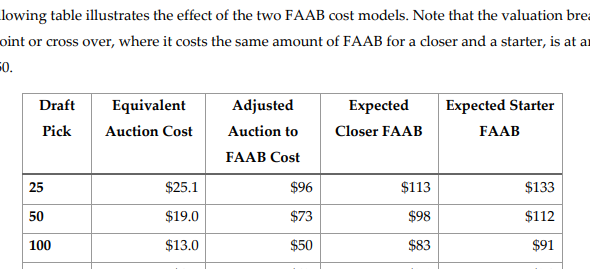
• A comparison to see if it’s more efficient to buy closers versus starters in the draft or wait for free agency for each one.

Read the rest of this entry »