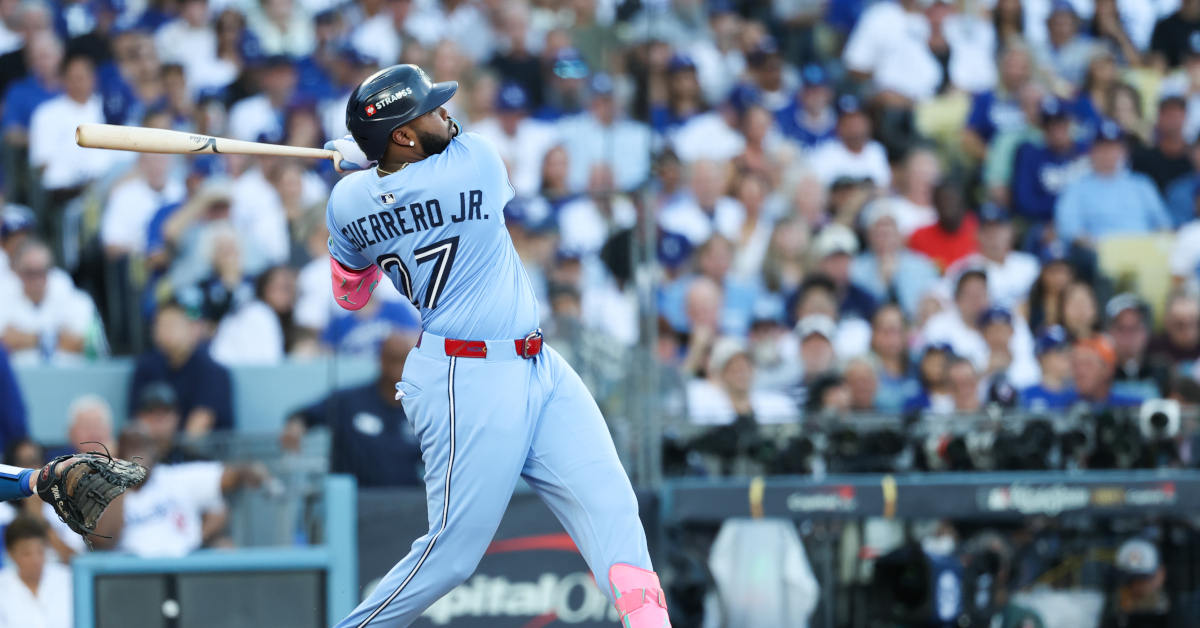
Since 2021, Vladimir Guerrero Jr. has been one of the best hitters in the league. As we enter June, he has just three home runs and his worst power numbers for several years. At this pace, he will finish with nine homers — the same as he managed in the shortened 60-game season in 2020. His top-20 average ADP has resulted in returns that barely put him in the top 20 at first base, and that poses the question: Can this regression be explained?
This season’s first base crop is an interesting one. The top name is far and away the best choice by projected value, followed by a significant gap to the next tier, where the rest of the names gradually decline in value as you would expect. A massive breakout that will go down as one of the best offensive performances by a rookie ever has made the second tier a touch more exciting after we’re typically forced to choose between established veterans. We then see the standard slide down the rankings for a number of aging veterans, while decent fantasy seasons from a slew of youngsters have pushed them up the rankings compared to last year’s final pre-season marks. Finally, there’s still room for speculation here — a number of former top prospects, plus injury returnees, could yield significant profits, assuming of course your leaguemates don’t also feel the same way and bid up their prices.
Today’s Discussion
The final rankings have landed! I moved up Spencer Torkelson and Munetaka Murakami, not for anything they have done in spring training, but to align better with reality. I was definitely too cautious about their potentially low batting averages, which many of the names on this list are at risk for as well. I do like that Murakami figures to hit cleanup, even if that includes hitting two spots behind Colson Montgomery and his projected sub-.300 OBP.
12/23/2025 – Josh Bell up, Munetaka Murakami added, Lenyn Sosa removed, Willson Contreras up
12/16/2025 – First Release
Ranking Methodology
ADP is based on 30-day rolling NFBC Online Championship Leagues.
$ Values are based on standard 5×5 12-team league using the FanGraphs Depth Charts and these Auction Calculator settings. They default to a player’s most valuable position, so if the first base list includes a catcher, it will show that player’s value at catcher.
ADP and $ Values are updated as of the last update date on this post.
5-game eligibility was used for these lists to cast the widest net.
Just when you thought Vladimir Guerrero Jr. was officially entering his prime years, he takes a step back, suffering a .032 point wOBA slide. A decline in power fueled the decline, as both his ISO and HR/FB rate hit their lowest marks since his 2019 debut. The rest of his skill set remained stable and strong, though I would still love to see a higher FB%, along with a higher rate of his fly balls being pulled. That said, even without such improvements, you have to think his power rebounds and he’ll be closer to 30 homers than 20 homers this upcoming season. He remains the clear-cut top first baseman in my eyes.
I can’t yet picture Pete Alonso donning a uniform other than the Mets, but the park switch might be a slight positive for his BABIP and bigger positive for his HR/FB rate. He’s been remarkably consistent throughout his career, with the only real fluctuations coming from a BABIP that plunged to just .205 in 2023, and then spiked to .305 in 2025. His HardHit% and Barrel% both spiked to new highs in 2025, but he failed to translate those gains into a higher HR/FB rate thanks to a career worst flyball Pull%. There’s little reason to expect anything different than what he’s done recently, but 126 RBI is not happening again.
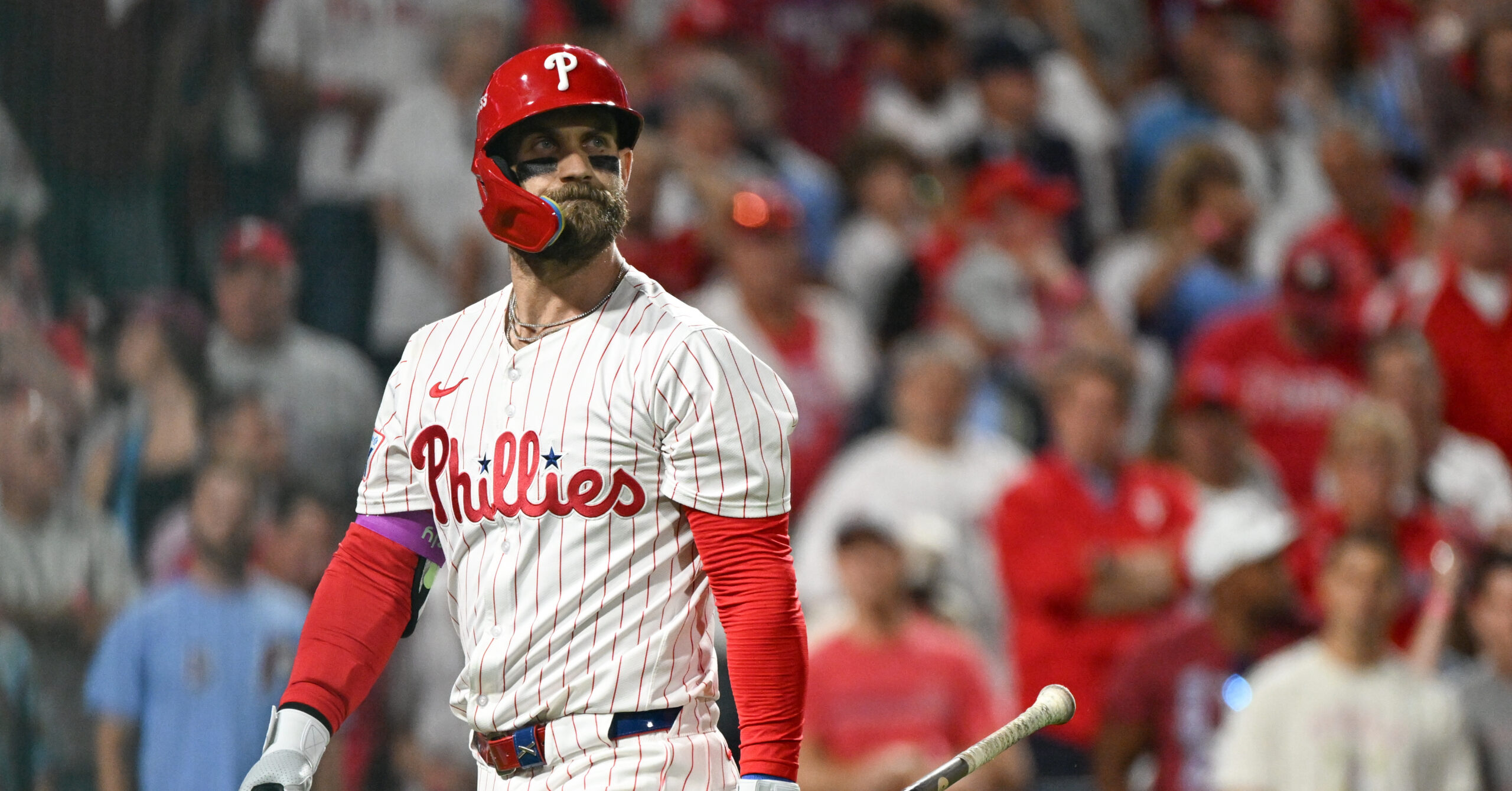
Bryce Harper has continued to maintain a remarkably stable skill set, with the only blemish last season coming from a decline in BABIP. That mark dropped to its lowest over a full season since 2018. It was likely driven by a drop in LD%, his lowest over a full season since 2016. Everything here looks pretty good, except for a maxEV that is slowly falling. As usual, it all comes down to health.
My, oh my, Nick Kurtz made his MLB debut on April 23 after just 151 minor league Pas and did this?! He recorded the 29th best wOBA by a rookie with at least 450 PAs going all the way back to 1871 (1,131 qualifiers). However, red flags include a strikeout rate just over 30% and a .371 xwOBA that was meaningfully lower than his actual .419 mark. Then again, he’ll certainly accumulate at least 100 more PAs if healthy. Regression is almost surely a lock, but how much is the question.
Aside from a jump in BABIP that reached a career high, this was almost a carbon copy of Matt Olson‘s 2024 performance. Of course, these last two seasons have been a far cry from his incredible 2023, which is looking more and more like a career year that he will never come close to approaching again. The skills remain quite strong, though, with the only red flag coming from a career worst flyball Pull%. If he could drive that back toward his career mark, he’ll have a chance to return to the 20% HR/FB rate plateau and flirt with 40 home runs.
Freddie Freeman‘s highest strikeout rate since 2016 didn’t affect his performance, thanks to a BABIP rebound after posting his second lowest mark in 2024. That increased strikeout rate was driven by a spike in SwStk%, which combined with his lowest xwOBA since tracking began in 2015, are causes for concern as he enters his age 36 season. The power still looks good, though, but his days as a lock for a .300 batting average might be over.
Stat Buffet
Power with either speed or AVG, which door do you choose?
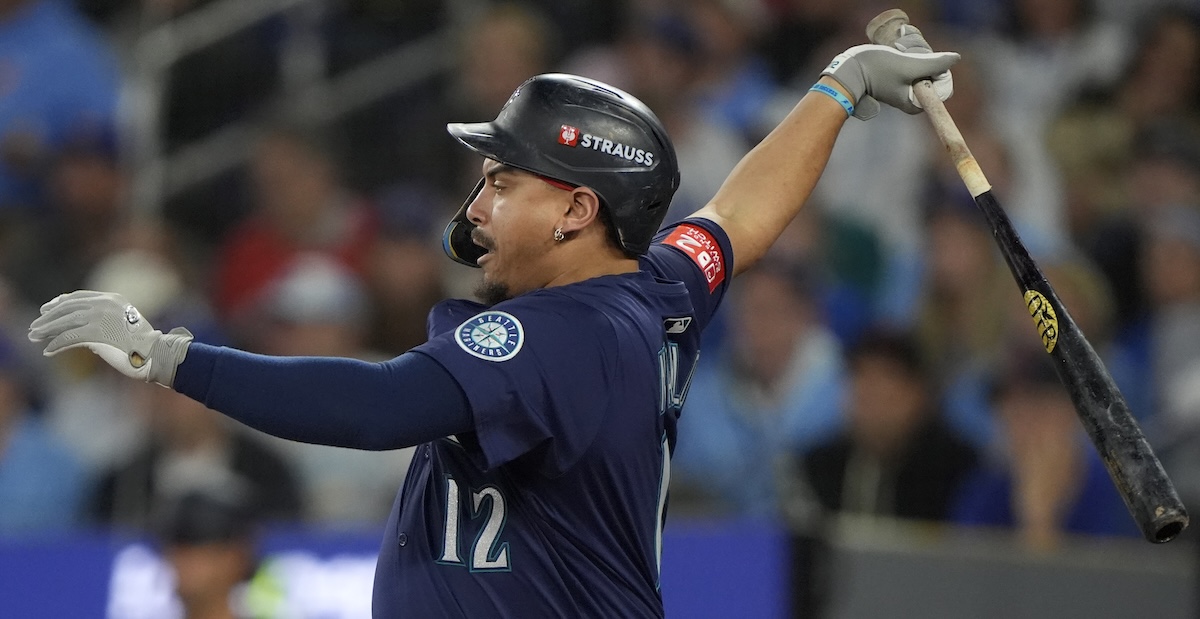
Unsurprisingly, Josh Naylor‘s power dipped right back down to historical levels after career best output in 2024. He’ll now play a full season calling the league’s worst park for left-handed offense home, though he did post a .431 wOBA at T-Mobile Park after his arrival. Of course, the elephant in the room is the 30 steals, five more than he had totaled in his entire career previously. He succeeded on about 94% of his attempts (and 100% with the Mariners), so does he keep running? If he does slow down, how much regression should we expect? These are the questions that keep me up at night.
The move to the Yankees and one of the best home run parks in baseball for left-handers didn’t exactly ignite a return to Cody Bellinger‘s peak power years. He did, however, enjoy a strong fantasy season and his delicious combination of a low strikeout rate and high FB% fueled his third highest home run total. I don’t quite see all the stars aligning again, but I still feel like there’s ample upside to his league average HR/FB rate.
Rafael Devers enjoyed yet another strong performance, despite his highest strikeout rate over a full season. Unfortunately, he’ll now be calling home for a full season one of the league’s worst parks for left-handed batters. Devers’ historical BABIP, HR/FB, and wOBA splits followed the Fenway Park factors, so Oracle Park could hamper his BABIP and reduce his HR/FB rate even further. He does get a nice boost in OBP leagues, though, depending on how real that walk rate spike was.
Pulling his fly balls has never been Yandy Díaz’s thing, but he managed to record a career high HR/FB rate despite posting a career low flyball Pull%. With his extreme groundball tendency, his home run total will continue to be difficult to predict, making him an annual risk to deliver just an empty batting average.
I have salivated over Vinnie Pasquantino‘s skill set for a while now and the fantasy breakout came in 2025. He seemingly pumped up the power at the expense of his strikeout rate, and his Statcast metrics suggest there’s still additional power upside left. Sadly, he calls the worst park for left-handed dingers home, which definitely caps his output, but that doesn’t mean there aren’t still brighter days ahead. The lack of steals and low BABIP hurt, but perhaps he’ll luck into a .300+ latter mark and surprise us with a .300 batting average.
Tyler Soderstrom‘s performance was a near mirror image of his 2024 partial season, with the exception coming from a significantly higher BABIP. The power is certainly real, but his home run output was capped by a low FB%. He also should really be pulling a higher rate of his flyballs. With multiple paths to a higher long ball total, 30 dingers are easily within reach, but I wouldn’t bank on a positive contribution from his batting average again.
Playing his way into a regular, rotating between first base, DH, and catcher, Ben Rice enjoyed a true breakout year. With excellent contact ability for a power hitter, a flyball tendency, and elite Statcast metrics, there might even be serious upside from here. Heck, he actually underperformed his xwOBA by .038 points! The risk of falling into a strong side platoon role will remain, as he has posted just an 88 wRC+ against left-handers over his short career, but a higher 104 mark in 2025. Oh, and since he still qualifies at catcher, you’re probably starting him there the vast majority of the time.
Nope, I definitely did not foresee 30+ home runs for Michael Busch in what was a strong side platoon role. Impressively, he enjoyed a massive Barrel% surge, ranking 11th in the metric among qualified batters, while also increasing his flyball Pull%. There were improvements across the board here, so the performance looks supported. However, can he maintain such improvements? I would guess he holds onto a portion of his gains and finishes somewhere between 2024 and 2025, but slightly closer to his 2025 results.
Another first base eligible catcher who you’re likely to slot into the weaker position slot, Salvador Perez hit the second most home runs of his career…at age 35. This guy just doesn’t slow down! The skills here all look quite stable, and the only blemish was a BABIP plunge, which appears to be a fluke. He’ll probably suffer some age-related decline at some point, or get hurt and miss a chunk of time, but there’s nothing suggesting any of that is imminent.
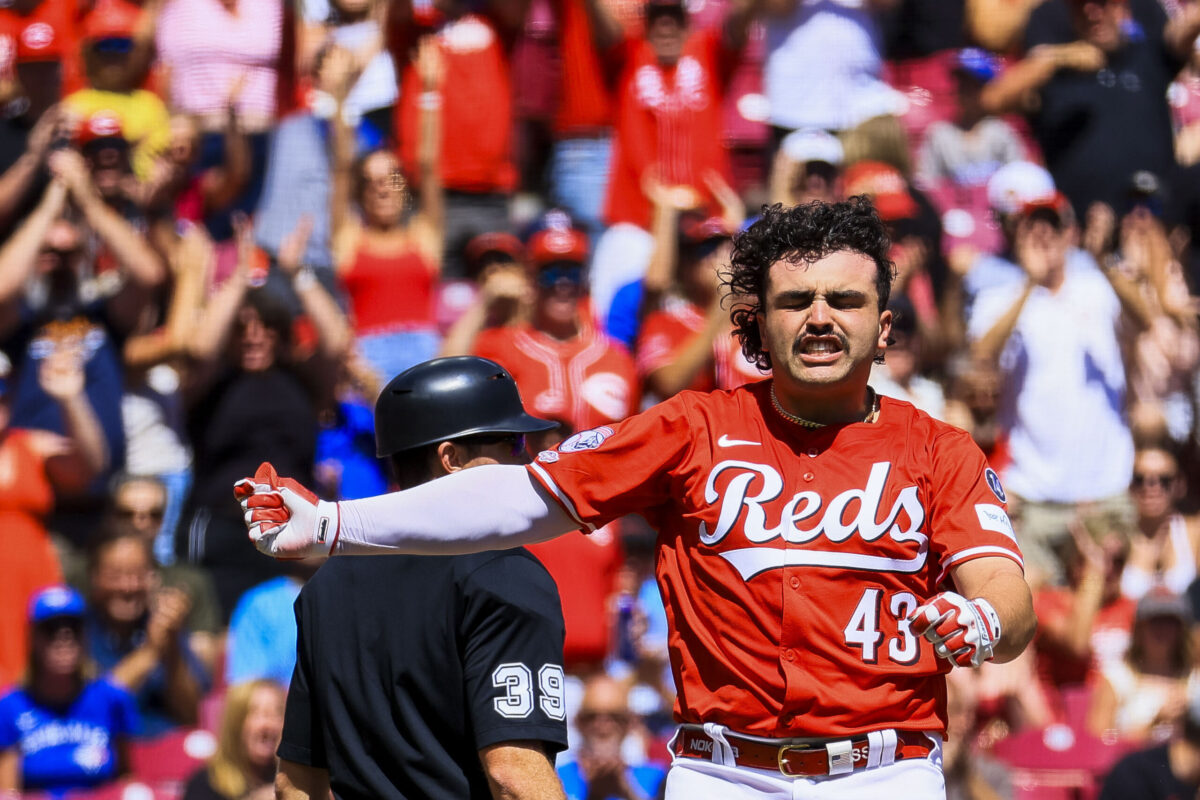
For a guy slapped with such underwhelming Hit and Game/Raw Power scouting grades, Sal Stewart has been awfully impressive offensively in the minors. He enjoyed a massive power spike over a small Triple-A sample after his promotion, and that carried over during his cup of coffee with the Reds. He doesn’t strike out often, walks enough, has recorded excellent Statcast metrics, and even swiped 17 bases in 20 tries. Without a clear position, his playing time isn’t as secure as you’d like. However, Gavin Lux’s departure gives him a clear shot at regular DH PAs, and I love the upside here. Update: Now Eugenio Suarez’s signing clouds his PT outlook once again.
Jake Burger‘s first season with the Rangers didn’t exactly go as planned, as he disappointed with the bat, leading to a short minor league demotion, and missed time to injury. His HR/FB rate collapsed, despite stable Statcast power metrics, thanks to a near halving of his flyball Pull%, which is truly bizarre to observe. Assuming that mark rebounds, his power should return, making him a strong rebound candidate.
One of the most anticipated debuts of 2025, Jac Caglianone ended up as a bust over a small sample size thanks to just a .239 wOBA and over a month missed due to a strained hamstring. He rose quickly through the minors after being drafted sixth overall in 2024, posting an absurd .446 wOBA in the minors in 2025, including an even crazier .478 mark at Triple-A. The good news here is that the underlying skills in the Majors were actually pretty good and he underperformed his xwOBA by a ridiculous .079 points. Calling the worst park for left-handed dingers home ain’t great, but he should rebound dramatically during his sophomore campaign.
Injury cut into what was shaping up to be a really strong season for Jonathan Aranda. Unfortunately, essentially all of the impressive performance could be chalked up to a .409 BABIP, which easily led baseball among hitters with at least 400 PAs. Though he does have a history of high BABIP marks in the minors, the chances of another .400+ mark, particularly over a full season, are almost nil. On the bright side, his Statcast metrics suggest power upside, especially if his flyball Pull% rises toward league average.
After taking a season off, the former top prospect version of Spencer Torkelson returned! His results were almost identical to his 2023 season, which begs the question of what actually happened in 2024. His old scouting grades and current Statcast power metrics do suggest there should be some additional HR/FB rate upside here. That could be a boon for his home run total given his extreme FB%. Sadly, the batting average is unlikely to ever be a positive given consistently low BABIP marks thanks to those flyball ways.
A whopping 14 home runs over the final two months of the season saved Christian Walker from disappointing in that department. His Statcast power metrics do appear stable, so there should be no worries about the distribution of his home runs in 2025. What is concerning is a SwStk% that skyrocketed, driving a spike in strikeout rate, both to career worsts. Heading into his age 35 season, a rebound might not be in the cards, meaning a reduction in counting stats and another weak batting average.
Alec Burleson‘s skill set reminds me a lot of Pasquantino’s, but the former clearly owns inferior raw power. Still, there’s probably a bit of power upside here, but he’ll need to reverse his flyball Pull% that has been trending in the wrong direction and sits well above league average.
Profit Potential or Free Agent By May
The names you settle for after missing out on better.
The catcher eligibility is officially gone after Willson Contreras served as the Cardinals’ regular first baseman. Predictably, he recorded a career high PAs, which also led to career bests in both runs scored and RBI, though notably not home runs. That’s because his HR/FB rate slid to the second lowest of his career, despite strong and stable Statcast power metrics. Heck, his flyball Pull% even jumped to a career best! So the HR/FB rate decline seems like a clear fluke, which means we could see him make a run at exceeding his current career high of 24 homers. The trade to the Red Sox should be a positive for his HR/FB rate as he struggled at Busch Stadium and Fenway Park’s right-handed HR park factor is a bit less pitcher friendly.
Arriving from Japan’s Nippon Professional Baseball, Kazuma Okamoto joins the Blue Jays, which means he’ll call home a park that has inflated right-handed home runs and suppressed strikeouts. While Okamoto’s HR/FB rate has been good, his home run potential is increased thanks to an extreme penchant for flyballs, along with improved strikeout rate and SwStk% marks. He owns no speed, so the hope here is that he’ll maintain that flyball tilt and the home run total will be more than enough to offset historically mediocre BABIP marks that could hamper his batting average.
Munetaka Murakami is a Chicago White Sock! That’s a sentence I did not expect to type. The upside is obvious — with 70/70 Game Power, 80/80 Raw Power, and ISO marks of .392 and .390 in 2022 and 2025, the power is immense. The downside, though, is he fails to make enough contact to actually take advantage of those power skills. His SwStk% has risen for four straight seasons, while his Z-Contact% is bad, very bad. He does walk a lot, which could make him a far better risk in OBP formats. Outside of such leagues, and in the format these rankings are based on, he’s the epitome of a lottery ticket.
Luis Arraez‘s first sub-.300 batting average since 2021 is a reminder how risky BABIP-reliant hitters are, as that BABIP fell below .300 for the first time in his career. With limited power and marginal stolen prowess, he loses much of his luster if he isn’t contributing major value in batting average. Luckily, he’s one of the few names who would call a move to pitcher friendly Oracle Park a positive, as the park has been one of the best for left-handed singles and non-home run hits over the past three seasons.
Gosh, Nolan Schanuel‘s skill set is so intriguing with a double digit walk rate, few swings and misses leading to a low strikeout rate, and an excellent batted ball type profile. And yet, the production simply hasn’t been there, thanks to a below average BABIP and underwhelming power. One has to wonder if the power will ever manifest, as his Statcast metrics have been poor, including ranking just 216th out of 226 in average bat speed in 2025.
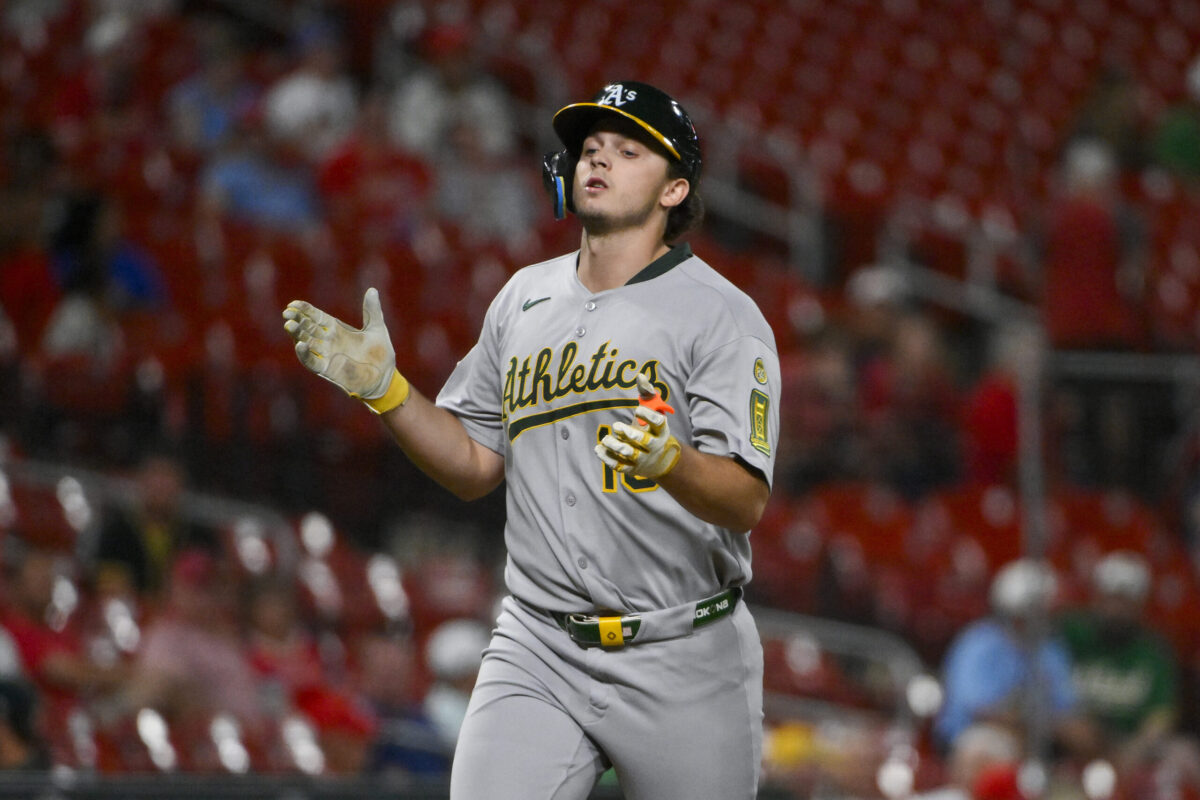
The consistency continues for Alec Bohm, which is both appreciated and disappointing at the same time. We keep waiting for a major power spike, but his Barrel% has been stuck in the 5.7%-6.8% range, which has kept his HR/FB rate pretty stable. Perhaps that surge will finally occur at age 29? If not, at least he remains a positive batting average contributor.
Kyle Manzardo somehow managed to score just 47 runs, while hitting 27 home runs. That fun fact either says a lot about his surrounding lineup’s inability to knock him in, his exteme lack of speed (he ranked just 529th out of 579 in Sprint Speed), or a combination of both. Other than that disappointing total, he pretty much performed as expected. Keep in mind that with a career 79 wRC+ against left-handers, he’s likely to end up on the strong side of a platoon, hampering his counting stats.
All Andrew Vaughn needed was to get out of Chicago, eh?! He posted a .373 wOBA with the Brewers after a .230 mark with the White Sox, and nothing higher than a .327 mark over a full season previously. His walk rate surged, strikeout rate dramatically improved, and his BABIP skyrocketed. His power, though, didn’t get a boost like his other skills and results, as he largely posted the same Statcast metrics. His new home park is far better for right-handed home runs and those Statcast metrics typically match with a significantly higher HR/FB rate than he’s posted, so there’s hope for better results.
Josh Bell joins his sixth team since 2022, becoming the Twins’ new regular first baseman. He’s coming off his third highest xwOBA, thanks to a career best strikeout rate, while a career high FB% is a good sign for his home run potential, if repeated, of course. He also posted the second highest HardHit% and Barrel% of his career, but those surges didn’t impact his HR/FB rate much. We still haven’t seen the peak power he last showed back in 2021, but even at age 33, it appears his power skills remain intact.
Ernie Clement makes fantastic contact…and that’s about it. He has oddly been a fly ball hitter the last two seasons despite owning limited power and that has hampered his BABIP. He could be of more use in batting average if he optimized his batted ball type profile, so we’ll see if that ever happens. For now, he looks like a light contributor across the board, but with risk of losing playing time and becoming merely a super utility guy.
After disappointing offensively in previous chances, former top prospect Miguel Vargas finally completed a full season in the Majors and hit respectably. His batted ball type profile is fascinating, as he has been an extreme flyball hitter, despite posting only mid-single digit HR/FB rates. However, his Statcast power metrics suggest much higher marks, so there’s seemingly some additional home run upside. It’s too bad all those flies have crushed his BABIP and batting average.
It’s been two seasons so far for former top prospect Colt Keith and he has yet to deliver much fantasy value. His Statcast power metrics did surge in 2025,, but his HR/FB rate only increased marginally. Without much speed, he’ll need to recapture the power he showed back in the minors. Don’t forget he’s entering just his age 24 season, so he’s got plenty of time for the power to reappear.
Ryan O’Hearn joins the Pirates and figures to serve as the team’s starting DH. Since he first broke out with the Orioles in 2023, he hasn’t shown much of an opposing handedness split, which eliminates the risk he’ll fall into a short-side platoon role. He’s shown some solid all-around skills in recent seasons, but simply doesn’t possess the power necessary to be an impact fantasy corner guy, as his Barrel% has hovered around league average most of his career. The move to Pittsburgh’s PNC Park won’t help any in that department, as it has been one of the toughest parks for left-handed home runs.
Nolan Gorman heads into the season as the regular third baseman with no risk of being platooned given identical career wOBA marks against each pitcher handedness. His power cratered last year, but his extreme FB% should magnify any sort of rebound there. Unfortunately, all those strikeouts really cap his counting stat upside and have crushed his batting average.
Finally, the lineup around Spencer Horwitz looks much better, which should benefit his PAs and counting stats. He has shown pretty good plate discipline over his two seasons, with double digit walk rates and high teen strikeout rates. That, combined with an above average BABIP, have resulted in positive batting average contributions. However, he owns limited power, and his Statcast metrics don’t hint at a spike anytime soon. With no speed, you’re just closing your eyes and hoping he suddenly discovers a power strike at age 28.
Gavin Sheets enjoyed his first season with the Padres, as he posted his highest BABIP and HR/FB rate. All of his Statcast power metrics spiked and actually suggest higher than the low double digit HR/FB rate he recorded. With decent other skills across the board, he should at least be as good as he was in 2025. However, his history shouldn’t be totally ignored, which makes him a risk if you’re counting on him to remain a starter all season.
A career best walk rate led to Jake Cronenworth’s highest wOBA since his first full season in 2021, but it failed to deliver positive fantasy value. With little speed, middling power, and a weak batting average, he’s a classic accumulator whose value is strictly tied to his everyday role.
Is this the year that Jared Triolo reaches 500 PAs? His strikeout rate has dramatically improved the last two seasons, he’s got a touch of pop, and speed. A full season could net double digits in both home runs and steals. But with a career .298 wOBA and projections for not much more, he’ll need his above average defense to be enough to give his middling bat in the lineup.
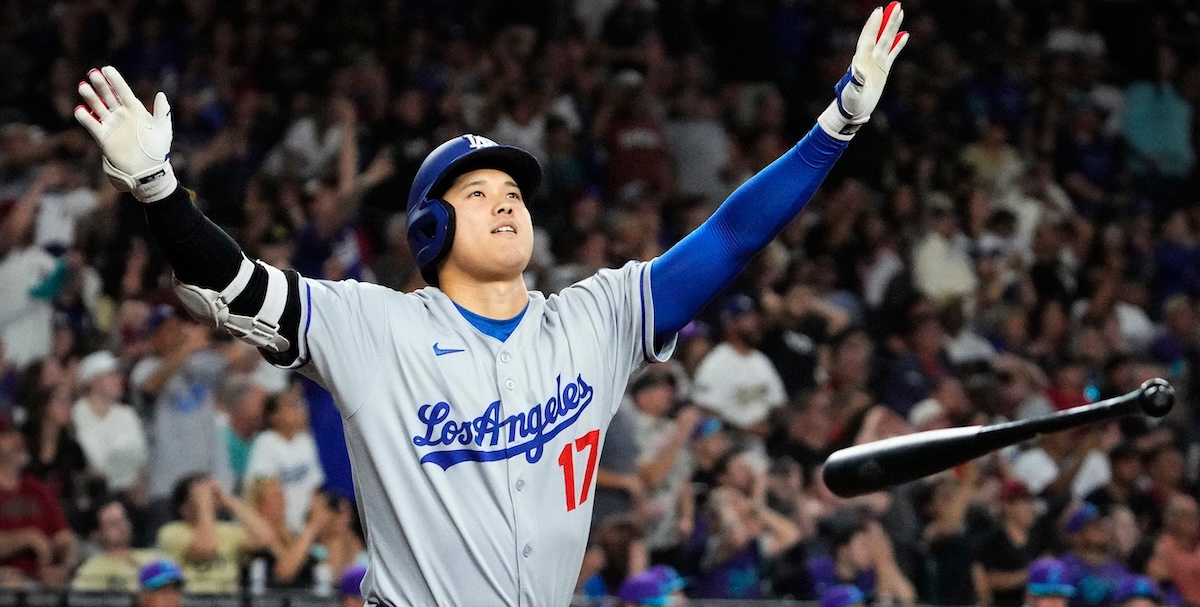
This one always leads to a bunch of questions, since I typically drop util-only players into the 1B/Util list and those guys fall into three camps. There are the true util-only types. There are guys who we expect to earn eligibility elsewhere sometime soon. And then there is the camp of one: Shohei Ohtani.
The Ottoneu rankings push continues with a look at the final position player group: first basemen. You can find all the information about the format and methodology for these rankings in Chad’s introduction.
Changelog
2/17/2026: Updated projections w/ ZiPS and OOPSY. Added player notes for all players in tier $1-$2 and above. Updated tier placement for seven players (green = moved up, red = moved down).
3/18/2026: Updated tier placement for 11 players based on 2026 draft results.
Jake Mailhot’s Ottoneu Tiered Rankings for Points Leagues: C | 1B | MI | 3B | OF | SP | RP
Chad Young’s Ottoneu Tiered Rankings for Points Leagues: C | 1B | MI | 3B |OF | SP | RP
Chad Young’s Ottoneu Tiered Rankings for 4×4: C | 1B | MI | 3B | OF | SP | RP
Here are few more notes about my process:
Projected points. I’ve been building my own homebrewed projections for the past decade plus, ever since I started playing Ottoneu, and they form the basis for the rankings below. They’re nothing overly complicated; essentially just a MARCEL-esque projection using three years of historical data filtered through a rough aging curve and adjusted for the current run environment. I also include a collection of up to five public projection systems (ZiPS, Steamer, OOPSY, THE BAT, and PECOTA) to provide some additional context. That gives each player a wealth of data sources to form their projection. Currently, the projections below only include Steamer and THE BAT projections. I will update the rankings in February once ZiPS, OOPSY, and PECOTA are released.
P/G vs P/PA. Points per game played is the gold standard by which you should be evaluating players in Ottoneu. I won’t argue with that. That measure does have some drawbacks, particularly for players who pinch hit, pinch run, or are used as defensive substitutions often. Those limited appearances can skew a player’s P/G lower than what they’re producing when they’re getting three or four plate appearances when they start a game. To provide a little more context for these kinds of players, I’m projecting players using points per plate appearance. That measure should give us a better idea of how a player produces no matter how he’s used by his team.
Just to reiterate a point that Chad makes in his introduction: yes, these rankings are presented ordinally, but the tier a player appears in is much more important than if they’re ranked 16th or 28th. Within tiers, players are generally ranked by their projected Pts/PA but that doesn’t necessarily mean I think one player is significantly more valuable than another in the same tier. I’ve got notes on the top 30-ish players below and I’ll add more notes when I update the rankings next month. I’m also including Util-only players in this list since there’s no good home for them elsewhere. Let’s get into it.
This ranking only reflects what he does as a hitter. Tack on the $25-$30 in value he provides as a pitcher and a $100 salary for Ohtani isn’t out of the question.
Power output has waxed and waned throughout his career, but the contact quality has always stayed elite. Even in a down power season, he was the 5th most valuable 1B in 2025.
Absolutely smashed the ball during his ROY award-winning campaign. Projects as the top 1B, though there’s still some risk the league will adjust to him.
Really took advantage of Steinbrenner Field in 2025 (.389 wOBA at home); return to Tropicana Field could hurt a bit. Fantastic plate approach gives him a high floor.
Up-and-down year in 2025 but took small steps forward. Increased walk rate and slightly improved contact quality. Platoon split “only” 50 points of wOBA.
As we hit the beginning of draft season, it is important to monitor where players are being drafted on a regular basis. Throughout draft season, I will be doing that work for you with regular updates on the Average Draft Position on NFBC up until Opening Day.You can read all the Market Reports here.
We are winding down towards the end of this series and we have landed on (in my opinion) one of the least interesting of these “follow up” articles. The cross-format comparisons are most interesting at positions where variations in player values are the greatest. Shortstop or outfield, for example, are full of guys who run, guys who mash, guys who do a bit of both. There are players at a lot of positions who stay on the field thanks to their defense, creating an opportunity for volume-based value that their bat doesn’t carry alone. But at first base and util? Not so much.
As we hit the beginning of draft season, it is important to monitor where players are being drafted on a regular basis. Throughout draft season, I will be doing that work for you with regular updates on the Average Draft Position on NFBC up until Opening Day.You can read all the Market Reports here.
The Ottoneu keeper deadline is quickly approaching. There’s about a month and a half left to make your roster decisions before the January 31 cut deadline. Over the next few weeks, I’ll be going through a handful of difficult keep or cut decisions at every position group. I’ll start with the four infield positions this week and move on to the outfield and pitchers next week.
While Bryce Harper probably isn’t going to hit like he’s one of the top 5 batters in baseball again, he’s still extremely productive as he enters his age-33 season in 2026. A wrist injury in June cost him about a month of the ‘25 season and he’s averaged a little under 130 games played per season over the last five years. While he might not be an iron man, he’s been productive while he’s on the field, putting up a 146 wRC+ during that same five year period. His batted ball peripherals all looked in line with his career norms; his 47.5% hard hit rate and 12.3% barrel rate both look good and his .368 xwOBA was right in line with his actual results on the field.
While his strikeout and walk rates look good on the surface, there are a few yellow flags in his underlying plate discipline stats. His chase rate has significantly jumped over the last few years and it was up to 36.0% in 2025, the second highest mark of his career. He’s being forced to hunt for pitches out of the zone because pitchers simply refuse to give him anything to hit. Since winning his MVP award in 2021, he’s seen the fewest pitches in the strike zone of any batter in baseball by a pretty wide margin. This year, his zone rate was just 42.9%, the lowest in the majors and three points lower than the guy right ahead of him.
Steamer is predicting a bit of a bounce back season for Harper in 2026, though it’s mostly fueled by a jump in BABIP. He’s at the age where power starts waning a bit and the projections see him essentially holding his power numbers steady next year. I guess that’s what worries me. Harper has already slipped a bit from his peak and he’s not getting any younger (no matter how many weird blood procedures he wants to try). If you’re paying a premium in the hopes that he’ll get back to his MVP caliber seasons, you’re likely going to be disappointed.
Keep or cut?
I think Harper’s current average salary of $45 is reasonable for the projected production you’re hoping to get from him in 2026. Like with any aging slugger, there’s some risk involved in paying that much for the downslope of a career. I’m keeping at $42 and I’m shopping my $49 Harper, hoping to pass the buck for that decision to someone else.
Now that Willson Contreras finally lost his catcher eligibility, he’s lost a ton of his fantasy value. A catcher who can put up 5.2 P/G is quite useful — just six other catchers surpassed that mark in 2025 — but a 5.2 P/G first baseman is quite another matter. Fifteen other first basemen surpassed that mark this year and eighteen are projected to be better than that in 2026. Instead of being a top tier option at catcher, Contreras is now a third or fourth tier option at first base.
To be fair, his batted ball peripherals all looked good during his first full season out from behind the plate. The biggest reason why his overall value took a hit in 2025 was because his walk rate dropped nearly five points, down to 7.8%. There was nothing amiss in his underlying plate discipline metrics; his chase rate, contact rate, and swing rates all looked normal. The biggest difference, then, was a higher rate of pitches seen in the zone — the highest zone rate of his career — and a corresponding increase in called strikes seen.
Steamer sees a bounce back in walk rate next year, but his BABIP takes a hit, leading to an overall projection a little worse than what he accomplished in 2025. I don’t have any qualms with the projection — it seems like it’s pretty reasonable — so my issue is with his positional eligibility. Right now, I’ve got him ranked in the same tier as Kyle Manzardo, Spencer Torkelson, and Christian Walker. Each of those players is useful in their own way, but I wouldn’t be comfortable with any of them as my primary first baseman in 2026.
Keep or cut?
I’m cutting both of my shares of Contreras. Paying up to $10 for him in next year’s auction is probably reasonable, but getting up to the mid-teens seems like an overpay.
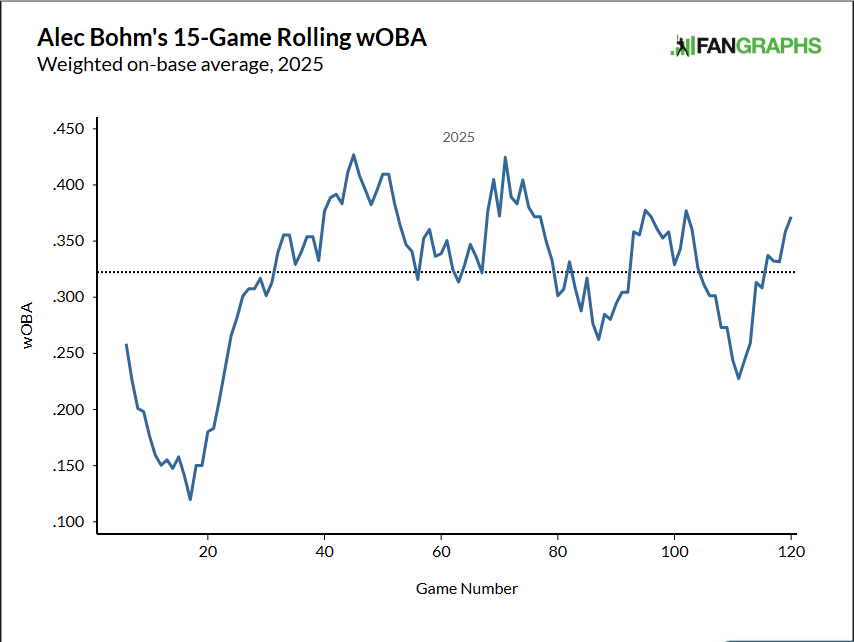
An abysmal first month of the season is bringing down Alec Bohm’s overall numbers from 2025. From May 1 through the end of the season, he posted a .308/.356/.453 slash line, good for a 124 wRC+ and 5.4 P/G.
That’s the kind of production we’ve been expecting to see from Bohm since his exciting debut back in 2020. The unfortunate thing about his excellent finish to the season is that it wasn’t really fueled by a change in any underlying batted ball metrics. He was the same hitter he’s always been, just really unlucky for the first month of the season and then a little luckier than normal over the next five months.
So which version of Bohm can we count on in 2026? Probably the same one we’ve come to know over the last few years — the same one who posted around 5.0 P/G in 2023 and ‘24. That’s a useful corner infielder, but not necessarily a high quality starting option. That’s what Steamer sees as the most likely outcome. If there’s one thing to latch onto as a source of hope, it’s that he ran the highest contact rate of his career this year. With his above average hard hit rate, putting the ball in play more often should lead to more positive results. Unfortunately, his ceiling is capped by how often he puts the ball on the ground and his correspondingly low barrel rate. Unless he can make a significant adjustment to start lofting the ball more often, his hot streak from the second half of this season will likely be the best version of Bohm we’ll see.
Keep or cut?
I’m really on the fence about Bohm. He fits better as a third baseman where the pool is a lot shallower than at first base but the roster where I have him rostered for $9 already has third base covered by José Ramírez. I’m not sure I want to keep him at $11 either, but that’s probably about what he’s going to be auctioned for if I end up cutting him. I think it’ll ultimately come down to my salary cap situation on both teams — if there’s room to roster a premium bench CI, then Bohm seems keepable. If not, he’ll end up a casualty of being good enough without a high potential ceiling to boost his value.
–
Adley Rutschman, C
Salary: $30
Average Salary: $21
2025 P/G: 3.79
Projected 2026 P/G: 5.03
I have no idea what to do with Adley Rutschman. To be fair, I don’t think the Orioles know what to do with him either. He had such a promising start to his career and then suddenly collapsed partway through the 2024 season. There was some hope that an offseason would help him get healthy for this year and he’d find a way to bounce back. That obviously didn’t happen. He suffered through two separate oblique strains, and even when he was healthy, he wasn’t producing at the plate.
The weird thing is that his underlying batted ball metrics aren’t out of whack, his plate discipline is still excellent, but he simply isn’t seeing the results that he enjoyed during his first two seasons in the big leagues. Some of that is a dramatic drop from his BABIP but it’s also a deterioration of his plate approach. His strikeout and walk rates aren’t affected, but his ability to hunt for pitches to do damage against has diminished over the last two years — his SEAGER dropped from 21.1 during his rookie campaign to 11.6 in 2025.
Steamer sees a pretty significant bounce back from Rutschman in 2026, but the projection has hedged against his ceiling based on his struggles these past two years. Like I mentioned with Contreras above, just seven catchers crossed the 5.0 P/G threshold this year. If Rutschman can get back to that level of production, he’ll be one of the best hitting catchers in baseball. There’s so much risk in paying for that projection knowing that he’s been a below average catcher for a season and a half now.
Keep or cut?
I’m obviously cutting at $30. That’s simply far too expensive for any catcher unless his name is Cal Raleigh. I’d be open to keeping Rutschman around $15, but even at that high a salary, you really need him to figure things out next year and hit his projection.
Last week, I reviewed my preseason top 40 first base rankings. There were some glaring omissions from that post for two reasons. First, there are always going to be hitters who gain eligibility at a new position that won’t be ranked there during the preseason. Second, there are usually going to be some surprise names off most radars who end up in the top 40, but failed to be ranked there. So today, let’s discuss the 12 hitters who finished among the top 40 first basemen, but were unranked.