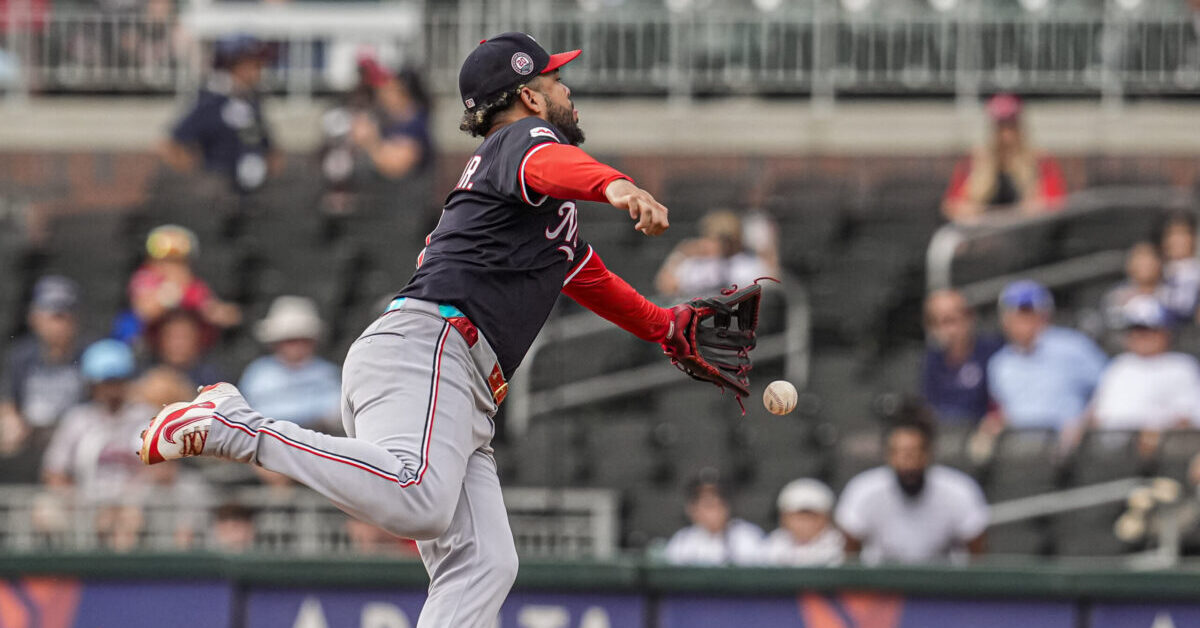
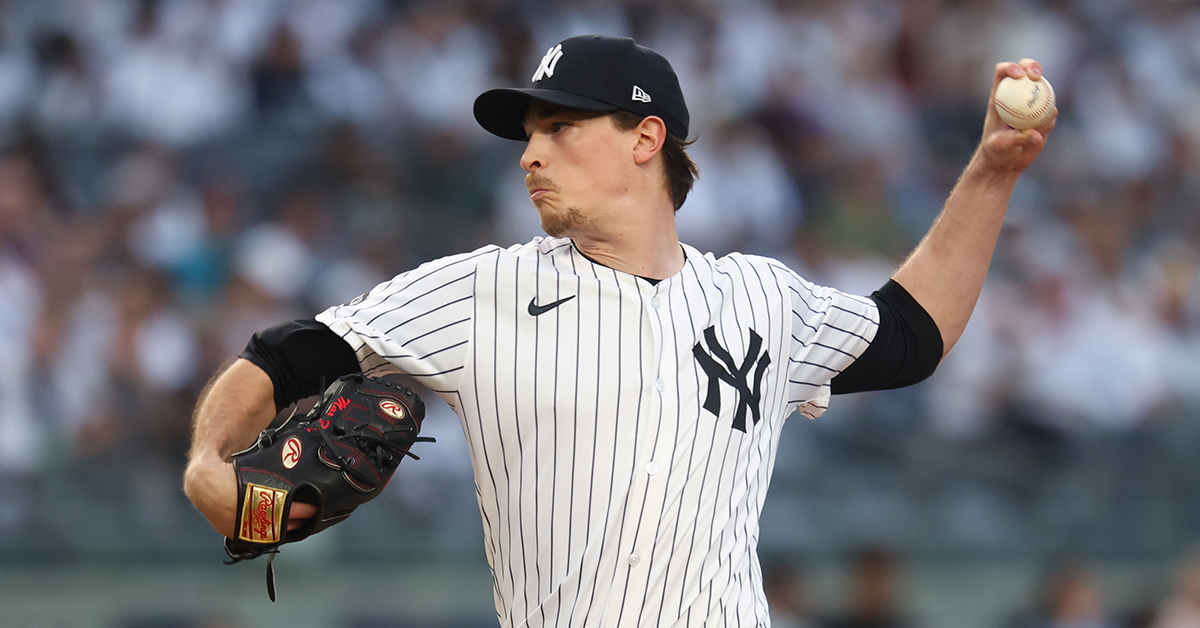
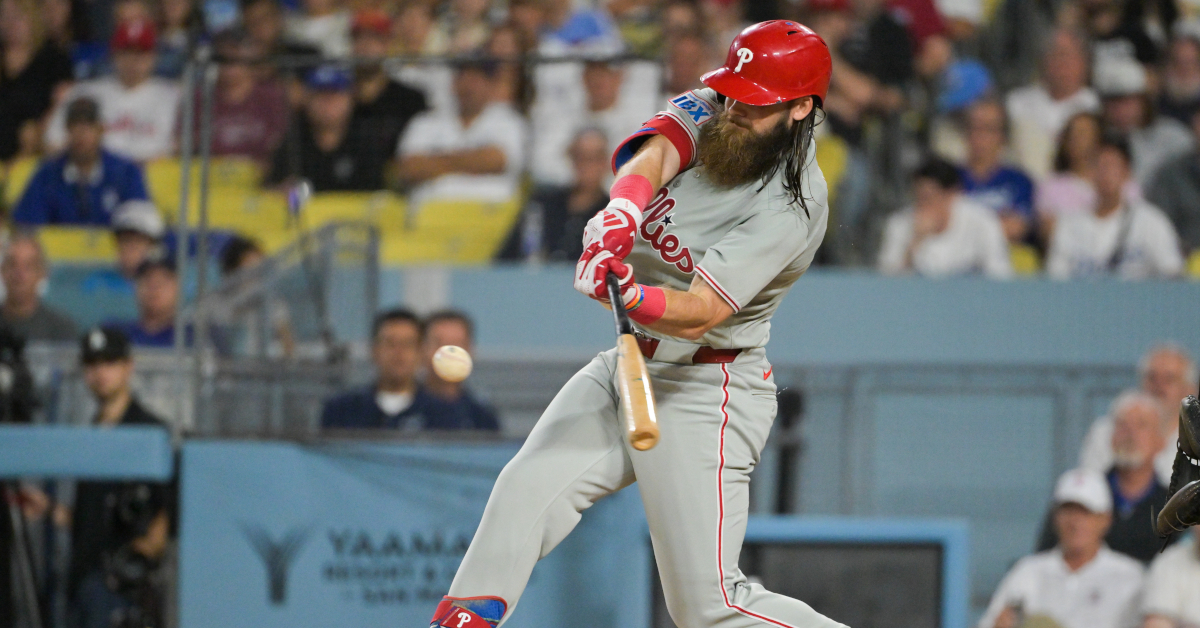
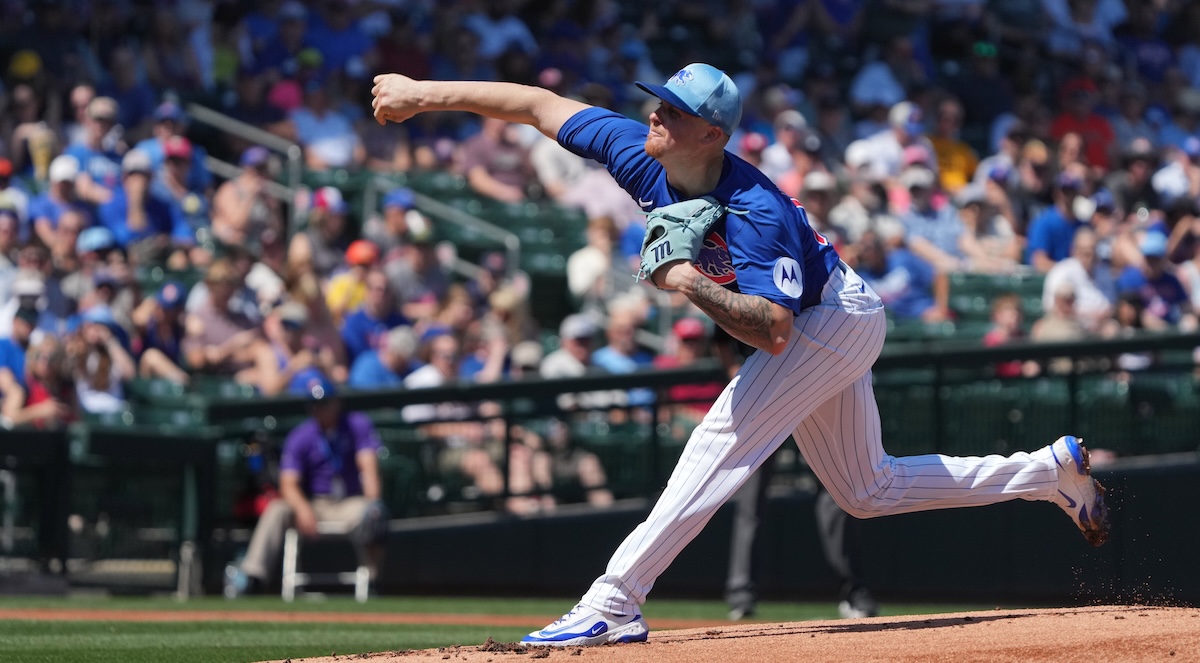
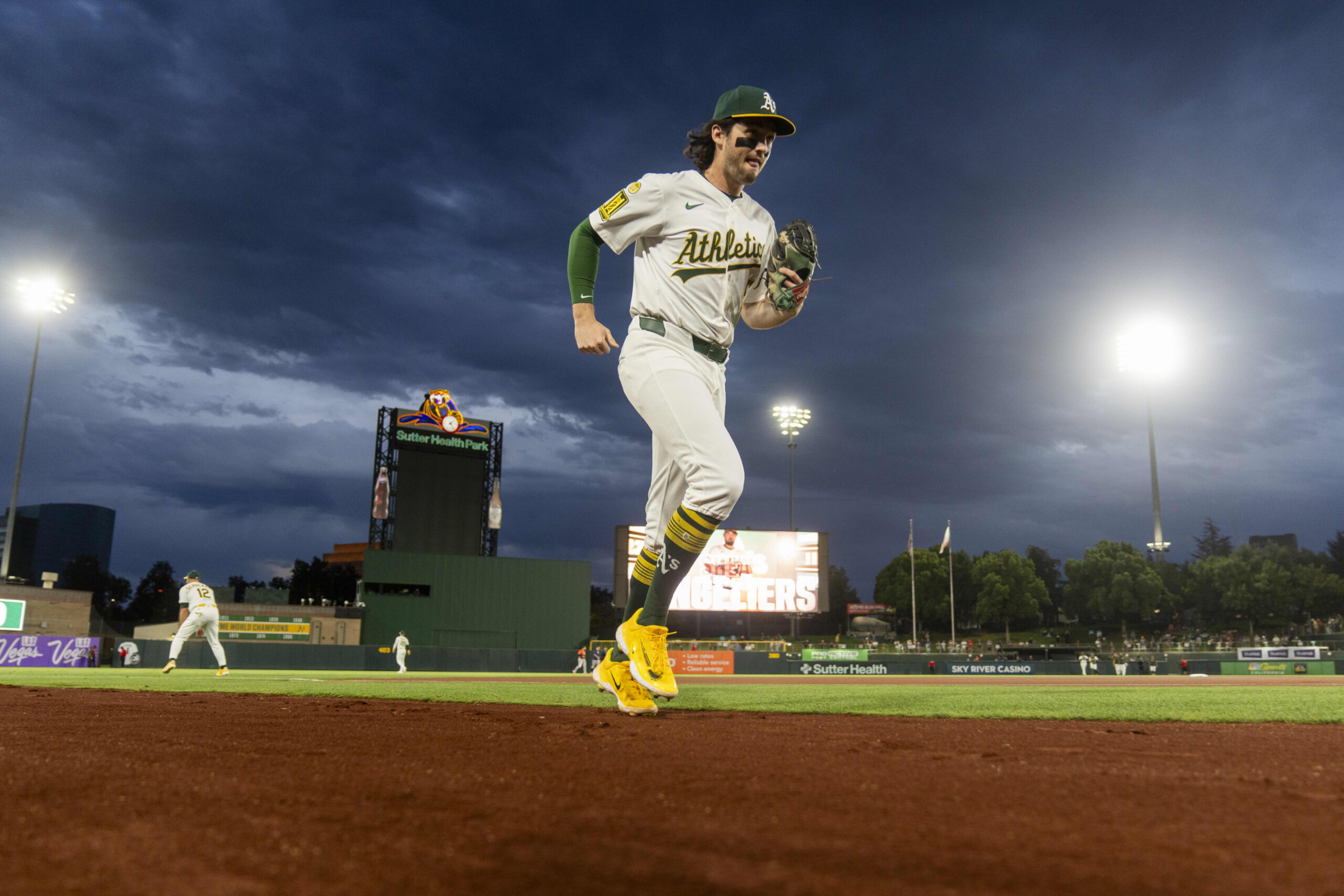
Denzel Clarke is arguably the best defender in MLB. His unprecedented stretch of elite defense propelled him up the OAA and DRS leaderboards before he exhausted prospect status. Unfortunately, a hip injury stalled Clarke’s meteoric rise to defensive stardom, and his poor offensive production made it difficult for the Athletics to grant him an everyday role. I do, however, have some faith that Clarke can improve his bat to a passable level and secure a full-time role in 2026. His whiff rates, particularly in-zone, were not as alarming as his 38.4 K% would suggest, and he has consistently shown patience throughout his MiLB career. The power-speed combination is undeniable, and if he can put more balls in play, his results should improve substantially. I am not expecting his bat to reach league-average levels, but if it becomes playable, Clarke could be in line for a potential three-win season.
3/14/2026 – Literally just wanted to update Hunter Greene before heading to Houston for the Italy-PR WBC game. More thorough update coming next week for the final push of draft season!
3/20/2026 – Finally update before draft season. I’m sorry I didn’t log every change, but I swept the entire board. I cut it back down to 170, focusing on expected rotations plus a handful of prospects and injury guys. I will answer as many questions as I can in the comments this evening, tomorrow morning, and then I’ll do another sweep Sunday morning. Good luck in the final big draft weekend!
Ranking Methodology
ADP is based on 30-day rolling NFBC Online Champions Leagues.
$ Values are based on standard 5×5 12-team league using the FanGraphs Depth Charts and these Auction Calculator settings. They default to a player’s most valuable position, so if the first base list includes a catcher, it will show that player’s value at catcher.
ADP and $ Values are updated as of the last update date on this post.
Change is the difference in rankings since the last update
5-game eligibility was used for these lists to cast the widest net.
Here is the opening look at the top 150 pitchers for the 2026 season. I’ll have plenty of updates including some tier updates/changes as I dive deeper on players and figure out better fits for them. I will eventually expand the list, too. I cut it at 150 for now just to have an endpoint, but I have something like 264 ranked. Drop a comment if you have questions on anyone, even if I haven’t written them up yet, but check back regularly for more profile additions.
Jan. 6th: First big update brings an expansion, lots of ranking changes, and tons of new profiles. Starting from this update forward, I will track the guys who change but there were just so many with this update that I didn’t end up keeping track of everything.
Jan. 21st: Smaller update here refreshes the ADP & dollar values along with some of the recent moves plus a handful of new profiles. We’re supposed to get a bad ice storm here in Austin this weekend and anyyyy measure of inclement weather can eat up our garbage electrical grid so I’m reluctant to guarantee a weekend update because of that.
Feb. 5th: If you’re coming on the morning of the 5th looking for the update promised in my chat yesterday, it’s being moved to the afternoon.
Feb. 25th: Huge update with tons of news, Spring Training starting, a few more key signings, and many added profiles!
Mar. 5th: Several new profiles added of interesting mid-to-late round targets who could pop off this year, plus a lot of rankings movement as I continue to battle test them in drafts of various formats.
Mar. 14th: Just a quick update to get Hunter Greene updated. I’m headed to Houston for Italy-Puerto Rico today so I’ll get a more thorough update out early next week for the final big draft week!
Mar. 20th: Huge overhaul. Shortened the list back down to 170, but I didn’t track all the changes and new profiles. You can definitely do a Ctrl-F search for “Mar. 20th” to get the those updates and then there’s a bunch of new profiles, too.
This weekend is the last weekend before Opening Day on March 25 which means it’s the biggest weekend for fantasy baseball drafting of the year. If you’ve got an Ottoneu auction draft coming up, you’ve probably already done the work to identify your team’s needs and the biggest targets in the draft. But what happens at the end of the draft when you’ve spent almost all of your salary cap and you’re looking for high-upside players to fill out your roster? That $1 zone is one of my favorite phases of the auction — diving for gold amidst a sea of all the leftover players. To help identify some of those late auction targets, here are 10 players — two from each position group (C, CI, MI, OF, SP) — whose current average auction price is less than $2. And if you’ve already completed your draft this year, you can treat this article as a list of interesting early waiver wire adds before the season gets underway.
“It’s been seven hours and fifteen days / since you took my drafts awayyyy”
Sinead O’Connor may not be a roto savant, but even she might agree that the best part of the fantasy baseball season is research-and-draft season. Every day, from February until Opening Day, is so incredibly thrilling – nonstop spring training news, draft rankings adjustments, and player pool deep-dives – there’s always some rabbit hole of research to go down. As we continue studying and gaining confidence in the fresh player pool and a new year’s ADP, more questions arise, and the more work there is to be done.
Whether in NFBC or best ball contests, high-volume early drafters subconsciously form bad habits in draft rooms. We get too comfortable targeting and drafting the same players over and over. Conversely, we avoid players who have burned us in previous seasons and those we have some subjective bias against. Rarely do we deep dive and reassess those players because we’ve already made up our minds. That’s why it’s crucial to explore every nook and cranny of a positional tier. We have all fallen victim to draft room paralysis, where a decision between several similarly ranked shortstops or starting pitchers becomes gut-wrenching when we’re on the clock. This preseason column aims to help with those tough calls. We will explore some of the most confusing ADP clusters, by position, beyond the simple “I need to boost my batting average, so I’m taking this guy.”
Let’s dive into these ADP pockets logically and systematically, reviewing four analytical components of the players within each cluster. Since this specific article’s topic is starting pitchers, the components have been slightly adjusted:
Health and Durability
Skills: Arsenal, Stuff, Velocity, Command, Control
Roto Ratio Expectations (ERA, WHIP)
Team Context: Defense, Bullpen, Run Support (Wins)
ADP Cluster: Round 16 Upside Starting Pitchers
These are starting pitchers drafted in Round 16 (ADP 180-192) in the NFBC Online Championship (OC) over the last four days (20 drafts).
All in this cluster were highly touted prospects who offer massive fantasy profit potential this season. Horton, McClanahan, and Baz were all real-life former first round draft picks. Bubic and Bibee were top pitching prospects in their respective organizations at one time. Would we be surprised if one or two of them ended up as a top 10 SP in 2026? This is the range Bryan Woo (SP4) was drafted from last spring.
Health and Durability
McClanahan turns 29 next month, and Bubic will be 29 this summer. Bibee just turned 27, Baz turns 27 in June, and Horton will be 25 in August. Bubic and McClanahan are both southpaws.
Kris Bubic was drafted in 2018, made 10 starts in his rookie season (2020), then averaged 130 innings per season from 2021-2022, mostly as a starter with an ERA over 5.00. He had Tommy John surgery early in the 2023 season, and returned late in 2024, missing the majority of both seasons. Previously a starter, Bubic was a dominant reliever in the final two months of 2024, then officially broke out in 2025 (2.55 ERA, 1.18 WHIP in 20 starts) before getting shut down in late July for a left rotator cuff strain. Bubic is healthy heading into the 2026 season. This spring, he has allowed just one run with three walks and 10 strikeouts over three abbreviated starts (eight innings).
Cade Horton has an extensive and serious injury history. He tore his UCL before his freshman year at the University of Oklahoma in 2021. His 2024 season was lost due to a right shoulder strain that May and he did not pitch again until the winter. Last season, he dealt with finger blisters, fractured his right rib by (cough) coughing, and was shut down before the playoffs. Horton’s 118 innings last season was his first time over 90 ever. This spring, he tossed two scoreless innings in his first appearance (February 24), served up six runs and two walks in 3.2 IP on March 9, and struck out 10 with just one run and one walk in latest start earlier this week.
Shane McClanahan last pitched in the Majors in 2023. He missed his freshman year of college recovering from TJS (2016), missed 17 days with back tightness in July of 2023, and had his second TJS in August of that same year. In his final ramp-up start of camp last March, McClanahan suffered a nerve injury in his triceps, and had surgery on it in August. His fastball velocity in Sunday’s exhibition start (94.8 mph) was down (from his previous 97), but he looked dominant, punching out seven Pirates and didn’t allow a hit in 3.2 innings.
Shane Baz has spent more time dealing with or recovering from right elbow troubles than pitching, since being drafted in 2017. He underwent arthroscopic elbow surgery in March of 2022, returned in June, and went back on the 60-day IL the following month. In late September of 2022, he underwent Tommy John surgery. Baz missed all of 2023, and returned in May of 2024. He made 10 starts in Triple-A and 14 for the Rays. Last season, he managed to stay healthy, throwing 166.1 innings over 31 starts.
Tanner Bibee has had the least amount of arm troubles of the bunch. His only IL stint in three Major League seasons was in his rookie year (2023), missing 15 days with right hip inflammation. Bibee dealt with some shoulder tightness in 2024, and has had to leave starts early with severe leg cramps a few times in the last two seasons – an issue that has plagued him since his college days. Bibee has averaged 166 innings per season over the last three, while Baz, McClanahan, and Bubic have averaged 174.1 innings combined over that same span.
If there’s a cluster we don’t need to see health grades for, it’s this one. But if you’re curious, here they are, courtesy of Jeff Zimmerman, from Eno Sarris’ article at The Athletic. McClanahan does not have a health grade listed.
Tanner Bibee – 96%
Cade Horton – 83%
Shane Baz – 74%
Kris Bubic – 72%
Skills: Arsenal, Stuff, Velocity, Command, Control
Roto Ratio Expectations (ERA, WHIP)
With much of this group missing significant time over the last few seasons, it is difficult to compare recent results. I’ll combine skills and ratio expectations into one section here. For this cluster, I’m using ATC’s projections, since it is an aggregate model. Included in the table below are the pitchers’ current ADP and their ADP from February, over 66 NFBC OC drafts.
Upside SP Cluster: NFBC ADP & ATC Projections
Name
Team
ADP (current)
ADP (February)
IP
ERA
WHIP
K%
BB%
Stuff+
Kris Bubic
Royals
188.7
202.6
137
3.75
1.24
23.2%
7.8%
96
Cade Horton
Cubs
189.2
189.1
128
3.91
1.22
20.6%
7.5%
96
Shane McClanahan
Rays
190.2
208.5
114
3.68
1.18
26%
7.4%
N/A
Shane Baz
Orioles
191.5
196.4
155
4.15
1.25
23.5%
8%
104
Tanner Bibee
Guardians
192
187.5
174
3.98
1.22
22.5%
7.1%
98
Bubic is a lefty who utilized a four-pitch mix last season (four-seam fastball, changeup, sweeper, slider), and occasionally threw a sinker. His four primary pitches were all plus offerings, though he doesn’t overpower opposing hitters (92.1 mph FB). Bubic produced a 24.4% strikeout rate and a 8.2% walk rate in his 20 starts – rates in line with his projections for 2026. He is more likely to produce a sub-4.00 ERA than a sub 1.20 WHIP. He allowed only six home runs in 116.1 innings (0.46 HR/9), a feat that would be difficult to repeat in a similar number of innings, particularly with Kansas City moving fences in.
Usually, a 1.4 differential between one’s ERA (2.67) and xFIP (4.27) in the prior season would push fantasy analysts and managers away and bucket a pitcher into the “lucky and due to regress” category. That’s not the case with Horton, who has held steadfastly with a 189 ADP since early February. His underlying metrics against lefties and righties were similar, though the one standout split was BABIP (.291 vs. LHHs, .219 vs. RHHs). He utilized his sweeper primary on righties (.171 BAA, 25.7% K), and his changeup more frequently against lefties (.115 BAA, 32.8% K). Horton averaged nearly 97 mph on his four-seam fastball. He was incredible at Wrigley Field (1.63 ERA, .251 wOBA). He generated league-average swings and misses (11% SwStr), but that mark hovered in the 14-15% range in the minors. Expect some improvement there closer to the 12-13% range in 2026.
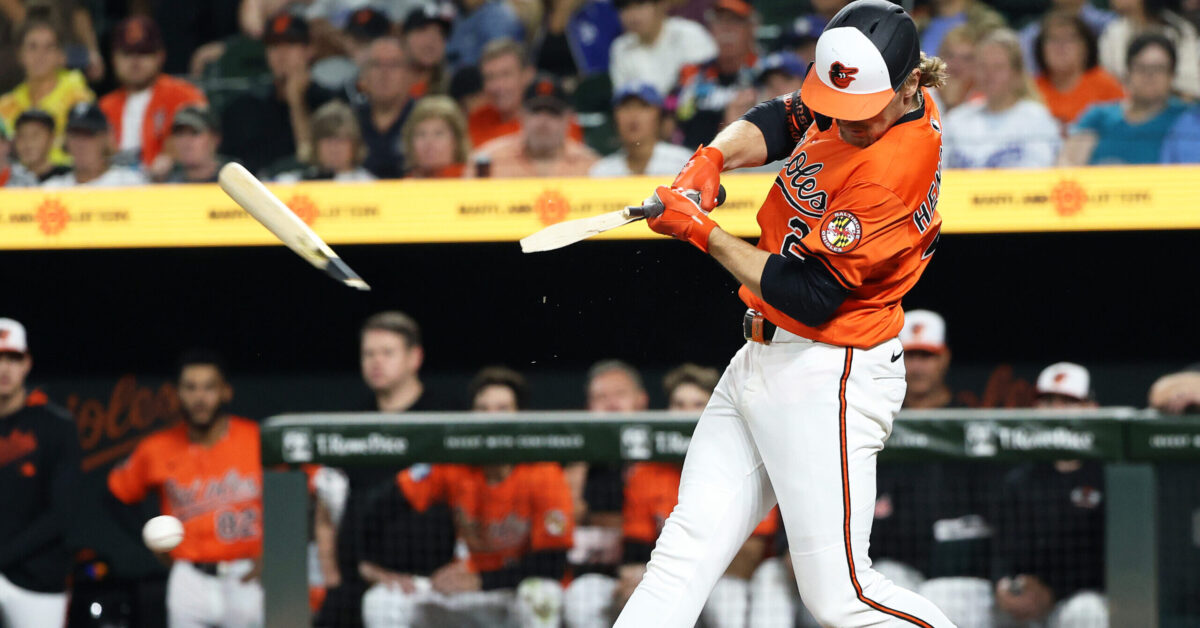
Shane Baz has a similar ADP as last draft season. What has kept his ADP stable? Probably his poor ERA (4.87) in 2025, and slight market concern about making half of his starts in Oriole Park instead of Tropicana Field. That ERA was a nearly a full run higher than his xFIP (3.88) and SIERA (3.95), with the majority of the damage occurring at hitter-friendly George Steinbrenner Field (5.90 ERA, .355 wOBA), while posting respectable rates on the road (3.86, .303). He unloaded his four-seamer at a 44% clip close to evenly against righties and lefties with an average velocity of 97 mph. Baz did not fare well with a new cutter last season (.412 wOBA, 16% K), but he mastered his knuckle curve with a sharp downward bite that punched batters out at a rate of 35.2%. Baz developed a two-seam fastball in the offseason.
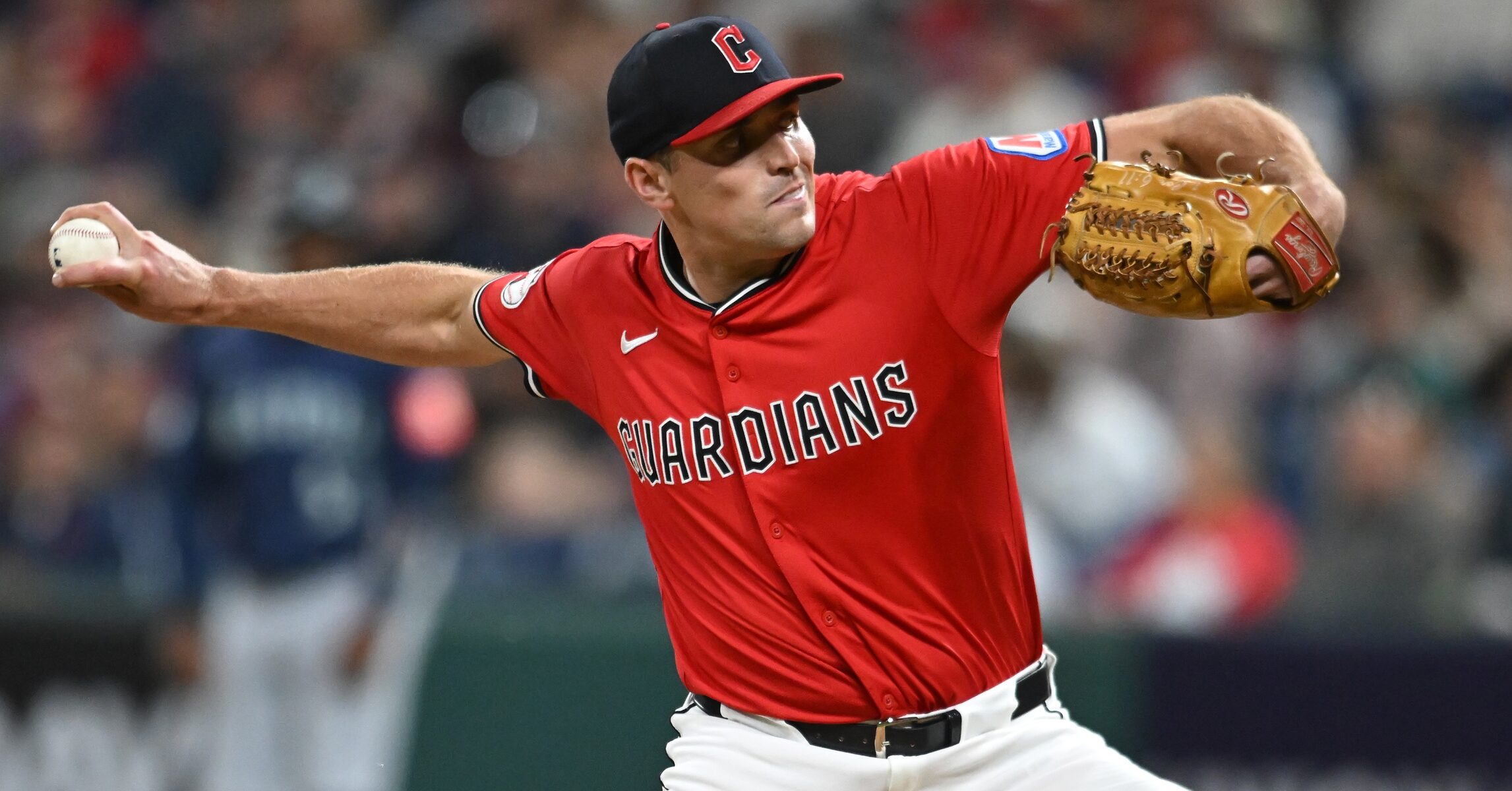
Tanner Bibee is the least “electric” of the group and has lost quite a bit of market confidence after a disappointing season (4.24 ERA, 1.23 WHIP) where draft helium took him as high as the fourth round of 15-team NFBC leagues last March. Going into last draft season, he was labeled as a dependable SP2 after an impressive first two years in the majors with a high strikeout rate (25.5%), low walk rate (6.6%), and one of only seven qualified pitchers between 2023 and 2024 with an ERA of 3.25 or lower. In 2025, Bibee greatly reduced his FB usage (from 43% to 28%), but that offering was still frequently mashed (47% hard-hit, .372 wOBA). He served up dingers at a higher rate (1.33 HR/9) than the past two seasons (.97) despite a six percent decrease in fly balls.
McClanahan last threw a regular season pitch in August of 2023 and is anxiously awaiting that first start in nearly three years. In his 74 career starts, McClanahan sports a 3.02 ERA (3.15 xFIP), a 1.10 WHIP, 28% strikeout rate and 7.1% walk rate. He will be under a strict innings limit this season, with a target of around 150. He is expected to make his Major League return in the Rays’ fifth game, which will be March 31 in Milwaukee.
Team Context: Defense, Bullpen, Run Support (Wins)
The Cubs defense is projected as one of the best in 2026, which is great for Horton. The Guardians (for Bibee) are expected to be strong defensively, and Progressive Field is an offense-suppressing environment.
The Rays moving back to their pitcher-friendly home stadium doesn’t move the needle much for McClanahan’s market price. If he’s on his A-game, where he pitches doesn’t matter.
Oriole Park at Camden Yards has been tougher on pitchers since they moved the walls in before last season. The HR Park Factor there last season was 121, second highest behind Dodger Stadium (137). Baz won’t stand a chance holding his HR/9 below 1.00, but can still produce a 4.00 ERA and at least a strikeout per inning. The O’s boast a powerhouse offense and should provide ample run support.
The walls moving in Kauffman Stadium shouldn’t impact Bubic’s HR rate as much as someone like his ace rotation-mate, Cole Ragans, but it might be too much to ask for a repeat of Bubic’s masterful, partial season. The Royals’ infield defense on the left side is bolstered by Bobby Witt Jr. and Maikel Garcia, but is questionable at the keystone with Jonathan India expected to move back there full time.
It is difficult to assess these bullpens and how they might move the needle on our valuations of starting pitchers in this cluster. The bullpen I’m most confident in is Kansas City’s. They added Matt Strahm in the offseason, hope to have a full season from Lucas Erceg, and have several other effective arms: lefties Daniel Lynch IV and veteran Bailey Falter, and righties John Schreiber, Nick Mears and possibly a new and improved Alex Lange. The Orioles’ bullpen is scary and include a couple of names even I’ve never heard of.
Recommendation (with target grade)
Talent-wise, this cluster of pitchers is an A-, but if we’re collectively grading them with durability in mind, the grade drops down to a solid B.
Cade Horton (B) is the pitcher who’s risen up my personal rankings the most since November. The more I dig in, the more I want to target him in drafts.
Tanner Bibee (B-) is the most stable of the group, but with the lowest upside. Sometimes that’s a good thing in fantasy.
I’d love to see Shane McClanahan (B-) bounce all the way back. My main issue with him is his recent draft helium, which may soar into the top 120 overall with another solid spring outing.
Kris Bubic (B+) and Shane Baz (A-) are my two favorite targets in this group. The ride might be bumpy with Baz, but I believe 2026 will be his breakout season.
Closers are probably the most exciting, frustrating position to deal with from a fantasy perspective. No other position is as fundamentally shaped by managerial discretion. No other position sees player value fluctuate so wildly. Last year, baseball’s most dominant closer, Mason Miller, lost his job to Robert Suarez at the trade deadline, for reasons wholly unrelated to performance–Suárez simply had performed admirably as closer, and the Padres preferred not to mess with their bullpen hierarchy, even if Miller was their best reliever. This offseason, Suárez himself appears to have already lost his closing job for reasons unrelated to performance, as he has opted for a setup role with the Braves.
This article ranks the closers for saves-only leagues for 2026. These rankings will be updated roughly once a week to reflect the latest happenings. The rankings will shift based on trades, free agent signings, team news, rumors, new projections, sufficiently persuasive reader feedback, and my own arbitrary whims. The list will grow longer as the offseason progresses.
Changelog
3/19/2026
This will be the final update for 2026. There was no major movement, but I made some small tweaks. Good luck this season; May thy closer’s knife neither chip nor shatter.
I lowered Carlos Estévez to tier four. Even though his velocity will likely rebound somewhat during the regular season, his projections are underwhelming enough where it’s hard to justify going any higher.
Clayton Beeter has looked great this spring. His velocity is down slightly, but his K% minus BB% is 36%.
Robert Garcia has had a dominant spring training, with normal velocity and a 42% K% minus BB%.
The messy Brewers situation did not resolve itself during spring training. Trevor Megill still looks likely to be dealt in-season, but it would not surprise me if he receives the bulk of save opportunities until then.
3/14/2026
One team reporter views Jojo Romero as likely closer to start the season, while another sees the situation as unresolved.
Riley O’Brien was predominantly used as closer ahead of Jojo Romero over the final three weeks of the 2025 season, but the situation appears dicier entering 2026. Romero remains a midseason trade candidate, but nothing appears imminent. O’Brien has struggled in his tiny spring training sample. I have bumped Romero just ahead of O’Brien in this update, but it’s close to a toss-up for me.
Taylor Rogers is still my top pick here, but it’s a messy situation with no clear favorite among the obvious candidates.
Josh Hader will begin the season on the injured list, though he emerged from his first spring bullpen feeling good.
On the whole, this is positive news as it looks like Hader will only miss a few weeks to start the year. In the meantime, Bryan Abreu will serve as a temporary top-tier closer.
Robert Stephenson experiences health setback, Kirby Yates viewed as top candidate to close to start the year.
With Stephenson out, Yates looks like a good bet to close for the Angels–at least until Ben Joyce proves he is fully recovered from shoulder surgery.
3/7/2026
Carlos Estévez’s velocity is down this spring.
It is common for closers to show diminished velocity early on in spring training, but Estévez’s average fastball is coming in six miles per hour slower than last year. He enters the season with great job security, but also arguably the worst rate stat projections of any closer, including Victor Vodnik.
Robert Stephenson reached 95 MPH in his first spring session against live hitters.
His average fastball velocity was 96 MPH in 2025, so he’s not far off where he was the last time we saw him healthy. He plans to be ready for opening day, further muddling an already cloudy Angels bullpen picture.
Hader continues to progress in his recovery from biceps inflammation and the team has not yet ruled him out for opening day. He’s heavily discounted in drafts right now given his uncertain health. If the reports on next week’s bullpen session are positive, he could be well worth the gamble, though not for the faint of heart.
2/24/2026
Paul Sewald signs with Diamondbacks.
Sewald jumps to the top of the closing hierachy in Arizona given his experience and recent team comments. However, Kevin Ginkel and Ryan Thompson are not far behind him if he stumbles.
It doesn’t appear to be a long-term concern, but it could cause him to miss Opening Day, giving Griffin Jax and Garrett Cleavinger a leg up in the Rays closing competition.
Hader is playing light catch as he recovers from biceps inflammation. It doesn’t appear to be a long-term concern, but he looks increasingly likely to miss Opening Day.
2/12/2026
Updated ADP data from NFBC Draft Champions to NFBC Online Championships.
Athletics sign Scott Barlow.
Barlow has the most closing experience on the team and his projections are passable. Mark Leiter Jr. has slightly better projections and signed for a slightly bigger contract ($3 million versus $2 million), so this one is close to a toss up–but right now I lean toward the guy with a lengthier track record of closing.
He was dealing with biceps tendinitis and returned to throwing yesterday. He believes it’s a minor concern that won’t impact his availability this year, but it’s enough to ding him a few spots in the rankings, and to bump Bryan Abreu up a few spots.
Kevin Ginkel is healthy, Andrew Saalfrank will miss the year after undergoing shoulder surgery, and A.J. Puk could return from elbow surgery before All-Star break.
Puk is not worth stashing for two months in standard FAAB leagues, but when he returns he is a good bet to reclaim closing duties from Kevin Ginkel, or whomever else has the job. With Saalfrank going down, Ginkel looks like a solid bet for saves to start the year.
Robert Stephenson dealt with multiple arm injuries this offseason, but is ostensibly healthy now.
With Ben Joyceuncertain for opening day, Kirby Yates looks like the clear front-runner for saves to start the year.
Robert Garcia and Chris Martin named as lead candidates for saves for the Rangers.
Texas did not give Martin many save opportunities last season even though he was as dominant as ever, so Garcia is still my preferred pick here–but Martin is also worth drafting later on.
Jordan Hicks traded to White Sox.
Per general manager Chris Getz, “I think the White Sox are at the best if he’s at his best in the bullpen.” Hicks still projects well in a bullpen role and could eventually compete for saves if Seranthony Domínguez falters.
Liam Hendriks signs minor-league contract with Twins.
Hendriks is coming off a rough couple of seasons but has legendary closing pedigree, while the Twins lack a clear closer. Monitor his chances of making the team this spring and consider him as a late dart throw in your drafts.
He joins tier three as he is expected to close. Jordan Leasure and Grant Taylor each take a hit in the ranks. Along with David Robertson, who has now announced his retirement, Domínguez was the last big domino to fall among free agent relievers. There are still a few interesting names left unsigned, like Michael Kopech, but none are a particularly good bet to usurp an incumbent closer regardless of where they end up. That means future movement in the ranks will be driven by trades, injuries, and commentary from the teams themselves.
Rogers immediately jumps to the top of the bullpen hierarchy in Minnesota given his past closing experience and the paucity of strong alternatives in the Twins bullpen. His ERA projections are nothing special, sitting in the high-threes across across most projections, but he’s a solid bet to open the season as closer.
Per Steamer and OOPSY, Loáisiga has the best projections of any healthy D-backs reliever, but he will probably have to work his way up the closer hierarchy as his contract is of the minor league variety. If he looks like a good bet to make the MLB roster this spring, I may need to move him up.
Moving in the fences will likely increase homers, decrease doubles and triples, and boost scoring overall. Carlos Estévez’s rank falls a few spots as his rate stat projections take a hit (note: the park changes are already reflected in OOPSY).
Given his extensive closing experience and Robert Stephenson’s trouble staying healthy, Yates vaults to the top of the Angels hierarchy for me, joining the third tier, while Stephenson drops down to tier four.
This year’s OOPSY projections should be published at some point in the next 24 hours, joining other published FanGraphs projections, Steamer, THE BAT, and (partially) ZiPS. Focusing on ERA projections, here are some relievers OOPSY is bullish on relative to the other systems: Andrés Muñoz (2.51), Griffin Jax (2.68), and Trevor Megill (2.93). OOPSY’s optimism on Muñoz is likely park-related, as it makes use of Statcast park factors that view T-Mobile as more pitcher-friendly relative to FanGraphs park factors. OOPSY’s Jax projection suggests he is one of baseball’s best relievers; he is no lock to lead the closing committee for Tampa, but he has huge upside if he is able to win a large share of the job. Megill’s projection would make him a worthy closer for many MLB teams, but OOPSY is even higher on Abner Uribe. In any case, the Brewers closer situation remains one of the most difficult to parse this offseason.
Closer Monkey and RosterResource are two indispensable sources for understanding bullpen hierarchies and saves situations. They tend to agree more than they disagree, with the two sources currently listing the same name at the top of the hierarchy for 26 of 30 teams. There are four teams where they disagree: the Rays, the Brewers, the Diamondbacks, and the Athletics. I currently side with Closer Monkey on three of those four, also preferring Griffin Jax, Kevin Ginkel, and Mark Leiter Jr. to lead their respective hierarchies, while I am aligned with RosterResource on Abner Uribe over Trevor Megill for now–in large part because I think Megill will be traded to a situation where he may not close. Additionally, I deviate from both sources only on two teams: I have Kirby Yates leading the Angels hierarchy, while both still prefer Robert Stephenson; I also have Kody Funderbunk leading the Twins hierarchy, although that situation is so volatile that I’d guess that their 2026 saves leader is someone that’s entirely off the radar at this point. In any case, from a fantasy perspective, the teams with disagreement are the most interesting–and volatile.
It’s a great landing spot for Fairbanks as he should be the sole closing option in Miami. Accordingly, Calvin Faucher and Ronny Henriquez have been removed from the ranks. Henriquez would have been removed even if he were healthy as a result of the Fairbanks signing, but it was also announced that he is slated to miss the 2026 season after undergoing UCL reconstruction surgery.
It is still difficult to imagine him not handling most save opportunities given his track record but at this point in his career his projections are less than stellar. I added Will Vest to the backend of the ranks as he has much better projections and was used ahead of Kyle Finnegan to close out games at the end of the 2025 season.
Newcomb will be given the chance to start, but he is still a nice late sleeper option for saves as he is more experienced than Jordan Leasure or Grant Taylor, plus he is coming off a strong 2025 season out of the pen.
Diamondbacks are expected to sign a closing option to fill the role until Justin Martinez and A.J. Puk are ready to return in late 2026.
The only issue here is there aren’t a ton of great bullpen options left in free agency. Per RosterResource’s Free Agent Tracker, some remaining arms that might compete for closer are Michael Kopech, Paul Sewald, and Seranthony Dominguez.
12/18/2025 – First Release
Ranking Methodology
ADP is based on 30-day rolling NFBC Draft Champions Leagues.
$ Values are based on standard 5×5 12-team saves league using the FanGraphs Depth Charts and these Auction Calculator settings. They default to a player’s most valuable position, so if the first base list includes a catcher, it will show that player’s value at catcher.
ADP and $ Values are updated as of the last update date on this post.
5-game eligibility was used for these lists to cast the widest net.
Mason Miller cemented his status as baseball’s most dominant reliever this past season, with an extraordinary 54.2 K% after joining the Padres. Edwin Díaz slots in next. He has continued his stellar performance year after year, and he will now be closing games for the World Series winners in Los Angeles. The only thing holding back Jhoan Duran’s fantasy value over the last couple of years has been Minnesota’s funky bullpen usage. With the Phillies set on using him as a traditional closer, he could take his fantasy game to the next level. Andrés Muñoz is a trustworthy option, especially in T-Mobile, the most pitcher-friendly park in baseball. Aroldis Chapman and Cade Smith are coming off great seasons, pairing elite projections with excellent job security. David Bednar also has a firm grip on the Yankees closing job after an incredible bounceback 2025. Devin Williams struggled uncharacteristically in 2025, with an ERA over four. K% minus BB% and xFIP are better indicators of pitching talent moving forward, however, and Williams’ indicators suggest a bounceback 2026 could be in order, this time closing games in Queens.
Next Best For The Ninth
A nitpick or two keeps these guys from joining tier one.
Ryan Helsley posted an unsightly 7.20 ERA after he was dealt to the Mets. He still has elite velocity and Stuff+ and is a good pick to rebound closing for the Orioles. Daniel Palencia dealt with a shoulder strain last year, but he made it back before the season ended and looked healthy, with normal velocity, in his return–and he has continued to look healthy this spring, particularly during the World Baseball Classic. Jeff Hoffman is a solid bet to bounceback after a down season, but he has less leash now, with Louis Varland, Yimi García, and Tyler Rogers giving the Blue Jays many worthy late-game options if Hoffman stumbles. Ryan Walker ended the season as de facto Giants closer after Randy Rodríguez underwent Tommy John surgery and Camilo Doval got shipped to the Yankees. He struggled in September and probably does not have a ton of job security, but he still projects well and should get the first chance to close in 2026. Raisel Iglesias ERA projections are no longer elite, but he enters 2026 with a good amount of leash. Pete Fairbanks projects well and is set to serve as sole closer in Miami.
Flawed Saves Heroes
This group contains many potential studs, but some will get knocked down by offseason shenanigans.
Josh Hader would be in tier one if not for health concerns. If you draft Hader, it may be worth reaching a bit to secure Bryan Abreu as a form of high quality health insurance. Abner Uribe is a tier one talent, but the looming threat of Trevor Megill bumps him down to tier two, as it’s not entirely clear who would get the first shot to close for the Brewers in 2026. Both are worthy late-game options, and both could will get a big bump if Megill is dealt to a team where he’d close. Emilio Pagán, Carlos Estévez, Dennis Santana, Seranthony Domínguez, and Kenley Jansen aren’t baseball’s most dominant relievers, but they’re solid, and more importantly, they have good job security to start the year. At the other end of the spectrum, Griffin Jax is an excellent reliever, but he doesn’t have much job security. Notwithstanding, he looks like a great value at ADP.
Closer Dart Throws
A few of these relievers will emerge as awesome closers this year–but which?
Many of these names have closing talent but none of them are a particularly safe bet to stick as closer. Robert Garcia and Clayton Beeter are nice sleeper options with the talent to lock down the role in 2026.
Deep League Fliers
These guys don’t get drafted in most leagues but they could be a factor on the waiver wire during the season.
As usual, my rankings have a heavy projection base and, for now, will closely mirror the auction calculator. I suspect more changes as I receive feedback and dive further into the player pool.
Two items. The rank is not specific to the tier order. For the tiers, I grouped batters by their skill type (e.g., power, speed, etc). Also, the placement of the catchers in the overall ranks will be league-specific, especially between one and two-catcher leagues. I need to dive into the current market on them. I’ll write a full analysis in a future update or separate article.
Changelog
12/5/2025 – First release
1/5/2026 – Post-holiday update. A few movers.
1/21/2026 – Update with a few players on new teams.
2/2/2026 – Update, little movement
2/10/2026 – Update
2/12/2026 – Spring Training update. I have bullets of the bullets
Dinged Lindor, Corbin Carroll, and Jackson Holliday on plate appearances and a 5% talent reduction.
Kyle Schwarber and Ivan Herrera should take a round or two hit in leagues where they are Utility-only.
Previously, for a player to be in the “Change” column, they needed to move 20 or more spots. I dropped the minimum mark down to 10 spots.
Updated ADP data from NFBC Draft Champions to NFBC Online Championships.
2/25/2026 – Just moving a few players around
3/12/2026 – Minor moves with some injury updates
3/19/2026 – Not much movement among these top guys, dig through the positional ones for late movers.
Ranking Methodology
ADP is based on 30-day rolling NFBC Online Championship Leagues.
$ Values are based on a standard 5×5 12-team league using the FanGraphs Depth Charts and these Auction Calculator settings. They default to a player’s most valuable position, so if the first base list includes a catcher, it will show that player’s value at catcher.
ADP and $ Values are updated as of the last update date on this post.
5-game eligibility was used for these lists to cast the widest net.
Five-Category Studs
These hitters provide value in every aspect of the game with speed, power, and batting average. There are no flaws in their game.
Balanced 2nd Division Bat (Pick Your Poison Tiers)
This tier and the next six tiers comprise the point in the draft where the talent starts to level off, and fantasy managers can focus on category specialists. Some of the unbalanced bats may provide some other category juice, but most of their value is wrapped up in a single category. This is another balanced tier, but in these instances, their trait is not being a drag in any category. They won’t allow a manager to catch up in any category.
Balanced 2nd Division Bat (Pick Your Poison Tiers)
1/7/2026 – Update with summaries for Harris, Pages, Anthony, Lile, Burleson, Trout, Wood, Rooker, Langford, and Chourio.
1/22/2026 – Update with summaries for Schwarber, Alvarez, Buxton, Yelich, Arozarena, Duran, Garcia, Bellinger, Altuve, and Hernandez.
2/02/2026 – Update and summaries for Cowser, Steer, Frelick, Carter, Soderstrom, Garcia, Friedl, and Laureano
2/10/2026 – Small update
2/12/2026 – Several items
Summaries for Abreu, Varsho, Springer, and Lowe
Updated ADP data from NFBC Draft Champions to NFBC Online Championships.
Changed the threshold for the amount a player moved in the rankings to 5 spots.
2/24/2026 – Small update, no real changes.
3/12/2026 – Small update with more injury information
3/19/2026 – Not much movement at the top, but some at the bottom.
Ranking Methodology
ADP is based on 30-day rolling NFBC Online Championship Leagues.
$ Values are based on a standard 5×5 12-team league using the FanGraphs Depth Charts and these Auction Calculator settings. They default to a player’s most valuable position, so if the first base list includes a catcher, it will show that player’s value at catcher.
ADP and $ Values are updated as of the last update date on this post.
5-game eligibility was used for these lists to cast the widest net.
Five-Category Studs
These hitters provide value in every aspect of the game with speed, power, and batting average. There are no flaws in their game.
Pete Crow-Armstrong is going to be a divisive player in drafts. First, he’s way better in Roto using batting average with the extra emphasis on stolen bases and no downgrade for a sub-300 OBP. He has the potential to be a platoon bat(career .769 OPS vs RHP, .591 OPS vs LHP), but his elite defense will keep him on the field. Running some comps, they point to a career similar to Javier Báez and Rougned Odor.
Brent Rooker is no longer an enigma; he’s a steady source of 30 HR or more with 180 Runs+RBI. This past season, he seems to have traded off a hit of power (91.9 avgEV to 90.7) for more contact (68% Contact% to 72%). He even throws in a half dozen stolen bases.
Which James Wood will show up this season? The one who hit 24 HR with a .915 OPS in the first half or the one with just 7 HR and a .690 OPS (39% K%) in the second half. I dug and could not find why his Contact% dropped from 72% to 65%. Think of the hype if the halves were switched. Wood’s bat speed and the subsequent batted balls are comparable to the league’s best hitters. Depending on his Contact%, his range of outcomes could be a 50 HR hitter or a frustration who will dominate for a few weeks but be a drag for the rest of the season (see Oneil Cruz).
After three straight seasons of 30+ home runs, Yordan Alvarez’s injured ankle caused him to miss most of last season. I’m worried it’s not 100% healthy, since the team says he will be the primary DH. Besides the injury, his home run per flyball rate has dropped in each of the last three seasons (25% to 21% to 16% to 10%). High risk play. Note: Could be Util-only in league with a 20-game minimum.
Five-Category Pillars
These hitters are good across the board, but don’t match up to those in the first tier.
Jackson Chourio has almost the exact same stats over the last two seasons, down to the seven caught stealings, four triples, and three hit-by-pitches. Some growth should be expected from the 21-year-old, but how much and when are the keys. One issue is that he might be slowing down with a 0.5 ft/s loss in Sprint Speed and only six stolen base attempts in the second half compared to 22 in the first half. In 2024, he was the 40th overall player and 59th last year, according to our player rater. That’s a nice floor. The key will be if he can improve on the 20 HR power AND continue to steal bases.
The arrows are heading in all directions with Wyatt Langford. He improved his power (43% HardHit% to 48%), but his contact rate got worse (80% Contact% to 76%). He stole more bases (19 SB to 22) with a slower Sprint Speed (29.8 ft/s to 28.9). Additionally, he missed time twice for oblique injuries while playing through them before taking time off. He quit running as much in the second half (15 SB vs 7), and maybe he didn’t want to re-injure the oblique. It’s tough to evaluate him with so many moving parts. The 24-year-old will be useful, but the way and amount are still up in the air.
Byron Buxton finally stayed “healthy” (126 games, highest since 2017) and posted the season everyone hoped he could (35 HR, 24 SB, .264 AVG). Besides health, there was no real skill improvement or degradation.
Jarren Duran regressed a bit after a career year in 2024, but still hit 24 HR with 24 SB. I’m not sure there is another gear for the 29-year-old. He seemed to sell out for power, with his average exit velocity up 1 mph and his average launch angle up 2.5 degrees. At the same time, his Contact% dropped over 4% points.
The projections love Michael Harris II as a 20/20 talent with a positive batting average. Those projections are of no help to the fantasy managers who started the 24-year-old when he hit .210/.234/.317 with 6 HR in the first half last season. Around the All-Star game, he changed his swing and hit .299/.315/.530 in the second half. One factor keeping his fantasy value down is that he’ll be hitting at the bottom of the Braves lineup, thereby suppressing his plate appearances.
Christian Yelich hit over 20 HR (29) for the first time since 2019. At 34-years-old, no one seems to be buying a breakout with a full season, career high 26% K%, and career-low 90.2 mph Average Exit Velocity. Besides not hitting the ball as hard, his 2 degree Launch Angle was the lowest since his rookie season. Note: He might only be Utility-only in leagues that require 20 games for a position.
Elite Power Bat, Nothing Else
These bats have 40+ home run power with a ton of counting stats. They provide very little in speed and batting average.
Kyle Schwarber knocks the crap out of the ball. Since the shift was banned, he’s been posting better batting averages, removing his one weakness.
Balanced 2nd Division Bat (Pick Your Poison Tiers)
This tier and the next six tiers comprise the point in the draft where the talent starts to level off, and fantasy managers can focus on category specialists. Some of the unbalanced bats may provide some other category juice, but most of their value is wrapped up in a single category. This is another balanced tier, but in these instances, their trait is not being a drag in any category. They won’t allow a manager to catch up in any category.
Balanced 2nd Division Bat (Pick Your Poison Tiers)
Cody Bellinger raised his launch angle and hit for more power, leading to a six-year high of 29 HR. The problem is that he’s had similar power strokes, and they’ve quickly disappeared. Additionally, last season was the first time he accumulated over 600 PA since 2019. With such variance, pay for the projection, knowing the results are hopefully better but could be way worse.
After a career-best season, George Springer is hoping for a repeat, and if so, it would be a historic first.
Usually, top prospects get all the love, but that doesn’t seem to be the case with Roman Anthony going after pick 50. While he only hit 8 HR in just over 300 PA, signs point to elite power. He led the league with a 60% HardHit%. He was fifth in the league with a 94.5% avgEV. He hit 27 Barrels, but only 8 of them went for HR (normally 1 HR for every two Barrels). The 21-year-old’s only weakness was a 28% K%.Upside of 30 HR.
After being a speed-only option in his first two seasons, Maikel Garcia hit 16 HR in 2025. He didn’t hit the ball harder, but he started elevating (6 deg to 10 deg LA, 49% GB% to 43% GB%) and pulling (33% Pull% to 39% Pull%) the ball more. Hopefully, he keeps or improves on those gains. In most leagues, he will only qualify at third base.
The last memory of Andy Pages is of his post-season struggles (.078 AVG) and benching. I examined similar players and found that a horrible postseason doesn’t affect the hitter’s next season’s production (article coming later this week). The market disagrees on his projection (.255 AVG, 25 HR, 10 SB), so take the discount and roster away.
Steven Kwan is a consistent source of batting average and steals with at least double-digit home runs.
After a breakout 2024 campaign, Lawrence Butler took a step back, likely because of a couple of knee injuries, one chronic. Additionally, he started getting platooned to end the season. Mute expectations because his talent and playing time could be at risk.
Seiya Suzuki’s power took a step forward with 35 HR being a possible outcome if he can stay on the field. The rest of his profile shows no signs of aging.
Jose Altuve posted a career-low (excluding 2020) batting average (.262 AVG) along with his lowest stolen base total in four years (10 SB). He posted nearly the same line in three of the past four seasons. I expect the same or worse results as he ages.
While his surface stats don’t show it, Ceddanne Rafaela took a major step forward in 2025.
Boring, old Brandon Nimmo has shown no signs of slowing down, and the change in home park could boost his production.
While Ian Happ’s hitting skills should repeat, his stolen base skills are deteriorating, and 5 SB might be his upside.
Heliot Ramos has settled into 20 HR to 25 HR with a half dozen stolen bases and a .260 AVG. He was able to post a career-low 23% K% to help keep his batting average up. Otherwise, he hasn’t changed, and he become a consistent productive player.
The 2025 season was a turbulent season for Brenton Doyle on and off the field. I’m going to give him a mulligan and rewind to his 2025 projections.
Daylen Lile may not have one standout trait, but he doesn’t seem to have a weakness besides being on the Nationals. Projections have him around a 15/15 guy with a .270 AVG (Jeremy Pena/Otto Lopez production, but 100 picks later). He ended the season hitting cleanup and sat against just one of the last seven lefties the team faced. Nice sleeper.
Over his first three seasons, Noelvi Marte showed several different versions of himself, with any narrative having an explanation. His value is tough to set beyond a basic projection.
If Ramón Laureano can keep the contact and power gains he made in 2025 while playing a full season, he becomes a solid sleeper
TJ Friedl is a high-variance play in home runs and stolen bases. When looking at his projections, I would take the over in home runs and the under in stolen bases.
Jasson Domínguez has struggled to live up to the hype surrounding him. In 2025, he was better than an average hitter (103 wRC+), but wasn’t good enough to crack a healthy Yankees outfield. With Bellinger gone, he is back in the outfield mix even after being the fifth-worst fielding outfielder according to Baseball Savant’s Out-Above-Average. (Note: As of December 18th, he is just hitting .184/.304/.263 in the Dominican Winter League).
Power and Average but zero Speed (Pick Your Poison Tiers)
The major contributions from these hitters are home runs and batting average, but no stolen bases.
Power and Average but zero Speed (Pick Your Poison Tiers)
I was fully invested in Jackson Merrill last season, and that idea did not go as planned. After being a five-category contributor in 2024 (24 HR, 16 SB, .292 AVG), he was barely replacement-level in 2025 (16 HR, 1 SB, .264 AVG). He ranked as the 59th outfielder, just ahead of Gavin Sheets. Before a June concussion, he was batting .304/.349/.474 with 5 HR and 1 SB (2 CS) in 186 PA. After returning from the concussion and until an ankle injury, he hit just .219/.286/.354. And when he returned from the ankle injury, he hit .275/.320/.626 with 7 HR in September. I’m not sure the steals will return, so pay or a .280 AVG with 25 HR. A Yandy Díaz or Corey Seager clone.
With the trade of Willson Contreras to the Red Sox, Alec Burleson takes over first base duties for the Cardinals. The 27-year-old improved both his Contact% (83% to 84%) and Hardhit% (41% to 43%) last year. The increase in hard contact led to a career-high .290 AVG and .169 ISO. While he didn’t get platooned to end last season, it is a possibility (career .606 OPS vs LHP, .775 OPS vs RHP).
If Bryan Reynolds’s shoulder heals, I could see him return to 25 HR and double-digit steals instead of the projected 20 HR/6 SB. I want to see him playing in the field and attempting steals in Spring Training to show that his shoulder is no longer an issue.
A shoulder injury ruined the first two months of Spencer Steer’s season, but he turned it around. With his current projections, I might expect a higher batting average and home runs but fewer stolen bases.
Power Focused (Pick Your Poison Tiers)
The major contribution from these hitters is home runs. The major contribution from these hitters is stolen bases.
Riley Greene has transitioned into a solid power option against righties (32 HR vs RHP, 4 HR vs LHP). Even as the 25-year-old struggled against lefties (career .680 OPS vs LHP, .825 OPS vs RHP), the Tigers started him in 157 games. The 30 HR power is legit, but he has a couple of flaws. He struckout 31% of the time last year as he struggled with fastballs (12% SwStr%). Additionally, I don’t expect him to start stealing bases with his Sprint Speed dropping from 28.1 ft/s (71st percentile) to 27.7 ft/s (59th percentile) to 26.7 ft/s (31st percentile) over the past three seasons.
Teoscar Hernandez is more well-rounded than just a power bat by chipping in a few stolen bases and ~.250 AVG. The 33-year-old’s power has been on a steady five-year decline. If the decline continues, he could be closer to 20 HR than his projected mid-to-high 20 HR totals.
Jo Adell may have improved his plate discipline enough to be a consistent home run threat.
Taylor Ward is projected for ~25 HR, 5 SB, and a .245 AVG. I could see bumping the home run number up to 30, but not any more.
Kyle Stowers turned his career around with career bests in power and contact metrics. He should be good for 25 HR to 35 HR. His batting average could dip as his BABIP regresses downward, but at least the average isn’t a major drain like in his first two seasons.
After coming off shoulder surgery, Daulton Varsho traded off contact for more power. He could be a source of 30+ HR and dozen or so stolen bases but a drain in batting average.
Over the past three seasons, Mike Trout has averaged 18 HR, 3 SB, and a .232 AVG. Those results are similar to those of Max Kepler and Kody Clemens. And I’m not sure of Trout’s upside at this point. He’s not running. A ballooning strikeout rate (32% last season) limits his batting average. Maybe managers will latch onto his late-season swing changes to make him more than a bench streamer.
Trent Grisham improved in two ways to help him the most: make more contact (80% Contact%, 2nd highest of his career) and hit the ball harder (career-high Barrel% and HardHit%). The 34 HR were double his previous high in 2022, and now all signs point to some downward regression. His 51 Barrels would normally produce 27 HR. Projections tag him with ~25 HR. Baseball Savant has him with 27.9 xHR, and had him with 29 HR if all his batted balls were in Yankee Stadium. Also, I would not expect any stolen bases after he stole a total of four over the past two seasons. I see him around a .230 AVG, 25 HR, and 2 SB.
Fantasy managers need to have a reality check when it comes to Jac Caglianone. Since he’s only shown the ability to hit for power in the majors, he’s just an accumulator. There is no hope for more than 1 or 2 SB, but he could be a positive contributor in batting average. Or he could repeat 2025 and be nearly unplayable. Gamble away.
Speed Focused (Pick Your Poison Tiers)
The major contribution from these hitters is stolen bases.
Jakob Marsee should be amongst the league leaders in stolen bases with double-digit home runs if given a full-time role. The biggest disagreement will be with his batting average. Will it be closer to the projections, .200 AVG to .220 AVG, or the nearly .300 AVG hitter he was in 2025.
Average Focused (Pick Your Poison Tiers)
The major contribution of these hitters is batting average.
Jung Hoo Lee: Before the season began, Lee dealt with a back issue that flared up in mid-June. His back could have bothered him for a while but after resting at the All-Star break, he hit .293/.345/.414 from then on. While he should post a great batting average, all signs point to 10 HR and 10 SB. Also, he could end up getting platooned with a career .610 OPS against lefties and .756 OPS against righties.
Speed and Power but Average Sink (Pick Your Poison Tiers)
These hitters provide a combination of home runs and stolen bases, but are a major drag on batting average.
Speed and Power but Average Sink (Pick Your Poison Tiers)
During his age-30 season, Randy Arozarena may have posted his career year with highs in plate appearances (709 PA) and home runs (27 HR). At the same time, his .238 AVG was a drag. Besides the $7 he earned in 2024, he’s earned at least $17 in every season since 2021. Steady add.
While Luis Robert has been a 30/30 “full-time” player over his career, he doesn’t play enough to reach that level. Roster only if getting an extreme discount.
The 32-year-old Adolis Garcia has struggled for two straight seasons while dealing with several injuries. He’s going to need to stop and reverse several negative trends as he ages into his mid-30’s.
As Dylan Crews enters in age-24 season, he needs to show improvement with his power and/or contact skills to take a step forward to be at least a league-average hitter (77 wRC+ in ’15). His steals can be valuable as long as he’s not a drain in other categories. If he were on a better team, there would be a risk of a demotion, but the Nationals will have nothing to play for and will keep sending him out.
Oneil Cruz needs to improve in several areas (health, platoon issues, strikeout rate) while not backtracking in any other area. He is a solid source of power and speed. Just make sure to have a solid batting average in place before adding him.
It’ll be tough to target Colton Cowser since he’s a platoon bat with major contact issues. If a fantasy team is set on batting average, he could be an option for his home run and stolen bases.
Speed and Average (Pick Your Poison Tiers)
These hitters provide a combination of speed and batting average.
Sal Frelick took a positive step forward in both his contact and hard hit rates last season. The key for him going forward is maintaining or improving on them … and not regressing backwards.
Only a narrow roto build will fully utilize Chandler Simpson’s skills. He does feel like a corrective action if a team misses on steals and needs to catch up.
Platoon Bats
These guys are strong-side platoon bats who will max out around 400 to 500 plate appearances.
While a strong-side platoon bat, the consistent Kerry Carpenter is a solid bet to hit around a .265 AVG with 25 HR.
Wilyer Abreu is a solid platoon bat whose upside is limited until he can prove that he can hit lefties.
A significant platoon disadvantage and checkered injury history limits Evan Carter’s upside.
Hopefully, Josh Lowe improves from his 2025 season, where he struggled in all aspects of his game, but I have little hope the Angels can help him rebound.
Mickey Moniak has turned into a solid platoon bat (career .497 OPS vs LHP, .760 OPS vs RHP) with some decent road numbers (career .745 OPS at home, .701 on the road, 92 wRC+ for both). He took a step forward in 2025 with a 74% Contact% and 45% HardHit%, both career highs. With more and harder contact, he hit 24 HR with a .270 AVG. I could see a repeat of the 25 HR with a solid .260 AVG with six to 12 stolen bases.
Parker Meadows is heading in the wrong direction. His HardHit% and Contact% have dropped every season. Prorating his 213 PA (missed time due to arm and quad injuries) to 639 PA, he is at 12 HR and 12 SB with a .215 AVG. The team has sat him against lefties (.502 OPS in ’25), but he’s not been good against righties (.653 OPS in ’25). I’d prefer to add him late and use him as a bench streaming option.
Time Shares
These hitters don’t have a set role just yet, but have the skills to be positive fantasy contributors.
Combining his minor league and major league numbers, Dylan Beavers accrued 22 HR and 25 SB. Steamer600 puts him at 17 HR and 16 SB with a .243 AVG, which seems reasonable. Accruing full-time at-bats will be the biggest issue for him since the Orioles have four regular outfielders and several options at the DH spot. His 26% K% could be a drag on his batting average, like in September when he hit .167 AVG.
1/26/2026 – J.T Realmuto and Victor Caratini signings.
2/2/2026 – Projections and ADP update.
2/10/2026 – ADP Update.
2/18/2026 – ADP Update
2/25/2026 – ADP and Projections Update
3/3/2026 – ADP and Projections Update
3/19/2026 – Kyle Teel injury and Harry Ford demotion update
Ranking Methodology
Updated ADP data from NFBC Draft Champions to NFBC Online Championships.
$ Values are based on standard 5×5 12-team league using the FanGraphs Depth Charts and these Auction Calculator settings. They default to a player’s most valuable position, so if the first base list includes a catcher, it will show that player’s value at catcher.
ADP and $ Values are updated as of the last update date on this post.
5-game eligibility was used for these lists to cast the widest net.
Catcher Overview
The catcher position is about as deep as it’s been after an influx of young talent to the position over the last few seasons. The additions of young studs to the crop of older, aging veterans give the position some beef, but also add to it’s volatility as we have seen with a number of the players who entered the Majors over previous seasons have shown us.
The biggest issue with the position is dependent on the format you are drafting for. In shallower one catcher leagues, it’s often best to wait as long as possible unless a player you covet drops. In deeper two catcher formats, the back end the pool offers negative value giving you more reasons to draft one or both of your catchers early. Knowing how your format and league values the position is crucial to your draft strategy.
—
Today’s Discussion
With the injury to Kyle Teel and demotion of Harry Ford, they move down the ranks as we head into the final drafts of the season.
Cal Raleigh is coming off of an historic season where he hit the most home runs ever by a catcher and was the #2 player on the player rater. There is no where to go but down but even with regression, he should be the first catcher off the board. He is a great bet for power and counting categories, but the contact skills gives him an average floor is much lower than what we saw in 2025.
A year after his breakout season, William Contreras took a step back, hitting just .260/.355/.399 with 17 home runs and six stolen bases. Some of that regression was likely injury related as he played through a finger fracture that is now been fixed through surgery. He should rebound now that he is healthy and return to being an elite option.
Shea Langeliers has made massive gains in each of the last two seasons in contact skills going from 78% to 83% to 85% while not sacrificing power or his approach. Hitting in Sacramento is a dream location for him and the A’s should continue to improve.
You can make the argument that Ben Rice should be the #2 catcher in fantasy since he isn’t actually catching this season. While the Yankees have brought back Paul Goldschmidt, I don’t see that hurting Rice long term this season as the Yankees are full of guys that get hurt. His combination of power and contact skills along with the home park could make for a massive season.
Hunter Goodman has elite power but the approach and swing and miss can be a problem for him. Hitting in Colorado will help because of the BABIP inflation and the lack of competition for the role, but the batting average downside is real and he will regress there in 2026.
Drake Baldwin is coming off of winning Rookie of the Year in the National League and there is more upside in the bat. He showcased his great approach and contact skills, but with a launch angle tweak, he could have a massive breakout. His bat speed, average exit velocity, and hard hit percentage were all in the top 85 percentile so if he could elevate some, he could push his homers in the mid twenties which would be some nice upside for a high floor catcher.
Agustin Ramirez showed a better hit tool than expected and the power was as advertised. We can’t sleep on the speed, either, as he went a very solid 16-for-19 on the basepaths. He is not a very good catcher defensively and likely will lose eligibility there at some point, but that is a problem for future seasons. He will get extra PAs at DH which will allow him to rack up plate appearances, but the Marlins supporting cast is meager which will hurt the runs and RBIs.
Being the old man of the group isn’t a bad thing. Salvador Perez is about as consistent as can be. He has back-to-back healthy season with at least 27 home runs and 100 RBIs. The ceiling may not be as high as the rest of the tier, but you don’t get much safer than Sal.
Last Year’s Favorites
Last year’s draft favorites that could jump up a tier!
When Yainer Diaz hit 23 home runs in just 377 plate appearances in 2023, people thought a full season breakout was coming, but in the last two seasons he has shown that power output was likely an outlier. He still has a high floor because of his fantastic contact ability, but the ceiling dropping a bit is why he is no longer in higher tiers.
Will Smith is about as safe as they come. You can can bank on high teens/low 20s home runs with a good average and great counting stats hitting in the top half of the Dodgers lineup. He actually had the second best barrel rate and hard hit percentages of his career, but it didn’t translate into more power. The downside is that he will never accumulate like other catchers because Ohtani blocks off the designated hitter spot.
Ivan Herrera won’t even be catcher eligible in most formats because he missed so much time with an elbow injury. He is expected to catch some, but will likely reside mostly at DH. After a further deep dive, I am becoming more convinced on his upside. He has great contact skills and the power metrics are way above average. We need to see him show some health, but there is reason to be optimistic that he can take a massive step forward if he is healthy.
Adley Rutschman lost a lot of time last year to injury and really struggled when he was on the field. If healthy, then he is likely to rebound to the levels we saw in 2023 and 2024 at least. There is still upside in the bat from his prospect pedigree and initial call up, but we can no longer project he will automatically get there.
Safe Backstops
Guys that do not have a ton of upside, but arent going to hurt you
Alejandro Kirk makes a lot of contact and there is some power in the bat, but that makes it a high floor profile rather than one that is super enticing for shallower one catcher formats.
When Gabriel Moreno hit four home runs in the 2023 postseason people got really excited that a massive breakout was coming. That was a mistake, but he is a great defensive catcher with a very good hit tool. He did show a bit more pop with a career-high .433 SLG and 9 HRs, but his .281 AVG points to his high floor as even his career-low .266 from 2023 was tied for 5th-highest at Catcher (min. 350 PA).
Samuel Basallo is a top tier prospect that made his debut in 2025. There is a ton of power in the bat and the question is whether he will make enough contact to unlock at the Major League level. the minor league numbers say he should, but there may be some growing pains, but the upside is tremendous. With the addition of Pete Alonso, he will need to hit to keep his spot, but I believe he will.
Francisco Alvarez has been great when he is on the field, but he has struggled with that since 2023. If he can stay healthy, there is 25-30 homer power. There are few catchers that have his power profile at the position, but he is best served for shallower formats where there is replacement value on the wire.
Austin Wells is built for Yankees Stadium where he can pull the ball in the air to the short porch. He makes better in-zone contact than his average suggests, so there is a chance that he could begin to make gains there, but I wouldn’t project that.
I love J.T. Realmuto, but the skills have been degrading for a while. That being said, ending back in Philly was the best case scenario for him. There is still a safe floor up the ceiling is lowering quickly.
Deep League Intrigue
Most useful for 2-Catcher leagues but have the talent to jump up a tier or two
If Tyler Stephenson had not missed so much time with injury, his line would have looked a lot more similar to his good 2024 season as opposed to his paltry 2023 one. However, his contact skills took a hit with his swinging strike rate rising and his Z-Contact dropping to its lowest mark of his career. He should bounceback some if healthy, but there are red flags here.
Carter Jensen is a top 50 prospect that debuted in 2025 and looked the part in a very small sample. The problem is playing time. With Sal Perez locked in behind the plate and a number of players that will be rotating at DH in Kansas City, it’s hard to find 400 plate appearance for the rookie. If he can find those plate appearances, then there is some upside for a guy that went 20/10 with a .290/.377/.501 line at AAA last season.
There isn’t a lot of upside in Freddy Fermin’s bat, but he has shown he can be a high floor accumulator when given playing time and now that he has escaped Sal Perez’s shadow and moved onto sunny San Diego, he should just get that.
Injuries derailed Keibert Ruiz’s season in 2025 and now there is competition for the role with Ford being acquired via trade this offseason. There wasn’t a ton of upside before and now there is a lower floor if he cannot accumulate as easily.
Edgar Quero is a former top 100 prospect, but he shares the role with Teel and is not as good of a defender. There isn’t much of a carrying tool for fantasy in the profile so he needs to get a lot of plate appearances in order to accumulate.
I understand why some people love Bo Naylor. While a good pop-good approach-no hit tool profile is not usually a problem in fantasy, but when you are on a team that loves Austin Hedges for his defense so much that you get stuck under 415 plate appearances, then the low ceiling/low floor combo isn’t as enticing.
Victor Caratini signed a deal to be the backup catcher in Minnesota. He will pick up added plate appearances at DH as well making him an interesting deep league third catcher or even a low end C2.
Kyle Teel is going to miss 4-6 weeks with a Grade 2 hamstring strain. Once he returns, he should go back to being the top catcher on the team, but you will have to stash him until then.
Sean Murphy has fallen off since coming to Atlanta and he likely isn’t regaining his pre-Braves form, but maybe if he gets a change of scenery via trade, he could become closer to the guy we saw in Oakland. There is a chance he misses time at the beginning of the season due to offseason hip surgery which is the reason for the drop. If we get a better timeline, he could move further down or back up.
Patrick Bailey is a premium defender behind the plate, but the offensive skills have never caught up to the defense. However, he will accumulate because he does not miss any games.
Harry Ford is a top 50 prospect who debuted in 2025, but was only given eight plate appearances in a small cup of coffee in the Majors. The 22-year-old was fantastic in AAA in 2025, hitting .283/.408/.460 with 16 home runs and seven stolen bases in 458 plate appearances. He was moved this offseason to Washington, but will begin the year in AAA. There is some decent upside, but his power is still developing some.
Dalton Rushing has talent, but he needs a trade more than anyone in baseball and in spite of early offseason rumors that the Dodgers could move him, it appears he will stay in LA for now. If he does get moved, he would shoot up the ranks further.
Joe Mack is a top 50 prospect that has power and is fantastic behind the plate. However, he really struggles with contact. His defense should prevent him from becoming a AAAA player, but there is a chance he spends the entire season in AAA trying to improve his hit tool.
Jeferson Quero is one of the Brewers top prospects and will be ready for the Majors at some point this season, but with Contreras in tow, I don’t know if there will be enough plate appearances to matter in 2026.
Sep 24, 2025; West Sacramento, California, USA; Athletics shortstop Jacob Wilson (5) jogs towards the dugout before the start of the game against the Houston Astros at Sutter Health Park. Mandatory Credit: Cary Edmondson-Imagn Images
Changelog
12/22/2025 – First Release
1/12/2026 – Projections update
1/26/2026 – Bo Bichette signing
2/1/2026 – Ha-Seong Kim injury, Projections update
2/18/2026 – Willi Castro signing, Injuries to Lindor and Holliday
2/27/2026 – Projections and ADP Update
3/10/2026 – Spring training overreactions and projections update.
3/20/2026 – Ha-Seong Kim injury timeline, projections and ADP update
Ranking Methodology
Updated ADP data from NFBC Draft Champions to NFBC Online Championships.
$ Values are based on standard 5×5 12-team league using the FanGraphs Depth Charts and these Auction Calculator settings. They default to a player’s most valuable position, so if the first base list includes a catcher, it will show that player’s value at catcher.
ADP and $ Values are updated as of the last update date on this post.
5-game eligibility was used for these lists to cast the widest net.
Shortstop Overview
The shortstop position is once again the deepest position in fantasy from top to bottom. There is a great mix of talent from old, reliable vets to young up and comers. However, a lot of the position has eligibility at other spots and there are big drop offs through out.
—
Today’s Discussion
Added news on Ha-Seong Kim’s injury timeline, moved up the trio of rookies that are trending towards making their team’s Opening Day rosters.
Bobby Witt Jr. was fantastic, but just didn’t hit for quite the power he did in 2024 and 2023. However, some of that can be chalked up to the injuries he played through. In spite of that, he still got to 687 plate appearances and stole 38 bases. If he is back to being full healthy, there is no reason to think that he cannot only be the top SS but challenge for the top player in fantasy not named Shohei.
There is an argument that Elly De La Cruz should be in the first tier with Witt, but there is just a bit more risk to his profile. He is making small improvements in the contact skills which is encouraging, but he definitely struggled in the second half, only hitting four home runs and stealing 12 bases. Manager Terry Francona stated that he would likely be giving him more days off after the break next year which could help but would lower his plate appearance upside a little. There upside is immense and at some point he could easily be the top player in fantasy, but the floor keeps him from challenging Witt for now.
Gunnar Henderson started the year on the IL and never really had the hot streak from a power perspective that one would have expected after his 2024 breakout. The more concerning part is the struggles versus lefties that plagued him in his rookie season returned. I do believe the power returns and he is better in 2025, but it may not be back to the 2024 levels and may look more like his 2023 season.
In spite of starting the year on the IL due to offseason injury, Zach Neto still posted a 26/26 season and has made improvements on the underlying contact skills and power metrics. If not for starting the year on the IL and then ending it on the IL with a hand strain, he would have likely had a 30/30 season. The only issue for Neto is the lineup around him as the Angels have traded away Ward and it doesn’t seem like they will add much to support Neto and Trout.
Speed Demons With A Bit Of Power
These guys can change the makeup of your team in multiple categories without making you sacrifice the other ones.
Trea Turner still is a premium talent, but the power decline has been noticeable as he has had a dip in two straight seasons in homers and fly balls. He has also missed more time than he used to over his last two seasons, but still offers quality production in runs, stolen bases, and average.
Francisco Lindor has gone 31/31 in two of the last three seasons and the one time he didn’t, he missed it by just two stolen bases in 2024. His profile is about as consistent as they come and the only thing that could change his rank is the talk that he could be traded this offseason. Lindor broke hit hamate bone and had surgery. He is expected to be ready by or soon after Opening Day, but his power could be lower early in the season.
Maikel Garcia has elite contact skills, but the addition of some power was the nice surprise. he improved his is barrel rate, his hard hit percentage and his exit velocities. Now, he is never going to be a massive homer or RBI threat, but to go from someone who hurt you in two categories to a contributor in five is massive. If the young offense behind him can continue to grow, Garcia could find himself pushing up into the next tier.
In spite of a terrible approach and questionable defense, CJ Abrams has turned into a pretty good fantasy option as a player who makes enough contact and then uses his speed to rack base hits and stolen bases. He likely won’t take another step forward until he improves his approach, but there isn’t a reason to believe he will until we see or hear something different.
Remember when Mookie Betts got sick during the Tokyo Series and lost 20 lbs because he vomited up every time he ate? We have to wonder if that was responsible for a lot of his struggles in the first half of the season. Obviously, it may just be natural regression as he ages into his 30s, but there are reasons to be concerned at this point. This will be the cheapest you will have been able to draft him ever and there isn’t much risk of him completely falling off, but the upside certainly seems limited. I agonized over where to rank him because this does feel low, so he could find himself moving up as the offseason rolls on.
Nico Hoerner was an afterthought in drafts last season due to concerns he could start the year on the IL since he was recovering from offseason surgery. However, he ended up being ready for the start of the actual season (missing the Tokyo Series) and being the guy he has been his entire career which is be a good asset in runs, stolen bases and batting average. He can actively hurt you in home runs and RBI which holds him back from moving up with Turner and Garcia, but he is a safe bet for a 30+ stolen bases and a good average and there is a range of outcomes where he competes for a batting title.
Corey Seager is a stud on a per plate appearance basis, but he struggles to stay on the field. In shallow leagues, that’s fine because of the replacement value at the position, but it becomes harder to roster him the deeper the league gets. The skills are immaculate and there is talk he could be moved this offseason which would likely be a park upgrade, but that is a discussion for a different day.
Willy Adames really struggled in the his first few months with the Giants, but once July hit, he was a different player, hitting .242/.341/.512 with 21 home runs and eight stolen bases in 328 plate appearances. The park and team do not do him many favors and while it’s hard to know for sure how new manager Tony Vitello will approach things, Vitello did not push things on the basepaths in Tennessee in 2025 so a bump in stolen bases may not be on the horizon. He did become the first Giant to hit 30 homers since Barry Bonds left so you should get power and good counting stats at worst.
Death, taxes, and Justin Mason giving up on a player a year before his breakout are the most guaranteed things in this world. Geraldo Perdomo was unreal in 2025, hitting .290/.389/.462 with 20 home runs and 27 stolen bases. The power is likely to regress with his 6.2% barrel rate and a 32% hard hit percentage. However, the stolen bases can definitely stick around and he is a very good in-zone hitter which I always love. The most important thing is the health. This was Perdomo’s first season in which he was able to stay on the field and get over the 500 plate appearance mark. If he can stay on the field, he can accumulate and be very valuable.
It’s hard to know what to make of Matt McLain at this point. He broke out of nowhere in 2023, missed all of 2024, and then was extremely uneven in his return to the field in 2025. A lot of the skills we saw in 2023 were still intact in 2025, but he was unable to maintain the high BABIP rate and he lifted the ball too much which caused his line drive rate to drop from 24% (9th best in baseball) to 17% (14th worst in baseball.) The question is whether his 2026 will look more like his 2025 season than his 2023 debut which I tend to believe it will unless we get more of a reason to think otherwise before drafts are in full force. He is having a massive spring which account for his rise in the ranks.
At this point, Jeremy Pena is who he: a very good accumulator on a good team. There likely isn’t another level but when on the field he is a 15/20 threat. The problem with Pena is he fractured his finger which means he will likely miss time at the beginning of the season which lowers his value a tad bit because there will be less time for him to accumulate. However, once he returns, he should go back to being a very stable shortstop with a safe floor.
Prior to 2025, Trevor Story had not been able to stay on the field since arriving in Boston. It all came together in 2025 when he put together his best season since 2019. He is 33 and has a long injury history at this point, so there is a ton of risk that he doesn’t get back to 600 plate appearances, but especially in shallower formats where there is plenty of replacement value, he is well worth the risk.
Bo Bichette has signed a multi-year deal with the Mets to play third base. He is moving to a worse park for his power and will be seeing pitchers he is much less familar with. He could get a boost in stolen bases as the Mets did run much more than the Blue Jays, but this isn’t the best overall fit for him. Picking up third base will be nice, but he does drop a little bit in the ranks.
Jacob Wilson was on pace for a Rookie of the Year caliber season before he broke his forearm and missed a month of the season. Wilson has one of the best hit tools in all of baseball, but there isn’t a lot else in the profile. He did hit 13 home runs which was surprising especially because half of those happened on the road. The problem with one category guys is if they get hurt or slump, they can really make it hard to replace their value on the wire, but the price is fair and if you need average, he will definitely give you plenty.
Jackson Holliday was decent in his first full season in the Majors and while there wasn’t a ton to do backflips over, he just turned 22 and the underlying skills are pretty well set for the future. We know there is good underlying power in Jackson’s bat and when it finally shows, he could be a stud, but it’s hard to know when that will happen. For now, he is a high floor guy that should continue to get better as he matures, but if people start paying for the breakout, that might be premature for 2026. Holliday will now miss Opening Day after getting surgery on his broken hamate bone. Expect him to return soon after Opening Day.
Prospects That Could Make the Team
New tier for prospects that have a real shot at being on the Opening Day roster
Kevin McGonigle doesn’t have a ton of power or speed, but what he does do is rake. His highest strikeout rate at any level was 12.6% and does a bit of everything. He is having a great spring and is projected to lead off for the Tigers to start the season.
With the trade of Brendan Donovan, JJ Wetherholt has a real shot to win a roster spot in St. Louis. The Cardinals top prospect has a great hit tool and approach but he doesn’t have immense power or speed so for him to be a vaulable fantasy player, he needs that playing time to accumulate. He has that chance now and St. Louis is not going to block him off from doing so.
Konnor Griffin is the top prospect in baseball for a reason. Recent reports say the Pirates will give him a shot to break camp camp with the team. I am still dubious that they actually start his clock, but there is amazing upside if they do. He could shoot up this list into the top 20 if it seems like he will be on the Opening Day roster.
Shortstops With Red Flags
These guys have the talent to jump up and be more but also have a red flag or two or three that add on risk
Ezequiel Tovar lost over 60 games in 2025 to injuries and when he returned in the second half, he struggled to get going completely. He still has terrible plate discipline and is not a great in-zone hitter and while there is pop and Coors helps, the underlying skills are a problem.
Brendon Donovan is a high floor, low ceiling glue guy that could be a runs/average play in a lot of leagues if he can stay healthy. Unfortunately, he has struggled with that in all, but one of his seasons in the Majors. He is was traded to the Mariners and moving there hurts his offensive upside some, but he should lead off for a good offense which offsets it some.
Colson Montgomery has power and a pretty good approach, but he struggles with consistent contact. That won’t be a problem on a rebuilding team in Chicago, but he could hurt your batting average in a ton of formats. If he can make just a bit more contact, he could jump up a few tiers and at 24 years old, there is still room for skills growth.
Nasim Nunez has speed and is good defensively, but not a ton else in the profile. He does walk some, so if he can make league average contact, there could be some upside here on a guy that is penciled into a regular role right now in Washington.
Ernie Clement had an unreal postseason run, hitting .411/.416/.562. Add that into his fantastic positional eligibility and there is going to be some hype on him heading into drafts. He makes a ton of in-zone contact, which I love but he also struggled with swinging too much outside the zone and his lack of punch paints a mediocre picture. Right now, he has a full time role, but he will need to hit consistently to keep it.
Willi Castro signed a deal to be the everyday third baseman in Colorado. Castro will benefit from the new home park and playing time and has been a 30 stolen base threat in the past and if the Rockies let him run, he could be a nice value on draft day.
Jose Caballero has a ton of speed and he puts it to good use when he gets playing time. Unless the Yankees bring in someone else, he will get that shot to begin the year with Volpe being on the IL. Even if you get nothing else from him in 2026, he could steal 50-60 bases this year.
Deep League MIs
Shallow leagues are not drafting these guys, but still should keep them on your radar
With Kim out for the first half of the season, Mauricio Dubon is expected to get most of plate appearances at shortstop for the Braves. There isnt a ton of upside here but he will get plate appearances.
Anthony Volpe has all the talent in the world, but has struggled over the course of his first few seasons. A lot of people in and out of New York seem ready to give up on him, but he still has power and speed along with a better hit tool than he gets credit for. He is low on these ranks because he is likely to begin the season on the IL and there is a chance the Yankees move on from him, but I am not ready to completely disregard him at 25 years old.
Ha-Seong Kim is now doing infield drills which means he could be back much sooner than the original timeline suggested. There is still some risk he misses a good amount of time at the beginning of the season, but the hope is he can return in early May.
Find someone who loves you as much as the Rays love Taylor Walls. Just don’t draft them or Walls for your fantasy team.
The trade to Milwaukee is a nice change of scenery for David Hamilton, but it doesn’t really improve his chance to be a starter unless Jett Williams struggles.
Thomas Saggese moves up a bit with the trade of Donovan, but it looks like Wetherholt will get the shot before him at second base.
Prospects That Could Debut This Year
The future may be here sooner rather than later for some of these guys.
With the trade of Caleb Durbin to Boston, Jett Williams will be given a chance to make the team as either the starting shortstop or third baseman in Milwaukee. Williams is a former first round pick that has power and speed, but struggles with consistent contact. The Brewer mold is a heavy contact and glove first type which Williams is not, but if he wins a role, he has a lot of upside in the bat. The addition of Luis Rengifo makes it harder for Williams to make the roster which is the reason for his fall.
Carson Williams struggled in his debut in 2025 but, the lack of hit tool is a huge problem. With the Rays shedding salary, he probably will get a good amount of PAs at some point, but he was demoted to the minors recently and will have to earn his way back to the Majors.
• While this blurb is directly about Seiya Suzuki, it points out that players can cut their IL stint from 10 to seven days if they don’t play in the last three Spring Training games. If a guy is not playing in a regular Spring Training game this upcoming weekend (back fields appearances don’t count), they may be headed to the IL, with a chance to be back in seven rather than 10 games.
The big question for the Cubs right now, in relation to both the WBC and the regular season, is whether Seiya Suzuki’s PCL sprain will prevent him from being available on Opening Day. The Cubs will see how Suzuki feels by the end of this weekend, and then make a decision on whether it’s an Injured List situation or not. The timing there matters, as an IL stint can be backdated by up to three days. In other words, the Cubs will want to know by this weekend whether they want to put Suzuki into the final few Cactus League games to ramp him up, or whether they need to hold him out so that they can backdate the maximum three days (and thus turn his 10-day minimum IL stint, effectively, into a 7-day minimum IL stint). Read the rest of this entry »