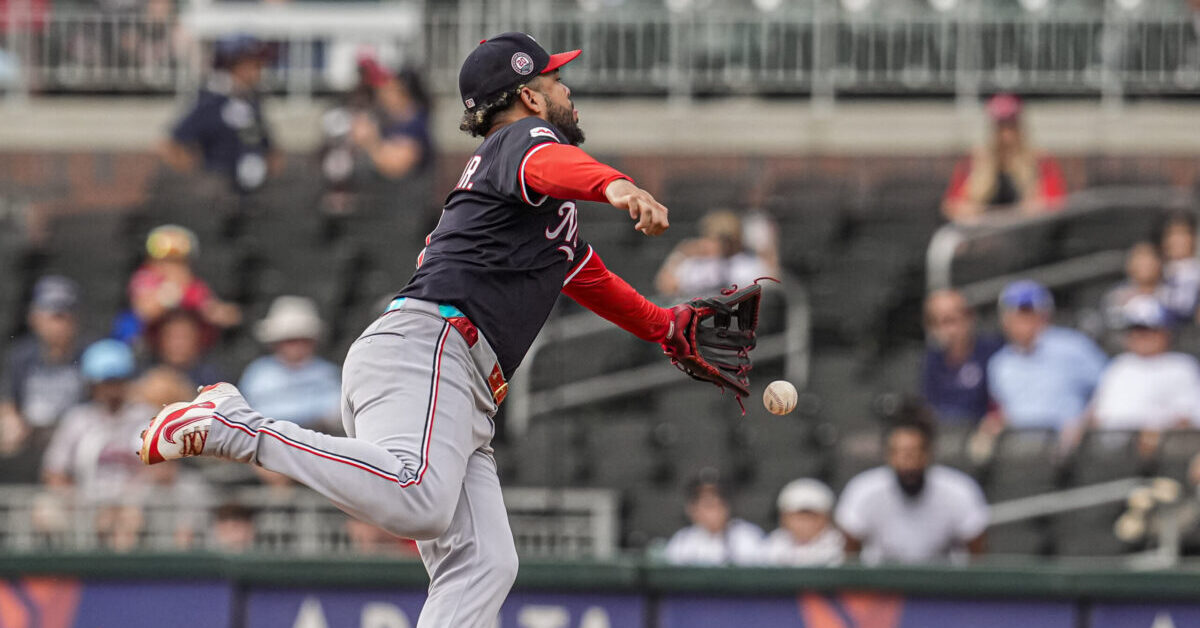
Historically, when I’ve done the Big Kid Adds, I looked at the players added in about half of the Elite Leagues (previously named High Stakes). Most of the leagues had just drafted, so there weren’t many moves. This week, I decided to dive into the guys added in two leagues or those that warranted double-digit bids.
Hitters
Moisés Ballesteros: Ballesteros can hit, but it might be hard for the 22-year-old to get full-time at-bats at DH. A solid 20 HR and .275 AVG bat.
Carson Williams: With an injury to Taylor Walls, Williams is now the Rays’ starting shortstop. I think the idea of Carson Williams might be better than the actual player. While he has shown the ability to hit for power and steal bases in AAA, he has major contact issues. In 466 AAA plate appearances, he has a 34% K%. In 106 PA last year in the majors, he posted a 42% K%. And he showed no improvement this Spring Training, with his Contact% dropping from 74% last year to 69%. He’s a broke man’s Oneil Cruz.
Jake Meyers: I’d not be surprised if Meyers ends up being one of the most added and dropped players this year. There will be weeks when he’ll be needed because of an injury replacement.
Starters
Carmen Mlodzinski (2): Lots of preseason talk revolved around Mlodzinski going to the bullpen. Now he’s in the rotation, and I’m interested. Last season, he posted a 3.60 xFIP (8.1 K/9, 48% GB%). And he went off this spring with a 10.2 K/9, 1.5 BB/9, and 57% GB%. He’s changed his pitch mix by leaning into his sinker (67% GB%), splitter (23% SwStr%, 50% GB%), and curve (12% SwStr%, 68% GB%). A must add to see where this goes.
Sean Burke (2): He’s in the White Sox rotation, but has been struggling. The biggest key for him is throwing strikes, as seen by his 4.2 BB/9 last season. His walk rate is down to 3.1 BB/9 in Spring Training. The only change is that he’s not throwing his subpar curveball (9% SwStr%, 42% GB%) as much.
Ryan Johnson (2): Johnson made the Angels rotation. He got hit around last year with a 2.5 HR/9 and .426 BABIP, but posted a 3.97 xFIP. This spring, he focused on his sinker (67% GB%) and splitter (67% GB%), and his groundball rate increased to 57%. He might have similar results to his teammate, José Soriano.
Brandon Sproat: Made the Brewers rotation after a solid 9 IP (2.51 xFIP) this spring. All his pitch velocities increased by 1-2 mph. He threw five pitches between 34% and 14% last season and continued those rates this Spring Training. The four-seamer and change stink, and he might have some upside if he cut down or eliminated their usage.
Landen Roupp: I was hoping he would improve his control after a 3.8 BB/9 last season. Nope, his walk rate jumped to 4.9 BB/9 this spring. He can miss bats and keep the ball on the ground, but he just walks too many batters.
Walker Buehler: By default, he’s in the Padres rotation. He’s been horrible over the last two seasons (5.10 ERA, 4.86 xFIP, 1.53 WHIP) and lost almost 2 mph on his pitches this spring. There are so many better options.
Rhett Lowder: While Lowder’s ERA is all over the place, one item remains constant: he walks a ton of batters (4.5 BB/9 this spring). He destroys a team’s WHIP. In deep leagues, he might be worth adding-and-benching to see if he can start throwing strikes, but be ready to move on once a better option materializes.
Eduardo Rodriguez: In the WBC, he threw over four innings of shutout ball against the USA team. He’s had good starts before, never sticking. Over 10 seasons, his talent has varied from streamable to unplayable. I don’t expect that to change this year.
Relievers
Jordan Romano (2): Possibly in the mix for Saves with the Angels.
Didier Fuentes: After a great spring (0.22 WHIP, 0.66 ERA), the 20-year-old will be used out of the bullpen as a long reliever.
JoJo Romero: Possibly in the mix for Saves with the Cardinals.
For my final article of the preseason, I decided to assign myself the difficult task of identifying my favorite fantasy pick from each Major League team. Some teams have several candidates, while others I have to hold my nose for (cough, cough, the Nats). You’ll see players from throughout the player pool, as my choices aren’t necessarily tied to their market value. They are players I have been targeting and drafting this winter and spring.
Here are the leagues I’m in this season:
22 NFBC Gladiators (roto, 15-team, 23 rounds, no bench)
7 NFBC Draft Champions (roto, 15-team, 50 rounds, draft and hold)
4 NFBC Online Champions (roto, 12-team, 30 rounds, with FAAB)
2 NFBC Main Events (roto, 15-team, 30 rounds, with FAAB)
SCARF (EARTH industry league on NFBC; same setup as the Main Event)
TGFBI (Justin Mason’s industry league on NFBC, same setup as the Main Event)
FSGA Experts Champions League (14-team roto, partnered with colleague Joe Orrico)
Tout Wars (roto, OBP instead of AVG, 15-team, draft and hold)
Yes, I love helping people win at fantasy baseball, but I also love to play it. You might think I’m crazy, but please note that only nine of them are FAAB leagues. The Gladiator is a hybrid best ball format where I don’t even have to set the lineups. I won’t even mention the 100+ best ball leagues I’m in on other sites. Again, no management is necessary – just draft and hope for production and good health luck.
Let’s get into it. Listed with each player is their current NFBC Online Championship and Yahoo average draft positions.
Toronto Blue Jays – Kazuma Okamoto, 1B/3B (NFBC: 196, Yahoo: 166)
Many older players from overseas have a difficult time adjusting to the Major Leagues. If spring training is any indication, Okamoto seems to be adjusting just fine (.316/.435/.632). He’s going to be an integral part of this offense. Oh, and Sporer loves him, too. Honorable mentions to Daulton Varsho (30+ homers if he stays healthy) and Cody Ponce 폰세, though his ADP has leaped over 100 spots over the last month.
I strongly believe that Anthony is a future Hall of Famer and that he will be a top 20 hitter in his first full season as the leadoff hitter for a strong Red Sox offense. Many fantasy analysts and managers believe that 2026 is the Year of the Breakout for Wilyer Abreu and Ceddanne Rafaela. Now imagine if Jarren Duran produces like it’s 2024, Trevor Story avoids fluky injuries, and Willson Contreras exceeds 600 plate appearances for the first time. That’s a lot of “ifs”, but with that pitching staff depth and bullpen, this could be a magical season in Fenway.
New York Yankees – José Caballero, 2B/3B/SS/OF (196, 189)
Most of the Yankees are fairly priced, but fully priced. The New York Fantasy Tax is a real thing – everyone knows proud New Yorkers get their guys. Caballero is a swipes maestro who has been working hard to improve as a hitter this offseason, and is eligible at almost every fantasy position. He’s a great hitter to bring into your lineup when someone in your starting lineup suffers a midweek injury or you need some stolen bases. An honorable mention to Carlos Rodón, who is one of my favorite mid-to-late-round stashes, and is on track to return well before Gerrit Cole.
BaltimoreOrioles – Five-Way Tie
My rule of thumb for 2026 drafts, if you have any remaining: when in doubt, draft the Orioles hitter. In AL Bold Predictions on FTN, I prognosticate that the Orioles will be the fourth team in history to hit 300 home runs. I have a Gunnar Henderson–Pete Alonso 1-2 punch on several teams, and would happily do it again. Colton Cowser, Trevor Rogers, and Shane Baz are the other three O’s I’ve been targeting. Well, I guess I like their pitching too (just not their horrendous bullpen).
Cream rises to the top in real life, and often does in fantasy as well. After a rocky rookie season in 2021 (6.37 ERA in 82 innings, mostly as a starter), Jax has slowly turned into one of the best relievers in the game. Over the last two seasons, only two qualified relievers have a higher swinging-strike rate than Jax’s 18.3% – Josh Hader (20.8%) and Mason Miller (20.3%). With Edwin Uceta ailing and Garrett Cleavinger a lefty, it’s only a matter of time for Kevin Cash to let Jax run with the closer’s job, similar to Pete Fairbanks last year.
Not a team loaded with fantasy goodness, but DeLauter stands out. A healthy DeLauter is a fantasy pick with massive upside, though his price has been steadily rising – out of the 300s and up several rounds, due to a hot spring. Parker Messick is a strong end-game target, though I haven’t been able to land many shares. I wouldn’t be shocked if he out-earns last season’s Major League walks leader, Gavin Williams.
Detroit Tigers – N/A
No offense to Tiger fans, but they are not a very exciting group from a fantasy perspective. Of course, that doesn’t mean that managers won’t be able to squeeze out some fantasy profit from some of these players. Tarik Skubal is the best pitcher in baseball. I have not often been in a position to draft him – and when I have, I usually target the elite first-round hitter. Sadly, I have no Skubal shares. The move to Detroit is a great one for Framber Valdez, on paper, but I don’t have great vibes on him this season. Jack Flaherty can be spectacular in one start, and serve up a half-dozen earned runs in the next – I can’t stomach that volatility. Top prospect Kevin McGonigle made the team and will be an exciting player. This is one I likely missed the boat on – especially recently, as his price continues to soar. The best bangs for the buck are Dillon Dingler and Gleyber Torres, with ADPs in the mid-200s.
I highlighted Vinnie P in my bold predictions article earlier this month, noting that smashing 40 dingers may not be quite so bold. Kauffman Stadium’s outfield fences are moving in being lowered, which should bode well for most of their hitters. In fact, there are quite a few 30+ HR candidates on the squad. Their pitching staff is solid, and the bullpen has been upgraded from last season. The Royals are my pick to win the AL Central.
Would you believe me if I told you that the White Sox player with the highest ADP this season is their new closer who has never been a closer for a full season and posted a 13.8% walk rate last season? I have a couple of Seranthony Domínguez shares, but I don’t feel great about it. I do feel good about a late-round Austin Hays, who should be an everyday hitter and respectable producer in the middle of their lineup.
Wallner is an elite power hitter with some past oblique issues. But Wallner is only focused on the future, which involves soaking those obliques before sleep, and then smashing some baseballs. Wallner and his 16% barrel rate can produce a 30-HR, 85-RBI season as an everyday player for the Twins. Management doesn’t intend to platoon him at this time. Mick Abel has been flying up draft boards, but alas, I have not been able to sneak a share yet. Josh Bell has been a bargain all season (ADP 370), and it’s almost criminal to not click on his name in a draft where you need a CI with power.
There are so many A’s to choose from. We’re expecting the world from the likes of Nick Kurtz, Brent Rooker, Tyler Soderstrom, Shea Langeliers, and even Lawrence Butler and his 94.3% healed knees. This is the type of offense that will keep opposing pitchers awake the night before the game, and give them nightmares in their sleep after the game. Wilson will play his part in disrupting Circadian rhythms as a potential .320-80-17-70-13 bat this season. The AL Batting Title goes through Mr. Wilson this year.
The former Pittsburgh Pirates’ prospect will find himself comfortable down in the Lone Star state. Thankfully, he won’t have to be the lone star in the rotation with ace Hunter Brown there. Some of us were witness to his official breakout, which occurred after the last All-Star break where Burrows produced a 3.27 ERA (3.19 FIP), 1.07 WHIP, 25.1% K, and a 6.4% BB in 10 starts and two multi-relief, piggyback spots. Burrows will make his official Astros debut on Friday against the Angels, as the pitcher slated second in his rotation.
We don’t only need stars to win fantasy baseball leagues, we need support roles as well. In this loaded lineup of stars, Donovan shall be the table-setter; the elite contact rate guy who provides above-average production, just not with a barrage of homers or bag thefts. “Better in real baseball” is what they say about Donovan. I wonder what they’ll be saying this October when the leadoff man scores triple-digit runs and establishes himself as the glue of this offense. Only time will tell and I’ll be ready to listen to the audio book on my long drive to Thanksgiving dinner.
We need to set some thresholds for the Driveline guys, but keep it simple. Can we measure it simply? Like, if O’Hoppe hits 30 home runs, then it’s one point for Driveline, or something like that. For drafters in one-catcher leagues who are light in roto power categories and need to fill their catcher slot before the draft ends might be thrilled with the big bopper, who I am certain has another level of production marinating and ready to be served up in 2026. Wait, we forgot to cook! O’Hoppe will do just that with elite framework for those called third strikes. It’s rumored that LOH knows the ABS blind spot.
Wyatt Langford and Corey Seager need each other. If one is hurt for a prolonged period, the other likely won’t earn or exceed their fantasy value. Both have been big targets, but the Langford price has skyrocketed with his red-hot spring, up to 33 in 12-team NFBC leagues. We saw glimpses of Leiter’s potential and dominance in his first full season and all said, “if only he could cut down on the free passes.” He’s been doing just that in the spring. If he could pull a Pivetta and dip that walk rate down to the 8-9% range, we’ll be laughing all the way to the roto bank.
This was a tough one because this team is loaded with fantasy goodness. Robert Jr. is one of my highest rostered hitters. He’s had a rough few years filled with losing, multiple managers, and myriad of injuries. This is his fresh start. He’s an above average base-stealer, an excellent defender, and likely did not hit 38 homers in 2023 by accident. Devin Williams, Bo Bichette, Freddy Peralta, Francisco Alvarez, Jorge Polanco, and Marcus Semien are other Mets I’ve frequently targeted in drafts. It’s an offense we want to invest in, and they may very well break the curse in 2026.
Acuña produced the best roto season in history (2023) before Shohei Ohtani topped him the following season. With the Braves offensive band healthy and back together, sparks (and balls) should fly. The big issue, of course, is the pitching rotation. Their current “IL staff” with Spencer Strider and Spencer Schwellenbach looks better than the quintet the Braves are rolling out there to begin the 2026 season. I’ve drafted Acuña over Juan Soto at the 4-spot quite frequently this draft season, and even took him over Bobby Witt Jr. at the 1.03 in my latest draft. Austin Riley and Matt Olson have been targets as well.
I’ve had one rule with starting pitchers this winter: don’t leave a draft without a Phillies or Mariners arm. This was a nasty trio last season. Per our Player Rater, Sánchez was the overall SP6, Wheeler the SP14, and Luzardo the SP30. Luzardo’s value was slightly weighed down by his ratios (3.96, 1.22), though he ranked fifth in the Majors in strikeouts with 216.
Though I have a few shares of Jakob Marsee, my favorite Marlins’ target has been Meyer. He only threw seven innings in spring, but they were filthy. He struck out 12, walked one, and did not allow an earned run. Meyer is incredibly talented, but has dealt with his fair share of injuries over the last few years. The key is that he is healthy now. Drafters have taken notice as his ADP has risen over 100 spots (to 257 in OCs) over the last two months.
Washington Nationals – N/A
My only true Nats’ target this winter was Harry Ford, who will undoubtedly crush in Triple-A while Keibert Ruiz keeps his job warm for him. It’s difficult to invest in a third-round James Wood, regardless of the obvious power and upside. His 221 strikeouts in 2025 were the third most ever, behind Mark Reynolds (223 in 2009) and Adam Dunn (222 in 2012). Top prospect Dylan Crews was just optioned to Triple-A, and CJ Abrams might need a chaperone for the evenings before road games, so he can be fully rested for a game of professional baseball. Don’t get me started on the pitchers and their closer committee, led by Clayton Beeter and his 17.3% walk rate last season. Though he’s moving in the right direction this spring (11.5% walk rate, yippee!) Though we all know that anything is possible in the Year of Our (Brad) Lord.
There’s something in the pitching water in Milwaukee, and we all want a taste. Woodruff was an early-draft-season target and Sproat more recently, since being traded to the Brewers. Let’s hope Woodruff can stay healthy and that Sproat can deliver on the promise and hype from his days as a New York Mets’ prospect.
I don’t always target an early second baseman this draft season, but when I do, it’s usually Hoerner around his ADP. It takes the proper power-heavy build through the first few rounds – one where Hoerner is the perfect complement with his assistance in three categories – batting average, runs, and stolen bases.
His price rose, and then it dropped. Now it’s reasonable, especially with us all aware of the Pirates’ front office’s tendencies of being cheap, maximizing service time, and keeping their top prospects down. Griffin is going to make an impact in the big leagues as soon as he is promoted, which I expect to happen sometime in early May. He is one of the few hitters worth stashing on shallow benches, especially if he is available in your last-minute drafts after 200 ADP.
He was a star at UCLA, and a budding star in his rookie season with the Reds in 2023, though his .290 average was clearly inflated by an irregularly high BABIP of .385. He was mostly a bust as a top 100 pick last season, and was hovering in the 180-200 ADP range for most of the winter. Fast forward to this spring where he has been the hottest hitter on the planet (.529/.571/1.020), and suddenly his NFBC ADP is closer to 100. Folks who invested early are pleased. He will go through prolonged slumps and strike out a ton, but has massive upside and potential to out-earn even his current draft cost.
St. Louis Cardinals – Iván Herrera, UT/C (182, 167)
Herrera was an unassuming, slap-hitter in the minors, who gradually improved his power metrics every season since. Last year was the breakout, as he hit .284 with 19 dingers, flexing above-average power (91.2 EV, 11% BRL, 47.4% HH). Health is the biggest question mark, and the one risk with drafting him. I haven’t landed him in drafts as much as I would have liked – he’s my ultimate FOMO guy. Herrera should earn catcher eligibility sometime in late April or early May.
Walker has flown under the radar for most of draft season because there hasn’t been much written about the Giants’ bullpen. His draft cost has been affordable because he wasn’t very good in his first full season as their closer. There isn’t much competition for the ninth-inning gig in San Francisco, and Walker has had a strong spring. Jung Hoo Lee is one of my “one year early” guys – my most rostered hitter last season. Moving back to his original position in the KBO (right field) should make him more comfortable. He won’t wow in any particular category, though he’s a sneaky candidate to hit over .300 this season.
I love Mason Miller as much as anyone, but I’ve haven’t been comfortable drafting him at his second-round ADP, outside of Gladiator contests back in December. King has been my favorite Padres’ target as a 10-round SP3 in 15-team leagues with the potential to help anchor my staff’s ERA and strikeout categories.
Hello, my name is Vlad Sedler – President of the Jordan Lawlar Fan Club. We all have our biases, and Lawlar is one of my biggest. He’s a former top prospect with the potential for five-category contribution and will gain outfield eligibility soon. The knock on him can’t be ignored – the kid has not been able to stay healthy. If he does though, it’s Profit Central.
The only Rockies player in the top 100 ADP is Hunter Goodman. If we scroll down a few rounds, the next man up is Brenton Doyle, who has been reasonably priced all draft season in the 160-200 ADP range. Doyle broke out in 2024 (82 R, 23 HR, 72 RBI, 30 SB), then had a rough follow-up in 2025 as he dealt with a family tragedy early in the season. He looked good after the All-Star break, hitting .282 with 8 HR and 9 SB in 56 games (207 PA), and has had a strong spring.
Saving my home team for last, we all know the fantasy juggernaut that the Dodgers are, though many of them are expensive – six of their players have average draft positions in the top 70. I do believe in a Mookie Betts bounce-back, though I usually target pitchers in his draft range and also usually have a shortstop by the time he’s a draft consideration around his ADP. I have more shares of Roki Sasaki than probably anyone in the NFBC, most from December and January non-FAAB leagues. I can be stubborn, but must also be realistic: he appears broken and unconfident, and may need a stint in the minors to help him. As for my top Dodgers target, that’s newcomer Kyle Tucker, who I believe will stay healthy, hit at least 30 home runs and make a run for the NL RBI crown.
Hope you’ve enjoyed my preseason content, and I look forward to serving you with good advice during the season. Opening Day is almost here, so let’s Play Ball!
I can usually tell you sometime in January or December who will show up in this piece. That’s not because I have started drafting – my leagues are all keeper or dynasty formats and I didn’t have any drafts until late January – but because I start to realize who I trust, who I am higher on than others, and who is likely to be on my rosters. This year, however, there are some surprises on my list.
I am not sure what to make of those surprises, but diving into these players, there are some patterns that might help me plan better for future seasons.
Normally, I rank players using CBS’s rostership rate changes. The values are off this week because many drafts are still going on. Guys like Shohei Otani and Aaron Judge are the most added players (who knew?). So for this week, I took the players who saw their ADP jump the most in NFBC draft-and-hold leagues, with the start of Spring Training being the cutoff point. Read the rest of this entry »
2/11/2026 – Write-ups added for all players, many rankings changes within Tiers 6 and 7; Injury updates on Jackson Holliday, Jordan Westburg, Tommy Edman; Updated ADP data from NFBC Draft Champions to NFBC Online Championships
2/20/2026 – Some shuffling in the mid-tiers. Westburg significantly dropped, Polanco, Semien get small bumps
2/26/2026 – Donovan, McNeil, Castro move up slightly, Clement, Sosa, Westburg, and Clemens move down
3/6/2026 – Polanco jumps into Top 10, Semien and Torres also jump up a few spots. Westburg, Holliday, Otto Lopez trend downward
3/20/2026 – Maikel Garcia, Matt McLain, Jeff McNeil get slight bumps, small shuffles in the mid-tiers
Ranking Methodology
$ Values are based on standard 5×5 12-team league using the FanGraphs Depth Charts and these Auction Calculator settings. They default to a player’s most valuable position, so if the first base list includes a catcher, it will show that player’s value at catcher.
ADP and $ Values are updated as of the last update date on this post.
5-game eligibility was used for these lists to cast the widest net.
Ketel Marte has been the best second baseman over the past two seasons, and it hasn’t been particularly close either. Since the start of 2024, his 149 wRC+ is 29 points higher than the next second baseman. He leads all qualified players at the position in HRs, runs, RBI, and batting average in that time as well. 2025 also saw him post the best barrel rate (13.5%) and maxEV (119.6) of his career. He gets drafted after Jazz in nearly every room which doesn’t make a ton of sense to me
Jazz Chisholm Jr. had the most complete fantasy season of his career in 2025, reaching the 30-30 plateau for the first time in his career despite missing 32 games. Durability has been a bit of a question in his career, but he has played in 77% of possible games since the start of 2024. His strikeout rate will likely keep the batting average in the .240/.250 range, but you can live with that considering the categorical output and the positional versatility you get.
Not Quite Elite, But Still Foundational Assets
Fantastic options that should be targets for most managers
Brice Turang made some excellent strides with his power output in 2025. He raised his barrel rate from 2.4% to 7.9%, and his hard hit rate went from 29.7% to 47.4%. Those are massive gains to make over the course of a single season, especially since Turang didn’t sacrifice any of his bat-to-ball skills and still achieved a .288 batting average. He represents a bit of a no-mans land after the first two names and before the next batch by ADP, and it’s justified in my eyes. He is very easily the #3 second baseman heading into 2026.
Nico Hoerner quietly had a fantastic 2025 season, something that didn’t seem guaranteed last offseason after he underwent shoulder surgery. At this point, we have an established baseline expectation of the production Hoerner brings: single-digit HRs with ~ 90 runs, 30 SBs, and a batting average that will be close to .300. He’s a great draft pick as long as you compensate for the lack of power you’ll be getting.
Jose Altuve has his doubters every year, and he always ends up producing anyway. Even at 35 years of age, he managed to hit 26 HRs while providing solid coverage across the other categories. He may not be the super elite target that he once was, but I’m not willing to count him out until we see the bottom really fall out from under, and we didn’t really get any string indications that he will be hitting that cliff in the immediate future. Now, we also get the added benefit of outfield eligibility.
Excellent Fall Back Options
If you miss out on the top two tiers, you should feel more than comfortable with these players starting for your squad
Maikel Garcia had the breakout season in 2025 that many were expecting a year earlier. He was a true five category asset and also cut down on his strikeout rate while improving his launch angle and barrel rate. Those playing on Yahoo or sites with lighter eligibility thresholds will get a goldmine utility player that they can stick just about anywhere in their lineup
Is this ranking of Ozzie Albies an indication that I believe he will bounce back, or is the position simply so bad that even a guy who was arguably droppable last year is entering the year as a Top 10 option? Well, yes on both fronts. We have seen several elite fantasy seasons from Ozzie Albies and I find it very hard to believe that all of the magic is just gone before he even turns 30. The Braves are positioned to be one of the better lineups in baseball (stop me if you’ve heard that one before) and Albies will be afforded the opportunity to play every single day. I’d personally be very surprised if we don’t see him turn things around in a big way in 2026.
The Question Marks
The players who have big questions surrounding their value entering the season, but all are very capable of returning Top 100 value if thinhs break right
What will Brandon Lowe look like in Pittsburgh? Well, I think fairly similar to what we’ve seen in Tampa. The initial instinct will be to think that Lowe is getting a park upgrade considering that the Rays are going back to Tropicana Field, but PNC park isn’t all that great for left-handed power hitters either. Over the past three years, PNC park ranks 25th in HR factor for LHH, and it was actually dead last in 2025, coming in more than 30% worse than league average. At the end of the day, Lowe is powerful enough to mostly compensate for that, but he may end up losing a few dingers. We also have to worry about his durability, as he’s never played 150 games in a season and the closest he came was 149 way back in 2021.
Jorge Polanco was terrific in 2025, especially considering he was hitting in one of the worst parks in the league. Across 138 games, he hit 26 HRs with a .265 average and a 132 wRC+. Now he’ll be in New York hitting right behind Juan Soto and should thrive in a better ballpark and RBI spot. He is one of the more mis-priced players on the board in early drafts, he should be going at least 75 picks earlier on average.
2025 was a horrific season for Matt McLain that saw him lose time as the Reds’ everyday second baseman. He still managed 15 HRs and 18 SBs, but it came with just 50 RBI and a .220 batting average over nearly 600 plate appearances. His hard hit metrics plummeted throughout the course of the season and he finished with a 77 wRC+. I still mostly believe in his talent, especially while hitting in that park, but we may have to adjust our expectations down a bit from what we thought he could achieve following his incredible rookie year in 2023. He may be able to reach those heights again, but it would be wiser to expect something in the 20-20 neighborhood and he pleasantly surprised if he is able to surpass that.
Ceddanne Rafaela fits more into the “accumulator” category as opposed to someone who will give you elite per-game production. He is arguably the best defensive center fielder in all of baseball so playing time will never be in jeopardy. However, he has an exceptionally high chase rate and SwStr%, which have been big reasons why his OBP has never exceeded .295. He’ll probably provide something close to a 20-20 season, just be prepared for it to come with a .240 batting average and potentially underwhelming counting stats.
Many are exciting at the prospect of drafting Luke Keaschall, but I think he may be a bit overpriced in early draft rooms. While I think he can hit for a strong batting average and likely provide ~25 SBs, I worry about the power potential and what his counting stats will look like in a rebuilding Twins’ lineup. He had just a 5.2% barrel rate and 31.2% hard hit rate as a rookie. Combined with his 46% ground ball rate, that translated to just four homers in 49 games. He’s a better target for OBP and point league players than he is for standard categories and roto formats.
I’m very intrugued by Marcus Semien as a New York Met. It’s very likely that he will be sandwiched between Francisco Lindor and Juan Soto in that lineup, which would provide Semien with a massive opportunity to provide runs and RBI. While he did miss some time in 2025, Semien has built his career around being a guy who plays 162. Even if he can’t quite play every game in 2026, I can easily see a world where he suits up 150 times, and even with a degrading skillset, ~150 games in that lineup spot could mean he comes close to 100 runs and RBI. He’s priced as a bench piece who could very easily become a cornerstone of your lineup.
I am expecting Jackson Holliday to take a big step forward in 2026 now that he’s had close to 900 plate appearances to get acclimated to big league pitching. He’s been mostly disappointing to this point but hasn’t really been overmatched by big league pitching either. He’s has an 8.3 BB% and 24.4 K% with relatively solid plate discipline metrics, especially considering he just turned 22 in early December. He’s expected to lead off for the Orioles, at least against RHPs, and we could see a monster season from Holiday if he is able to lift the ball just a bit more than what we’ve seen to this point. 2/11 Update: Holliday will miss opening day with a broken hamate bone and that does concern me with regards to his power for the rest of the season. This feels like a situation that the Orioles will approach carefully as opposed to rushing him back, so we cold end up looiking at a mised month (or more) with potentially diminished skills in the immediate aftermath.
Xavier Edwards did just about exactly what we thought he would in 2025. A very marginal power output that was accompanied by 27 steals and a .283 batting average, and that is about what we should expect again. He’s a phenomenal contact hitter and could compete for the batting title in a given year. In a lot of ways, he’s a poor man’s Nico Hoerner. You can expect relatively similar production from Edwards with a lower floor in most categories, but if you miss out on Hoerner and want to shore up your speed/BA categories, Edwards is a solid option in what has become a very interesting offence in Miami.
Mediocre/Middle Infield targets
The guys who you won’t be terribly excited to draft, but will likely return a small profit by the end of the year
Gleyber Torres is back in Detroit following a very solid first year with the team in 2025. However, it was a tale of two season for Gleyber. He slashed .281/.387/.425 in the first half with a 131 wRC+. In the second half, he slashed .223/.320/.339 with an 88 wRC+. This will probably keep people away and is likely why his ADP has been around 250 all draft season, but I’m not overly concerned about the splits. Torres is still only 29 and he represents a very high floor at a terrible position. He’s a solid fall back option as a starter in deeper leagues, a very good MI candidate, and could function as a bench asset in shallower leagues
While his 2026 home is still undetermined with trade rumors flying all around, Brendan Donovan should be counted on as a solid asset wherever he lands. Across four seasons and nearly 500 major league games, Donovan has a 119 wRC+ with a .282/.361/.411 slash line. For fantasy purposes, he’s a great option to throw in when you know he’ll be facing a lot of RHPs, but he is a bit limited overall considering the lack of power and speed. He’s a great batting average asset and you could get away with starting him in your MI spot, but I’d prefer if he wasn’t in the starting 2B spot if possible due to the lack of categorical juice. 2/11 Update: A trade to the Mariners should actually help his value despite a ballparl downgrade. We were never relying on donovan for power to begin wth and now he is projected to lead off for a very, very good mariners lineup. He’s a very strong target in all formats.
While there has been some fluctuation in his year-to-year output, we have a pretty solid baseline when it comes to Bryson Stott. He plays nearly every day in a solid lineup and is a great speed threat if you went power-heavy early in your draft. He goes around pick 200 in most drafts, which is more than reasonable considering what he’s done to this point in his career. It’s also about the lowest he’s gone since he became a household fantasy name in 2023.
Luis Garcia Jr. wasn’t quite what we were hoping for in 2025, but it was necessarily a bad campaign either. He went 16-14 while providing decent counting stats and a .252 batting average, but it does look like he is capable of more than that. He showcased a career high 9% barrel rate and 46% hard hit rate and also cut down on the ground balls for the third consecutive season. He’s a nice option for those looking to punt the position in deeper formats and go bargain bin hunting, as I’d still feel comfortable with him as my starting 2B in a 15 team league.
Brett Baty was surprisingly really good in 2025, but it mostly flew under the radar. He hit 18 HRs with a .254 average and a 111 wRC+, and really thrived in the second half with an .829 OPS and 135 wRC+. He’ll likely enter 2026 as the Mets’ everyday third baseman and will be given the opportunity to play everyday. With an ADP in the 260s and qualifying at two of the worst positions in fantasy, he’s looking like a great late pick
Talent has never been the question when it comes to Jordan Westburg, it’s just been a matter of staying on the field. The positive news is that he did finish the season healthy and the Orioles’ lineup looks as good as it ever has in this era of Baltimore baseball. We are projecting him to hit 2nd in the O’s lineup and should that stick, he’ll find himself in a very opportune spot for run production. 2/11 Update: Westburg is already dealing with a sore oblique and given his track record of health (or lack theirof), he has to move down a touch until we have a clearer picture from the Orioles
2025 was Lenyn Sosa’s first full major league season, and he delivered with 22 HRs, 75 RBIs, and a .264 batting average. He displayed an impressive 10.4% barrel rate with very strong contact rates as well. After some offseason moves, he is now projected to serve in a branch role for the White Sox but I don’t see that as being very likely. This isn’t a team that is good enough to leave Sosa on the bench with any regularity, even given his defensive shortcomings. I expect him to see time at first, second, and third base throughout the season with DH reps mixed in as well. He is being drafted beyond the Top 300 picks in NFBC drafts, and I think he has become a value.
The Boring Tier
These players all have their uses but aren’t particularly exciting and likely won’t be mainstays in your starting lineup all season.
While he is not the most exciting player to draft, Jose Caballero will fit a lot of builds in 2026 due to his elite speed. Since the start of 2024, his 93 stolen bases trail only Elly De La Cruz and he led the majors in 2025 with 49. Caballero was initially projected to serve in more of a utility role for the Yankees, but Anthony Volpe’s injury means that more playing time has opened up for him at shortstop to begin the season. He is a traditional fantasy “rabbit” that will likely only assist you in one category, but there is value in that for speed deficient teams given his mid-200s ADP
Colt Keith has some fairly strong underlying skills, and is a target in particular when it comes to OBP formats. Over 137 games last year, he slashed .256/.333/.413 with 13 HRs and a 9.2% barrel rate. He also is a very good contact hitter who doesn’t chase a lot of pitches. RosterResource is also projecting him to lead off for the Tigers which should add to his fairly pedestrian run total from a year ago. An added bonus is that he has eligibility all over the field and will be easy to squeeze into your lineups.
Jeff McNeil feels like a very good fit in the Athletics’ lineup. On a team full of young players, McNeil is the only bat besides Brent Rooker in the lineup who is over 30 years old and should provide a stable veteran presence. We could see a few more home runs than usual given the very favourable home park that the A’s will be playing in again, and we’ve seen the batting average upside throughout his entire career. McNeil will likely be in the middle of the order somewhere but don’t be surprised to see him get some top-of-the-order reps as well. He’s a great but right now.
I believe we have reached the point where Luis Arraez has become undervalued. While he doesn’t possess a well rounded fantasy skillset, he has the ability to win a batting title and even in a poor 2025, he still hit .292. He has at least 600 plate appearances in every season going back to 2022 and his batting average with that volume is incredibly valuable. As the leadoff hitter for the Giants we can expect a solid run total to go along with his usual chip in homers and steals. His ADP is usually around the 280 range, and it feels like the market has soured on him a bit too much this year.
After a poor 2025, Willi Castro seems like a strong bounceback candidate in 2026 as he heads to Colorado. We’ve seen solid fantasy seasons from him in the past and in a very hitter friendly environment where he should play everyday, Castro could return something like 15 HRs and 30 SBs as long as he stays healthy. Initially not someone I had a ton of interest in, I now see Castro as a pretty viable sleeper at a very dark position. As a bonus, you can also use him at third and in the outfield, two other very scarce positions in 2026
Otto Lopez had a very serviceable fantasy season in 2025, putting up a 15/15 season with 77 runs and a .246 batting average. The issue is that it took him nearly 600 plate appearances to do so and he doesn’t have a strong offensive skillset when you look beneath the hood. While he is a strong contact hitter, most projections see him as a ~.260 bat with very limited power. He’s also projected to be the #6 hitter in the Marlins lineup which is far from ideal for fantasy counting stats. He’s not necessarily a fade, but not really a target unless I am desperate for a middle infielder.
Ernie Clement had a strong 2025 season and went on a legendary run in the postseason, but he doesn’t have a very strong fantasy skillset. In 157 games and 588 plate appearances, he managed just nine homers and six steals while driving in 50. His .277 batting average and 83 runs scored were nice, but the main appeal here is his multi position eligibility and being able to plug him in when one of your starters is injured or sitting. If he is in your starting lineup with regularity, you will inevitably start to fall behind with power and speed.
We’re Throwing Darts, Folks
The point of a draft where you are simply throwing darts and hoping for the best
Chase Meidroth had a very impressive rookie debut in 2025. He played a very strong second base and shortstop while also showing a lot of promise at the dish. His contact ability is already some of the best in baseball, evidenced by his 21.9% O-Swing, 91.6% Z-Contact, and 4.3 SwStr%. His power will likely be non-existent given his 1.6% barrel rate and 53.3% groundball rate, but he will likely give you ~15 SB with a strong batting average as an everyday player. There is some value here but he really is best suited deeper league players.
Kody Clemens has a similar story to Lenyn Sosa. They both played their first full season in 2025, had success for a re-building team, and are now projected as bench pieces. As with Sosa, I think this will not end up being the case with Clemens. He hit 19 HR in just 386 plate appearances, anchored by a 12% barrel rate and 48.3% hard hit rate. His power is also combined with solid contact and low chase rates. He’s a strong defender at first and second base, and I can see him functioning in a utility role that sees him playing ~5 times per week. He’s an afterthought in drafts with his 392 ADP. I’d be buying the dip where possible, especially in NFBC Draft Champions formats.
Brooks Lee has a fairly average profile overall. His power and contact rates are fairly average and he’s not a standout defender anywhere on the field. However, as the Twins continue to rebuild, Lee should stand to see 500+ plate appearances again in 2026. After 189 games played and more than 700 major league plate appearances with a 75 wRC+, it’s fair to question what Lee will turn into, but he’s being drafted outside of the Top 300 picks and brings 2B/3B/SS eligibility to the table. He’s a decent dart throw but keep expectations in check.
Playing for the Dodgers can be a huge boon to your fantasy value, and that’s why Tommy Edman comes in as high as he does on this list. In just 97 games, he managed 49 runs and 49 RBI, even with a career worst 81 wRC+. Edman is still just 30 and I’d expect him to start stealing again now that the ankle issues are in the rearview mirror. The upside here is a Top 7-10 option at the position if he is able to stay healthy. That’s a big if with Edman, but he’s priced to buy with an ADP beyond 300. 2/11 Update: Edman will miss the start of the season as he continues to recover from anle surgery. I’d still be willing to draft him if he falls quite dramatically in drafts, but it would have to be a substabtual discount given his track record over the past couple of years.
Kristian Campbell was a bit of a disaster in 2025. He looked great in April before faltering and being sent down to AAA where he spent the remainder of the year. The Red Sox have said that he’ll be primarily in the outfield this season and he’ll have a chance to earn a job out of spring training. We should be encouraged by the fact that Boston has already paid him, as it shows their confidence in the 23-year-old and also incentivizes them to play him. He’s not a specific target outside of deep formats, but there is a world where he breaks camp with the team and hits his way into the lineup on a regular basis.
Jonathan India was a total disaster last season. He failed to reach double digit homers and did not successfully steal one base. I’m encouraged by the fact that much of his profile remained the same from his time in Cincinnati and he will still have a regular role for the Royals in 2026. With an ADP of 370 and eligibility at 2B/3B/OF, India is a solid bounceback candidate on what should be an improved team.
At this stage of his career, we know exactly who Jake Cronenworth is. He’s going to hit 10-15 HRs, steal a handful of bases,and hit somewhere in the .230/.240 range. Considering he does after pick 400 in most drafts, that production is fine, but he doesn’t stand out in any category and will likely be hitting in the bottom third of the Padres’ order which will limit his counting stats.
Christian Moore struggled during his first cup of major league coffee in 2025, slashing .198/.284/.370 in 53 games. However, I find it encouraging that even with his struggles, he hit seven home runs in just 184 plate appearances. He has a very long way to go as a hitter but the Angels should give him a lot of rope as an everyday player considering the state of their team. Another player who is best suited for deep mixed/AL Only leagues.
Andres Gimenez has been steadily declining offensively ever since his breakout 2022 season. He hasn’t even been a league average bat in any year since and in 2026, he will be transitioning from second base to shortstop. I can see him stealing ~20 bases but that’s about it when it comes to his fantasy value. No power from a bottom of the order bat who can’t hit for avagere either is a recipe for fantasy disaster without drastic changes to his hitting profile.
An offseason trade has landed Gavin Lux with the Rays, where we are currently projecting him as the leadoff hitter on the strong side of the second base platoon. He was a serviceable bat in 2025, hitting .269 with a 102 wRC+ as a member of the Reds. While he’s not a massive target for me, getting a leadoff hitter (even a part-time one) behind pick 450 feels like a very safe investment to make
Hyeseong Kim didn’t really have the role many were expecting he would entering the 2025 season. He ended up with just 171 plate appearances and while he did hit three home runs and steal 13 bases while hitting .280, there wasn’t much fantasy managers could do besides hope he would get in the lineup more. The Tommy Edman injury has opened an opportunity for Kim to start the season as the everyday second baseman and potentially earn himself a full time role. His recent ADP is 486 and even with concerns about his plate skills and playing time, that’s more than a fair price to pay for a player who could wind up as a regular contributor to the best lineup in baseball.
Denzel Clarke is arguably the best defender in MLB. His unprecedented stretch of elite defense propelled him up the OAA and DRS leaderboards before he exhausted prospect status. Unfortunately, a hip injury stalled Clarke’s meteoric rise to defensive stardom, and his poor offensive production made it difficult for the Athletics to grant him an everyday role. I do, however, have some faith that Clarke can improve his bat to a passable level and secure a full-time role in 2026. His whiff rates, particularly in-zone, were not as alarming as his 38.4 K% would suggest, and he has consistently shown patience throughout his MiLB career. The power-speed combination is undeniable, and if he can put more balls in play, his results should improve substantially. I am not expecting his bat to reach league-average levels, but if it becomes playable, Clarke could be in line for a potential three-win season.