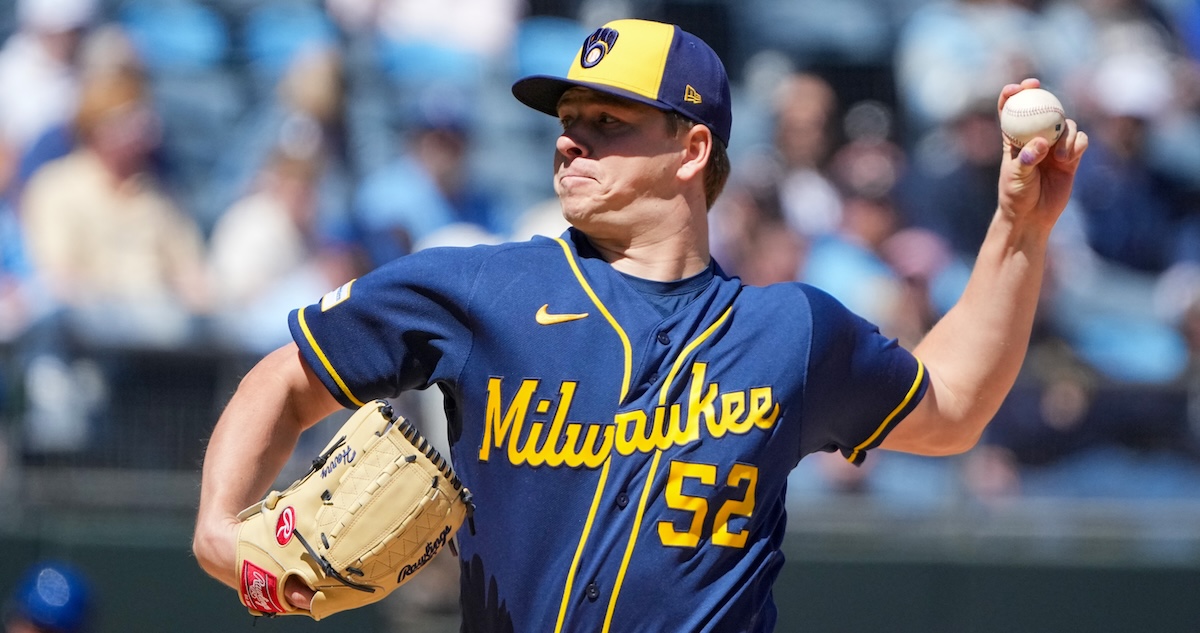
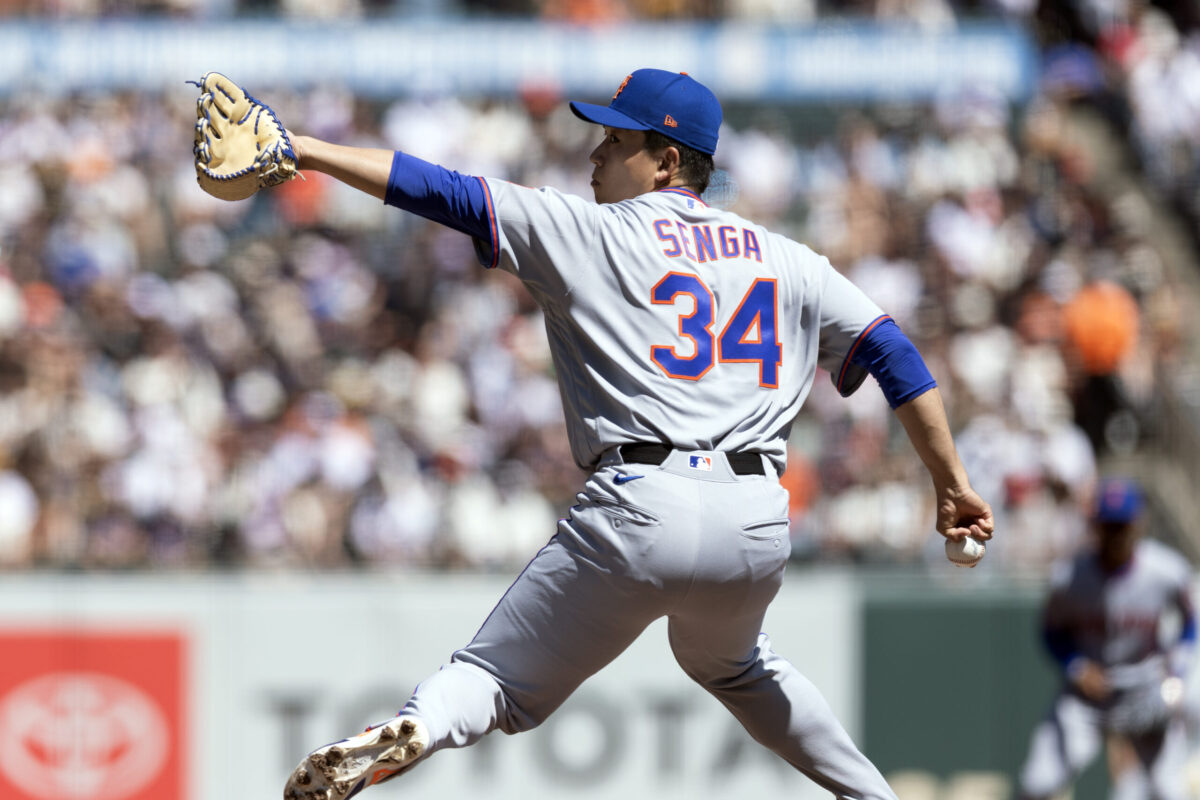
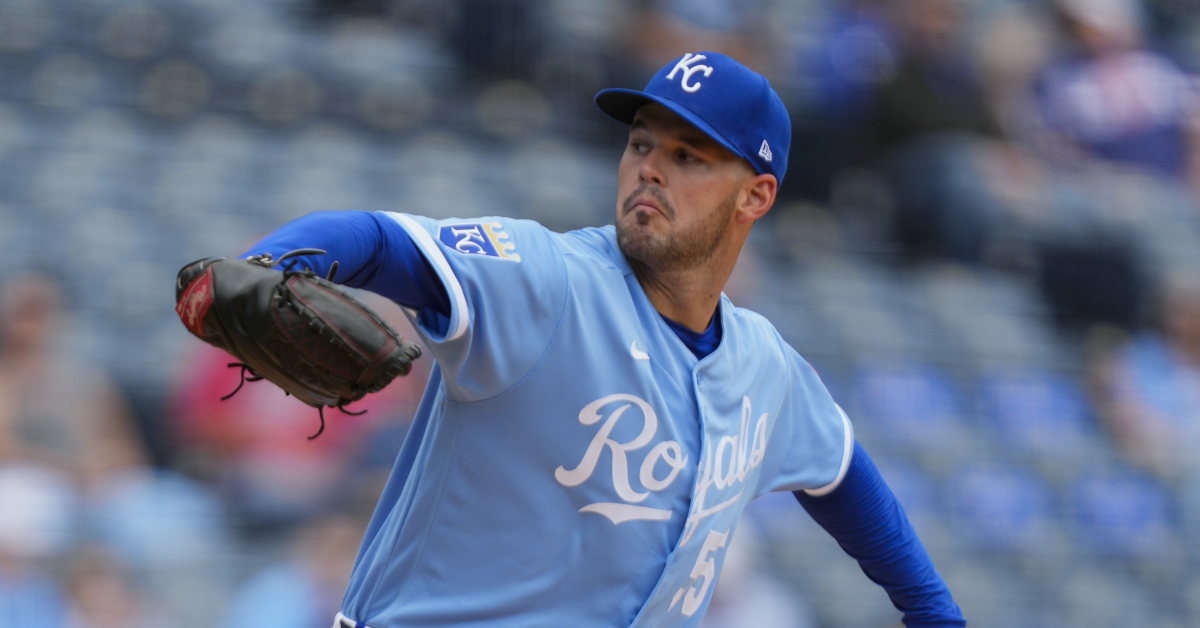
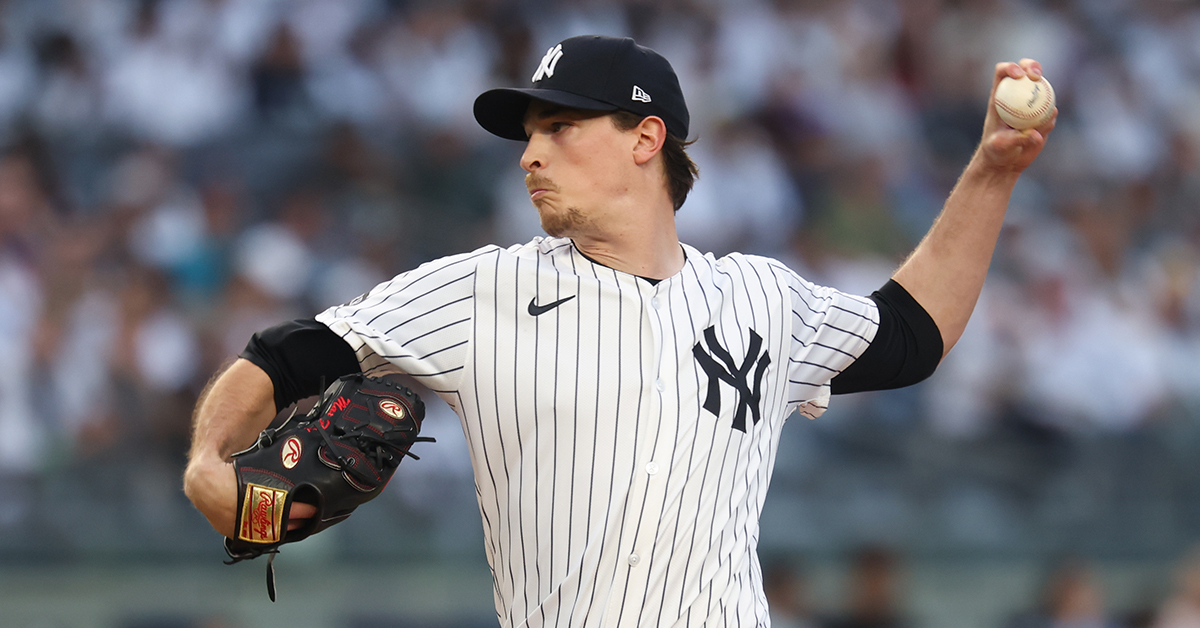
The 2026 fantasy baseball season is still in its infancy, and in the grand scheme of things, we don’t really know what to expect over the next ~six months. Established studs will disappoint, new fantasy heroes will emerge, and performances will undulate to the point of causing madness. The unpredictability is why we have so much fun playing and analyzing this game of ours.
With that being said, trends are starting to set in and there are a few players that I am believing in more and more as the sample sizes continue to grow and the data becomes clearer. In this article, I’ll be highlighting five pitchers who have shown signs of breaking out that I believe will be sustainable throughout the 2026 season.
There will undoubtedly be some ups and downs, but I believe these arms are worth picking up/trading for before they become the established studs that I think they’ll develop into.
Since the majority of stats remain in small sample size territory, especially for starting pitchers who may have only made one start so far, I like to dig into the underlying metrics that could ultimately drive a change in results. One of those drivers is pitcher fastball velocity. We know that velocity is highly correlated with strikeout rate and ERA, so all else being equal, higher fastball velocity should result in a higher strikeout rate and lower ERA. Of course, each individual pitcher start is a small sample, so you’re not always going to see the increased strikeout rate or lower ERA immediately, or vice versa. That’s why it’s prudent to track velocity changes early on to better predict where a pitcher’s strikeout rate and ERA may be headed.
Welcome back to the Ottoneu Starting Pitching Planner. Based on the Roster Resource Probables Grid, I’ve organized every starter slated to start next week into four categories: start, maybe, risky, and sit for Ottoneu points leagues. The first and last category are pretty self-explanatory. Starters who fall into the “maybe” category are guys you could start if you need to keep up with the innings pitched pace in points leagues or need to hit your games started cap in head-to-head leagues; they’re good bets to turn in a decent start, but you shouldn’t automatically insert them into your lineup. If you’ve fallen behind on the innings pitched pace or you’re really starving for starts in a head-to-head matchup, you could turn to a “risky” starter or two.
I’ve also calculated a “Matchup Score” for each series using a straight combination of opponent’s home/away wOBA, opponent wOBA over the last 14 days, and the park factor for the ballpark the teams are playing in. It’s indexed so that 100 is average and anything above that is a favorable matchup and anything below is unfavorable. That matchup rating informs some of the sit/start recommendations I’m making, though the quality of the pitcher definitely takes precedence. To start the season, I’ll be relying on projected team wOBA until there’s sufficient in-season data to start calculating these matchup ratings.
Yesterday, I shared some of the fun tiny sample size performances among the batter population. Now let’s flip over to pitchers. Unfortunately, the pitching side is going to be a little less fun because not every starter has even made a start yet. Let’s see what we can come up with.
Frank Bowen IV – The Enquirer/USA TODAY NETWORK via Imagn Images
After Wednesday’s introduction to this year’s Position Player Playing Time Changes, it’s time for pitchers! Every Friday, these roundups will work much the same as the position player ones, except I’ll split out starters and relievers. As with position players, this week’s compares changes since March 1, and next week I’ll transition to looking at week-to-week changes. Away we go:
Schedule is obviously one of the biggest drivers for picking up a streamer. You can’t plan too far out because things can change on a dime, especially in cold weather spots this early in the season. But let’s see if the first few weeks can offer some worthy pickups.
Injuries cleared a path for Williamson to sneak into the rotation and he sets up beautifully against two of the worst teams versus lefties last year. Pittsburgh was 29th in wOBA and Miami was 23rd. Pittsburgh did lengthen their lineup, but two of the three big adds are lefties (Brandon Lowe, Ryan O’Hearn). The Angels outing is a maybe as Nick Lodolo could be back, but then Williamson might shift into Chase Burns’s follower which is still a great role. Burns is slated to be part of the LAA series and then will pitch at MIN/at TBR if things hold, but that’s looking way too far out to have any real confidence in it. Pick him up for PIT/at MIA and we’ll go from there. The dream is Ryan Yarbrough 2.0 and they let him follow Burns (or Lowder) all year.
Welcome back to the Ottoneu Starting Pitching Planner. Based on the Roster Resource Probables Grid, I’ve organized every starter slated to start next week into four categories: start, maybe, risky, and sit. The first and last category are pretty self-explanatory. Starters who fall into the “maybe” category are guys you could start if you need to keep up with the innings pitched pace in points leagues or need to hit your games started cap in head-to-head leagues; they’re good bets to turn in a decent start, but you shouldn’t automatically insert them into your lineup. If you’ve fallen behind on the innings pitched pace or you’re really starving for starts in a head-to-head matchup, you could turn to a “risky” starter or two.
I’ve also calculated a “Matchup Score” for each series using a straight combination of opponent’s home/away wOBA, opponent wOBA over the last 14 days, and the park factor for the ballpark the teams are playing in. It’s indexed so that 100 is average and anything above that is a favorable matchup and anything below is unfavorable. That matchup rating informs some of the sit/start recommendations I’m making, though the quality of the pitcher definitely takes precedence. To start the season, I’ll be relying on projected team wOBA until there’s sufficient in-season data to start calculating these matchup ratings.
First, a reminder that the first week of Ottoneu head-to-head leagues ends on April 5, which means you have 12 days to hit your games started cap. That means you’ve got a very long window to figure out which starters to use over the next week and half, and you may want to sit some of the riskier pitchers on your roster because you’ll have so many options on the table. The table below has my sit/start recommendations for the weekend and then there’s a second table below for the first normal week.
3/14/2026 – Literally just wanted to update Hunter Greene before heading to Houston for the Italy-PR WBC game. More thorough update coming next week for the final push of draft season!
3/20/2026 – Finally update before draft season. I’m sorry I didn’t log every change, but I swept the entire board. I cut it back down to 170, focusing on expected rotations plus a handful of prospects and injury guys. I will answer as many questions as I can in the comments this evening, tomorrow morning, and then I’ll do another sweep Sunday morning. Good luck in the final big draft weekend!
Ranking Methodology
ADP is based on 30-day rolling NFBC Online Champions Leagues.
$ Values are based on standard 5×5 12-team league using the FanGraphs Depth Charts and these Auction Calculator settings. They default to a player’s most valuable position, so if the first base list includes a catcher, it will show that player’s value at catcher.
ADP and $ Values are updated as of the last update date on this post.
Change is the difference in rankings since the last update
5-game eligibility was used for these lists to cast the widest net.
Here is the opening look at the top 150 pitchers for the 2026 season. I’ll have plenty of updates including some tier updates/changes as I dive deeper on players and figure out better fits for them. I will eventually expand the list, too. I cut it at 150 for now just to have an endpoint, but I have something like 264 ranked. Drop a comment if you have questions on anyone, even if I haven’t written them up yet, but check back regularly for more profile additions.
Jan. 6th: First big update brings an expansion, lots of ranking changes, and tons of new profiles. Starting from this update forward, I will track the guys who change but there were just so many with this update that I didn’t end up keeping track of everything.
Jan. 21st: Smaller update here refreshes the ADP & dollar values along with some of the recent moves plus a handful of new profiles. We’re supposed to get a bad ice storm here in Austin this weekend and anyyyy measure of inclement weather can eat up our garbage electrical grid so I’m reluctant to guarantee a weekend update because of that.
Feb. 5th: If you’re coming on the morning of the 5th looking for the update promised in my chat yesterday, it’s being moved to the afternoon.
Feb. 25th: Huge update with tons of news, Spring Training starting, a few more key signings, and many added profiles!
Mar. 5th: Several new profiles added of interesting mid-to-late round targets who could pop off this year, plus a lot of rankings movement as I continue to battle test them in drafts of various formats.
Mar. 14th: Just a quick update to get Hunter Greene updated. I’m headed to Houston for Italy-Puerto Rico today so I’ll get a more thorough update out early next week for the final big draft week!
Mar. 20th: Huge overhaul. Shortened the list back down to 170, but I didn’t track all the changes and new profiles. You can definitely do a Ctrl-F search for “Mar. 20th” to get the those updates and then there’s a bunch of new profiles, too.
“It’s been seven hours and fifteen days / since you took my drafts awayyyy”
Sinead O’Connor may not be a roto savant, but even she might agree that the best part of the fantasy baseball season is research-and-draft season. Every day, from February until Opening Day, is so incredibly thrilling – nonstop spring training news, draft rankings adjustments, and player pool deep-dives – there’s always some rabbit hole of research to go down. As we continue studying and gaining confidence in the fresh player pool and a new year’s ADP, more questions arise, and the more work there is to be done.
Whether in NFBC or best ball contests, high-volume early drafters subconsciously form bad habits in draft rooms. We get too comfortable targeting and drafting the same players over and over. Conversely, we avoid players who have burned us in previous seasons and those we have some subjective bias against. Rarely do we deep dive and reassess those players because we’ve already made up our minds. That’s why it’s crucial to explore every nook and cranny of a positional tier. We have all fallen victim to draft room paralysis, where a decision between several similarly ranked shortstops or starting pitchers becomes gut-wrenching when we’re on the clock. This preseason column aims to help with those tough calls. We will explore some of the most confusing ADP clusters, by position, beyond the simple “I need to boost my batting average, so I’m taking this guy.”
Let’s dive into these ADP pockets logically and systematically, reviewing four analytical components of the players within each cluster. Since this specific article’s topic is starting pitchers, the components have been slightly adjusted:
Health and Durability
Skills: Arsenal, Stuff, Velocity, Command, Control
Roto Ratio Expectations (ERA, WHIP)
Team Context: Defense, Bullpen, Run Support (Wins)
ADP Cluster: Round 16 Upside Starting Pitchers
These are starting pitchers drafted in Round 16 (ADP 180-192) in the NFBC Online Championship (OC) over the last four days (20 drafts).
All in this cluster were highly touted prospects who offer massive fantasy profit potential this season. Horton, McClanahan, and Baz were all real-life former first round draft picks. Bubic and Bibee were top pitching prospects in their respective organizations at one time. Would we be surprised if one or two of them ended up as a top 10 SP in 2026? This is the range Bryan Woo (SP4) was drafted from last spring.
Health and Durability
McClanahan turns 29 next month, and Bubic will be 29 this summer. Bibee just turned 27, Baz turns 27 in June, and Horton will be 25 in August. Bubic and McClanahan are both southpaws.
Kris Bubic was drafted in 2018, made 10 starts in his rookie season (2020), then averaged 130 innings per season from 2021-2022, mostly as a starter with an ERA over 5.00. He had Tommy John surgery early in the 2023 season, and returned late in 2024, missing the majority of both seasons. Previously a starter, Bubic was a dominant reliever in the final two months of 2024, then officially broke out in 2025 (2.55 ERA, 1.18 WHIP in 20 starts) before getting shut down in late July for a left rotator cuff strain. Bubic is healthy heading into the 2026 season. This spring, he has allowed just one run with three walks and 10 strikeouts over three abbreviated starts (eight innings).
Cade Horton has an extensive and serious injury history. He tore his UCL before his freshman year at the University of Oklahoma in 2021. His 2024 season was lost due to a right shoulder strain that May and he did not pitch again until the winter. Last season, he dealt with finger blisters, fractured his right rib by (cough) coughing, and was shut down before the playoffs. Horton’s 118 innings last season was his first time over 90 ever. This spring, he tossed two scoreless innings in his first appearance (February 24), served up six runs and two walks in 3.2 IP on March 9, and struck out 10 with just one run and one walk in latest start earlier this week.
Shane McClanahan last pitched in the Majors in 2023. He missed his freshman year of college recovering from TJS (2016), missed 17 days with back tightness in July of 2023, and had his second TJS in August of that same year. In his final ramp-up start of camp last March, McClanahan suffered a nerve injury in his triceps, and had surgery on it in August. His fastball velocity in Sunday’s exhibition start (94.8 mph) was down (from his previous 97), but he looked dominant, punching out seven Pirates and didn’t allow a hit in 3.2 innings.
Shane Baz has spent more time dealing with or recovering from right elbow troubles than pitching, since being drafted in 2017. He underwent arthroscopic elbow surgery in March of 2022, returned in June, and went back on the 60-day IL the following month. In late September of 2022, he underwent Tommy John surgery. Baz missed all of 2023, and returned in May of 2024. He made 10 starts in Triple-A and 14 for the Rays. Last season, he managed to stay healthy, throwing 166.1 innings over 31 starts.
Tanner Bibee has had the least amount of arm troubles of the bunch. His only IL stint in three Major League seasons was in his rookie year (2023), missing 15 days with right hip inflammation. Bibee dealt with some shoulder tightness in 2024, and has had to leave starts early with severe leg cramps a few times in the last two seasons – an issue that has plagued him since his college days. Bibee has averaged 166 innings per season over the last three, while Baz, McClanahan, and Bubic have averaged 174.1 innings combined over that same span.
If there’s a cluster we don’t need to see health grades for, it’s this one. But if you’re curious, here they are, courtesy of Jeff Zimmerman, from Eno Sarris’ article at The Athletic. McClanahan does not have a health grade listed.
Tanner Bibee – 96%
Cade Horton – 83%
Shane Baz – 74%
Kris Bubic – 72%
Skills: Arsenal, Stuff, Velocity, Command, Control
Roto Ratio Expectations (ERA, WHIP)
With much of this group missing significant time over the last few seasons, it is difficult to compare recent results. I’ll combine skills and ratio expectations into one section here. For this cluster, I’m using ATC’s projections, since it is an aggregate model. Included in the table below are the pitchers’ current ADP and their ADP from February, over 66 NFBC OC drafts.
Upside SP Cluster: NFBC ADP & ATC Projections
Name
Team
ADP (current)
ADP (February)
IP
ERA
WHIP
K%
BB%
Stuff+
Kris Bubic
Royals
188.7
202.6
137
3.75
1.24
23.2%
7.8%
96
Cade Horton
Cubs
189.2
189.1
128
3.91
1.22
20.6%
7.5%
96
Shane McClanahan
Rays
190.2
208.5
114
3.68
1.18
26%
7.4%
N/A
Shane Baz
Orioles
191.5
196.4
155
4.15
1.25
23.5%
8%
104
Tanner Bibee
Guardians
192
187.5
174
3.98
1.22
22.5%
7.1%
98
Bubic is a lefty who utilized a four-pitch mix last season (four-seam fastball, changeup, sweeper, slider), and occasionally threw a sinker. His four primary pitches were all plus offerings, though he doesn’t overpower opposing hitters (92.1 mph FB). Bubic produced a 24.4% strikeout rate and a 8.2% walk rate in his 20 starts – rates in line with his projections for 2026. He is more likely to produce a sub-4.00 ERA than a sub 1.20 WHIP. He allowed only six home runs in 116.1 innings (0.46 HR/9), a feat that would be difficult to repeat in a similar number of innings, particularly with Kansas City moving fences in.
Usually, a 1.4 differential between one’s ERA (2.67) and xFIP (4.27) in the prior season would push fantasy analysts and managers away and bucket a pitcher into the “lucky and due to regress” category. That’s not the case with Horton, who has held steadfastly with a 189 ADP since early February. His underlying metrics against lefties and righties were similar, though the one standout split was BABIP (.291 vs. LHHs, .219 vs. RHHs). He utilized his sweeper primary on righties (.171 BAA, 25.7% K), and his changeup more frequently against lefties (.115 BAA, 32.8% K). Horton averaged nearly 97 mph on his four-seam fastball. He was incredible at Wrigley Field (1.63 ERA, .251 wOBA). He generated league-average swings and misses (11% SwStr), but that mark hovered in the 14-15% range in the minors. Expect some improvement there closer to the 12-13% range in 2026.
Shane Baz has a similar ADP as last draft season. What has kept his ADP stable? Probably his poor ERA (4.87) in 2025, and slight market concern about making half of his starts in Oriole Park instead of Tropicana Field. That ERA was a nearly a full run higher than his xFIP (3.88) and SIERA (3.95), with the majority of the damage occurring at hitter-friendly George Steinbrenner Field (5.90 ERA, .355 wOBA), while posting respectable rates on the road (3.86, .303). He unloaded his four-seamer at a 44% clip close to evenly against righties and lefties with an average velocity of 97 mph. Baz did not fare well with a new cutter last season (.412 wOBA, 16% K), but he mastered his knuckle curve with a sharp downward bite that punched batters out at a rate of 35.2%. Baz developed a two-seam fastball in the offseason.
Tanner Bibee is the least “electric” of the group and has lost quite a bit of market confidence after a disappointing season (4.24 ERA, 1.23 WHIP) where draft helium took him as high as the fourth round of 15-team NFBC leagues last March. Going into last draft season, he was labeled as a dependable SP2 after an impressive first two years in the majors with a high strikeout rate (25.5%), low walk rate (6.6%), and one of only seven qualified pitchers between 2023 and 2024 with an ERA of 3.25 or lower. In 2025, Bibee greatly reduced his FB usage (from 43% to 28%), but that offering was still frequently mashed (47% hard-hit, .372 wOBA). He served up dingers at a higher rate (1.33 HR/9) than the past two seasons (.97) despite a six percent decrease in fly balls.
McClanahan last threw a regular season pitch in August of 2023 and is anxiously awaiting that first start in nearly three years. In his 74 career starts, McClanahan sports a 3.02 ERA (3.15 xFIP), a 1.10 WHIP, 28% strikeout rate and 7.1% walk rate. He will be under a strict innings limit this season, with a target of around 150. He is expected to make his Major League return in the Rays’ fifth game, which will be March 31 in Milwaukee.
Team Context: Defense, Bullpen, Run Support (Wins)
The Cubs defense is projected as one of the best in 2026, which is great for Horton. The Guardians (for Bibee) are expected to be strong defensively, and Progressive Field is an offense-suppressing environment.
The Rays moving back to their pitcher-friendly home stadium doesn’t move the needle much for McClanahan’s market price. If he’s on his A-game, where he pitches doesn’t matter.
Oriole Park at Camden Yards has been tougher on pitchers since they moved the walls in before last season. The HR Park Factor there last season was 121, second highest behind Dodger Stadium (137). Baz won’t stand a chance holding his HR/9 below 1.00, but can still produce a 4.00 ERA and at least a strikeout per inning. The O’s boast a powerhouse offense and should provide ample run support.
The walls moving in Kauffman Stadium shouldn’t impact Bubic’s HR rate as much as someone like his ace rotation-mate, Cole Ragans, but it might be too much to ask for a repeat of Bubic’s masterful, partial season. The Royals’ infield defense on the left side is bolstered by Bobby Witt Jr. and Maikel Garcia, but is questionable at the keystone with Jonathan India expected to move back there full time.
It is difficult to assess these bullpens and how they might move the needle on our valuations of starting pitchers in this cluster. The bullpen I’m most confident in is Kansas City’s. They added Matt Strahm in the offseason, hope to have a full season from Lucas Erceg, and have several other effective arms: lefties Daniel Lynch IV and veteran Bailey Falter, and righties John Schreiber, Nick Mears and possibly a new and improved Alex Lange. The Orioles’ bullpen is scary and include a couple of names even I’ve never heard of.
Recommendation (with target grade)
Talent-wise, this cluster of pitchers is an A-, but if we’re collectively grading them with durability in mind, the grade drops down to a solid B.
Cade Horton (B) is the pitcher who’s risen up my personal rankings the most since November. The more I dig in, the more I want to target him in drafts.
Tanner Bibee (B-) is the most stable of the group, but with the lowest upside. Sometimes that’s a good thing in fantasy.
I’d love to see Shane McClanahan (B-) bounce all the way back. My main issue with him is his recent draft helium, which may soar into the top 120 overall with another solid spring outing.
Kris Bubic (B+) and Shane Baz (A-) are my two favorite targets in this group. The ride might be bumpy with Baz, but I believe 2026 will be his breakout season.
Last weekend, the largest national fantasy baseball contest kicked off – the NFBC Main Event. For those unfamiliar, it’s a 30-round, 15-team, 5×5 roto contest with an $1,800 entry fee. This year, 855 teams will be drafted (57 leagues), and only one person will win the overall grand prize of $200,000. Most of these leagues are drafted online. A dozen or so are drafted in person, in Las Vegas, on the weekend of March 20.
I’ve been to Vegas for the Main Event every year since 2014, except for the COVID-shortened season. It’s an incredible experience filled with camaraderie among diehard fantasy baseball enthusiasts, many of us long-time friends. Many of the attendees are incredibly sharp, skilled managers, though not everyone who enters and attends is a fantasy savant. As math would have it, every league has 12 losers, since only the top three cash. For the most part, and of importance to fantasy baseball managers everywhere, is that Main Event drafters are highly invested and motivated. The draft boards and ADP movement in these leagues is worth looking at closely. We can extract actionable takeaways from such highly invested players that can assist with our roto drafts, no matter the entry fee.
Main Event drafters are human. They can be swayed by spring training production and swept away in ADP helium, a chain reaction of pushing players higher and higher in drafts, far beyond their November-February market prices. Last March, Main Event helium rose Cristopher Sánchez by several rounds, from a 175 ADP in January to 101 by Vegas, including a min pick of 63. Obviously, that worked out. A similar thing happened with Nick Pivetta, Robbie Ray, Kris Bubic, but also with Will Warren, Hayden Birdsong, and a slew of out-of-nowhere “closers” who bombed – Luke Jackson, Jordan Romano, and Mike Clevinger. And who can forget the rise of red-hot Astros outfielder Cam Smith? We call it helium because it’s literally akin to a balloon taking you up, up, and away – oftentimes directly into the scorching sun.
One interesting nuance of the Main Event: since there is overall prize money on the line as well, and we’re competing against 800+ others, it does not behoove us to punt roto categories – specifically, pitching ones. One adage is always true here: pitching always gets pushed up in the Main Event. Elite ratios (ERA, WHIP) are a scarce commodity; hence, most NFBC managers focus on anchoring their teams with strong pitching to avoid the inevitable blowups when chasing mediocre two-start pitchers in FAAB during the season. With strong planning, execution, and a bit of luck, we can punt saves in our standalone home leagues. This strategy rarely works in the Main Events, where roto categorical balance is vital and where league-mates research incessantly to make competitive bids every FAAB period for 27 weeks. Teams at the top of the Main Event standings last year didn’t win and do well in pitching because they drafted breakouts like Sánchez, Bryan Woo and/or Hunter Brown alone. Many of them used a first or second round pick on Tarik Skubal, Paul Skenes, or Garrett Crochetand drafted Woo and Pivetta, or Brown and Nathan Eovaldi, and picked up Trevor Rogers in-season for pennies on the dollar in May. A decade ago, the fantasy world would scoff at the idea of drafting starting pitchers or closers early. In the Main Event world in recent years, no one has besmirched their fellow competitors for drafting Skubal with the first pick of the draft or the elite, top closer in the second round.
Many of us enjoy digging deep into pitcher profiles and advanced stats at FanGraphs and other sites, hoping to discover prospect pitchers who are ready to break out, or undervalued “sleeper” pitchers the market is currently undervaluing. We want to be first on the next big thing. We want to draft him before others, and if we can’t, sometimes we’ll grab one of those helium balloons and set some min picks.
Biggest SP Risers
With the first five 2026 Main Event drafts in the books, the fresh ADPs are available for all to peruse (select ‘Main Event’ in the dropdown). The original plan for this piece was to compare the last 10 days of NFBC Draft Champions ADP (50 rounds, no FAAB) to these first five Main Event drafts to see who the biggest risers and fallers were at each position. After a quick visit with my good friend XLOOKUP and building out some comparison tables, my focus (and impetus for this piece) was inspired by the massive helium with starting pitchers after 200 ADP. This is where the action was at, with blasts from our past like Kyle Harrison, Taj Bradley, Luis Gil in all his Ricky Vaughn-esque glory, and even the legend himself, Justin Verlander, who is back with the Tigers.
I sorted and discovered the starting pitchers whose Main Event ADP is at least three rounds higher than where it was just last week in the 50-round Draft Champions format. Pitchers in this group have risen exorbitantly over the last week for various reasons: increased spring velocity, introducing an effective new pitch, having a productive (in some cases, dominant) spring, and the increasing likelihood of an Opening Day rotation spot and aspirations of massive profit from a late-round selection.
The table below consists of 25 starting pitchers – mostly from the middle and late rounds – whose ADPs have risen by at least three rounds (45 picks) from early-March DCs to these first five Main Events. I’ve listed ADPs and their pick differences, the number of 15-team rounds increased by, and the percentage increase.
Justin Wrobleski | River Ryan, Los Angeles Dodgers
If a pitcher has a pulse, wears Dodger Blue, and has a shot at the rotation, expect helium to ensue. Blake Snell will likely spend the first month of the season on the injured list. Most drafters don’t trust Roki Sasaki, whose ADP has fallen from the the low 200’s to the mid 300’s over the past two months. Manager Dave Roberts says he will be in the rotation, which means there will be at least one rotation spot open for Wrobleski or Ryan. Both have been solid in spring – Wrobleski has 0 ER, 0 BB, 4 K in 6 IP and Ryan has a 7:3 K:BB with one earned run allowed, also in six innings. Ryan is the more exciting and dynamic pitcher, but both his and Wrobleski’s ADPs remain close to each other until more definitive news is presented. Whoever is officially announced as the guy joining the rotation should see a spike of 100+ draft slots. For our shallower home leagues, these are names to monitor, but not specifically target.
Both are beneficiaries of the Roki Sasaki spring rollercoaster ride. As the market continues to lose market confidence in Sasaki and Blake Snell’s timetable continues to be pushed, Wrobleski and Ryan’s preseason
Mick Abel | Taj Bradley, Minnesota Twins
Both Abel and Bradley had horrific 2025 seasons and were mostly off our radars this draft season. Bradley had success at this level before, with the Rays in 2024, but owns a career 4.86 ERA in 385 innings. Abel was a promising first-round draft pick of the Phillies whose stock plummeted after his rough 39-inning debut last season (6.23, 1.51). Abel has 13 punchouts and no walks allowed in 10 spring innings. Bradley has a 19:5 K:BB with 7 ER in 14 innings. Given Abel’s pedigree, he is likely to rise up ADP at a higher rate than Bradley, depending on how his next spring starts go. Nevertheless, both pitch for a declining Twins team and run support may be tough to come by. Abel and Bradley’s high ADPs in the Main Event are tough pills to swallow and it might be best to not chase either one.
Kyle Harrison | Brandon Sproat, Milwaukee Brewers
With Freddy Peralta traded and Quinn Priester dealing with nerve issues in his wrist and starting the season on the IL, opportunities arise for the Brewers’ newest, talented young arms, Harrison and Sproat. Both are projected to begin the season in the rotation, though Sproat’s inclusion may depend on the health status of Logan Henderson. Harrison’s ADP has ballooned as it gets close to Round 20 of 15-team Main Events. Sproat’s current price is a bit more palatable, though it too will likely rise over the next two weeks. Both are former impact prospects and familiar names. Fantasy managers usually feel comfortable investing in Milwaukee starters, and this does feel like a great opportunity for both Harrison and Sproat. Harrison is a strong end-game target in shallower non-NFBC leagues as well.
Dustin May | Richard Fitts | Matthew Liberatore, St. Louis Cardinals
It really is comical how much preseason baseball influences the market. Two months ago, fantasy analysts (myself included) preached to avoid Cardinals pitchers outright. Fast forward to March, and the helium begins impacting every potential starting pitcher who looks good in the spring. Liberatore had somewhat of a breakout season in 2025, producing respectably in 29 starts, posting an above-average walk rate of 6.2%. May has teased us for years and there is no doubt he will draw many drafters back in. May finally threw more than 60 innings in a season last year (132.1 between two teams), but the results were poor (4.96 ERA, 4.47 SIERA, 1.42 WHIP. The most important thing to monitor with May this spring is his control. He walked batters at a 9.6% clip last year and has three walks in 6.2 innings so far this spring. Fitts is throwing hard (touching 99 mph) and having a nice spring. It’s possible that he beats out Kyle Leahy for the fifth spot, but is more likely to begin the season in Triple-A. Of the three, Liberatore is the one I’d want to target in deeper drafts. For 12-team drafts, stay away from all three.
Grant Holmes | J.R. Ritchie, Atlanta Braves
Traditionally, Atlanta Braves rotations have been a strong source of March helium – AJ Smith-Shawver anyone? With Spencer Schwellenbach and Hurston Waldrep sidelined for a while, opportunities to snag rotation spots have risen. Holmes is all but locked into a spot, especially after a masterful nine-strikeout performance against the Pirates on Thursday. Holmes did not allow a hit in five innings. Holmes boasted a 25% strikeout rate (22 starts, one relief appearance), though his 11% walk rate was a huge issue. Holmes is capable of reducing it to the 9% range, though don’t expect a helpful WHIP from him. As long as Holmes is healthy, he will be in this rotation. His 358 ADP is very reasonable, though it’s certainly going up after that masterful performance. Ritchie is a stud prospect who returned from Tommy John in June of 2024 and had a strong season in the minors in 2025 (140 IP – 2.64 ERA – 1.01 WHIP – 24.8% K – 9.6% BB). Though he is likely to start the year in Triple-A, he is certainly ready to dominate in the Majors. He is one spring injury away from earning a rotation spot before Opening Day. Both Holmes and Ritchie are strong targets in deeper formats and in the Main Event.
Wrapping It Up
There are other intriguing risers like Shane McClanahan, though we must always proceed with caution chasing massive ADP jumps with pitchers like him and Joe Musgrove who are working their way back after long delays. It’s difficult to field competitive fantasy squads if they’re loaded with injury risks and promising prospects. Hey, it’s great that Cade Cavalli is healthy and looks fantastic this spring. But there’s no chance I’m going to chase a Washington Nationals’ starter into the top 250 ADP when there are oodles of viable, safer options in this draft range. For every few risers, there are fallers. Sometimes players fall because we’re too dialed into small spring samples and missing the forest for the trees.
Though some of the best fantasy players around play the NFBC Main Event, we must remember that no one can predict the future. We can still take occasional risks, but they must be calculated and logical ones. Taking a shot on the Braves and Brewers pitchers who have been rising feel like a sharper move than chasing ADP helium on lesser talented starters who aren’t guaranteed rotation spots and play on worse teams. Good starting pitching is a key to success in all roto formats, but chasing helium blindly will often carry our balloon directly into getting burnt. Stay cool out there.