Archive for Pitcher Spotlight

Reynaldo López, King of FIP

Here’s a shock; Reynaldo López holds the sixth-best WAR and sixth-best FIP (as of games through 9/28/22) among qualified relievers in 2022. If you rostered him from the start of the season until now, which I’m sure you didn’t, you would have accumulated five wins, leveled out your ERA with a 2.84 contribution, and almost certainly lowered your overall WHIP thanks to his career-low 0.93.

In 2022 López lowered his BB% by nearly eight percentage points and increased his K% by over five percentage points when compared to his 2020 season. Just look at how his statcast percentile ranks have changed over that time:

How did he do it? I won’t dance around the answer trying to build tension, I’ll just deliver it up front; he became a reliever and started throwing harder. In 2022, he only started one game and in that start against the Texas Rangers on June, 10th, he only threw two innings, acting as an opener in what essentially was a bullpen game.

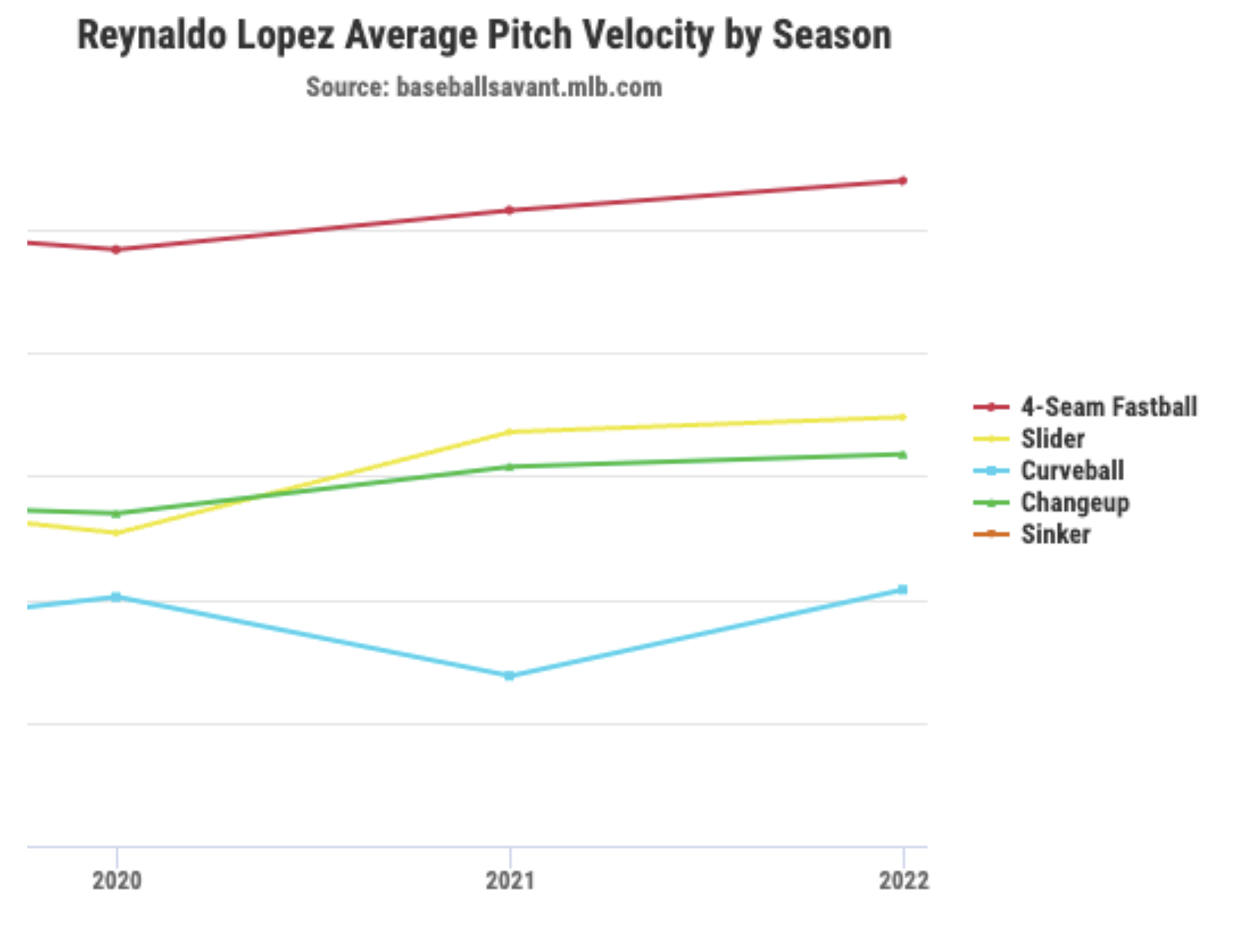
At the end of the 2020 season when López was 26 years old and holding a 6.49 ERA, the White Sox didn’t know what to do with the big righty. He started nine games and only threw 57.2 innings. In 2021, he bounced back and forth between reliever and starter roles, and in his reliever roles, he averaged two innings. In 2022, only 14 of his 59 games have gone over one inning. When a pitcher knows he is only going out for one inning, he can put a little more ompfff in his fastball:
 

López Velo


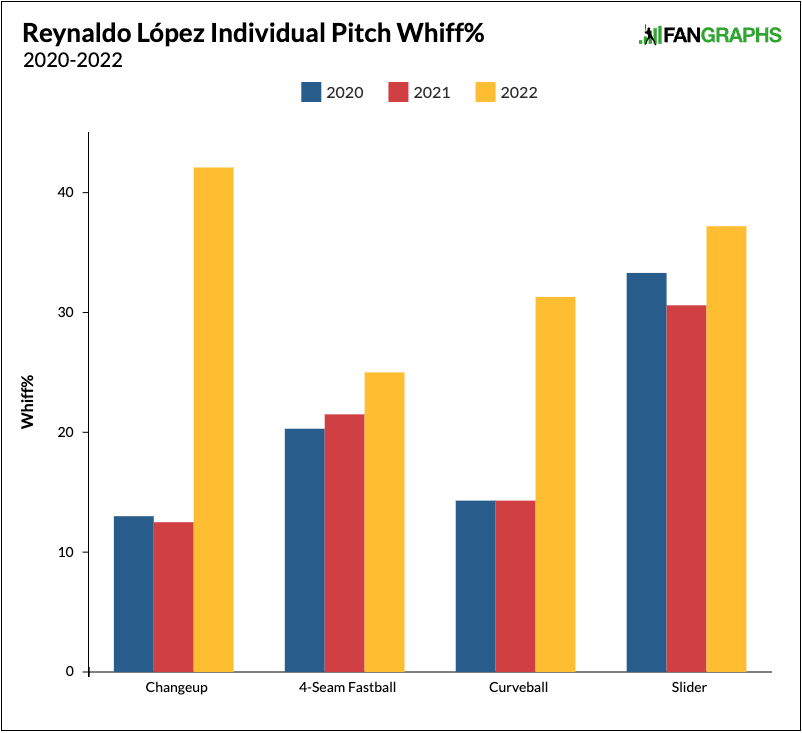
It would certainly seem that throwing the ball harder on all of his four pitches used in 2022 has led to overall improvements, but each pitch on its own has improved in Whiff%. In addition, his overall out-of-zone swing % has improved.
 

López Whiff%

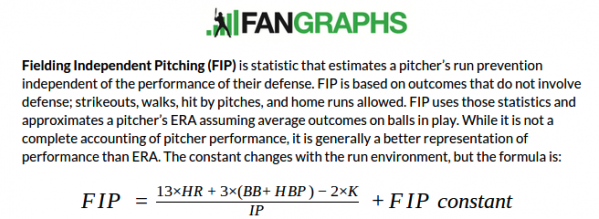
So, is it that simple? Throw the ball harder for a shorter period of time and you’ll be better? You’ll double your WAR in a single season and you’ll more than double your WAR from two seasons ago? Decreasing his FIP has gone a long way when it comes to increasing his WAR. If a pitcher limit’s their home run totals while also limiting the walks they give up, they are on their way to an improved FIP.
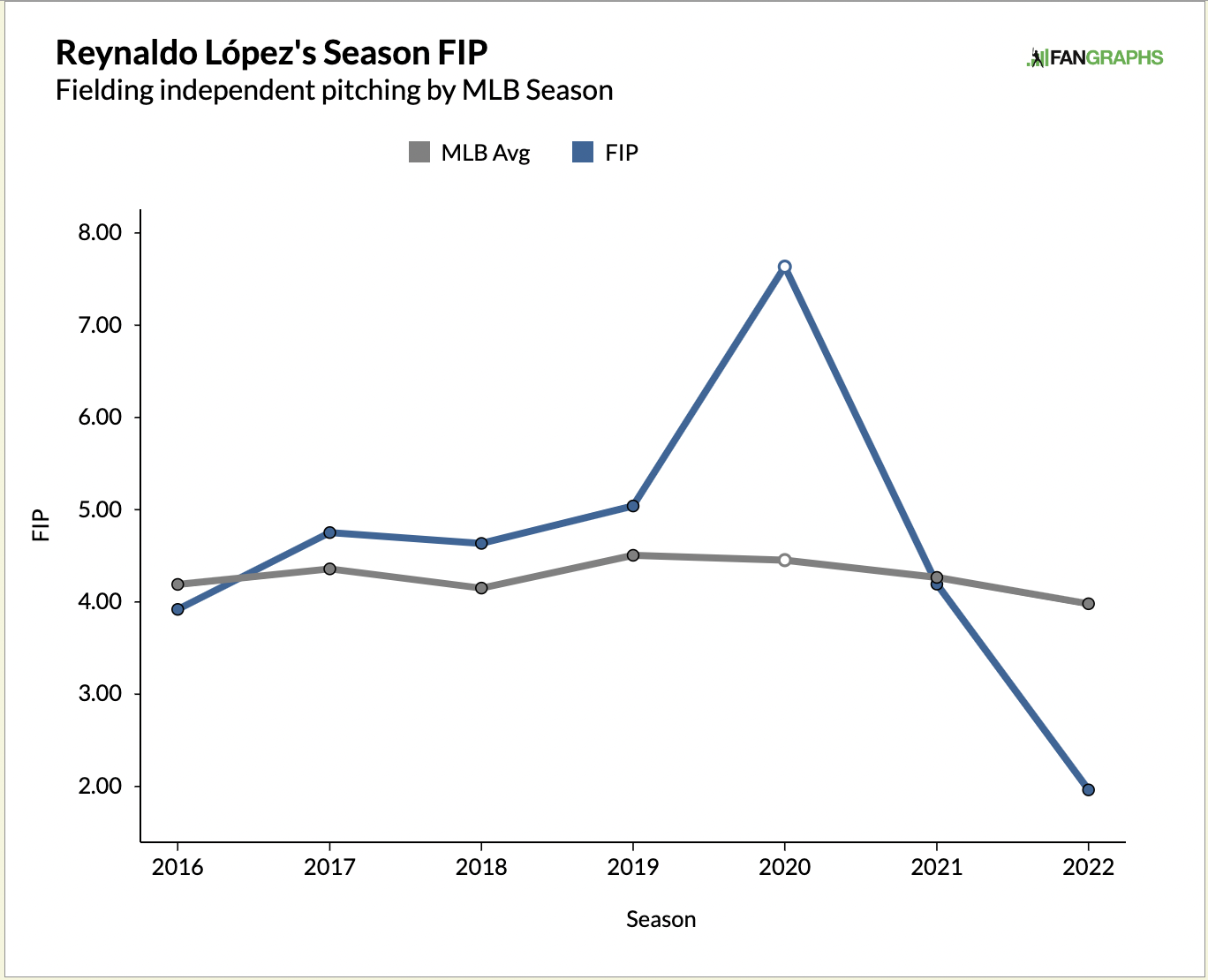
 

FIP equation


Lopez FIP

But the real kicker here is that while he has lowered his FIP, increased his Whiff%, increased his Chase%, lowered his ERA, his WHIP, and his BB/9, López has held an unsustainably low HR/FB rate in 2022. He has only given up one home run on the year. Last year, he gave up 10. It’s not necessarily crazy for a reliever to give up only one home run. So far in 2022, there have been five qualified relievers who have given up one home run and 14 qualified relievers have given up only two home runs. But, scroll back up and look at López’s statcast percentiles and you will see that he still gives up hard contact.
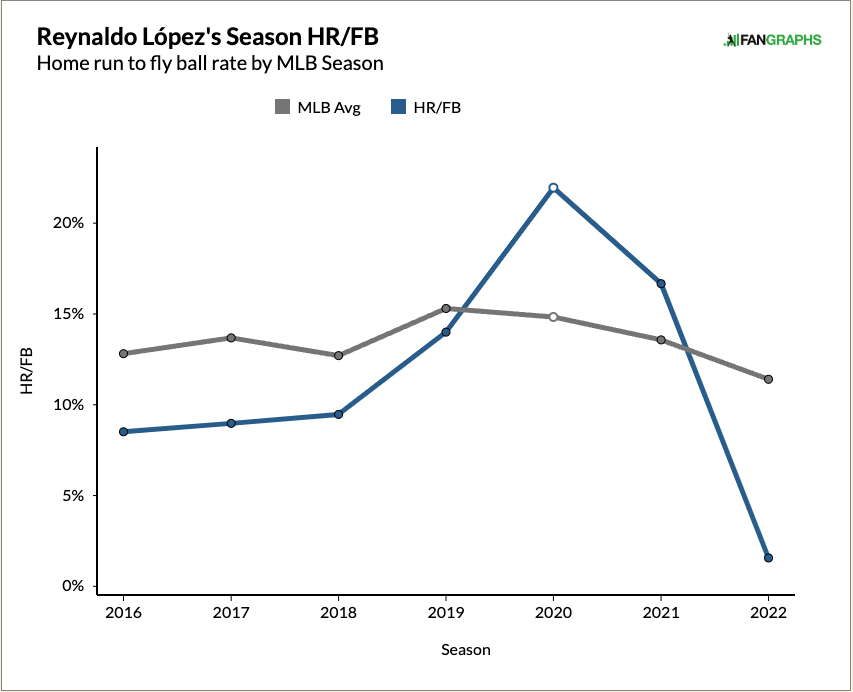
HR/FB López

In every year of his career, López has been above the average of balls in play that are fly balls. If he is still giving up hard contact, but in smaller samples as a reliever, and he is still putting the ball in the air more often than the average, yet he is no longer giving up home runs, what will happen?
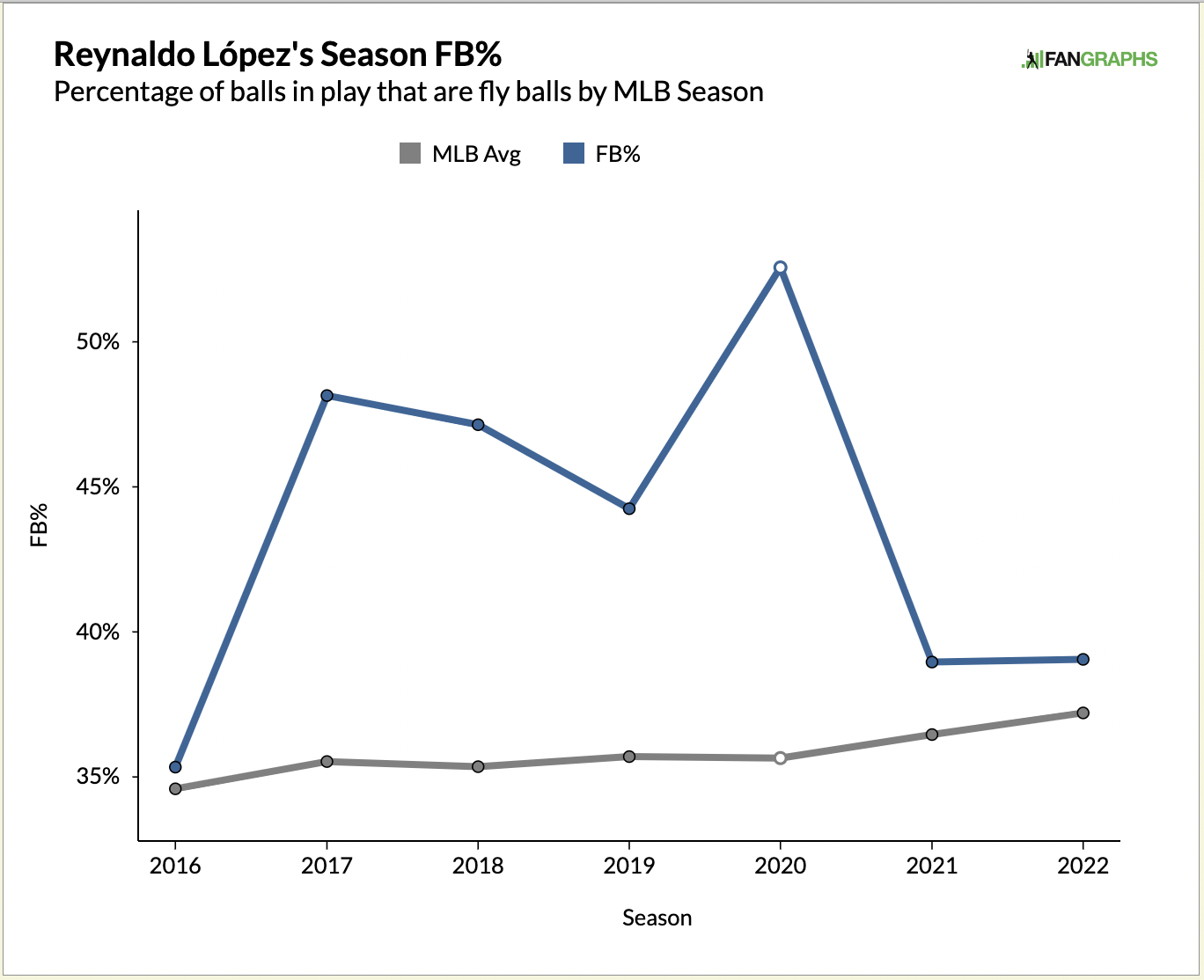
López FB%

Steamer projected 13 home runs to be hit off the Chicago righty, but to be fair, he was mostly projected as a starter. Regardless, let’s re-calculate his FIP on the year and throw in five more home runs for a total of six. His FIP is now 2.96 which is more in line with his xFIP of 3.27. Finally, here’s the point: Reynaldo López has gotten lucky this year with home runs. He has limited his walk rate and the home runs he has given up tremendously, but it’s not sustainable.

López Spray Chart

This may seem like an off-season article, but we’re nearly there. You may be looking through leaderboards and you may notice López’s excellent reliever WAR standing to finish off the year. You may notice his FIP. You may notice his velocity increase, his new role, and his improved whiff rate. Don’t get me wrong, López has had a nice season. It has been a great way to bounce back and become relevant once again. But, hidden under all those improvements, is fly ball/home run luck.


The FanGraphs 2022 pVal Competition Check-In #1

Kamil Krzaczynski-USA TODAY Sports

At the start of the 2022 season, the always gracious Nick Pollack and friends at PitcherList lent the FanGraphs staff the pVal draft template and a few of us conducted a slow draft of all slow drafts. It was great! Tweets were tweeted, points were tallied and now, it’s time to take a look at how we’re doing. If you want a little pVal background, you can read my previous posts, Highfalutin pVals or Sweet Swirlin’ Secondaries. Or, you can read our glossary explainer, or just head over to the 2022 leaderboard and click around.

Before we get into the results, here’s a quick rundown on how this works. Each participant drafts an individual pitch and your goal is to maximize the sum of your pitch pVals. Just like a traditional fantasy manager must draft certain positions (OF, SS, SP, RP, etc.,) the pVal drafters must choose different pitches:

pVal Draft Required Pitches

Luke Hooper, Nicklaus Gaut, Paul Sporer, Alex Chamberlain, and I are all part of this year’s FanGraphs contingent. We’re off to the races and Luke Hooper has taken a quick lead:

pVal Draft 2022 Current Standings Bar Chart

–

Participant: Lucas Kelly
Current Place: 3rd
Best Pitch So Far: Michael Kopech’s four-Seam fastball
Worst Pitch So Far: Walker Buehler’s four-Seam fastball

Lucas pVals
Player Category Pitch Points
Walker Buehler 3x Fastballs (wFA, wFS, wFC, wSI) wFA -9.2
Zack Wheeler “ wFA 7.9
Alex Cobb “ wFS 0.2
Max Scherzer 2x Sliders wSL 6.3
Cristian Javier “ wSL -0.2
Corbin Burnes 1x Curveballs wCU 7.5
Lucas Giolito 1x Changeup wCH -2.3
Shohei Ohtani 1x Secondary wFS -1.7
Yu Darvish 1x 2021 Negative pVal wFC -0.4
Matt Harvey 1x Negative Regression wCH 0.0
Liam Hendriks 2x Util wFA -0.1
Michael Kopech “ wFA 9.8
Alek Manoah 2x Reserves wFA 6.4
Hunter Greene wSL 5.8
*PitchInfo Pitch Type Value
**Highlighted values have been replaced with Reserves

3x Fastballs:
Walker Buehler’s four-seamer was my first pick and I thought I had taken candy from a bunch of babies. The pitch earned a pVal of 17.9 in 2021 and with his 207.2 innings pitched that season, I thought it was a guarantee points getter. This year, however, opponents are hitting .377 against the pitch and slugging .638. It’s being hit hard 51.6% of the time and has a very low 8.6% K%. The pitch has been used only 33.1% of the time, a career-low, and he’s increased his cutter usage to 25.1%. While the cutter is performing better than the four-seamer, the effective combination of both pitches led to success for Buehler in the past. Nicklaus Gaut wrote about Buehler’s spin rate decreases in his latest post. He did a great job of analyzing what has been going wrong with the pitch.

Zack Wheeler‘s four-seamer is right where I want it to be. Its usage is in the low 40% range which is right in line with where it was when it earned 16.7 pVal points last year. It has a 36.7% K%, a career-high, and hitters are getting to it with a .215 batting average. It is being hit hard 47.4% of the time which is a little concerning, but just a little. Alex Cobb’s splitter is being used at a career-high 40.8% and has an xBA of .149! That’s great. We’ll have to see if his health can keep him throwing the pitch. He’s currently on the IL with back trouble.

2x Sliders:
Max Scherzer, please come back!..and wear mittens when you’re helping injured dogs. Scherzer’s slider has a very nice 32.5% K% on the year so far, but it’s well below his career-best 50% in 2017. While I don’t expect it to reach career-level marks, the pitch didn’t seem fully refined at the start of the season and I think there’s room for improvement once he’s back. I’m not sure what to make of Cristian Javier’s slider. He’s only thrown 235 of them so far this year, but it has a 44.9% K% and a .182 batting average against. In 2021 the pitch accumulated 12.0 pVal points in 101.1 innings and this year, Javier is on pace (GP%) for 126.0 innings. I think there’s room to grow here as well.

1x Curveball:
I think I did it! I think I picked a good pitch. Corbin Burnes‘ curveball is currently a league leader with a 7.5 pVal. He’s closely followed by Framber Valdez (6.4), Shane McClanahan (6.3), and Kyle Wright (6.3). It has been Burnes’ best secondary and he’s using it a career-high 19.7% of the time. It has a 47.1% K%, hitters are batting .080 against the pitch, and it is hard hit only 15.4% of the time.

1x Changeup:
Yikes! Lucas Giolito hasn’t found the changeup yet and its usage is down. Its K% is still high at 41.5% but hitters are likely laying off (.371 wOBA) and getting to it (.267 BA, 21.7% Hard-Hit%) more than what the man with a fantastic first name would like.

1x Secondary:
I have a thing for splitters and I really just wanted to take a Shohei Ohtani pitch so that I have even more to root for when I watch him pitch. As of now, he’s only thrown the pitch 25 times and it has been hit with a .333 BA. I’d say it’s too early to tell, but he’s got some catching up to do if he wants to get back to the 14.2 pVal points he earned with the splitter in 2021.

1x Negative pVal:
This one is fun. The idea is to draft a pitch that had a negative value last season and bet that it improves this season. Last season Yu Darvish’s cutter earned -2.8 pVal points. To be honest, I saw a GIF of a dirty Darvish cutter from the past and thought, “There’s no way that pitch is negative in 2022.” So far, I’ve been wrong. He’s still using it 32.7% of the time but it’s getting hit hard with a .337 xBA and a .533 xSLG. He’s putting the cutter in the zone (57%) more than the MLB average (45.8%) and that could be part of the reason for the high xBA. Darvish’s PitcherList player page shows a .321 BABIP on the pitch vs. the .295 MLB average on cutters, so perhaps there’s still some hope.

1x Negative Regression:
Matt Harvey’s changeup earned 4.7 pVal points in 2021. I didn’t think he could replicate that again and it looks like I might be right, just for reasons other than what I had in mind at the time.

2x Util:
Cool fact; Hanser Alberto and Liam Hendriks have the same wFA pVal, -0.1. Go figure. In one way, this shows how pVals really need to be understood before they’re used to make any grand statements at your local watering hole. In another, it goes to show you that Liam Hendriks has struggled with the pitch in 2022. It’s just getting hit too often and too hard; .349 wOBA, .277 BA, .462 SLG, .578 xSLG. Kopech’s fastball on the other hand is my money maker and currently sits 3rd best in the MLB according to pVal.

2x Reserves:
Last but literally not least are my reserve picks. Lucky for me, the rules of the pVal competition allow me to drop the two worst performing pitches and replace them with my reserve picks. Alek Manoah‘s four-seamer is bringing my total back up and as long as he keeps utilizing his three positive pVal pitches (6.4 wFA, 2.6 wSI, 4.7 wSL), he’ll likely be replacing another pitch all season. Hunter Greene’s slider is the only of his pitches holding positive pVal this season and that’s fine with me. Baseball fans everywhere were excited to see Greene’s 99th statcast percentile fastball velocity on a more regular basis in 2022, but the pitch has not been effective from a pVal standpoint at -12.8. It’s being put in the zone a little too much and getting hit (.352 BA) a lot too much. The slider, however, is only getting a .112 BA and has been impressive thus far with a 40.4% Whiff rate.

Time will tell if my squad will be able to reach Luke Hoopers pVal leaders. What I do know is that this pVal draft was a lot of fun to conduct and has been a lot of fun to score. If you can find a few friends to participate in one, do it. It’s another great way to interact with the game. Thanks again to the PitcherList crew for sharing the rules of the game with us and stay tuned for more updates throughout the season.


Clarke Schmidt Had A Good Inning

The first inning of any spring training game should come with tempered expectations, but I always find myself like the kid in the bleachers whose parents thought it would be a good idea to just get the ice cream out of the way before the first pitch is thrown. With a chocolate-smeared face and wide eyes, I find myself taking in every pitch as if I’ll never see another game again. So, maybe that’s why my reaction to Clarke Schmidt’s first inning against the Phillies motivated me to write about the Yankee righty, or maybe, he’s a pitcher that should be on your radar in keeper and dynasty leagues. Let me preface this article with the mutual understanding that I am not a prospects guy, I’m just a kid watching from the bleachers taking in the sunshine with chocolate on my face, excited to see baseball again.

Read the rest of this entry »


Beat the Shift Podcast – Episode w/ Jeremy Hefner (New York Mets)

The latest episode of the Beat the Shift Podcast – a baseball podcast for fantasy baseball players.

Guest: Jeremy Hefner, New York Mets

Interview

  • Highlight of career
  • Game preparation
    • Preparing players for the mental & physical aspects of the game
    • Is game planning more about having players pitch to their strengths, or about exploiting weaknesses of your opponents ?
    • In-game management
      • 3rd time through the order
    • Use of an “opener”
    • How “first-in” and “next-in” pitchers coming out of the bullpen are decided
  • Health
    • Keeping pitchers healthy throughout the season
    • Extended rest between outings – good or bad?
  • Analytics
    • How best to use analytics as a coach
      • Objective vs. subjective view
    • Analytics vs. Gut
      • Pulling Blake Snell in the World Series
      • Trusting analytics, and when to go with your gut
    • How are stats/analytics used to help players on the major league level?
      • Which are the key stats/indicators that you look at?
  • Injury Guru’s Trivia of the Week
  • Rule changes in baseball
    • Universal DH
    • 3 batter minimum rule for pitchers
    • Extra inning runner on 2nd base rule
  • Position players pitching in baseball
    • Effectiveness of Ariel pitching in the major leagues

Read the rest of this entry »

00:44:38

Decision Trees Finding Top Pitching Talent

Machine learning allows human eyes to take a break from the mundane scrolling and sorting through spreadsheets while still gathering useful insights. What made a top-five pitcher (from a fantasy perspective) so great in 2021? You could answer that easily by sorting through our leaderboards. Robbie Ray? Well, he had an excellent K-BB% (25.2%, league-average 14.6%) Corbin Burnes? His K/9 was a huge 12.61 while the league was only at 8.9. These underlying metrics are important to take note of but can be difficult to analyze all at once. Don’t get me wrong, it can be done. Just look at Michael Simione’s latest piece where he compares pitchers’ underlying metrics. In fact, that’s a lot of fun to do! But, as you come out of your fantasy hibernation and are ready to begin making your draft rankings, you’ll want a quicker way to analyze large data sets all at once. Enter the decision tree. 

Read the rest of this entry »


How Are Your Counting Stats? Strikeout Edition

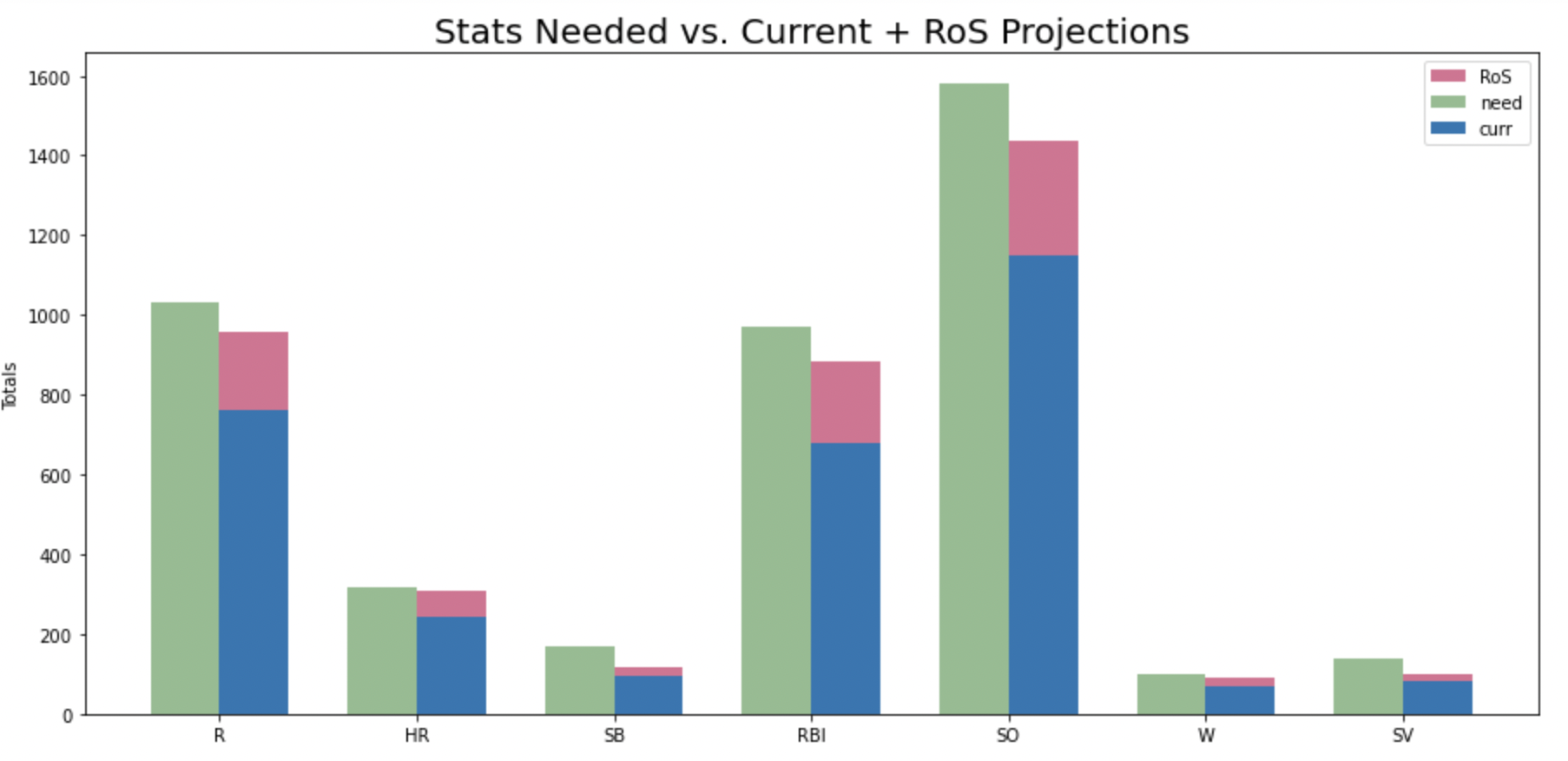
This season I’ve been checking to make sure all my counting stats are on pace using my league’s historical first-place totals. This is just a shallow ESPN league, but we’ve been at it for a few years now. So, I can get a good idea of what totals I’ll need to accumulate to come out on top. Using historical data in combination with Steamer rest of season projections, I can get a good sense of where I’ll be at the season’s end. Here’s a nice, simple graph that you can easily replicate using Excel:


I won’t show my ratios, you don’t want to see them. My WHIP and ERA are practically gone and never coming back. But, that allows me to go all-in on strikeouts and as you can see, I’ll need a big boost if I want to finish with first-place totals. Here are three pitchers who are likely available on waiver wires and have high rest of season strikeout totals. 


Patrick Corbin, 43.9% rostered ESPN, ROS SO: 44

Corbin has hurt a lot of fantasy managers this season and his 5.82 ERA is the evidence. But, an extra 44 strikeouts would certainly be welcome. With the Nationals projected to win another 16 games, you may just get one or two more wins. His ROS ERA is 4.02, but this is really a move for strikeouts and not ratios. If you’re holding onto a small number there, don’t claim Corbin. 


Josiah Gray, 33.9% rostered ESPN, ROS SO: 41

In Gray’s second start for the Nationals he recorded 10 strikeouts and in his two most recent starts he’s gone six innings. His ROS K/9 is a healthy 9.48 and it really seems like the Nationals are trying to see what their new rotation piece has to offer. 


JT Brubaker, 12.4% rostered ESPN, ROS SO: 36

I know, I know. He’s on the IL, he’s had a rough go in his last few starts and his ROS ERA is a 4.18. But, his injury is supposedly only going to keep him on for the minimum stay, two of his last three starts resulted in an xFIP that was at least 4 points lower than his FIP and he only gave up four hits, and no runs in his most recent start.


The big disclaimer here is that you need to be willing to ditch WHIP and ERA. These three pitchers are not projected to keep the numbers off the scoreboard, but they could be cheap and easy ways of accumulating more strikeouts. As long as you have the starts remaining to spare, these three pitchers’ rest of season projections could get you what you need.


MLB DFS Pitching Analysis: April 13, 2021

Our MLB DFS lineups don’t start and end with pitching. I’m not saying to punt pitcher every night or even every now and then. I’m just stressing that each and every slate does not rest upon our pitching. But the pitcher position is so vital because it’s the slot where we can get the most accurate projection in an extremely volatile wing of DFS.

Our pitching isn’t just a source of fantasy points. The price tags on pitchers make it so they shape they dictate the freedoms and restrictions of building our lineups. Before reading this article, it’s highly suggested that you read my article, “DFS Pitching Primer,” so the concepts discussed here make more sense.

That we’re not selecting the best players. We’re constructing the lineups which carry the most leverage without sacrificing many projected fantasy points.

Tonight’s slate features a wide variety of pitching quality, but we’re gonna focus on the top — the best pitcher, the best play, and the best contrarian option — or else some poor editor is gonna have to sift through 3,000 words, as there is just so much really good pitching.

The best pitcher of these three is Shane Bieber and it isn’t particularly close. His 3.09 SIERA, 11.99 K/9, and 27.9% K-BB rate all lead the slate. And his matchup against the White Sox is not as scary as many think it is. The White Sox only have a 102 wRC+ against right-handed pitching and they carry a 24.5% K rate. Vegas has the implied run total for the White Sox around 3.5, which is totally fine. And Bieber is about $1k too cheap on both sites for his skill level. That all said, Bieber won’t carry the most ownership.

Trevor Bauer will likely actually be the heavily-owned chalk tonight because he’s a couple hundred cheaper than Bieber and is projecting better across the industry, despite being far short of Bieber in SIERA at 3.77 and overall skill. There are three key reasons why:

      1. The Rockies are a trainwreck. Forget the home-road garbage. We don’t have to speculate on the extremes of Coors Field. The Rockies active roster has a 79 wRC+ against right-handed pitchers with a 25.1% K rate.

      Is Trevor Story legit-good? Sure. Is Charlie Blackmon nothing to slouch about? Sure. Does C.J. Cron have the type of power that transcends the Coors advantage? Sure. Can Ryan McMahon be a real thing? Sure.

      But the rest of the Rockies lineup is hot garbage and none of the guys I mentioned are elite. According to the RotoGrinders Plate IQ tool, their projected starting lineup has an Earth-shattering 27.2% K rate.

      2. Bauer’s environment is better for run prevention. Guaranteed Rate Field is a low-key big-time hitters park. It has a 102 park factor for wOBA and a 116 for home runs, according to EV Analytics, compared to 101 and 109 for Dodger Stadium. The rumor is that Dodgers Stadium’s home run factor goes down at night because of the marine layer. Not sure I believe it, but still a significant park advantage for Bauer.

      Vegas sees (1) and (2) to give Colorado a 2.51 implied total — almost a full run under the White Sox.

      3. Bauer’s one of the best pitchers in the league. Not like Bieber, but still… Bieber is probably a top-three pitcher in baseball, while Bauer is somewhere in the middle or bottom of the top-12, depending on who you ask. The most valuable quality Bauer possesses after his 11.23 K/9 and sub-4.00 SIERA is his ability to pitch deep into games. We get points for innings and more innings equal more Ks. His 6.36 innings pitched per start is elite in today’s game and his three complete game shutouts (CGSO) since 2019 as tied with one guy in MLB over that span.

This is the worst wRC+ versus any handedness in the league and one of the worst K rates in a much better ballpark for pitching than Bieber has to face. Add Bauer’s leash and there is legitimate CGSO upside for Bauer tonight.

That said, projecting considerably lower than Bauer, there’s Lucas Giolito. His matchup isn’t as finger-lickin’ juicy as Bauer’s and he’s pitching in the same park as Bieber, but no one’s gonna play him. His 3.48 SIERA is better than Bauer’s. His 11.89 K/9 is higher than Bauer’s. And his 24.6% K-BB rate is higher than Bauer’s.

Cleveland doesn’t strike out much (22.9% against right-handers), but their 90 wRC+ against right-handers is awful. Vegas has the game as a pick-em, so the implied total for Cleveland is even with the White Sox.

In cash games, we play Bauer. In smaller tournaments, we take a stand on Bauer or Bieber. But in large-field tournaments where we need more leverage over the field of entrants, Giolito has to be in the mix. If we’re maximum multi-entering or even playing 20-plus lineups, we should consider lineups without any of the three, as the pool of SP2s is about as deep as it gets.

All stats cited are since 2019, unless otherwise noted.


Out of Nowhere All Stars – Pitchers

A couple weeks back I highlight a group of Out of Nowhere Hitters and gave some thoughts on how I view them for 2021. It’s time to take a look at some pitchers!

Note: this is not a complete list, there are definitely more than seven candidates so feel free to include yours in the comments and I’ll give my thoughts on them in a response.

Framber Valdez | Houston Astros

Valdez ranked just 22nd among Astros prospects coming into 2019 tabbed with a bullpen future due in large part to a two-pitch repertoire. A lack of viable starting options gave him an opportunity in 2020 and he took full advantage. After a mediocre debut against the Dodgers, he reeled off 41 innings of a 2.20 ERA and 1.10 WHIP with 46 strikeouts and a 3-1 record. Back-to-back duds against the LA teams (8 ER in 7 IP at LAA, 5 ER in 5 IP at LAD) pushed his ERA to 4.08 but then he allowed just 2 ER in his final 13.3 innings to give him a season mark of 3.57 in 70.7 IP.

Read the rest of this entry »


Pitch Mix Changes: Mengden, Velasquez, Cueto, & Wojciechowski

Again, I’m diving into some lowly-owned starters who have changed their pitch mix since last season. A couple seem to have potential.

Daniel Mengden (3% Owned at CBS)

Daniel Mengden’s Pitch Mix
Pitch Type 2019 2020 Diff
FA% 36% 54% 18%
SI% 17% 0% -17%
FC% 12% 2% -10%
SL% 14% 23% 9%
CU% 10% 10% 1%
CH% 11% 10% -1%
FS% 0% 0% 0%

While he’s better known for his 80-grade mustache, he’s trying to mix up his pitches to become useful. He’s reorganized a bunch of pitches that have helped but other parts of his game are dragging him down.
Read the rest of this entry »


Pitch Mix Changes: Porcello, Gonzales, Lopez, Sheffield, & Freeland

I’m grinding away trying to find any pitchers who have changed their pitch mix and are flying under the radar. The changes could be for the better or worse. Also, I’m focusing on lowly owned guys. There is no reason to worry about pitchers who aren’t an option to cut or add. For example, Walker Beuhler has limited the usage of his four-seamer and curve and is throwing his cutter, sinker, and slider more. Sure he might change but is any owner going drop or bench him on the information.
Read the rest of this entry »