Archive for Featured

Big Kid Adds (Week 2)


John E. Sokolowski-Imagn Images

While the NFBC Main Event garners most of the attention, there are a handful of leagues with even larger entry fees ($2.5K to $15K). They are named Elite leagues (previously called High Stakes Leagues), and there are seven of them. With so much money on the line, these fantasy managers try to gain any advantage. Most of the time, these managers will be a week or two ahead of everyone else on their adds. Here are the players and some information on the ones added in five or more leagues. Read the rest of this entry »


Starting Pitcher Chart – April 9th, 2026

Neville E. Guard-Imagn Images

Welcome to the Daily SP Chart.

The chart includes their performance for 2025 until we get some actual data for this year (I changed over in late-April last year), their opponent’s wOBA versus the pitcher’s handedness from last year (not a perfect solution as teams change in the offseason, but better than using just a few days of data from this year), my general start/sit recommendation for 10-team, 12-team, and 15-team (or more) leagues, and then a note about some, most, or all depending on the day. Obviously, there are league sizes beyond those three so it’s essentially a shallow, medium, deep. If a pitcher only has an “x” in 15-team, it doesn’t mean there’s no potential use in 10s and 12s, but it’s a much riskier stream for those spots.

These are general recommendations, and your league situation will carry more weight whether you are protecting ratios or chasing counting numbers. This is for standard 5×5 roto leagues. The thresholds for H2H starts are generally lower, especially in points leagues so I thought there would be more value focusing on roto.

I usually won’t have much to write about aces who are locked into our rotations, you don’t really need a shiny stat to be convinced on starting guys like that. If you want to discuss someone further, please feel free to leave a comment and I’ll get you an answer when I can. I try to do a few sweeps of the comments before game time in case there are time-sensitive questions.

Read the rest of this entry »


Roto Riteup: April 8, 2026

This guy is going to be a human highlight reel.

Read the rest of this entry »


Starting Pitcher Chart – April 8th, 2026

Gary A. Vasquez-Imagn Images

Welcome to the Daily SP Chart.

The chart includes their performance for 2025 until we get some actual data for this year (I changed over in late-April last year), their opponent’s wOBA versus the pitcher’s handedness from last year (not a perfect solution as teams change in the offseason, but better than using just a few days of data from this year), my general start/sit recommendation for 10-team, 12-team, and 15-team (or more) leagues, and then a note about some, most, or all depending on the day. Obviously, there are league sizes beyond those three so it’s essentially a shallow, medium, deep. If a pitcher only has an “x” in 15-team, it doesn’t mean there’s no potential use in 10s and 12s, but it’s a much riskier stream for those spots.

These are general recommendations, and your league situation will carry more weight whether you are protecting ratios or chasing counting numbers. This is for standard 5×5 roto leagues. The thresholds for H2H starts are generally lower, especially in points leagues so I thought there would be more value focusing on roto.

I usually won’t have much to write about aces who are locked into our rotations, you don’t really need a shiny stat to be convinced on starting guys like that. If you want to discuss someone further, please feel free to leave a comment and I’ll get you an answer when I can. I try to do a few sweeps of the comments before game time in case there are time-sensitive questions.

Read the rest of this entry »


Mining the News (4/7/26)


Katie Stratman-Imagn Images

American League

Orioles

Brandon Young added a sinker.

With a new sinker in the arsenal, which Young threw eight times (12%) against the White Sox, the right-hander kept Chicago guessing and generated weak contact before finishing with a strong 1-2-3 frame in the fifth. Not only was the pitch effective, but it also opened up the rest of his six-pitch repertoire.

“It’s just a little something different, another heater that I can throw to both sides,” Young said of the pitch. “Puts a little wrinkle in. Two-seam, sinker, I don’t even know what it is, really, but just something different to keep them off. It’s been good to me. Started in Spring Training throwing it, so I had the encouragement to throw it tonight. I think it’s going to be a big pitch for me.”

Our STUPH models love the sinker, grading it as his best pitch (56 botOvr, 127 Pitching+). Read the rest of this entry »


The Trade Desk: Winning a Pitcher Deal

Jim Cowsert-USA TODAY Sports

Trades are the lifeblood of fantasy baseball home leagues. The conversations around them help keep us connected and engaged, and make our league more fun. Striking deals isn’t always easy. There are often hurt feelings around lopsided proposals, league-mates who value players differently, and that one guy who wants to veto everything. We can improve our fantasy squads with the waiver wire, but our collective hit rates are low. Quite often, those pickups backfire in the form of a hitter’s cold streak or a pitcher’s blowup, which inevitably leads to dropping the player. The one facet we have control of in home leagues is trading.

Managers are often emotionally tied to certain players – specifically, missed draft targets or players from their favorite baseball team. Also, we’re not all great at zooming out for a long-term view and not being stuck in the moment. Good analysis can be washed away by recency bias and small sample sizes. No one can force us to make a deal, so it’s the one element of the game we have some control over and can use proper value assessment and negotiation techniques to our advantage.

This column will recommend hitters and pitchers to attempt to sell-high or buy-low, and touch on trade strategies. No two leagues or two managers are the same. You know your league-mates best: what kind of deal they’ll scoff at, which player type they’re willing to deal or acquire, and how good their player and market valuation skills are. I’ll do my best to dig deep and present realistic opportunities.

April is a good time to capitalize on the overreaction and panic of our league-mates.

Here is a trade scenario to consider that could perhaps spawn ideas about similar players:

Offer: Matthew Liberatore (SP, STL), Eduardo Rodriguez (SP, ARZ)

Target: Nathan Eovaldi (SP, TEX), Max Meyer (SP, MIA)

Now is a good time to explore offers for Liberatore and E-Rod. Both are lefties on below-average teams. Both are off to good starts. It is unlikely that either will have a higher market value this season than they do now.

Liberatore is a fine pitcher. He’s a former first-round draft pick of the Rays (2018) who spent time as both a reliever and starter until the Cardinals stretched him out last spring so that he could be part of their rotation. Liberatore had an excellent stretch over the first two months of the season. In his first 11 starts, Liberatore produced a 3.08 ERA, a 1.06 WHIP, and an impressive 3.5% walk rate, and his strikeout rate hovered at 21.4%. His walk rate normalized closer to league average (8%) over the final four months, but Liberatore had several blow-up starts and those last 18 starts didn’t go as well — a 5.05 ERA, 1.49 WHIP, as well as a K-rate dip to 17%.

Through his first two games this season, the ace of the Cards rotation has allowed two runs (both solo homers), with three walks and four punchouts in 11 innings. We shouldn’t fall victim to small sampleitis, but it’s worth noting that the damage could have been worse in those starts when we consider his strand rate (100%), BABIP (.216), and differential in ERA (1.64) and xFIP (5.28). The big question: does someone in our league like him and consider him “safe”? The one way to find out is by trade-fishing.

Eduardo Rodriguez has had two noteworthy seasons — with the Red Sox in 2019 (203.1 IP, 25% K, 3.81 ERA) and in 2023 with the Tigers (152.2 IP, 23% K, 3.30 ERA). The rest of his career has been mostly unremarkable and his WHIP (career 1.33) is usually detrimental to fantasy teams. In deeper leagues (15-teamers and above), where starting pitching options are thin, E-Rod might have slight appeal to someone in your league (perhaps a Red Sox fan) on name recognition alone. He looked great in his season debut where he threw five scoreless innings with five punchouts and two walks against a stacked Dodgers offense. Five days later, he followed up with seven strong innings with no runs allowed against the Braves. Most notable in those first two starts was his pitch mix. Typically a 44-47% four-seam guy, Rodriguez threw his fastball just 28% of the time in those first two starts, while significantly increasing his changeup usage (from 21% since 2024 to 35% in 2026). Rodriguez’s changeup was an effective pitch in his two best seasons, but it’s been an inconsistent offering of his over the course of his career. His sinkers and cutters pop from time to time, but overall, E-Rod’s pitch mix and effectiveness has been all over the map — simply too much tinkering.

Your league-mates are probably too smart to buy high on an inconsistent pitcher on a bad team just because he has a 0.00 ERA through two starts, but it sure is worth exploring. His next four starts are against the Mets (road), Orioles (home), White Sox (home), Brewers (road). Since the Diamondbacks play six, five and six games the next three weeks, there are no two-start weeks on the horizon for him unless there’s a rotation shift or some rainouts.

The biggest reasons to shop Liberatore and Rodriguez is because their ratios are currently far below where they’ll end up at and because we want as few of the below-average swing-and-miss arms on our roster as possible. Liberatore’s career swinging-strike rate is 9.2% (8.9% last season) and Rodriguez’s is 10.4% (under nine percent since 2024).

It’s unlikely that another manager will give up Nathan Eovaldi or Max Meyer in a 1-for-1 deal for Liberatore or Rodriguez, but it’s not a far-fetched starting point. Most of our friends can read through attempts of fantasy baseball trade subterfuge. We’re not going to start the conversation with “let me take Eovaldi off your hands and I’ll give you E-Rod, who hasn’t given up a run all season.” But we should take any opportunity to subtly point things out that accentuate the player you’re offering or criticizes the player you’re targeting. In fact, it doesn’t hurt do the opposite, perhaps with a little bit of BYAF (But You Are Free), a persuasion technique that reinforces a person’s autonomy:

Eovaldi never plays a full season and is getting old, but I’m willing to take on the risk. It’s up to you, of course.”

It’s undoubtedly been a rough start for Eovaldi. In his first outing, he gave up a two-run shot to Kyle Schwarber in the first inning and a three-run bomb to Alec Bohm in the fifth before getting pulled with two outs in the fifth. He struck out seven and didn’t walk a batter. His second start, against the Orioles, went poorly — 4 IP – 8 H – 6 ER – 3 BB – 5 K. There are no issues with his velocity — he’s still hitting 94-95 mph with his four-seamer. In fact, he threw it less than 14% of the time while raising his split-finger usage from 31% to 37%. His four-seamer is the pitch most of the damage has come on, and it’s likely he will continue relying primarily on his split-finger, curveball and cutter. He has a .481 BABIP and 54.1% strand rate in those two starts — definitely a touch unlucky.

Let’s not forget that the man maintained a 1.73 ERA (3.02 SIERA) and 0.85 WHIP over 22 starts last season. He hasn’t exactly been the bastion of health, but Ol’ Nate has averaged nearly 27 starts over his last five seasons. Moreover, he is typically an elite control guy, boasting a 6.5% career walk rate (since 2011!) and sported a 4.2% mark last season. A low-walk veteran with a 11+ ERA and 2+ WHIP is the exact type of pitcher we target in trades now.

The person with Max Meyer might currently be experiencing a case of “man, I fell for the hype; this guy stinks.” Meyer has allowed five runs and has walked five batters through his first two starts. On the flip side, he has 11 strikeouts (9.2 innings) with a 14.1% SwStr, his velocity is intact, and he continues to throw his patented slider at an average of one out of every three pitches. He calls a pitchers’ park home and is talented enough to beat out his ratio projections, which peg him in the 4.20-4.40 (ERA) and 1.30-1.35 (WHIP) range. Could you pull off Meyer for Liberatore or Rodriguez straight up? Probably not, but we don’t get what we want in life without asking.

The managers who win pitcher trades are the ones digging in the trenches. The ones who do a deep dive into peripherals, underlying metrics, velocity changes, pitch mix adjustments and play logs of past outings. Remember that a 1-for-1 offer out of the blue will usually give away your intent, so try to hide your true goal in a smaller, multi-player deal. It’s easier to trade with friends or league-mates you already have baseball or trade conversations with, and you can play a bit of the long-game by planting seeds in conversations that could help you get the deal you’d like to get done.


Roto Riteup: April 7, 2026

Just do it all, sir!

Read the rest of this entry »


Starting Pitcher Chart – April 7th, 2026

Jim Rassol-USA TODAY Sports

Welcome to the Daily SP Chart.

The chart includes their performance for 2025 until we get some actual data for this year (I changed over in late-April last year), their opponent’s wOBA versus the pitcher’s handedness from last year (not a perfect solution as teams change in the offseason, but better than using just a few days of data from this year), my general start/sit recommendation for 10-team, 12-team, and 15-team (or more) leagues, and then a note about some, most, or all depending on the day. Obviously, there are league sizes beyond those three so it’s essentially a shallow, medium, deep. If a pitcher only has an “x” in 15-team, it doesn’t mean there’s no potential use in 10s and 12s, but it’s a much riskier stream for those spots.

These are general recommendations, and your league situation will carry more weight whether you are protecting ratios or chasing counting numbers. This is for standard 5×5 roto leagues. The thresholds for H2H starts are generally lower, especially in points leagues so I thought there would be more value focusing on roto.

I usually won’t have much to write about aces who are locked into our rotations, you don’t really need a shiny stat to be convinced on starting guys like that. If you want to discuss someone further, please feel free to leave a comment and I’ll get you an answer when I can. I try to do a few sweeps of the comments before game time in case there are time-sensitive questions.

Read the rest of this entry »


FAAB Frenzy and Waivers Wild: Week 3

Every Monday, this column will break down the most popular waiver wire and free agent acquisitions of the weekend.

Fantasy baseball managers know that our game is the ultimate test of grit, grind, tenacity, and patience. Unlike fantasy football, where league titles can be won with minimal in-season activity, fantasy baseball leagues require incessant attention and activity. Particularly when it comes to free agent adds and drops. Real-life baseball managers are constantly adjusting batting orders, players are frequently optioned to and promoted from the Minor Leagues, and injuries occur almost daily. There’s no resting on our laurels. We must always stay vigilant with league news and notes and remain active on the waiver wire if we want to win our leagues.

Every week, I’ll dig into the top adds on the ever-popular Fantrax and in the NFBC Online Championship (OC), a national mid-stakes contest with 240 total leagues of 12 and a six-figure grand prize. Reviewing player adds between the two should provide us with a well-rounded perspective and barometer of the fantasy baseball marketplace.

Week 2 Overview

The hottest hitters of the week were Andy Pages (.583 – 2 HR – 7 RBI), Yordan Alvarez (.471-3-8), Oneil Cruz (.360-4-10), Ben Rice (.421-3-9), CJ Abrams (.333-3-10) and Drake Baldwin (.310-2-10). Luisangel Acuña was the only player with four stolen bases. Four consensus first round hitters have yet to hit a home run (Bobby Witt Jr., Ronald Acuña Jr., Julio Rodríguez and Fernando Tatis Jr.). Second-rounders Cal Raleigh and Nick Kurtz have yet to homer as well. It’s a long season, they will be alright. Of the 30 starting pitchers who made two starts in Week 2, 10% (three) earned two wins – Clay Holmes, Michael Soroka and Davis Martin. I’ve tracked two-start pitcher data the last few seasons, and that 10% rate is on par with average week over the last three seasons, usually hovering between 6% and 18% most weeks. Be wary about chasing wins with below-average starting pitchers this early in the season. As the data shows, locking in two wins without crushing the ratios is hard enough for above-average starters. Be particularly careful with mediocre or below-average 2x SPs whose first start is on a Tuesday. Sometimes weather will push their start back until the following week. Occasionally, those pitchers are pulled out of the rotation or demoted if they had a rough first start. Oftentimes, that is for the better to avoid further fantasy ERA/WHIP damage.

As we did last week, let’s review the top trending acquisitions for Fantrax (waivers) and the NFBC 12-team OC (blind bid FAAB).

Fantrax – Most Popular Player Adds (+/-)
Player Team Position Ros +/-
Liam Hicks MIA C/1B 74% 54%
Lance McCullers Jr. HOU SP 73% 34%
Jose Fernandez ARI SS 40% 33%
Kyle Isbel KC OF 41% 33%
Michael Soroka ARI SP 68% 29%
Bryce Elder ATL SP 59% 28%
Gregory Soto PIT RP 41% 21%
Paul Sewald ARZ RP 61% 21%
Mauricio Dubón ATL 5 pos. 43% 20%
Joey Wiemer WSH OF 62% 20%
Landen Roupp SF SP 64% 19%
Erik Sabrowski CLE RP 46% 19%
Emerson Hancock SEA SP 83% 18%
Taj Bradley MIN SP 79% 16%
Tyler Alexander TEX RP 28% 15%
Garrett Mitchell MIL OF 47% 14%
Randy Vásquez SD SP 77% 14%

Roster % is the current percentage of leagues rostering the player; +/-  is the percentage of leagues the player was added in the previous week

NFBC Online Championship – Top Average Winning Bids
Player Team Position % Added AWB
Jordan Walker STL OF 33% $115
Riley O’Brien STL RP 18% $90
Gregory Soto PIT RP 84% $90
Emerson Hancock SEA SP 18% $87
Garrett Mitchell MIL OF 57% $44
Michael Soroka ARI SP 67% $43
Bryan Baker TB RP 65% $40
Liam Hicks MIA C/1B 88% $39
Max Muncy ATH 2B/3B 60% $35
Randy Vásquez SD SP 40% $34
Lance McCullers Jr. HOU SP 78% $30
Rhett Lowder CIN SP 35% $30
Mark Vientos NYM 3B 50% $30
TJ Rumfield COL 1B 50% $29
Joe Boyle TB SP 42% $29
Seth Lugo KC SP 25% $29
Bryce Elder ATL SP 57% $28
Mitch Keller PIT SP 23% $27
Dylan Beavers BAL OF 35% $26
Mark Leiter Jr. ATH RP 42% $25

% Added is the percentage of leagues that added the player; AWB stands for average winning bid

Jordan Walker has been a disappointment since his rookie season. Despite positive offseason reports about adjustments made at Driveline, Walker struggled in spring training, and was mostly overlooked by NFBC 12-team drafters. I won’t take a victory lap after 10 days, but I would like to mention that Walker is one of my highest rostered hitters this season. Walker was the only player with a triple-digit AWB. Relievers Riley O’Brien and Gregory Soto, and Seattle’s SP5 Emerson Hancock came close. Hancock is now rostered in each of the 240 OCs. O’Brien and Soto are still available in two percent of leagues.

Relievers

It’s the second week in a row where we’re discussing the Cardinals bullpen. Hopefully, it will be the last time. Riley O’Brien had the highest ADP this winter and spring among Cardinals relievers, though a calf injury kept from joining South Korea for the WBC and his ADP began to drop while the ADPs of JoJo Romero and Matt Svanson rose. Veteran Ryne Stanek snagged the first opportunity and closed the game out, though he walked three batters. He then stumbled in his second chance two days later, and O’Brien saved the day. Last week, O’Brien further distanced himself from the pack with three clean innings in three appearances, with two saves. Meanwhile, Matt Svanson has struggled mightily in middle relief. JoJo Romero would like step up for the occasional save opportunity when a southpaw is needed.

Gregory Soto is well known for throwing heat. He saved 30 games for the Tigers in 2022 and has spent the last few seasons as a lefty setup man who walks opposing batters at an above-average clip (over 10%). Last Tuesday, assumed Pirates closer Dennis Santana pitched the eighth inning and Soto handled the ninth, though the Pirates scored two runs in the top of the ninth, so it wasn’t a save opportunity. The Pirates beat the Reds 8-3 again on Wednesday. Santana didn’t make an appearance, but Soto did so again in the ninth; again it wasn’t a save opportunity since the Pirates scored four in the ninth. A similar setup occurred on Friday as Santana pitched a clean eighth and Soto came in to close out the Orioles in the ninth, though he gave up a solo shot to Gunnar Henderson. The Pirates continued their late-game heroics on Saturday. With the game tied 3-3 going into the ninth, Santana stepped in to pitch a clean ninth, then Nick Yorke walked it off with a double to give Santana the win. Soto is the more dynamic of the two, but is less stable because of history with free passes. It’s possible Soto earns more opportunities going forward, though it will likely remain a committee for now. The only thing that can hold Soto running away with the gig is Soto himself.

Paul Sewald was picked up in 21% of Fantrax leagues. Oddly, the Diamondbacks clear-as-day closer is only rostered in 61% of leagues, likely because of the inclusion of 10-teamers, points leagues, and roto leagues where holds are used in addition to saves. Tyler Alexander was scooped up in many leagues, though he is more of a spec-add. He has earned the Rangers only two saves, but is not the clear ninth-inning man. This was originally expected to be a two-man committee with lefty Robert Garcia and righty Chris Martin. Garcia hasn’t been great and Martin has been awful. Martin may move into a setup role, though the Rangers do still need a righty to step up. Perhaps that will be fireballer Cole Winn, who I picked up for $5 in a 15-team league on Sunday. Mark Leiter Jr. might be the first guy dropped from NFBC leagues next week if his struggles continue. He blew the save on Saturday and isn’t even locked into the A’s job. Bryan Baker hasn’t earned a save for the Rays yet, but has been pitching in the highest-leverage spots with Garrett Cleavinger on IL and Griffin Jax struggling.

Starting Pitchers

Hancock, Randy Vásquez and Lance McCullers Jr. were three of the most popular SP acquisitions of the weekend. Hancock followed up his masterful Opening Weekend performance (nine punchouts in six hitless innings) with a solid outing (6.2 IP – 6 H – 1 ER – 0 BB – 5 K) on Saturday, though the Mariners were robbed of three home runs by Angels Jo Adell and lost 1-0. Hancock lines up for a home start (Astros) this week, then a road start against the Padres. He should be quickly snagged in any leagues where he is available, 10-teamers included.

Randy Vásquez had some offseason buzz in deeper formats despite a ridiculously low 15% career walk rate. Folks paying attention may have noticed a slight velocity bump from Vásquez this spring, which he parlayed into two six-inning gems — an 11:4 K:BB with just eight hits and one earned run allowed against the Tigers at home and the Red Sox in Fenway. He has been throwing his four-seam fastball, sinker and slider 1-2 mph faster than last season and boasts an impressive 15.5% swinging-strike rate, albeit in a two-start sample. He now gets the pleasure of facing the Rockies at home, who will be heading over to San Diego from the high elevation of Denver.

The Bryce Elder Experience returns for another tour, likely to yet again tease us before destroying our ratios. Elder had a few good starts last season, but the overall body of work was horrific. His 5.30 ERA ranked sixth-worst among starting pitchers with at least 150 innings pitched. Could this turn into his breakout tour? His pitch mix and velocity remains the same and there’s nothing in his profile that portends massive improvement. He threw six scoreless against the A’s in his first start and seven scoreless with eight punchouts in Arizona on Saturday. It’s enough to lure us into starting him at home against the Guardians this week. Color me dubious, nevertheless.

Hitters

Among the top hitter adds on Fantrax, Mauricio Dubón, Joey Wiemer and Kyle Isbel feel like the ones most likely to find their way back to the free agent pool next week. Dubón has some appeal in deeper formats since he’s on a great offense and offers several positions of eligibility (on Fantrax he’s 1B, 2B, 3B, SS, OF). Wiemer had a hot start but he’s a short-side platoon bat and is a massive batting average drag. Isbel and his bottom-of-the-order crew have been producing the bulk of the runs over the last week, but it’s only a matter of days before the production shifts to the top and the middle of the Royals lineup.

Rookie infielder Jose Fernandez has cooled off since his 2-HR Major League debut last week, though with Carlos Santana banged up, Fernandez should earn more playing time going forward. In his first four career starts, he has already played first base, third base and DH. Fernandez is shortstop eligible in NFBC and would need to play 10 games at first or third to earn that eligibility. The Diamondbacks have some tough matchups this week facing the Mets and the Phillies.

Mark Vientos and TJ Rumfield are the two most intriguing and potentially valuable hitter acquisitions of the week. Vientos is off to a hot start, hitting .476 in 23 plate appearances. He is playing every day since Jorge Polanco is playing through an Achilles issue and is not ready to play the field yet. The Mets will have to get creative when Polanco can play first base again, but Polanco never had before this season and we don’t know if they’ll revert to their preseason plan. Rumfield isn’t hitting the ball hard (84.3 EV, 32% HH), but he is slashing .345/.406/.586 with two dingers and has the hold on the strong-side platoon at first base. He is a stronger stream option with the Rockies expected to face seven righties this week.

Drop of the Week

It’s hard to imagine Roki Sasaki sticking in the Dodgers rotation much longer after his shaky outing against the lowly Nationals on Sunday (6 ER, 3 BB in 5 IP). Sasaki’s four-seam fastball has averaged 97 mph, but it’s generated a 20% whiff rate and a measly 5.6% strikeout rate. Between his quotes and body language, it is clear that he lacks confidence on the mound. Manager Dave Roberts has been extremely patient throughout Sasaki’s rough spring, but a little reset in the minors or a trip to the minors may be in the cards. There are too many terrific alternatives available in 12-team leagues to continue to ride the Sasaki train, at least for now.


Taking Advantage of the Ottoneu/FanGraphs Leaderboards

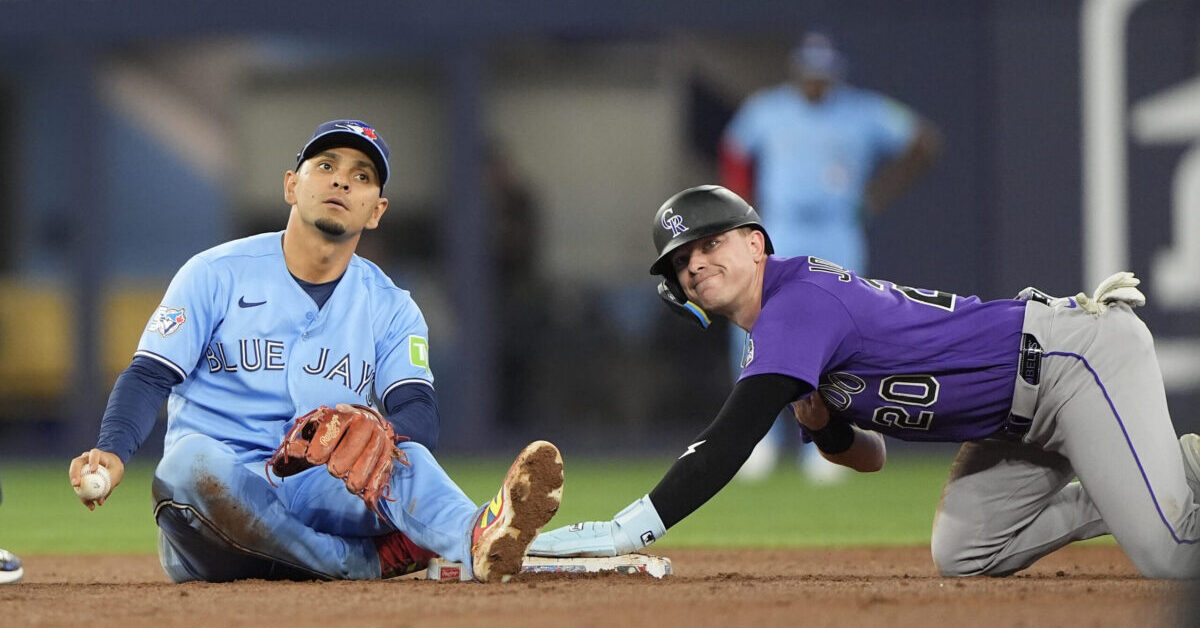
Washington Nationals left fielder Joey Wiemer (21) hits an infield single during the second inning against the Philadelphia Phillies at Citizens Bank Park.
Credit: Bill Streicher-Imagn Images

Like many of you, I fantasy baseball at multiple sites (Ottoneu primarily, but also FanTrax, CBS, and ESPN) and so I find myself navigating leaderboards at multiple sites. Kind of.

Yes, I do use the leaderboards at those other sites to find players, but that’s mostly out of laziness. When I have the time and the desire, my preferred way to find free agents and evaluate players is to come back to FanGraphs and use our player pages and leaderboards. CBS can tell me what a guy’s OBP is over the last 30 days; but it can’t tell me what has changed to drive that newfound on-base talent. So I identify free agents at one place, dig into them back here, and then head back to the other place to make FAAB bids or waiver claims.

The integration between Ottoneu and FanGraphs is one of the best and yet most underutilized aspects of the Ottoneu platform. And there are some little tricks you can use to make them even more powerful.

Read the rest of this entry »