Archive for Uncategorized

Double Dipping: Not Just for Chips

If you aren’t a Dungeon Master and actually leave the house every once and awhile, you know about the social faux pas that is double dipping. If not, “double dipping” is when you dip a chip, take a bite, and then dip again. It is frowned upon because not only are you a fat slob with an insatiable appetite for guacamole, but you are spreading your germs into the bowl of dip.

Double dipping shows up elsewhere in life, including fantasy leagues. What is Fantasy Baseball double dipping you ask? Fantasy double dipping is when an event affects two different stat categories in your league. When an event counts twice, it can skew league results slightly and have a small affect on player rankings. Fantasy double dipping comes in two forms: acceptable, and unacceptable. First, let us look at some acceptable double dipping:

  • HR & R/RBI/AVG – A home run goes into almost every category, but since it is such a special event it can slide through.

That’s it! The above case is the only common acceptable case of double dipping. Now, some of the many unacceptable cases:

  • ERA & QS – If you had a quality start, you had a low ERA.
  • AVG & OBP – A walk counts once, but a hit counts twice? Absurd.
  • OPS & OBP/SLG – OPS is “On-base plus slugging”. It’s in the name, people.

Consider this a public service announcement. In the words of the almighty Seinfeld, “Just take one dip and end it!”


ADP Values in Center Field (Part 1?)

This was supposed to be a look at the ADP values in the tiers I created during my Check the Position series, but two pairs of players in the second center field tier caught my eye. These players lie right on fantasy fault lines: they are within a couple picks of each other, yet it seems that their value is disparate. I think you’ll be able to tell who I fancy (as the Brits say).

First up are two borderline second-rounders (though a bit less borderline if your league breaks out the outfield into three positions). Jacoby Ellsbury (20.36 ADP) goes earliest, and many fantasy managers may scoff at the number if they are accustomed to playing with plain “OF” positions, and they could be right. He is projected to retain his game-changing speed and put up a steals number north of 50. To put that in perspective, only three players crossed that threshold last year, and only one other player is projected to do so in most projection systems next year (Michael Bourn). There’s a good chance that Ellsbury finally nets triple-digit runs too, provided he remains atop the order and the Boston offense doesn’t take a step back with their renewed emphasis on defense. So Ellsbury will have some good qualities.

But what about Grady Sizemore (26.52 ADP), who is being picked almost a half-round later? If you were in the right draft spot, you could actually avoid Ellsbury and take Sizemore after the turn in the third round. I did it recently, and felt great about it. It’s not like Sizemore won’t steal any bases – although the amount is in question. He put up a career-low 6.0 speed score last year (5.0 is average) and the projections range from 20 steals to the Fans’ more optimistic 29 steals. He’s still young (27), and here’s a bet that he’ll touch the higher end of the steals projections. The power is no question – he should out-homer Ellsbury by at least a dozen home runs, and as many as 20. For whatever reason, his batting average won’t be as nice, either.

So how do you compare two different players like this? How much are Ellsbury’s extra singles and stolen bases worth? How much should you pay for Sizemore’s extra power? An excellent site, BaseballMonster.com, attempts to answer this question by measuring a player’s impact in each of the 5×5 categories in terms of standard deviations above the mean in said category. Using Sizemore’s projections for 2009 (2010 is not up yet, and the .276, 32 HR, 38 SBs only need to be scaled back a little in the speed category to make sense), his across-the-board positive contributions gave him a ranking as the ninth-best hitter. How did Ellsbury finish last year? 14th. (I report, you decide.)

Next up is Curtis Granderson (53.64 ADP), who already seems like an ADP value at his draft position. In fact, in that mock where I scored Sizemore in the third, I took Granderson after the turn in the fifth and called it a double-victory. Granderson is going from a park that had a .974 park factor for home runs last year to one that sported a 1.261 factor this year. He’s going to have a nice bounce-back season according to his BABIP (.276 last year, .323 career). Yes, his speed factor was lower than his career average, but the speed factor counts stolen bases, and it’s hard to steal bases when you aren’t on base (and it’s hard to get on base when you’re getting unlucky with the bouncing ball). All systems go for Granderson, despite his unfavorable splits against lefties, which may not be as bad as they first appear.

And yet, Josh Hamilton (52.85 ADP), who has further to bounce back, is getting picked before Granderson. This is really a head-scratcher, in the end. Perhaps fantasy managers are being swayed by that gaudy 130 RBI total a couple of years back, because his career-high in home runs (32) is only two more than Granderson’s, and he doesn’t really steal bases (at all). Again, we are left to ponder the value of Hamilton’s batting average, because the RBI are so team-specific, and Granderson may out-produce Hamilton in that category depending on his position in the batting lineup in the Bronx. I think the home run totals will be close, and Granderson will get the final laugh.


ADP Values at Second Base

A while back, we checked the position at second base and outlined some tiers that should help you choose between options in your draft. Unfortunately, this position doesn’t produce ADP values as cleanly as some other positions (and we like our values clean).

Take the first two tiers, for example. It would be nice to pick the lowest-drafted second baseman in the first two tiers, Brian Roberts (40.69 ADP), and just declare him the value of the two tiers. The problem is that Roberts has too many question marks to get the (grade A) stamp of approval as a value. For instance, though his ISO was a second-best last year (.168), and it seems to have grown organically (three straight increases), that ISO has famously peaked before (.201 in his 18-home-run 2005 season) and then returned back towards the baseline (.137). He’s 32 and his stolen bases have declined for two straight seasons. Then again, 2008 produced his career-best full-season speed score (7.3), and that wasn’t so long ago. The point is, counting on his for anything more than 12 or so home runs and 30 or so stolen bases probably isn’t a good idea, and those numbers seem a little light for the third round. On the other hand, Dustin Pedroia (37.48 ADP) goes three picks earlier and isn’t going to hit that stolen base number and may only out-homer Roberts by a handful. Maybe Roberts is the actual value here.

There is a lot of questionable power in the next tier. Aaron Hill (46.87 ADP), Robinson Cano (45.83 ADP) and Jose Lopez (123.97 ADP) all had power spikes last year, and their draft positions show the confidence the general public has that the different players will return with good power in 2010. Once again, it’s tempting to take Lopez with the lowest ADP and call him the value – and there are some reasons to believe the power will stick. His ISO, fly ball, and HR/FB rates have all steadily risen over the last three years. The problem is that, with his walk rate (3.7% career), his value is tied up in that power, and his career ISO (.141) is still low enough that it is hard to count on. Why not take Dan Uggla (85.10) a couple rounds earlier so that you can depend on his power (.225 career ISO)? Here it seems that Uggla is the real value in the tier.

The final tier is a rag-tag group, as Asdrubal Cabrera (158.18) and Howie Kendrick (146.64) leading the way, though neither is a lock to hit 15 home runs or stolen bases next year. They’ll have to hit a lot of singles to make up for their shortcomings in those two important fantasy categories. Again here, Clint Barmes (307.61) and Adam Kennedy (327.96) bring up the rear but have too many questions to tout as the values of the tier. Barmes doesn’t walk (4.3%), strikes out a fair amount (22% last year), and though he showed power last year (.195 ISO), his career power is less exciting (.157). He’s also done a lot of jumping around in the power department, and last year may have just defined his upside anyway. Kennedy had a nice year, but despite his 20 stolen bases last year, his speed score was actually below-average. He doesn’t really have a single skill you can count on.

If you’re going to take a plunge, why not take one on Rickie Weeks (212.37 ADP)? Yes, it will cost a healthier pick than Barmes, but we’re still talking about a 19th-round pick in mixed league drafts. His ISO has jumped around some too (.125 – .245), but it’s been trending upwards in a general way. There’s still the upside that he might finally put together one of his better strikeout rates (say, 2008’s 24.2%) with one of his better walk rates (11.8% in 2008) and BABIPs (.313 last year) and get his batting average up past the .250s. We know he has power and speed, and an okay batting average would make him a valuable second baseman, especially in head-to-head leagues. That he might be the value of the final tier should serve as a positional scarcity warning for the position, too.


Deep League Values at Catcher (with More Facial Hair (and Parentheses))

Perhaps it’s because I can’t grow substantial facial hair of my own, but when my grandmother-in-law very nicely sent along a shoebox full of baseball cards from 1978-1982, I was re-awed (sp?) by the facial hair (I say nicely because this is about the nicest thing she’s ever done (she once declared to a room full of people I didn’t know that my hair was obviously a perm (then she did so again during the processional at my wedding (!)))).

Being mathematical myself (take that sentence opening Mr. Connolly! (Mr. Connolly was my high-school English teacher)), I decided to sort them by some sort of mathematical function. Here it is:

Sort (1980, facial_hair, inches_of_face_coverage, wildness_of_look) = FaceHairRanking

After running my rather large sample size (200 or so cards) through the function, I have your top three players in FaceHairRanking for 1980 (drum roll please): 3) Gene Garber (Holy neck beard!); 2) Sparky Lyle (twirl those ends you bad boy!); 1) Al Hrabosky (Mad Hungarian is right!). Of course, these guys did other things (Garber had the now-rare trio of 10 wins, 12 losses and 14 saves in 1975, Lyle had a 127 ERA+ in almost 1400 innings, and Hrabosky, well, Hrabosky (I like writing his name (and saying it in my head)) threw with his left hand (and was mad), but I’m sure they are all eagerly awaiting their trophy (named the Tommy Bennett) in the mail.

Tortured intros aside (how much space did I leave for fantasy analysis?), this all does have a point. Let’s say you are in a deep league and you don’t want to reach on a catcher (reasonable enough), and you’re looking at catchers that are “Just off” our tiered rankings for the position (or below). How do you sort these guys?

If FaceHairRanking won’t help, what will? I mean, Yadier Molina (240.31 ADP), Carlos Ruiz (274.17 ADP), John Baker (322.9 ADP), Gerald Laird (325.7 ADP), and Jesus Flores (351.46 ADP) – cross your eyes a little when looking at their stats, and what’s the difference really (don’t leave them crossed, you’ll go blind). Maybe one will approach a .275 batting average (as opposed to .250), and maybe one will hit 10 home runs (as opposed to six), but most of them are interchangeable parts. So here’s an idea, sort these guys by reverse ADP! Seriously. Maybe Flores has the most threatening battery mate (but Ivan Rodriguez (329.87 ADP) is older than dirt in catcher years, and Flores is the youngest of the bunch), but you could really just wait past the 300th (!) pick in your draft, and then take whatever catcher you like. Boom – deep league catcher value article (book it!).

I do have a (less facetious) point that goes even deeper than the ADP rankings currently allow. Some leagues are so deep that you might even have room for a second catcher on your bench – in which case you can use a stolen tactic (from fantasy football) called handcuffing (like you’ve never heard of it). Why not take Laird and the (admittedly over-achieving) Alex Avila (ADP > 350) in order to make sure you have the (mediocre) starting catcher for the Tigers? That’ll cost you two end-game picks. If it’s a re-draft league, pair (ueberprospect) Carlos Santana (326.29) with the (less exciting) Lou Marson (ADP > 350). Or Taylor Teagarden (326.07) and Jarrod Saltalamacchia (319.38 ADP) if you want a little more balance between your two guys.

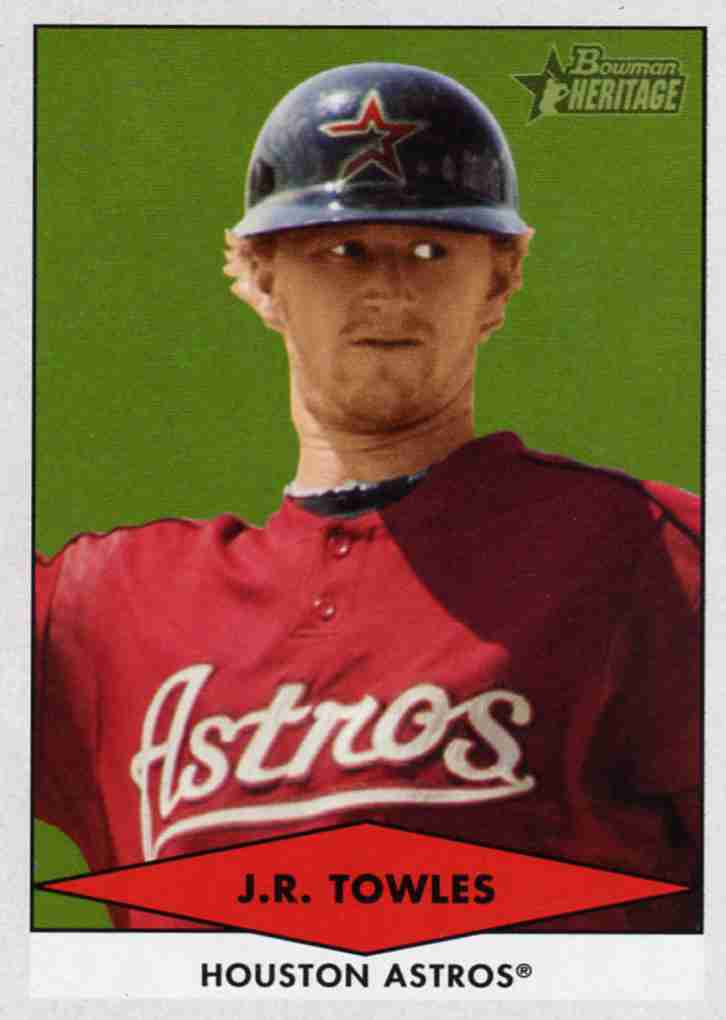
If you’re a gambling type (and why not, if you’ve got no catcher and your deep league is wrapping up), here are two final names for you. They are both young guys, with some (former) gleam to their prospect shine, and an ADP value over 350, going up against extremely mediocre veterans. One is Adam Moore in Seattle, and the other is J.R. Towles in Houston. They might both deserve more words than I can (now) give them, but they both have some interesting minor league numbers (.301/.369/.483 for Moore; .299/.370/.493 for Towles) and some terrible big league numbers (.217/.250/.391 for Moore; .188/.280/.329 for Towles). But they both have mitigating secondary statistics (23 major league ABs for Moore (I know, not really a secondary statistic); .218 major league BABIP for Towles). Hey, Towles even ranks (reasonably) highly in today’s version of FaceHairRanking. (Please don’t hate me for my love of parentheses.)


ADP Values at Third Base

It’s time for another episode of “You can get with that, but this is where it’s at,” boys and girls. This week, we take a look at the heroes manning what may prove to be the thinnest position on the diamond. Where shortstop had such frugal luminaries as Everth Cabrera, Ryan Theriot and Elvis Andrus, and catcher featured thrifty backstops like Miguel Montero and A.J. Pierzynski, we may have a harder time finding values at the hot corner.

As usual, we’ll start in the first tier. You can’t really fault anyone for going big with Alex Rodriguez (despite the hip and the age, 3.37 ADP), David Wright (despite the power outage, 14.76 ADP), Evan Longoria (I don’t see a problem here, 10.28 ADP) or Mark Reynolds (the king of the whiff, 20.17 ADP). Why is Ryan Zimmerman being drafted at the end of the third round (39.78 ADP)? I guess people are suspicious of his career high .233 ISO (and 33 home runs) last year. I take the view that nothing seems out of place for a 25 year-old top prospect with a .229 minor league ISO and a slowly increasing fly ball rate, who is also on the correct side of his peak. Sign me up for some of that in 2010.

The next tier has some svelte athletes (Pablo Sandoval, 44.83 ADP), some slow-footed plodders (Chone Figgins, 77.84 ADP) and some low-contact sluggers (Michael Young, 93.51 ADP). Scarcasm aside, why not take a player with possibly the same amount of risk (and yet bundles of upside) a little bit later than the fellow members of his tier? Gordon Beckham (93.87 ADP) had a good rookie season despite a low line drive percentage (16.6%) that kept his BABIP down (.294), and therefore his batting average (.270). But look at the good side, if you prorate out his stats, he had a 21-home run, 11 stolen-base kind of year, and his line drive rates were much higher in the minor leagues. Even if he just finished out the pro-rated string next year, he’d be an ADP value in his tier. Bend it like Beckham!

Let’s move past mixed metaphors to the final tier. This tier makes you realize how turdly third base truly is this year. You can gamble on next year’s Mark Reynolds with Ian Stewart (131.84 ADP) or put your grandfather Larry Wayne Jones (ADP 134.39) in the position and cross your fingers. The projection systems don’t like the bearded wonder Casey Blake (ADP 162.64) for good reason, as late bloomers are usually early exits. You could say the same about Mark DeRosa (ADP 246.44), really. Who’s to like in this tier?

The answer, in the immortal words of Homer Simpson, is “I… don’t… know.” I’d probably try to avoid the whole situation altogether by drafting a third-sacker earlier. But I think I might take a pair of players from the bottom, and those two might be Adrian Beltre (ADP 199.55) and Alex Gordon (245.03). Some may say that splits aren’t statistically significant, but perhaps that’s not true in Beltre’s case, who has a grand total of 3272 away at-bats away from pitcher’s havens in Los Angeles and Seattle. In those (probably significant at-bats), he’s put up a .287/.338/.488 career line (compared to a .726 OPS at home). I’d just cover my butt with a post-hype sleeper like Gordon, who had been making nice strides in walk rate, strikeout rate, ISO, line drive rate, and reach rate before injury sidelined him last year. I’ll be owning him more than once this year, I’d reckon.

Ah! Let me stop you right there. Jorge Cantu is ranked as a first baseman.


Check the Position: SP2

Over the offseason we’ll take a look at each position on the diamond and see how the past season affected the positional rankings and where there might be some potential bounceback value picks going into next year’s drafts. (See shortstops, catchers, second basemen, first basemen, third basemen, right fielders, left fielders and center fielders.)

Of course, when it comes to pitchers, the format suffers. We’re not about to do tiered rankings for the top 75+ pitchers that get drafted every year in mixed leagues – that would be one long post. Instead, we’re doing starters by tiers. Tier one, otherwise known as SP1, was last week. SP2 is below.

Imagine if, on offense, you were just able to pick whomever regardless of position? Or, more correctly, what if there were only two positions on offense in fantasy baseball? Infield and Outfield? That’s what it’s like on the pitching side. So, not surprisingly, the second tier of fantasy starting pitchers looks pretty nice. (It’s also reason #36,978 to draft pitching later!)

All of the hurlers in the first tier could easily end up as fantasy aces next year. Matt Cain and Javier Vazquez were probably even SP1s last year… we just doubt their ability to repeat those seasons. Jake Peavy got a demotion from the first set of pitchers because of his health and move to the stronger league. Yovani Gallardo and Tommy Hanson are young, exciting, and ascendant: pick one of them as your SP1 and follow it up with a possible bounce-back veteran like Cole Hamels, and your likelihood of having two fantasy aces is high.

The next tier just has more question marks. Clayton Kershaw has some awesome pitches, and an equally terrible walk rate to go with them. Jair Jurrjens just had too many stranded runners and too many bouncing balls go his way to trust him to be anywhere as good as he was last year. Wandy Rodriguez has now sustained his excellence two years in a row – but his fastball barely cracks 90 miles per hour, and throwing all those curveballs (almost 40%) has to catch up with you some day, maybe. John Lackey brings multiple question marks (rising walk rate, dropping strikeout rate and innings totals) with him into a new stadium. Chad Billingsley looks like he got a little unlucky last year and may return to grace, but given his walk rate, his WHIP may never be elite.

The final tier includes some semi-controversial pitchers, since we all seem to love Brett Anderson more than his major league numbers perhaps bear out. It could be because of his unique stuff, as Dave Allen showed us a while back in a great post. Then we have numbers that seem to suggest that Ricky Nolasco was very unlucky last year and should be in line for a good season as the luck pendulum swings back for him. We also see two former aces that have ridden injuries to the bottom of the SP2s in Roy Oswalt and Brandon Webb. Webb’s injury is a bigger deal because it was in his shoulder, but Oswalt is a slight guy with declining innings totals that has talked of an early retirement.

And then we have the two toughest names to place on this list. James Shields never had plus strikeout rates, and with the walk rate and WHIP rising slowly, you have to wonder if he’ll just always be a high-3s ERA guy that won’t get you much more than 160 Ks. Joining him is fellow low-WHIP meister Scott Baker. Both pitchers actually have okay strikeout rates, good walk rates, poor home run rates, and high-3s FIPs. Their low WHIP makes them attractive, and they are good pitchers. But who do you move off the list to get them on?


ADP Values at Shortstop

When we checked the position at shortstop, it became clear through the tiers that there were some values to be had. Shortstop can be a tough position in fantasy baseball, because it’s one of the most volatile positions, but it’s also a shallow position. Having a stud there is immensely valuable, and that’s why many a successful manager will pick one in the early rounds. On the other hand, there were plenty of fantasy teams that were sunk by their early shortstop picks last year (thank you, Jose Reyes!).

So what are we to do? The answer, as always, is to focus on the position and yet avoid overpaying. So let’s take a look at the Average Draft Positions (via Mock Draft Central) and see some similar players that will cost disparate draft picks in 2010. That’ll bag us some value picks.

Alexei Ramirez is a fine player. He managed better-than-scratch defense at shortstop this year (+2.4 UZR/150), cut down on his terrible reach rate (from 42.7 to 32.1%), and made more contact in the zone (87.6% to 91%) in 2009. He still doesn’t hit line drives (16.1% career) and his power is suspect (.185 ISO in 2008, .113 ISO in 2009), but he’s a fine player with the upside to hit .280 with 20 home runs and 20 stolen bases. His ADP (108.2) is not terrible – using an eighth-round pick on that upside is fine.

But what if I told you that you could wait another six rounds and get someone that might better Ramirez’ production this year? That’s right, Elvis Andrus is being drafted, on average, with the 179th pick of drafts this year. Andrus won’t give you the power that his white-socked counterpart will provide, but he will certainly out-steal Sexei. The fans like Andrus for 42 stolen bases next year, and that is a reasonable projection given his 33 successful thefts in only 39 attempts in his rookie year. Their batting averages are projected to be similar (Andrus is projected from .266 to .280, Ramirez .277 to .286), so you’d be paying 70 draft spots for about ten home runs if you draft Ramirez. Andrus is the value here.

Rafael Furcal
has already been eviscerated by Zach Sanders this site, and maybe y’all are listening because his ADP went from 127 at the time of his post to 130.34 currently. Well, maybe a couple of you are listening, but we’ll let Zach’s analysis speak for itself. Yunel Escobar certainly is more likely to have a healthy year than Furcal and is going two-to-three rounds later (ADP 156.06), so you’d think he’s the value of his tier. There are certainly some nice things about Escobar – his power seems to be slowly developing as his ISO, fly ball and HR/FB numbers have all increased in his first three years in the league. But he still only shows modest power (his .136 ISO in 2009 was his career high) and unless you are in an OBP league, Escobar’s 15 or so home runs and five or so stolen bases aren’t very exciting.

The real value of this tier comes a whopping 111 picks later. Ryan Theriot won’t knock the stitches out of any balls this year, but once again we have the option of eschewing a mere dozen home runs at most and reaping the benefits of almost ten rounds of picks in the mean time (his ADP is 267.61!). Theriot should steal as many as 20 more bases than Escobar, all while putting up a similar batting average. His OBP won’t even be that much worse than Escobar’s, as he’s projected to put up a number in the .350s while the Atlanta shortstop should come in somewhere in the .370s. I’ll take the cheaper shortstop here, making Theriot the true value of the final shortstop tier.


Minor Moves: Podsednik to K.C., Greene to Texas

Kansas City Royals signed OF Scott Podsednik to a one-year, $1.75 million contract with an option for the 2011 season.

Score one for Dayton Moore in a game of one-upmanship (one-downmanship?) between the Royals GM and his N.L. doppelganger in Queens.

Thirty-four years old in March, Podsednik posted a combined 76 wRC+ between 2006 and 2008, missing significant time in both ’07 (groin, rib cage) and ’08 (fractured lefty pinky finger). Back with the White Sox in 2009 after a one-year stint with the Rockies, Podsednik stayed healthy and hit .304/.353/.412 with a 103 wRC+ in 587 plate appearances. The lefty batter swiped 30 bases to boot.

Sounds good, right? Well, there are several drawbacks. Scotty Pods’ line was fueled by a .342 BABIP, well north of his .324 expected batting average on balls in play (xBABIP) and his career .321 BABIP. If you take some air out of that batting average, Podsednik’s line loses its luster. CHONE projects him to bat .271/.333/.367 with an 89 wRC+ in 2010. ZiPS throws out a .279/.336/.384 triple-slash, and the fans are even more pessimistic (.270/.323/.345, 83 wRC+).

Also, those 30 steals don’t sound quite as impressive when you consider that Podsednik was caught red-handed 13 times. With a 70 percent success rate, Podsednik actually cost the White Sox a couple of runs. According to Baseball Prospectus’ Equivalent Stolen Base Runs metric, Podsednik’s stealing was worth -2.09 runs in 2009. He rated positively in 2008 (+0.93), but he was in the negatives in 2007 (-0.21) and 2006 (-1.9) as well. Those CS still matter in fantasy, as he’s costing you possible runs scored.

Overall, I’m just left wondering, “what’s the point?” The cash isn’t exorbitant and the in-house alternatives aren’t breath-taking, but Podsednik is not a clear upgrade on, say, Mitch Maier (projected by CHONE for .262/.326/.368 line and an 87 wRC+).

Why spend an additional two million bucks and not reap any reward from the expenditure? It’s like driving a Ford Pinto to a car dealership and then buying an AMC Pacer with the same features but a higher payment. You’re still going to get left in the dust. Now, it’s just going to cost more.

Texas Rangers signed INF Khalil Greene to a one-year, $750,000 contract.

From 2004 to 2007, Greene’s low on-base, high-slugging offensive profile made him a slightly above-average hitter. His wRC+ over that time period was 105. However, Greene’s production plummeted in 2008 (66 wRC+), as his power output dipped and his strikeout rate spiked. San Diego’s 2002 first-rounder broke his left hand in late July of ’08 after punching a wall, missing the rest of the season. The Padres traded him to the Cardinals for relievers Luke Gregerson and Mark Worrell that December.

Greene played sparsely for St. Louis, serving multiple DL stints while getting treatment for social anxiety disorder. In 193 PA, his wRC+ was 65. With Texas, the 30 year-old will serve as a utility man: Greene clearly won’t challenge Elvis Andrus or Ian Kinsler for up-the-middle playing time, and Michael Young is locked in at third base. It’s surprising that Greene chose a team that presents him with little opportunity for moving into a significant role. His fantasy value is basically zilch.


David Freese: Deep League Value

When you’re playing a deep league, most of the time any player that will start in 2010 is draftable and interesting. In my 20-team keeper league, we have Corner Infield spots on our rosters, meaning that we need to play 60 players at first base and third base combined. No need to remind you that there are thirty teams in the league, I’m sure. Warm, starting bodies perk interest in these leagues.

So we come to the Cardinals, who have unloaded their coffers to protect Albert Pujols in the lineup with their shiny new toy, Matt Holliday. According to Cot’s Contracts, the Cards now have $81 million locked up in current contracts, and some significant players entering arbitration (Skip Schumaker, Kyle McClellan, and Ryan Ludwick most prominently). Factoring in all the young players that typically round out a roster, plus these arbitration upgrades, the Cards have already cleared $90 million in contracts this year, and could be looking at close to $95 million in payroll once the dust clears. Since 2005, the team has averaged $91.9 million per year in payroll. It certainly looks like some young men will get a shot to fill in the remaining holes on this roster.

All of this is preamble for GM John Mozeliak stating on Saturday that David Freese is the number one candidate for their third base opening, and (by implication) Miguel Tejada is probably not on his way into town. What can we expect from the 26-year-old, who is also trying to deal with a DWI charge that was handed down this offseason?

First, the positive. Freese hit .300 at every level last year, culminating in a 300/.369/.525 effort in AAA. As Marc Hulet pointed out in his piece on the Red Birds’ prospects, he was aided by some high BABIPs (.355 was his lowest BABIP since 2008). Another positive is that it seems Freese can do better than his 6% walk rate from last year, as his 2008 and 2009 rates were all higher. He can approach 10% and provide some value with the free passes. Lastly, Freese has posted ISOs over .200 in all but one of his minor league spots. He has real pop.

The bad news is that his strikeout rates could actually get worse next year. Freese debuted with a reasonable number last year (22.6%) but he showed rates in the minors that were in the high 20s. Those sort of strikeout rates aren’t normally associated with strong batting averages. Lo and behold, CHONE has Freese striking out more next year (25.2%), enjoying a more normal BABIP (.391 in 2009, projected for .329 in 2010) and posting a lower batting average (.269) as a result.

But CHONE didn’t account for the young man taking over the job and keeping it all year. The system has him projected for 388 plate appearances, and if he plays all year he will surely clear 600. Pro-rate the power out and you’re looking at a brand-spanking new .269/.335/.442 third baseman with 19 home runs and 82 RBI. I think both the Cardinals and deep league fantasy managers would be very happy with those numbers, especially considering their cost.


Bay Inks with Mets

According to MLB.com’s Bill Ladson, free agent OF Jason Bay has come to terms on a four-year, $66 million deal with the New York Mets, pending a physical. Bay’s contract reportedly includes a vesting option for 2014, too.

Bay, 31, was actually Mets property back in 2002. The former Gonzaga star was a 22nd round pick of the Expos in 2000. He was dealt to the Mets in March of 2002, only to be traded to the Padres in July of ’02 and then the Pirates in August of 2003. The Bucs shipped Bay to the Red Sox as part of a three-team deal in July of 2008.

The 6-2 righty batter can mash, but his defensive shortcomings do dent his value. Bay has a career -8 UZR/150 in left field, and his recent work has been even less appealing.

There’s a lot to like about the bat, though. Bay has a career 137 wRC+, meaning his offensive production has been 37 percent above average once we account for park and league factors. He suffered a down 2007 season (97 wRC+) as he battled a knee injury, but Bay bashed to the tune of a 138 wRC+ in 2008 and a 142 wRC+ in 2009.

A highly disciplined hitter, Bay has walked nearly 13% of the time during his big league career, with a 19.4 outside swing percentage (the MLB average has been around 25 percent in recent years, though it was lower in 2004 and 2005).

His career ISO is .240, and checked in at .269 in 2009. Bay isn’t a big stolen base threat, but he snatched 13 bags in 16 attempts this past year. The Canadian has crushed fastballs (+1.70 runs/100 pitches), with positive run values against changeups (+0.46) and sliders (+0.42) as well. Curves haven’t been his kryptonite, but he’s at -0.21 runs per 100 tosses against the pitch.

How will Bay fare in Citi Field? It’s hard to make any bold conclusions based on just one year of park data, but Citi did play like a pitcher’s park in its inaugural season. According to the Bill James 2010 Handbook, Citi Field depressed run scoring eight percent compared to a neutral ball park. Home run production was stunted by four percent. Lefties (93 HR park factor) felt the effects more than righties (99 HR park factor).

That’s not as hospitable as Fenway, which has increased run scoring by 11 percent compared to a neutral park from 2007-2009. Homers are hard to come by because of the Green Monster (91 HR park factor), but doubles are plentiful. Fenway has boosted two-baggers by 45 percent since 2007.

Baseball-Reference’s Play Index Tool gives the option of taking a batter’s line and adjusting it, based on the offensive level of the league (NL or AL) and the run scoring environment of the ball park. According to the Play Index Tool, here’s what Bay’s 2009 season would have looked like, had it occurred in Citi Field:

Actual: .267/.384/.537, .269 ISO
Adjusted: .265/.380/.535, .270 ISO

The net impact doesn’t appear to be huge. On one hand, Bay is going from a clear hitter’s venue to a park that played as pitcher-friendly in 2009. But on the other, he’s moving back to the NL. Derek Carty of The Hardball Times showed last off-season that batters going from the AL to the NL receive a slight boost in contact rate, home run per fly ball percentage, singles and doubles.

Whether Bay is worth four years and $66M remains to be seen. But as for 2010, his move to Queens shouldn’t change his fantasy value tremendously. Luckily, you don’t have to worry about how a 34 or 35 year-old Bay will produce.