Archive for Hitters

Vlad Sedler’s 2026 Bold Predictions
Credit: © William Purnell-Imagn Images

Bold can be beautiful. Sometimes it’s downright ugly. In the case of bold fantasy predictions, it’s not in the eye of the beholder, but in the results. Since most bold predictions columns focus deep into the player pool, I decided to approach it from a different angle. Below is a set of prognostications, only for hitters in the top 100 ADP. I’ll cover one per offensive position, though they will not be presented in order of confidence, since I’m mostly confident in all of them. Be sure to let me have it if they’re downright ugly come the end of the season.

Fantasy earnings mentioned below are measured for standard 5×5 roto using the FanGraphs Fantasy Player Rater


CatcherWilliam Contreras outearns Cal Raleigh and is the highest-rated catcher

No one will ever be able take away Cal Raleigh’s magical season – only six other players and no other catchers have ever socked 60 dingers in a season. He’s a consensus second-round fantasy pick, and no other backstop is within 30 ADP spots of him. Let’s pivot from fantasy to reality: Raleigh is a beast. He rarely takes a day off, makes a quarter of his starts as Seattle’s designated hitter to give his knees a rest, and he could easily crush 40+ bombs again. How can any other catcher even come close? If Raleigh’s 2026 production more closely mirrors 2023-2024 than 2025, then 76-36-90-2-.227 won’t cut the mustard for overall C1. Especially in this new world of impact fantasy catchers who spend time at other positions or more frequently DH (Salvador Perez, Hunter Goodman) or don’t catch at all (Ben Rice). If ever there was a guy to unseat him, why not the guy Raleigh just unseated? His name is William Contreras – the top fantasy catcher in 2024 and 2023.

Contreras is coming off a down year, yet he still earned $20 in 12-team standard roto and was the overall C4, playing with a fracture in his left middle finger for much of the season. Contreras’ 1,949 plate appearances over the last three seasons are the most at the position. From 2023 to 2024, as the no. 1 backstop, he averaged 93 runs, 20 homers, 85 RBIs,  8 stolen bases, and a .284 BA. A similar 5×5 stat line in 2026 should yield another top-25 season, pitchers excluded. Contreras hits the ball hard (92 mph EV, 49% HH), produces an elite batting average at his position (in fact, for any position), and he usually throws in a few bags. With Jackson Chourio and Brice Turang hitting in front of him, and Christian Yelich and Andrew Vaughn behind, who is to say Contreras can’t set new highs in runs and runs batted in? He’s healthy, in his prime (age 28 season), and is ready to earn his crown back from the Big Dumper, assuming Cal sterilizes it first.

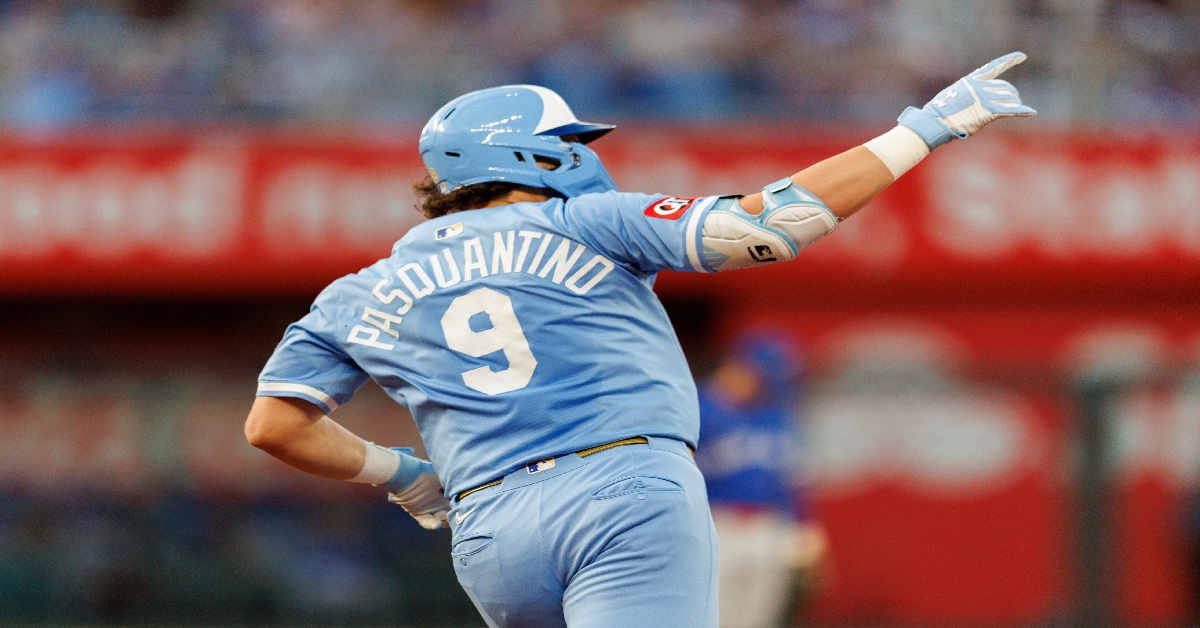
First BaseVinnie Pasquantino hits 40 home runs

It’s possible we have not yet seen the best of Pasquatch. Pasquantino is a popular player and an easy guy to root for. The big guy is friendly, active on social media, and has a love for baseball analytics. He is one of just eight hitters averaging 105 or more RBIs over the last two seasons, and that’s with missing 33 games. He maintained a BB/K over 1.00 in the minors, and though it’s 0.61 in the majors, that is still above big-league average, and he’s a tough guy to punch out (13.5% career strikeout rate). Pasquantino set a career high in homers with 32 last season. Models project a slight regression, around 27, which is a very reasonable expectation. Those doubting 40 is possible would point toward league-average power metrics, such as a 91 average EV, 9% barrel rate, 45% hard-hit rate, and .191 ISO.

Moreover, his bat speed (72.5) is mediocre, and his launch angle of 16.6 degrees over the last two seasons could use a slight increase. Pasquantino’s plate discipline has been slowly waning over these past few years, and with Kauffman Stadium’s outfield walls moving in, Vinnie P might be interested in selling out a bit of contact (85% career) for more power. Kauffman’s dimension shifts are a big deal. The left and right field fences are coming in by 9-10 feet, and the wall heights are reduced by up to 18 inches. There is no debate about more homers being hit there in 2026 than in past seasons. Vinnie P may not be a batting average stalwart like he was in the minors and his rookie season, but that’s ok because the HR/RBI numbers will be epic. I believe the Royals will win the AL Central, and that Pasquantino crushes 40 this year.

Second BaseNico Hoerner is fantasy’s top second baseman

“Are you trying to tell me a guy who has never hit 10 homers in a season is going to be the top producer at his position?” That’s exactly what I’m telling you. In fact, that’s exactly what happened last season when Brice Turang (who came in with a career-high seven home runs) was the only second baseman to earn $20+ in roto. This one should qualify as the least bold call of all, since the bar for being the overall 2B1 isn’t high. The only others here in the ADP 100 are Turang, Jazz Chisholm Jr. and Ketel Marte, and only a few from the field below Hoerner could even be considered dark horse candidates. Chisholm and Marte have had their share of injury woes, though both are strong candidates. Turang is firmly entrenched in the 2B1 conversation, but what if the home runs (18) and outlier batting average (.288; .262 xBA) aren’t repeated, and the swipes remain in the 20-30 range? This is a fantasy opportunity for Hoerner – an elite contact hitter and base-stealer on a talented veteran-infused lineup to tie it all together with a bow of 16 dingers? A 90-16-66-36-.292 line could earn him the top spot, and they’re all numbers he’s produced before, sans the homers.

Third Base/ShortstopGunnar Henderson and Zach Neto become the newest members of the 30/30 Club

The 30/30 Club isn’t as exclusive as it once was. No hitters accomplished the feat between 2013 and 2017. Since then, there have been two (2018), two (2019), one (2021 – Cedric Mullins), none in 2022, four (2023), and three (2024). In 2025, there were seven: José Ramírez, Julio Rodriguez, Jazz Chisholm Jr., Juan Soto, Francisco Lindor, Corbin Carroll and Pete Crow-Armstrong. Bobby Witt Jr. fell short (22/38), but accomplished the feat in 2023 and 2024. Gunnar Henderson and Zach Neto can join the club in 2026. Henderson only missed six games last season, but played through left shoulder impingement and inflammation for most of the year. He still stole 30 bases on 35 attempts and hit 17 home runs. In the previous season, Henderson crushed 37 bombs. His average exit velocity (92.1 mph), bat speed (75.3 mph) and hard-hit rate (49.2%) all ranked in the top 15% of hitters last season.

With Pete Alonso, Taylor Ward, and a loaded, improving offense around him, Henderson is very capable of 30/30 and a run at the AL MVP award. Neto produced 23/30 in his first full season (602 PA, 2024), and followed up with 26/26 in just 554 plate appearances in 2025. His average exit velocity (91 mph) and hard-hit rate (46.6%) were both well above average, and he nearly doubled his barrel rate from 2024 (8.8%) to 2025 (14%). The key for Neto to get there is, of course, health. Though not just his own, but that of veteran Mike Trout, whose presence in the lineup always has a positive impact on those around him. Despite his second/third-round ADP, Neto is still somewhat underrated and should make a name for himself on the national stage this year. Henderson and Neto join the 30/30 Club this season!

OutfieldRonald Acuña Jr. outearns everyone

There have only been two $60+ seasons, per our Player Rater – Shohei Ohtani’s 50/50 season from 2024 and Ronald Acuña Jr.’s in 2023. That season, Acuña stayed healthy, amassed 735 plate appearances and produced an insane line: 149 R, 41 HR, 106 RBI, 73 SB and a .337 average. If anyone can beat out Ohtani, Judge or Witt for fantasy’s top earner this season, it’s Acuña. I’m buying in on another epic season as the leadoff man for a stacked Atlanta Braves offense in his age-28 season. Last season, he slashed .290/.417/.518, hit 21 dingers in 412 PAs, and flaunted healthy power metrics – 92.7 mph EV, 15.7% BRL, 52.5% HH. He kept his running to a minimum (nine swipes on 10 attempts) last season, but ran wild in winter ball (11 SB in 71 PA), and stole another two in his first four spring training games. Acuña is as healthy as he’s been since that epic 2023 season and is hungry for a repeat. With his ability for elite production across all five standard roto categories, and the fact that Ohtani isn’t projected to run wild like in 2024 (63 attempts), Acuña will edge out the field and be the king of fantasy once again.

Bonus: Kyle Tucker leads the National League in RBIs

Very few folks outside of those who drafted him or who bleed Dodger Blue want to see this one come to fruition. Tucker has been catching lots of grief over the past year between his lowkey demeanor, missing substantial time with injuries, and signing a huge AAV contract ($57.2M per for four years), loaded with deferrals. When healthy, he is one of the most consistent and well-rounded producers in fantasy, averaging .278/.353/.517, 30 HR, 23 SB, 84 R, 104 RBI and a 138 wRC+ over his first three full seasons (2021-2023). His production pace was elite in his last two, injury-marred seasons as well. Tucker is in a position to produce a career year in his first season with the Dodgers. Manager Dave Roberts intends to have him bat second between Shohei Ohtani and Mookie Betts, which would line Tucker up to score more runs than he drives in. It’s highly likely that Tucker earns most of his at-bats this season hitting third between Betts and projected cleanup man, Freddie Freeman – and that’s exactly how I foresee the top of this lineup materializing. FanGraphs Depth Charts (FGDC) currently projects Tucker with the fourth-most RBIs (99) in the NL behind Ohtani, Kyle Schwarber, and Juan Soto. I’ve got Tucker with 126 and the RBI NL crown.
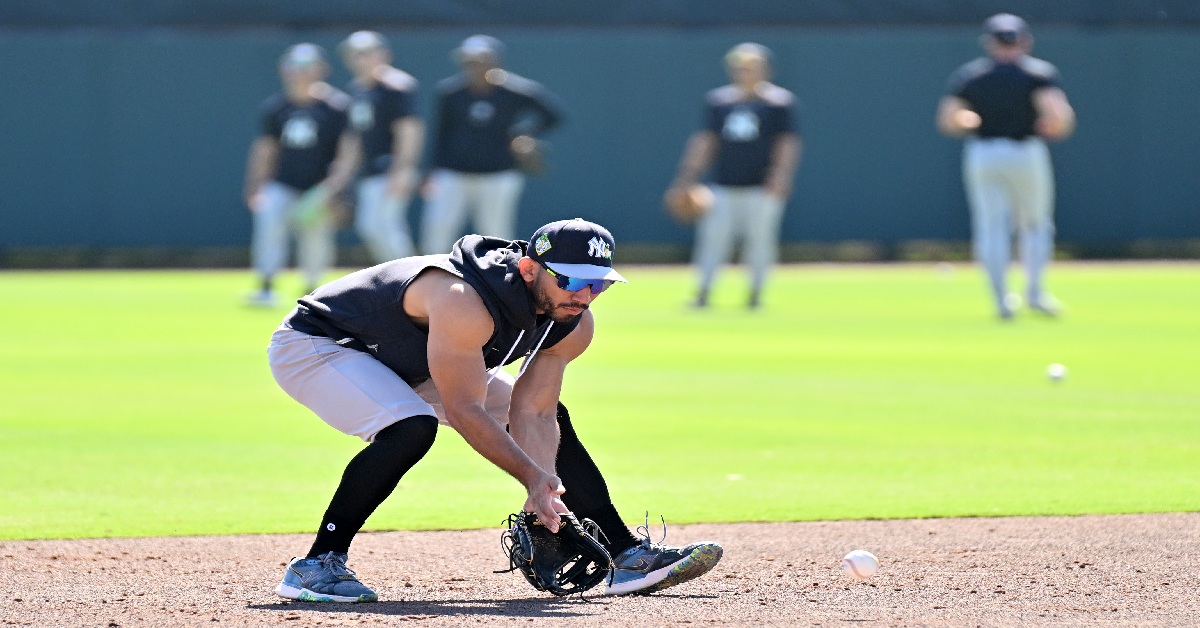


The Declining Value of MPE Hitters

Credit: © Jonathan Dyer-Imagn Images

VCRs, CDs, DVDs, MP3s, and…MPEs.

These are all acronyms for things that have lost value over the last 30 years. The first four are outdated and of little use outside of nostalgic purposes, due to modern technological advances. The latter is a fantasy baseball term that stands for Multiple Position Eligibility.

We all love the hitter with an extra position of eligibility or three. That urge to bump José Caballero (2B, SS, 3B, OF) two rounds ahead of his ADP is strong! He’s that hot bowl of chicken noodle soup, wrapping your roster in a warm blanket of full positional coverage, with some steals on the side. There’s only one problem with MPE hitters in fantasy baseball these days – they aren’t as scarce or valuable as they used to be. Or at least that’s what it’s felt like recently.

For the National Fantasy Baseball Championship (NFBC) in 2026, hitters qualify at a position where they played at least 20 games in 2025 and gain in-season eligibility at a position once they’ve played 10 games there.

Here is some recent data on multi-position eligible hitters from NFBC’s all-time career earner, Phil Dussault:

Among the top 300 hitters per the 2024 NFBC Main Event ADP, 47 started the season with more than one position of eligibility, and 75 ended with it. In 2025, there were 39 at the beginning of the season and 78 by the end. Over the last two seasons (less catchers and UT-only), 17% of the 15-team league player pool had at least two positions of eligibility during draft season, and 29% by the end of the regular season. So, nearly 1 of every 3 hitters provided coverage at another position. Is it possible that we are over-inflating the value of MPE hitters?

There is no doubting the extra value that multi-position-eligible hitters bring, especially in a format like NFBC Roto that has two scoring periods per week for hitters. Roster flexibility is extremely important for avoiding zeroes in our starting lineups. We’ve all fallen victim to the mid-week injury where, if not for a guy like Caballero on our bench, we’d be earning no stats at third base if our starter was Royce Lewis and he hit the IL on a Thursday.

MPE hitters are even more important in the NFBC Cutline, which is a hybrid best ball points format. Since we don’t set lineups and weekly scoring is optimized, the 3-4 round ADP bump for MPE hitters in Cutlines is justified. For example, Caballero has a 168 ADP in Cutlines, compared to 205 in traditional roto contests. In managed leagues, multi-position eligible value is measured by the size of the bench – the fewer bench spots we have, the more we should covet MPE guys. In daily H2H and Points leagues, we must be hyperactive managers who optimize each starting hitter spot every day. Most of the time, MPE hitters hang around our rosters because of their quick coverage capability.

Though I’ve been playing NFBC since 2009, I haven’t been good at maintaining historical data until the past few years. To help prove my theory that the MPE hitter market is oversaturated, other than anecdotally, I needed to see the rate of MPE hitters in the draftable player pool over the last 10-15 years. I have far from a complete picture, but thankfully, my old friend and high-stakes stalwart, Scott Jenstad, shared the NFBC ADP from 2017. It’s just a one-year sample, of course, but the findings were interesting. Only 8% of the 290 hitters drafted started the year with more than one position of eligibility. The only hitters with at least three were Javier Báez (2B, 3B, SS), Matt Carpenter (1B, 2B, 3B), and Jedd Gyorko (2B, 3B, SS). The only catcher with another position that year was Willson Contreras (C, OF).

Despite not having a full picture of the last decade or two, most of us who managed fantasy baseball leagues last season recognize the surplus of MPE options on the waiver wire every week. There was always a Zach McKinstry or a Brooks Lee available. The draw of the MPE hitter lost its allure, as we attempted to reset our focus on a player’s projected fantasy output for the upcoming week, not just peacocking our fancy bench of multi-positional hitters for the sake of it.

Most Valuable Multi-Position Eligibles (MVMPE)

Let’s quickly touch on some of the most valuable types of multi-position-eligible hitters.

The Catcher Who Doesn’t Catch

Ben Rice is the prime example this season. He plays for the Yankees, hits the ball hard, and is eligible at catcher, but will mostly play first base and DH. Just like we didn’t draft Buster Posey in 2018 for the first base eligibility, we’re locking Rice into our catcher slot. Evan Gattis (C, OF) was another fun blast from the past. Willson Contreras fit the bill last season, though he eventually found a way back to his second home, the IL. Iván Herrera may sneak his way back into catcher eligibility, which would make him even more valuable, but it may not happen. The Cardinals may opt to utilize him in left field and at first base. In very deep draft-and-hold leagues, Luis Campusano is an option as a UT-only hitter with a high likelihood of earning catcher eligibility in April. Campusano currently projects as Freddy Fermin’s backup in San Diego.

The Crossover Guy

Arguably, the most important type of MPE hitter is one who earns eligibility outside his MI or CI vertical – the middle infielder adding third base eligibility who we plug in at 2B, SS, MI, 3B, and CI, or the corner infielder who earns middle infield or outfield eligibility. The crossover is especially meaningful if it’s a corner infielder who earns middle infield eligibility and can provide fantasy squads with a much-needed power boost.

Isaac Paredes is a prime example this draft season. The draft market has been lukewarm on Paredes due to his one-dimensionality, trade rumors, and the possibility of platooning. His NFBC ADP has dropped from 188 to 237 since December 1. The 27-year-old hit 31 HR with 98 RBI in 2023 and crushed another 20 bombs in 438 plate appearances last season before suffering a severe hamstring strain in mid-July. Paredes played 89 of 102 games last season at third base, has been earning spring reps at second base, and may mix in at first base as well.

Toronto Blue Jays third baseman Kazuma Okamoto (ADP 221) is another hitter whose price doesn’t properly reflect the added value of potential in-season positional gains – outfield and first base. Okamoto is off to a roaring start in spring training, and his ADP is beginning to creep up into the top 200.

Keystone Versatility

Here is another interesting tidbit from Mr. Dussault’s vault – his percentage chance that a single-position player adds a second position during the season, based on their current position:

  • First Base – 11.9%
  • Second Base – 39.1%
  • Third Base – 27.1%
  • Shortstop – 21.8%
  • Outfield – 5.8%

With only Jazz Chisholm Jr., Ketel Marte, and Brice Turang in the top 100 ADP, second base is easily the weakest position in those early rounds, but it deepens later in drafts. At 39%, it is also the position most likely to gain additional in-season eligibility. Among second basemen drafted in the top 500, 56% (24 of 43) are currently eligible at a position beyond second base. The most popular real-life positional shifts this spring are among fantasy second basemen:

Most of these middle infielders were covered in my ADP Clusters last week, but I must remind you that the market is greatly undervaluing Seattle’s projected leadoff man, Brendan Donovan.

There are a handful of deep league or in-season stream-worthy fantasy second basemen who should also earn a second position of eligibility, though more likely in May than in April:

Since I won’t touch on every player expected to earn new position eligibility, I’ll point out the solid article by Mark Steubinger of Pitcher List that Jeff Zimmerman referenced in his latest Mining the News. Let’s wrap this up with a few final new position gainers.

Bo Bichette, SS – adding 3B

The shortstop position is deep, and it’s important for folks who haven’t been drafting up a storm these last few months to know that you will be tempted to draft a second shortstop earlier than you may like. Those of us locked into a 1.03 pick, earning the pleasure of drafting Bobby Witt Jr., should not cross Bichette off, because he can play third base for us. It’s an especially valuable notion to recall on draft day since third base is the second shallowest position in the top 100 ADP. Just be sure to have another third baseman on the roster to hold down the fort until Bichette qualifies.

Eugenio Suárez, Munetaka Murakami, 3B – adding 1B

These two big boppers should pad our power categories, no matter which corner we start them at. Even the most meticulous planners won’t know for sure where they need these guys until they’re already drafting. Not to mention drafts have a funny way of throwing plans out of alignment. The most important thing is to be mindful of their eventual positional flexibility if one of these guys is a must-have target. Not everything in a draft will go to plan, but the chances of things going our way increase when less new information is introduced to us on the spot.

MPE hitters aren’t the scarce commodity they once were, but are nevertheless a vital element of our draft and in-season strategy, especially in the NFBC Cutline and in leagues with shallower benches. A second position of eligibility can absolutely be a draft pick tiebreaker between two hitters of relative value. Incorporating these projected new positions of eligibility into our player notes, rankings, or draft plans should add another layer of organization and confidence to make optimal decisions in our drafts. When it comes to in-season management, one of our primary assignments to ensure we don’t put ourselves in danger of taking zeroes in our lineup.


Using Points per Game Started to Evaluate Hitters

Boston Red Sox right fielder Wilyer Abreu (52) hits a two run home run during the fourth inning against the Miami Marlins at Fenway Park.
Credit: Bob DeChiara-Imagn Images

Every fantasy format plays a little differently and, as a result, every fantasy formats has a unique way to measure value. In points leagues, we tend to look at points per game (P/G). This seems logical enough. When you draft or add or trade for players and when you set your lineups, you want to pick the guys who will score the most points when they are in the lineup. So you try to max out P/G. Easy peasy.

Except P/G isn’t actually the right measure of player value. You do want a ratio with points scored in the numerator, but the “games” is the wrong denominator. The correct denominator depends on whether you have daily or weekly lineups, and that can have a real impact on who you target in drafts and who you plug into your lineup.

Read the rest of this entry »


Optimal ADP Clusters: 2B Punts

Credit:
© Sam Navarro-Imagn Images

Don’t it always seem to go, you don’t know what you got ‘til it’s gone.”

Joni Mitchell may not be a roto savant, but even she might agree that the best part of the fantasy baseball season is research-and-draft season. Every day, from February until Opening Day, is so incredibly thrilling – nonstop spring training news, draft rankings adjustments, and player pool deep-dives – there’s always some rabbit hole of research to go down. As we continue studying and gaining confidence in the fresh player pool and a new year’s ADP, more questions arise, and the more work there is to be done.

Whether in NFBC or best ball contests, high-volume early drafters subconsciously form bad habits in draft rooms. We get too comfortable targeting and drafting the same players over and over. Conversely, we avoid players who have burned us in previous seasons and those we have some subjective bias against. Rarely do we deep dive and reassess those players because we’ve already made up our minds. That’s why it’s crucial to explore every nook and cranny of a positional tier. We have all fallen victim to draft room paralysis, where a decision between several similarly ranked shortstops or starting pitchers becomes gut-wrenching when we’re on the clock. This preseason column aims to help with those tough calls. We will explore some of the most confusing ADP clusters, by position, beyond the simple “I need to boost my batting average, so I’m taking this guy.”

Let’s dive into these ADP pockets logically and systematically, reviewing four analytical components of the players within each cluster.

  • Playing Time (and Role)
  • Health/Durability
  • Skills/Categorical Contributions
  • Context of Team Offense

ADP Cluster 2: Second Base Punts

ADP from NFBC 12-team Online Championships (OC) over the last two weeks (2/6-2/19)

If there is one position we can afford to punt this season, it’s second base. It’s the thinnest position by a wide margin. There are only three in the top 100 – Jazz Chisholm Jr. (ADP 20.7), Ketel Marte (31.8), and Brice Turang (52.4) – before it drops off to Nico Hoerner (105.8) and a few other questionable options in the 120-180 range. Unless we have a strong urge to target one of the top guys, most of us will inevitably wait until the second half of a 30-round draft to secure the services of a second baseman. Carefully navigating late-round options at the keystone is imperative. We want to get the most bang for a buck, and avoid hitters we might be tempted to quickly replace on the waiver wire or FAAB. The ADP 180-300 range is the best place to shop for our second baseman, so let’s zone in on a few clusters to help us score some of that sweet, sweet profit.

Semi-Punts

NFBC drafters have pulled Matt McLain into the top 200 over the last few weeks. Unironically, his rise is probably related to the mid-January news about him adding 12 pounds of muscle. The former UCLA standout and Reds’ first-round pick from 2021 was an all-around disappointment as a top 100 fantasy draft pick in 2025. Despite some massive slumps and spending half of his at-bats hitting eighth and ninth, McLain scored 73 runs, hit 15 home runs, and swiped 18 bags on 20 attempts. He strikes out a ton (career 28.8%) and won’t help with batting average, but McLain is a shoo-in to improve in his second full season following a lost 2024 due to a left shoulder injury. Great American Ball Park ranks fourth in overall Park Factor, and McLain could work his way into the two-hole, ahead of Elly De La Cruz.

Death, taxes, and Brandon Lowe hitting bombs when healthy. Lowe boasts a career .234 ISO, and his 17.4 AB/HR ranks 16th since 2023 – a higher rate than Eugenio Suárez and Rafael Devers. Moving to PNC Park is rarely ideal for hitters, but it’s slightly better for lefty bats, and of course, half of his games are away from PNC. Lowe should thrive hitting in the top third of this lineup. If he avoids the injured list and hits behind top prospect Konnor Griffin, fantasy profit shall be unlocked.

Xavier Edwards and Bryson Stott are the two speed-friendly picks in this cluster. Stott is an asset on defense, but he is a below-average hitter (career .127 ISO, 4.4% BRL), particularly against lefties (61 wRC+ in 2025), which puts him at risk of being platooned again this season. Don’t let the fact that Edwards only managed to barrel four balls in 619 plate appearances deter you from drafting him in a power-heavy build. He’s an elite bat-to-ball guy – one of seven with a Contact rate over 89% last season. Between his unique skill set and the improved team context (full seasons from Jakob Marsee, Agustín Ramírez, and Kyle Stowers), Edwards can benefit fantasy managers in three roto categories. The 95th percentile outcome is .320, 85 runs and 42 stolen bases.

Jorge Polanco is slightly outside of this cluster, but is quickly gaining steam, moving up 1.5 rounds (ADP 230) since January. Despite his slightly boring fantasy profile, Polanco’s offensive environment is superior to the others in this cluster, especially if he can spend a good chunk of the season hitting fourth behind Francisco Lindor, Juan Soto, and Bo Bichette. Polanco’s .229 ISO last season was his second time over .200 (.235 in 2021 when he hit 36 homers), and his 45.8% HardHit rate was a career high. He will earn first base eligibility early in the season, though fantasy managers should start him at second. The key to profit is avoiding the IL. He has only surpassed 650 plate appearances twice, and is on the wrong side of 30, turning 33 right before the All-Star break. A .255 average with 22 HR and 70 RBI would make him a worthwhile investment at the current price.

Medium Punts

Otto Lopez got comfortable in his second full big-league season, producing a respectable .246-66-15-77-15 roto line in 594 PAs. The homers were a tad fluky based on a few metrics like launch angle (8.4 degrees), barrel rate (7.1%), and hard-hit rate (38.3%), but low double-digit dingers are certainly attainable. Lopez is a tough cat to punch out (15.3% strikeout rate over the last two seasons), and he offers coverage at second base and shortstop. I’ve noticed that several NFBC sharps are bullish on him, but I’d be surprised if he bests any of last season’s roto categories outside of stolen bases and possibly average.

We can’t target everyone under the sun, and Luis García Jr. happens to be one of those guys I’m not very fond of. He’s a solid 15/15 guy who shouldn’t negatively impact the BA category, but he’s a dud against southpaws (22 wRC+ in 2025). Perhaps we should avoid platoon infielders in formats with shallow benches.

Gleyber Torres and Marcus Semien don’t excel in any one fantasy category these days, though they are very good at one important thing: racking up plate appearances. Since 2018, no one has more than Semien, who has averaged 697 per season over that span. Torres missed 17 games last season, but averages 655 since 2023. Torres has produced a $10+ season in each of the last four, and his plate discipline in his first season with the Tigers was impressive – 13.5% walk rate, 16.1% strikeout rate. He probably won’t hit more than 20 homers or steal double-digit bases, but he will find a way to return another $10 or more in his age-29 season.

Semien has oddly never barreled balls at a rate over 10%, yet has a 33 and 45 home run season on his resume (shout out Dunedin and Buffalo!). He missed 35 games with a fractured left foot last season – his first time playing fewer than 159 games in a non-COVID year since 2016. His surface stats regressed mightily, and we can’t blame it on his “feud” with Corey Seager, nor his injury, since it occurred in late August. Perhaps this revamped Mets’ offense, with its positive team context and fresh faces of leadership, can help jumpstart Semien into a profitable fantasy season at this depressed cost. I haven’t targeted or drafted Semien in several years, but I’m absolutely on board with him as a second base punt in 2026.

Full Punts

There are several potentially viable punts after ADP 250, though most are best utilized as reserve and depth bats. Willi Castro (278.6) should resume earning everyday at-bats in a fresh shade of purple and should score his third straight season of double-digit dingers and swipes. Andrés Giménez (327.1) and Luisangel Acuña (341.4) are SB-specific picks. Jeff McNeil (354.3) should not yet be proclaimed roto-dead. The 33-year-old has a bit of juice left, especially with this strong A’s lineup and the home park boost in Sacramento. Finally, there’s Brendan Donovan, who may just be the steal of the late rounds. The contact savant takes his talents to sleepy Seattle. He will earn third base eligibility in no time, and is projected to lead off for the Mariners, with Cal Raleigh, Julio Rodríguez, and Josh Naylor hitting behind him. Donovan is a career .282 hitter who can score 100 runs with 650-plus plate appearances.

Recap

Undervalued: Jorge Polanco, Marcus Semien, Brendan Donovan

Overvalued: Bryson Stott, Luis García Jr

Speed Punts: Xavier Edwards, Andrés Giménez, Luisangel Acuña

Power Punts: Brandon Lowe

Top 50 Overall Upside: Matt McLain


Optimal ADP Clusters: Catchers

Don’t it always seem to go, you don’t know what you got ‘til it’s gone.”

Joni Mitchell may not be a roto savant, but even she might agree that the best part of the fantasy baseball season is research-and-draft season. Every day, from February until Opening Day, is so incredibly thrilling – nonstop spring training news, draft rankings adjustments, and player pool deep-dives – there’s always some rabbit hole of research to go down. As we continue studying and gaining confidence in the fresh player pool and a new year’s ADP, more questions arise, and the more work there is to be done.

Whether in NFBC or best ball contests, high-volume early drafters subconsciously form bad habits in draft rooms. We get too comfortable targeting and drafting the same players over and over. Conversely, we avoid players who have burned us in previous seasons and those we have some subjective bias against. Rarely do we deep dive and reassess those players because we’ve already made up our minds. That’s why it’s crucial to explore every nook and cranny of a positional tier. We have all fallen victim to draft room paralysis, where a decision between several similarly ranked shortstops or starting pitchers becomes gut-wrenching when we’re on the clock. This preseason column aims to help with those tough calls. We will explore some of the most confusing ADP clusters, by position, beyond the simple “I need to boost my batting average, so I’m taking this guy.”

Let’s dive into these ADP pockets logically and systematically, reviewing four analytical components of the players within each cluster.

  • Playing Time (and Role)
  • Health/Durability
  • Skills/Categorical Contributions
  • Context of Team Offense

ADP Cluster 1: Second Catcher

ADP from NFBC 12-team Online Championships (OC), February 1st to 16th

The top of the catcher pool is more robust than ever, as early drafters are prioritizing at least one of the top 10-12. Punting outright is less viable than last season – there are no true sleepers (Hunter Goodman) or studly, late-round prospects (Agustín Ramírez, Drake Baldwin) this draft season. Folks in two-catcher leagues who don’t address the position early end up with low-floor, fungible backstops like Freddy Fermin and Danny Jansen.

This intriguing cluster of catchers between Alejandro Kirk (ADP 156.3) and Carter Jensen (203.2) is packed with potential fantasy profit and serves as a fallback option for drafters in one-catcher leagues. Alvarez, Moreno, Basallo, and Teel are being drafted in Rounds 14 and 15 of NFBC OCs.

Francisco Alvarez, (ADP 168.1)

It’s been quite some time since Alvarez has been fantasy relevant. He popped onto the scene like the Kool-Aid Man, mashing 25 dingers as a rookie in 2023. Since then, Alvarez has spent over 100 days on the IL, mostly due to freakishly bad injury luck:

April 2024 (left thumb UCL tear)

  • Broke his fall rounding first base; Missed two months after having surgery.

March 2025 (left hamate bone fracture)

  • Injured his hand on a swing in spring training on March 8. He returned one month into the season (April 25) and did not hit his first home run until June 8.

August 2025 (right thumb UCL sprain + left pinky finger fracture)

  • Alvarez hurt his thumb on a headfirst slide to second on August 17. Just 10 days later, while on a rehab assignment, he suffered a pinky finger fracture on an errant pitch during an at-bat. Alvarez played through the pain in September, then had surgery on his right thumb after the season ended.

You can’t make this stuff up!

Alvarez’s thumb is fully healed, and he is back to mashing at Mets camp.

Per Laura Albanese of Newsday, Alvarez has lost “eight or 10 pounds by focusing on nutrition”. RosterResource projects Alvarez hitting seventh in this revamped lineup featuring potentially impactful veterans/newcomers Bo Bichette, Marcus Semien, and Luis Robert Jr. Though Alvarez managed only 276 plate appearances last season, his 93.1 mph average exit velocity was three ticks higher than his 2023 mark. Alvarez rocked a potent 57.9% HardHit rate from June 1 to August 17, the day of the right thumb injury.

To summarize, Alvarez is a pure masher who is just 24 years old, in one of the best projected offenses in the majors. He will whiff his fair share (25.9% career) and won’t help in batting average or stolen bases, but will benefit squads in the other three standard roto categories (R, HR, RBI), which should be enough to earn profit on his reasonable price tag.

Gabriel Moreno (ADP: 177)

Moreno is certainly no beacon of health either. He has spent over 140 days on the IL since 2023 with various ailments to his shoulder, groin, left thumb, and right hand. Moreno is nearly two years older than Alvarez. Like Alvarez, Moreno’s career-high games played were in his first full season (111 in 2023). Unlike Alvarez, Moreno is known more for his contact skills (career 82.8% Contact rate) than his power (.123 ISO) and is typically targeted for that rare batting average contribution from a catcher. Only Yainer Diaz’s .279 is higher than Moreno’s (.278), among backstops with at least 1,000 plate appearances since 2023.

Moreno projects as the Opening Day cleanup hitter – a true testament to the weak state of the Diamondbacks offense. Moreover, Corbin Carroll isn’t a lock to be ready for the start of the season, and the likely five-hole hitter against right-handed pitchers is #oldfriend, Quad-A’er, Pavin Smith, who I hope does not read this column. With 450+ plate appearances, Moreno can produce 10-15 HR, 60+ RBI, and a plus BA, but his lack of power and his team’s offensive environment reduce his appeal – especially in the context of the other catchers in this range.

Samuel Basallo (ADP: 182)

We have a rare situation with backstops in Baltimore, with two among the top 15 at the position. Adley Rutschman and Samuel Basallo had ADPs within 10 picks of each other in the NFBC Draft Champions (15-team, 50 rounds, draft-and-hold) for most of the winter. Rutschman’s 12-team OC ADP is at least two rounds higher (149.9, C11) than Basallo’s over the last two weeks. Rutschman’s role and playing time in the top half of the lineup are secure, while Basallo’s will depend on several factors, including his production during spring training and early in the season.

The Jason R.R. Martinez Effect is real, as his lineup projections influence the early draft market. RosterResource slates Basallo to hit ninth as the strong side DH, though this Opening Day lineup is many weeks away from crystallization. We can use Basallo’s small rookie year sample (.165/.229/.330, 118 PA) as a reason to avoid him in redraft leagues, but that would be cherry-picking to support a biased argument. Basallo’s massive power upside in the majors is not debatable, nor is his long-term future with the Orioles after signing an 8-year, $67M deal as a 21-year-old. No matter how talented, all young prospects are works-in-progress, and that progress isn’t usually linear. Perhaps the best approach is to let nature take its course by buying into potential greatness and taking part in the journey. It has been said that cream rises to the top. Basallo is the riskiest of this cluster but offers the most upside and profit potential.

Kyle Teel (ADP: 189.2)

The Boston Red Sox drafted Kyle Teel with the 14th overall pick in the 2023 amateur draft, but they had to part with their prized prospect to pull off the Garrett Crochet heist. Rumors of the Red Sox attempting to reacquire Teel have been afloat this offseason, and their FOMO is well justified after Teel’s impactful 297 rookie-year plate appearances (.273/.375/.411, 12.5% BB). Teel has been labeled a “high IQ player”, which is quite common for catchers, but not always ones with such limited major league experience. Spring training roommate Mike Vasil can surely attest to it, as I initiate a rumor that Vasil saw 16 FanGraphs tabs open on Teel’s laptop.

Projection models don’t peg Teel for much power – at least not this season. His minor league ISO never exceeded .200, and anything over 15 homers would be a bonus. Teel’s earning fantasy profit would come from 1) proving he can hit LHPs to avoid being platooned, 2) maintaining a strong OBP to lock in consistent work in the top third of the lineup, and 3) the overall bolstering of R/RBI production because of an improved offense around him. He should chip in with a few stolen bases as well. Teel certainly has that feel of a ‘fun’ fantasy draft pick, though it’s a realistic possibility that his fantasy ceiling for 2026 isn’t very high, and that he’s a better real-life player than a fantasy one.

Recap

  • Francisco Alvarez – best overall value (expect an ADP rise out of this cluster)
  • Gabriel Moreno – poor team context; BA category help; high floor if no IL stints
  • Samuel Basallo – highest upside; playing time concerns; typical bumpy rookie ride
  • Kyle Teel – moderately high floor for the price; potential five-category contributor (light)

Hope you’ve enjoyed my debut! For the next installment, I’ll attempt to shine some light on a cluster of boring, late-round second basemen.


2026 Projection Showdown: THE BAT X vs Steamer wOBA Forecasts

Mandatory Credit: Kamil Krzaczynski-Imagn Images

In a just released study, THE BAT X and Steamer were the two best original projection systems last year that were reviewed by FantasyPros and available on this very site. So let’s compare their individual hitter wOBA forecasts and discuss the hitters each is most optimistic on versus the other. Since most projection systems tend to produce similar results, especially the aggregates, it’s always fun to learn about the outliers in the original systems, as they could be the product of factors missed by the other systems or overvalued that leads to inaccurate forecasts.

Read the rest of this entry »


HR/FB Surgers & Decliners Using League-Relative Statcast Power Metrics

Mandatory Credit: Daniel Kucin Jr.-Imagn Images

Last week, I unveiled new research that concludes looking at league-relative Statcast power metrics, such as HardHit%, maxEV, and Barrel% could help forecast the direction of both Barrel% and HR/FB rate the following season. The data was bucketed into two groups, A being those with high relative HardHit% and maxEV marks, but low Barrel%, while B included those with low relative HardHit% and maxEV marks, but high Barrel%. Let’s now identify and discuss the names that met each group’s criteria in 2025 as we look forward to 2026.

Read the rest of this entry »


How League-Relative Statcast Power Metrics Forecast Next Year’s Rates

Mandatory Credit: Wendell Cruz-Imagn Images

Over the years, I’ve thought about so many different ways to try predicting which hitters might see a jump or decline in power and HR/FB rate. Whether it was using ESPN Home Run Tracker, building an xHR/FB rate equation, using Statcast’s Home Runs leaderboard and its xHR calculation, or countless other ways, I left no stone unturned when attempting to find an edge. So are you ready for a new method?! Sure, you are!

Read the rest of this entry »


Kyle Tucker Dons Dodger Blue

Mandatory Credit: David Banks-Imagn Images

Perhaps the most valuable free agent fantasy asset finally signed after weeks and weeks of speculation. Kyle Tucker signed with the Dodgers, making it more laughably strong than it already was. Heck, they scored the second most runs in baseball last year so they weren’t exactly hurting for even more offense. But more offense they got, which means you might want to think twice about your starting facing the team, no matter who that starter is! Moving out of Wrigley Field and now calling Dodger Stadium home, let’s dive into the park factors to find out how the move might impact Tucker’s results.

Read the rest of this entry »


2026 Preview: Potential Batter HR/FB Rate Surgers & Decliners

Mandatory Credit: Daniel Kucin Jr.-Imagn Images

Let’s dive into Statcast’s Home Runs Leaderboard to identify and discuss the hitters with the largest gaps, both positive and negative, between actual and expected home runs. I’m using the default “Adjusted” type which applies an environmental variable to the xHR total to account for ballpark effects. Also note that this leaderboard includes postseason home runs, which made me do a double take since I definitely didn’t remember Cal Raleigh hitting 65 home runs and Shohei Ohtani also clearing 60 homers!

Read the rest of this entry »