Author Archive

Jake Mailhot’s 2026 Tiered Rankings for Ottoneu Points: Middle Infield

Credit: Jeff Hanisch-Imagn Images


Chad started off the Ottoneu rankings push with his 4×4 middle infield rankings yesterday and I’m following up with my rankings for Ottoneu points leagues. You can find all the information about the format and methodology for these rankings in Chad’s introduction.

Changelog

  • 2/19/2026: Updated projections w/ ZiPS and OOPSY. Added player notes for all players in tier $1-$2 and above. Updated tier placement for 11 players (green = moved up, red = moved down).
  • 3/18/2026: Updated tier placement for 16 players based on 2026 draft results.


Jake Mailhot’s Ottoneu Tiered Rankings for Points Leagues: C | 1B | MI | 3B | OF | SP | RP
Chad Young’s Ottoneu Tiered Rankings for Points Leagues: C | 1B | MI | 3B |OF | SP | RP
Chad Young’s Ottoneu Tiered Rankings for 4×4: C | 1B | MI | 3B | OF | SP | RP


Here are few more notes about my process:

  • Projected points. I’ve been building my own homebrewed projections for the past decade plus, ever since I started playing Ottoneu, and they form the basis for the rankings below. They’re nothing overly complicated; essentially just a MARCEL-esque projection using three years of historical data filtered through a rough aging curve and adjusted for the current run environment. I also include a collection of up to five public projection systems (ZiPS, Steamer, OOPSY, THE BAT, and PECOTA) to provide some additional context. That gives each player a wealth of data sources to form their projection. Currently, the projections below only include Steamer and THE BAT projections. I will update the rankings in February once ZiPS, OOPSY, and PECOTA are released.
  • P/G vs P/PA. Points per game played is the gold standard by which you should be evaluating players in Ottoneu. I won’t argue with that. That measure does have some drawbacks, particularly for players who pinch hit, pinch run, or are used as defensive substitutions often. Those limited appearances can skew a player’s P/G lower than what they’re producing when they’re getting three or four plate appearances when they start a game. To provide a little more context for these kinds of players, I’m projecting players using points per plate appearance. That measure should give us a better idea of how a player produces no matter how he’s used by his team.

Just to reiterate a point that Chad makes in his introduction: yes, these rankings are presented ordinally, but the tier a player appears in is much more important than if they’re ranked 16th or 28th. Within tiers, players are generally ranked by their projected Pts/PA but that doesn’t necessarily mean I think one player is significantly more valuable than another in the same tier. I’ve got notes on the top 50-ish players below and I’ll add more notes when I update the rankings next month. Let’s get into it.

Ottoneu Points MI Tiered Rankings
Tier Rank Player Position Projected Pts Pts/PA Notes
$45-$54 1 Bobby Witt Jr. SS 1040.4 1.55 Clearly the best MI in baseball with just six hitters projected to outproduce him.
$36-$44 2 Ketel Marte 2B 857.8 1.47 The best 2B in baseball, trade rumors shouldn’t affect production.
$36-$44 3 Corey Seager SS 732.4 1.45 Productive when on the field but injury concerns will always be a factor.
$36-$44 4 Gunnar Henderson SS 941.6 1.43 Took a step back in 2025 but the ceiling is still very high.
$28-$35 5 Francisco Lindor SS 920.6 1.35 Consistent production means he’s a little overlooked in favor of flashier MI, but he’s been very good for four years straight.
$28-$35 6 Elly De La Cruz SS 885.2 1.34 Quad injury clearly held him back in 2025, but the ceiling is sky high. Considered ranking him a tier higher, but needs to prove it first.
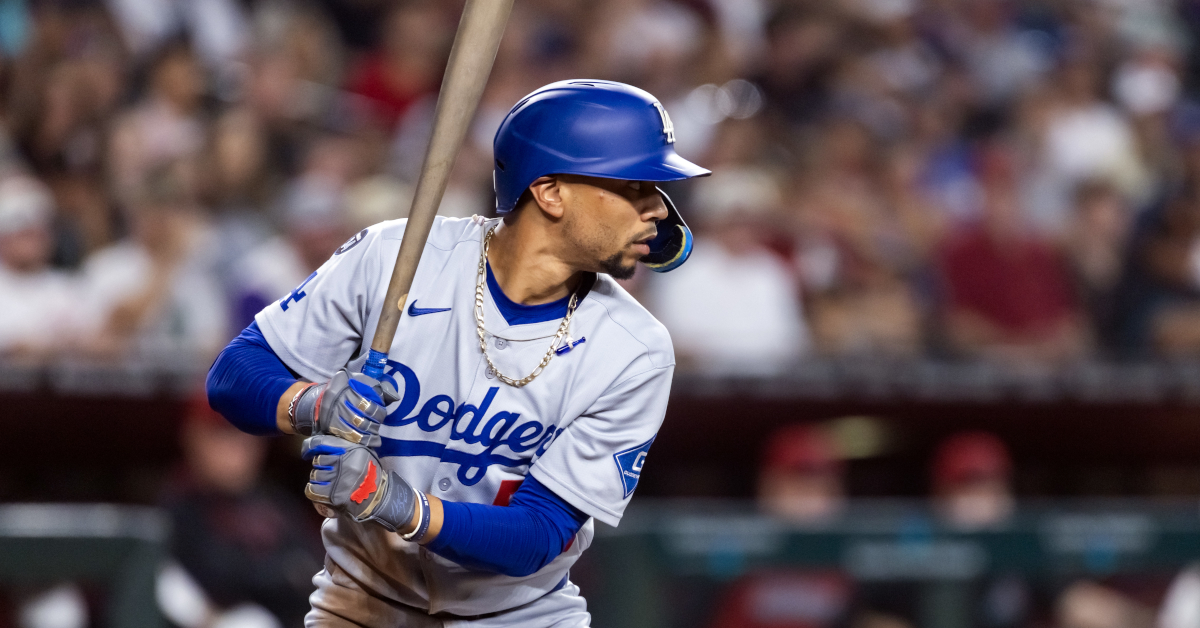
$28-$35 7 Mookie Betts SS 800.3 1.31 Lost positional flexibility and spring illness negatively affected his entire 2025. Should bounce back in 2026, but how high?
$21-$27 8 Trea Turner SS 798.6 1.30 The power is probably on the downswing, but contact ability is still excellent. Steals are a bonus in FGpts.
$21-$27 9 Jazz Chisholm Jr. 2B/3B 721.2 1.29 Huge power explosion in first full season in New York raises his ceiling significantly.
$21-$27 10 Geraldo Perdomo SS 784.6 1.29 Big breakout in 2025 and all the underlying metrics look sustainable. Still worried about some power regression.
$21-$27 11 Zach Neto SS 747.8 1.27 The ceiling is a 30/30 season. Batted ball metrics all point to significant breakout potential.
$21-$27 12 Bo Bichette SS 746.4 1.27 Posted his best offensive season in 2025 after a down year in ’24. Any potential landing spot shouldn’t affect his production too much.
$15-$20 13 Jose Altuve 2B/OF 745.4 1.21 Approaching the age cliff at 36 years old. Still possesses solid skills, but how long will they last?
$15-$20 14 Jeremy Peña SS 714.8 1.19 Came back down to earth after rib injury (143 wRC+ in 1H, 120 in 2H), but 2025 represented a big step forward for him.
$10-$14 15 Jacob Wilson SS 623.8 1.22 Idealized version of Luis Arraez with a touch more power. Still pretty BABIP dependent which leads to low lows.
$10-$14 16 Brandon Lowe 2B 615.9 1.21 Move to Pittsburgh shouldn’t hurt too much. 2025 was his first (mostly) healthy season since 2021.
$10-$14 17 Luke Keaschall 2B 512.7 1.20 Looked like a big leaguer in his cup of coffee in 2025. Batted ball peripherals are a bit concerning, but the contact skill is real.
$10-$14 18 Jorge Polanco 2B/3B 586.7 1.20 Swing change allowed him to thrive despite battling nagging injuries. Probably won’t be MI eligible next year.
$10-$14 19 CJ Abrams SS 730.9 1.19 Has developed into a good player, though the promise of a power breakout is probably fleeting unless he makes some serious contact quality gains.
$10-$14 20 Willy Adames SS 774.9 1.17 The power is real but playing in SF hurt his overall offensive production.
$10-$14 21 Brendan Donovan 2B/SS/OF 645.7 1.17 Solid player across the board with no weaknesses. Multi-positional eligibility helps his value.
$10-$14 22 Carlos Correa SS/3B 608.6 1.15 Has a history of quality production but health will determine if he can reach his previous highs.
$10-$14 23 Gleyber Torres 2B 734.2 1.15 Played through injury during the second half but still put up a solid season in Detroit.
$10-$14 24 Maikel Garcia 2B/SS/3B/OF 719.3 1.14 Huge breakout in 2025 doesn’t look like a mirage. Positional flexibility a big bonus.
$10-$14 25 Brice Turang 2B 706.7 1.14 Another big breakout from 2025 that looks like it’s going to stick. Might have the highest ceiling of any player in this tier.
$6-$9 26 Jordan Westburg 2B/3B 593.6 1.23 Solid player across the board with no weaknesses, but no standout skills either. Needs to stay healthy.
$6-$9 27 Kevin McGonigle SS 360.2 1.19 Top prospect who could make his debut sometime in 2026.
$6-$9 28 Colt Keith 1B/2B/3B 559.7 1.13 Quietly put together a great season in his second year in the big leagues. Projections really like him in 2026.
$6-$9 29 Trevor Story SS 643.4 1.13 First healthy year since 2021 led to significant improvements in contact quality. Poor plate discipline holds him back.
$6-$9 30 Konnor Griffin SS 550.0 1.12 Top prospect who could make his debut sometime in 2026.
$6-$9 31 Ezequiel Tovar SS 649.4 1.12 Extremely streaky hitter who had a big step backwards in 2025. Uncertain future, but Coors effect should be a benefit.
$6-$9 32 Nico Hoerner 2B 704.6 1.11 All hit, no power profile works when he’s making contact 90% of the time.
$6-$9 33 Xander Bogaerts SS 600.9 1.11 Probably won’t reach his previous highs, but still a useful accumulator with decent skills across the board.
$3-$5 34 Luis García Jr. 2B 576.8 1.13 Still only 26, he’s improved signifcantly over the last few years. Added a bit of power in 2024, needs to put it all together to really take step forward.
$3-$5 35 Brett Baty 2B/3B 461.9 1.12 Excellent 2H (135 wRC+) gives him something to build off of. Excellent contact quality but needs to elevate more often. Could have a path to playing time at DH in a crowded infield in New York.
$3-$5 36 Jeff McNeil 2B/OF 557.5 1.10 New ballpark in Sacramento should help, but health uncertain after offseason thoracic outlet surgery.
$3-$5 37 Bryson Stott 2B/SS 623.8 1.10 Swing change helped him improve contact quality in 2H. Breakout candidate if the swing change sticks.
$3-$5 38 Luis Arraez 1B/2B 696.9 1.10 Contact rate king, but too much weak contact to make the most of all those balls in play.
$3-$5 39 Colson Montgomery SS/3B 533.1 1.09 A lot of home runs make up for a really poor approach at the plate.
$3-$5 40 Dansby Swanson SS 663.9 1.08 Still has some pop but poor plate approach caps his ceiling as an average MI.
$3-$5 41 Zach McKinstry SS/3B/OF 472.7 1.08 Came back down to earth after All-Star break (132 wRC+ in 1H, 81 in 2H). He really leaned into his pull side to outperform xwOBA. Positional flexibility is an asset.
$3-$5 42 JJ Wetherholt 2B/SS 448.4 1.08 Probably closer to the big leagues than the other two top prospects in this tier but lower ceiling than Griffin and McGonigle.
$3-$5 43 Xavier Edwards 2B/SS 594.3 1.07 BABIP fell by 68 points and walk rate dropped by 3 points in 2025. High-contact approach will always be dependent on batted ball luck.
$3-$5 44 Caleb Durbin 2B/3B 553.9 1.07 High-contact, pull-oriented approach should play well in Boston.
$3-$5 45 Ozzie Albies 2B 636.6 1.07 He’s fallen pretty far from his peak but still only 29 years old. The power has completely evaporated and it doesn’t look like it’s coming back.
$3-$5 46 Ceddanne Rafaela 2B/OF 602.8 1.07 Managed to cut strikeout rate by 6.5 points in 2025, but underlying plate discipline metrics aren’t pretty. Chases and whiffs too much to support a K% below 20%.
$3-$5 47 Jackson Holliday 2B/SS 613.2 1.06 Slower development than expected from a former top prospect. Ceiling is still high and only 22 years old.
$3-$5 48 Willi Castro 2B/3B/OF 547.3 1.06 Absolutely tanked after joining Chicago last summer but he was a useful utility guy in Minnesota for three years. New home in Colorado should help.
$3-$5 49 Jake Cronenworth 1B/2B/SS 594.0 1.05 Put together his best season in 2025 since breakout in 2021.
$3-$5 50 Marcus Semien 2B 657.1 1.04 Another veteran who has fallen far from his peak. Solid 2H gives some hope he’s still got something in the tank.
$1-$2 51 Romy Gonzalez 1B/2B 396.9 1.21 Significant improvement in contact quality in 2025, but still might only be the short side of a 2B platoon.
$1-$2 52 Kody Clemens 1B/2B/OF 332.3 1.07 Earned consistent playing time after joining Minnesota in late April and contact quality significantly improved. Doesn’t have a path to full-time at-bats right now, but should be first man off the bench.
$1-$2 53 Tyler Freeman 2B/OF 397.8 1.06 Claimed full-time at-bats by June but limped through the end of the season (66 wRC+ in 2H)
$1-$2 54 Marcelo Mayer 2B/SS/3B 424.9 1.06 Has had trouble staying healthy (wrist surgery derailed his rookie season) and might not start against LHP. Has the pedigree and skill set to be successful, but needs to put it all together first.
$1-$2 55 Jonathan India 2B/3B/OF 587.9 1.05 Suffered through his worst season of his career in 2025. Too much elevated contact without enough quality to do real damage.
$1-$2 56 Josh Smith 1B/SS/3B/OF 541.8 1.05 Plate discipline improved in 2025 but contact quality slid backwards. Decent bat with flexible positiion eligibilty.
$1-$2 57 Matt McLain 2B 568.5 1.04 His breakout in 2023 seems like eons ago. Was the shoulder injury still affecting him or did we see the real McLain in ’25?
$1-$2 58 Jett Williams 2B/SS/OF 481.3 1.04 Trade to Milwaukee opens up a path to a major league debut in 2026. Power/speed combo is enticing, but questions about his hit tool remain.
$1-$2 59 J.P. Crawford SS 600.3 1.02 Excellent plate discipline gives him a solid floor but power dried up in 2025.
$1-$2 60 Masyn Winn SS 600.0 1.02 Played through knee injury in 2025 which could explain the dip in power output. Elite defense will keep him on the field, helping him accumulate points.
$1-$2 61 Kristian Campbell 1B/2B/OF 374.7 1.02 Disaster of a rookie campaign and now it doesn’t look like he has a path to a full-time role in the majors. Needs to bounce back in Triple-A first and force his way into the lineup.
$1-$2 62 Jordan Lawlar 2B/SS/3B 279.8 1.01 Arizona continues to find excuses to bury Lawlar on the depth chart. Now he’s learning center field this spring but still might be sharing time anyway.
$1-$2 63 Otto Lopez 2B/SS 548.4 1.01
$1-$2 64 Jose Caballero 2B/SS/3B/OF 376.0 1.01
$1-$2 65 Ernie Clement 1B/2B/SS/3B 536.2 1.00
$1-$2 66 Max Muncy (ATH) 2B/SS/3B 329.5 0.96
$1-$2 67 Leo De Vries SS 427.4 0.93 Top prospect who might be a year or two away from making his debut. Very high ceiling, but still very young.
$1-$2 68 Cole Young 2B/SS 358.4 0.92
$1-$2 69 Colt Emerson SS 381.5 0.88 Top prospect who could make his debut sometime in 2026. Solid skills across the board, but doesn’t have the elite carrying tool like other top prospects ranked above.
$1-$2 70 Jesús Made SS #N/A #N/A
$0-$1 71 Sebastian Walcott SS 376.2 0.81
$0-$1 72 Luis Peña 2B/SS #N/A #N/A
$0-$1 73 Ethan Holliday Util #N/A #N/A
$0-$1 74 George Lombard Jr. SS #N/A #N/A
$0-$1 75 Eli Willits Util #N/A #N/A
$0-$1 76 Travis Bazzana 2B 306.8 0.95
$0-$1 77 Franklin Arias SS #N/A #N/A
$0-$1 78 Aidan Miller SS 450.3 0.98
$0-$1 79 Bryce Rainer SS #N/A #N/A
$0-$1 80 Aiva Arquette SS #N/A #N/A
$0-$1 81 Angel Genao SS #N/A #N/A
$0-$1 82 JoJo Parker Util #N/A #N/A
$0-$1 83 Arjun Nimmala SS #N/A #N/A
$0-$1 84 Kaelen Culpepper SS #N/A #N/A
$0-$1 85 Edmundo Sosa 2B/SS/3B 276.9 1.11
$0-$1 86 Alex Freeland 2B/SS/3B 475.6 1.09
$0-$1 87 Davis Schneider 2B/OF 376.6 1.08
$0-$1 88 Ha-Seong Kim 김하성 2B/SS 419.5 1.07
$0-$1 89 Tyler Fitzgerald 2B 336.0 1.05
$0-$1 90 Gavin Lux 2B/3B/OF 487.8 1.05 Patient enough to have a solid floor but not enough power to have a high ceiling. Decent bat with flexible positiion eligibilty.
$0-$1 91 Brooks Baldwin 2B/SS/3B/OF 374.2 1.05
$0-$1 92 Adael Amador 2B 393.2 1.04
$0-$1 93 David Hamilton 2B/SS 270.3 1.03
$0-$1 94 Nolan Gorman 2B/3B 456.2 1.02
$0-$1 95 Weston Wilson 2B/OF 255.1 1.02
$0-$1 96 Jeremiah Jackson SS/3B/OF 341.9 1.02
$0-$1 97 Edouard Julien 1B/2B 336.6 1.01
$0-$1 98 Lenyn Sosa 1B/2B 453.0 1.00
$0-$1 99 Casey Schmitt 1B/2B/3B 357.4 1.00
$0-$1 100 Nick Gonzales 2B/SS 412.1 0.99
$0-$1 101 Vaughn Grissom 2B/SS 328.3 0.99
$0-$1 102 Ronny Mauricio 2B/3B 288.6 0.99
$0-$1 103 Tommy Edman 2B/3B/OF 417.3 0.99
$0-$1 104 Carson Williams SS 404.4 0.98
$0-$1 105 Andrés Giménez 2B/SS 517.4 0.98
$0-$1 106 Chase Meidroth 2B/SS 505.6 0.98
$0-$1 107 Anthony Volpe SS 557.7 0.97
$0-$1 108 Christian Moore 2B 385.6 0.97
$0-$1 109 Jared Triolo 1B/2B/SS/3B 439.4 0.97
$0-$1 110 Sung-Mun Song 송성문 2B/3B 450.8 0.95
$0 111 Jace Jung 2B/3B 399.2 1.04
$0 112 Dylan Moore 1B/2B/3B/OF 319.5 1.03
$0 113 Ramón Urías 2B/3B 336.5 1.02
$0 114 Miguel Rojas 2B/SS/3B 297.2 1.01
$0 115 José Fermín 2B 207.5 1.01
$0 116 Zack Gelof 2B 386.2 1.00
$0 117 Amed Rosario 2B/3B 313.1 0.98
$0 118 Blaze Alexander 2B/3B 350.7 0.97
$0 119 Hyeseong Kim 김혜성 2B/SS/OF 224.9 0.97
$0 120 José Tena 2B/3B 299.4 0.97
$0 121 Brendan Rodgers 2B 329.2 0.96
$0 122 Andy Ibáñez 2B/3B 243.7 0.96
$0 123 Brooks Lee 2B/SS/3B 472.1 0.95
$0 124 Joey Ortiz SS 480.1 0.94
$0 125 Leo Jiménez 2B 230.9 0.94
$0 126 Thairo Estrada 2B 323.8 0.94
$0 127 Michael Massey 2B/OF 319.2 0.93
$0 128 Luis Rengifo 2B/3B/OF 415.9 0.93
$0 129 Luis Urías 2B/3B 265.6 0.93
$0 130 Leo Rivas 2B/SS 226.1 0.93
$0 131 Jon Berti 2B/3B 211.5 0.93
$0 132 Paul DeJong 2B/SS/3B 306.2 0.92
$0 133 Thomas Saggese 2B/SS/3B 353.3 0.92
$0 134 Christian Koss 2B/3B 208.8 0.92
$0 135 Nick Yorke 2B/OF 324.9 0.91
$0 136 Jorge Mateo 2B/SS/OF 188.6 0.91
$0 137 Nick Loftin 2B/3B/OF 233.1 0.91
$0 138 Darell Hernaiz 2B/SS/3B 314.5 0.91
$0 139 Mauricio Dubón 2B/SS/3B/OF 345.1 0.90
$0 140 Gabriel Arias 2B/SS 370.0 0.90
$0 141 Ezequiel Duran 1B/2B/SS/3B/OF 270.8 0.90
$0 142 Brayan Rocchio 2B/SS 412.2 0.90
$0 143 Curtis Mead 1B/2B/3B 258.6 0.90
$0 144 Kyle Farmer 1B/2B/SS/3B 239.3 0.89
$0 145 Daniel Schneemann 2B/SS/3B/OF 306.1 0.89
$0 146 Chris Taylor 2B/OF 216.6 0.88
$0 147 Max Schuemann 2B/SS/3B/OF 279.7 0.88
$0 148 Michael Helman SS/OF 215.6 0.87
$0 149 Jose Iglesias 2B/SS/3B 254.5 0.87
$0 150 Luisangel Acuña 2B 344.0 0.87
$0 151 Nasim Nuñez 2B/SS 267.9 0.86
$0 152 Tim Tawa 1B/2B/OF 260.2 0.86
$0 153 Enrique Hernández 1B/2B/3B/OF/RP 281.9 0.86
$0 154 Isiah Kiner-Falefa 2B/SS/3B 355.8 0.86
$0 155 Adam Frazier 2B/OF 330.1 0.86
$0 156 Javier Báez 2B/SS/3B/OF 329.0 0.86
$0 157 Angel Martínez 2B/OF 347.5 0.86
$0 158 Taylor Walls SS 255.4 0.82
$0 159 Ildemaro Vargas 1B/2B/3B 197.1 0.82
$0 160 Orlando Arcia 1B/2B/SS/3B 324.8 0.81
$0 161 Josh Rojas 2B/3B 274.4 0.81
$0 162 Trey Sweeney SS 266.9 0.81
$0 163 Santiago Espinal 2B/3B/OF 238.3 0.78
$0 164 Oswald Peraza 1B/2B/SS/3B 200.6 0.71

Jake Mailhot’s 2026 Tiered Rankings for Ottoneu Points: Third Base

Credit: Patrick Gorski-Imagn Images

The Ottoneu rankings push continues this week with a look at the hot corner. You can find all the information about the format and methodology for these rankings in Chad’s introduction.

Changelog

  • 2/18/2026: Updated projections w/ ZiPS and OOPSY. Added player notes for all players in tier $1-$2 and above. Updated tier placement for five players (green = moved up, red = moved down).
  • 3/18/2026: Updated tier placement for three players based on 2026 draft results.


Jake Mailhot’s Ottoneu Tiered Rankings for Points Leagues: C | 1B | MI | 3B | OF | SP | RP
Chad Young’s Ottoneu Tiered Rankings for Points Leagues: C | 1B | MI | 3B |OF | SP | RP
Chad Young’s Ottoneu Tiered Rankings for 4×4: C | 1B | MI | 3B | OF | SP | RP


Here are few more notes about my process:

  • Projected points. I’ve been building my own homebrewed projections for the past decade plus, ever since I started playing Ottoneu, and they form the basis for the rankings below. They’re nothing overly complicated; essentially just a MARCEL-esque projection using three years of historical data filtered through a rough aging curve and adjusted for the current run environment. I also include a collection of up to five public projection systems (ZiPS, Steamer, OOPSY, THE BAT, and PECOTA) to provide some additional context. That gives each player a wealth of data sources to form their projection. Currently, the projections below only include Steamer and THE BAT projections. I will update the rankings in February once ZiPS, OOPSY, and PECOTA are released.
  • P/G vs P/PA. Points per game played is the gold standard by which you should be evaluating players in Ottoneu. I won’t argue with that. That measure does have some drawbacks, particularly for players who pinch hit, pinch run, or are used as defensive substitutions often. Those limited appearances can skew a player’s P/G lower than what they’re producing when they’re getting three or four plate appearances when they start a game. To provide a little more context for these kinds of players, I’m projecting players using points per plate appearance. That measure should give us a better idea of how a player produces no matter how he’s used by his team.

Just to reiterate a point that Chad makes in his introduction: yes, these rankings are presented ordinally, but the tier a player appears in is much more important than if they’re ranked 16th or 28th. Within tiers, players are generally ranked by their projected Pts/PA but that doesn’t necessarily mean I think one player is significantly more valuable than another in the same tier. I’ve got notes on the top 15-ish players below and I’ll add more notes when I update the rankings next month. Let’s get into it.

Ottoneu Points 3B Tiered Rankings
Tier Rank Player Position Projected Pts Pts/PA Notes
$36-$44 1 José Ramírez 3B 954.8 1.46 133 wRC+ in 2025 was a “down” year for him. Contact quality slipped a bit too.
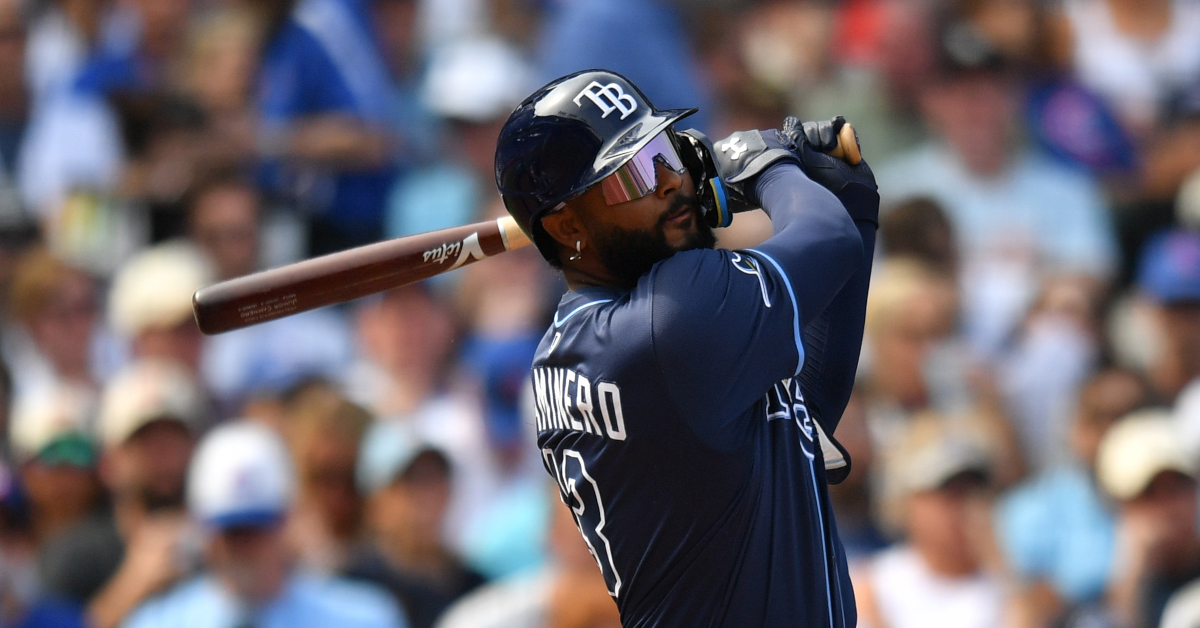
$28-$35 2 Junior Caminero 3B 848.1 1.42 Blasted 45 home runs in his first full year in the big leagues. Move back to Tropicana Field won’t help but has enough power that it won’t matter much.
$21-$27 3 Max Muncy (LAD) 3B 528.6 1.31 Muncy’s wRC+ after he started wearing glasses on April 30: 166. Contact quality improved and strikeout rate dropped by 5 points.
$21-$27 4 Austin Riley 3B 713.2 1.28 Four straight years of declining production is a big concern. Contact quality looks fantastic but plate discipline deteriorated in 2025.
$21-$27 5 Manny Machado 3B 803.1 1.26 A useful accumulator with good skills across the board. Always plays — two seasons in his entire career w/ less than 150 games played.
$15-$20 6 Munetaka Murakami 3B 710.7 1.29 The power is definitely real but there’s huge risk in his contact rate. The projections look decent, but the adjustment period could hurt.
$15-$20 7 Matt Chapman 3B 719.7 1.21 Pretty reliable contributor across the board. No weaknesses, but no standout skills either.
$15-$20 8 Alex Bregman 3B 726.6 1.20 New home in Wrigley Field shouldn’t hurt his pull-heavy approach too much and he had his best contact quality of his career in 2025.
$10-$14 9 Kazuma Okamoto 1B/3B 636.2 1.22 Much more stable profile than Murakami without the high ceiling. Will probably end up getting 3B eligibility.
$10-$14 10 Isaac Paredes 3B 612.8 1.22 Hamstring injury derailed a very good first year in Houston. Some concerns about playing time in a crowded lineup.
$10-$14 11 Eugenio Suárez 3B 750.7 1.20 Couldn’t keep his offensive resurgence going after re-joining Seattle. Ceiling might come down to where he signs.
$10-$14 12 Sal Stewart 1B/3B 570.8 1.19 Solid debut late last year with impressive contact quality. Needs to earn a spot in a crowded lineup.
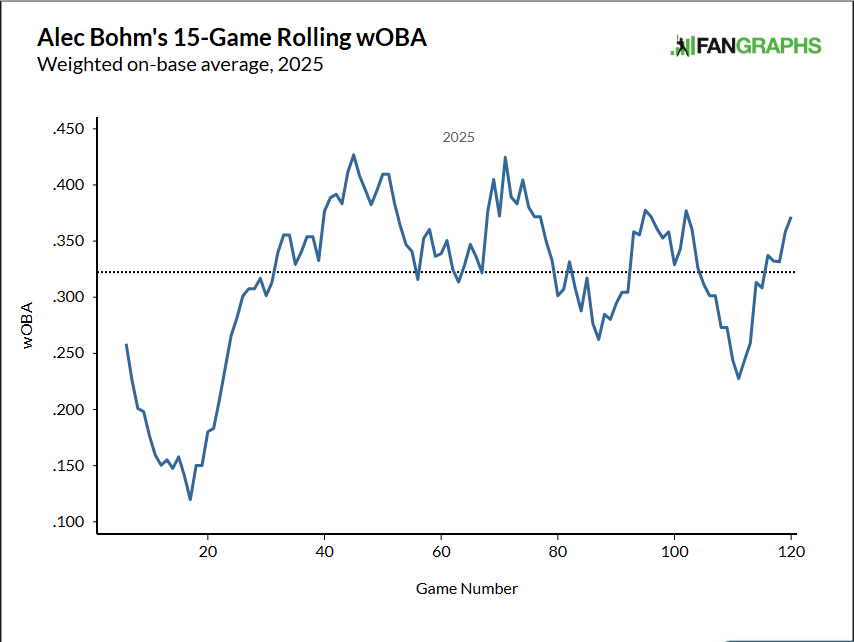
$6-$9 13 Alec Bohm 1B/3B 645.6 1.16 Career-high contact rate in 2025, but still pounds the ball into the ground too often.
$6-$9 14 Addison Barger 3B/OF 531.6 1.15 1H breakout (125 wRC+) slowed way down in 2H (87) and then starred in the postseason (188). Great contact quality, needs to hone plate approach.
$3-$5 15 Mark Vientos 3B 526.3 1.16 Couldn’t repeat his breakout from 2024, rebounded a bit in 2H ’25. Contact quality looks good and strikeout rate dropped 5 points.
$3-$5 16 Yoán Moncada 3B 393.3 1.13 Big contact quality improvements in 2025 came at the cost of a slightly lower contact rate. The big question is if he can stay healthy.
$3-$5 17 Royce Lewis 3B 490.2 1.12 Is he healthy? If he is, is he the guy who posted a 152 wRC+ in 2023 or an 85 wRC+ in ’25?
$3-$5 18 Noelvi Marte 3B/OF 475.3 1.09 Looked pretty good after returning from PED suspension in July. Plate approach leaves a lot to be desired.
$3-$5 19 Miguel Vargas 1B/3B 558.6 1.07 Earned a shot at full-time at-bats and delivered a solid season with a good plate approach and decent contact quality.
$1-$2 20 Miguel Andujar 3B/OF 399.6 1.13 What a weird career arc. Huge 2H in 2025 was likely BABIP fueled (.413 BABIP w/ Cincinnati) but that comes with his aggressive, contact-oriented approach.
$1-$2 21 Matt Shaw 3B 438.1 1.08 Up-and-down rookie season in 2025 and now it doesn’t look like he has a spot in the starting lineup with Bregman in town.
$1-$2 22 Otto Kemp 1B/3B/OF 365.8 1.08 Really solid contact quality, really poor plate approach. Also on the short side of a platoon in Philadelphia.
$1-$2 23 Connor Norby 3B 439.4 1.03 Injuries took a toll on him in 2025, but had a really intriguing debut back in ’24. Contact rate needs to improve to maintain any sort of success.
$1-$2 24 Nolan Arenado 3B 538.6 1.01 Offense cratered in 2025. Too much elevated contact without enough quality to do real damage. Maybe we’ll see a dead cat bounce now that he’s been traded to Arizona.
$1-$2 25 Josh Jung 3B 485.0 1.01 Injuries have derailed what had been a promising start to his career. Contact quality improved in 2025 and the contact rate jumped nearly 6 points, but still too aggressive with his approach.
$1-$2 26 Ryan McMahon 3B 560.0 1.01 Contact quality has been excellent but it’s really hard to survive with a strikeout rate over 30%. Probably on the strong side of a platoon in New York.
$0-$1 27 Christian Encarnacion-Strand 1B/3B 272.4 1.03
$0-$1 28 Nate Eaton 3B/OF 297.6 1.02
$0 29 Justin Turner 1B/3B 405.4 1.06
$0 30 Kyle Karros 3B 315.5 0.98
$0 31 Jeimer Candelario 1B/3B 351.6 0.95
$0 32 Will Wagner 1B/3B 221.0 0.94
$0 33 Jose Miranda 3B 346.7 0.94
$0 34 Abraham Toro 1B/3B 325.5 0.92
$0 35 Oswaldo Cabrera 3B 220.4 0.89
$0 36 Brady House 3B 393.8 0.88
$0 37 Gio Urshela 3B 258.1 0.88
$0 38 Deyvison De Los Santos 1B/3B 336.0 0.87
$0 39 Ke’Bryan Hayes 3B 443.1 0.85
$0 40 Nacho Alvarez Jr. 3B 258.4 0.84
$0 41 Ben Williamson 3B 314.0 0.83

Jake Mailhot’s 2026 Tiered Rankings for Ottoneu Points: First Base

Credit: Kiyoshi Mio-Imagn Images

The Ottoneu rankings push continues with a look at the final position player group: first basemen. You can find all the information about the format and methodology for these rankings in Chad’s introduction.

Changelog

  • 2/17/2026: Updated projections w/ ZiPS and OOPSY. Added player notes for all players in tier $1-$2 and above. Updated tier placement for seven players (green = moved up, red = moved down).
  • 3/18/2026: Updated tier placement for 11 players based on 2026 draft results.


Jake Mailhot’s Ottoneu Tiered Rankings for Points Leagues: C | 1B | MI | 3B | OF | SP | RP
Chad Young’s Ottoneu Tiered Rankings for Points Leagues: C | 1B | MI | 3B |OF | SP | RP
Chad Young’s Ottoneu Tiered Rankings for 4×4: C | 1B | MI | 3B | OF | SP | RP


Here are few more notes about my process:

  • Projected points. I’ve been building my own homebrewed projections for the past decade plus, ever since I started playing Ottoneu, and they form the basis for the rankings below. They’re nothing overly complicated; essentially just a MARCEL-esque projection using three years of historical data filtered through a rough aging curve and adjusted for the current run environment. I also include a collection of up to five public projection systems (ZiPS, Steamer, OOPSY, THE BAT, and PECOTA) to provide some additional context. That gives each player a wealth of data sources to form their projection. Currently, the projections below only include Steamer and THE BAT projections. I will update the rankings in February once ZiPS, OOPSY, and PECOTA are released.
  • P/G vs P/PA. Points per game played is the gold standard by which you should be evaluating players in Ottoneu. I won’t argue with that. That measure does have some drawbacks, particularly for players who pinch hit, pinch run, or are used as defensive substitutions often. Those limited appearances can skew a player’s P/G lower than what they’re producing when they’re getting three or four plate appearances when they start a game. To provide a little more context for these kinds of players, I’m projecting players using points per plate appearance. That measure should give us a better idea of how a player produces no matter how he’s used by his team.

Just to reiterate a point that Chad makes in his introduction: yes, these rankings are presented ordinally, but the tier a player appears in is much more important than if they’re ranked 16th or 28th. Within tiers, players are generally ranked by their projected Pts/PA but that doesn’t necessarily mean I think one player is significantly more valuable than another in the same tier. I’ve got notes on the top 30-ish players below and I’ll add more notes when I update the rankings next month. I’m also including Util-only players in this list since there’s no good home for them elsewhere. Let’s get into it.

Ottoneu Points 1B Tiered Rankings
Tier Rank Player Position Projected Pts Pts/PA Notes
$66-$77 1 Shohei Ohtani Util/SP 1306.1 1.89 This ranking only reflects what he does as a hitter. Tack on the $25-$30 in value he provides as a pitcher and a $100 salary for Ohtani isn’t out of the question.
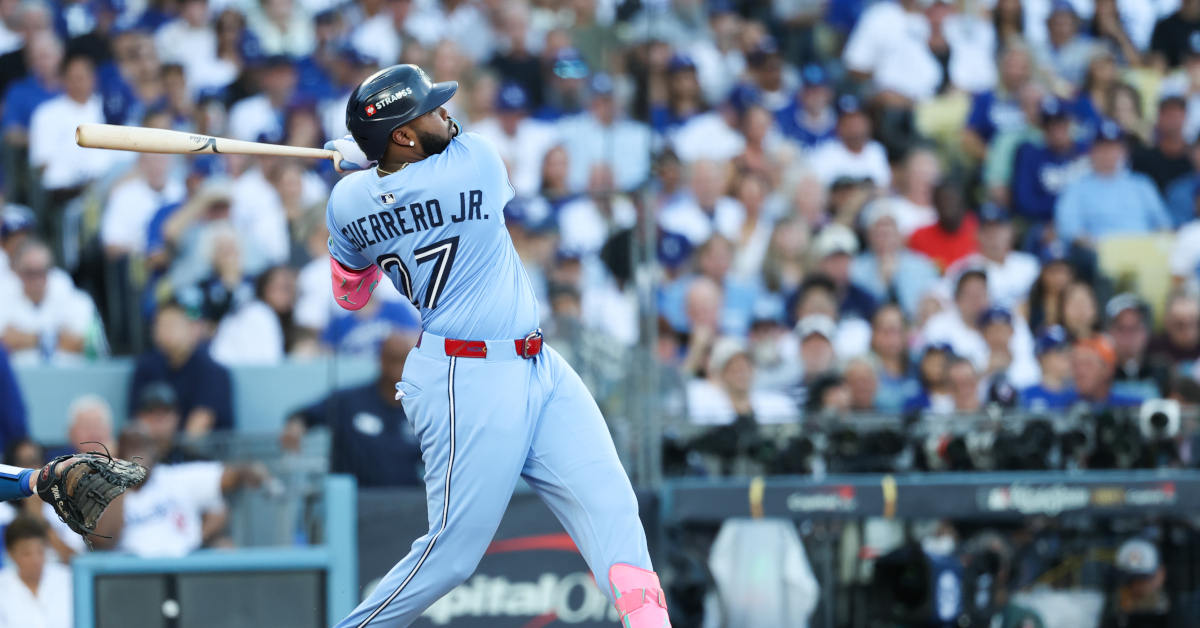
$45-$54 2 Vladimir Guerrero Jr. 1B 1019.7 1.53 Power output has waxed and waned throughout his career, but the contact quality has always stayed elite. Even in a down power season, he was the 5th most valuable 1B in 2025.
$36-$44 3 Nick Kurtz 1B 850.6 1.57 Absolutely smashed the ball during his ROY award-winning campaign. Projects as the top 1B, though there’s still some risk the league will adjust to him.
$28-$35 4 Bryce Harper 1B 875.6 1.46 Some plate discipline yellow flags — high chase rate, low zone rate — but still has excellent contact quality.
$28-$35 5 Freddie Freeman 1B 918.6 1.45 Might be showing some signs of aging; strikeout rate jumped 5 points thanks to big spike in chase and whiff rates.
$28-$35 6 Pete Alonso 1B 950.1 1.41 Posted his best contact quality numbers of his career in 2025 and move to Camden Yards shouldn’t hurt too much.
$28-$35 7 Rafael Devers 1B 917.6 1.38 Struggled a bit once he joined San Francisco — strikeout rate jumped 7 points — but his contact quality remains elite.
$28-$35 8 Matt Olson 1B 940.1 1.37 Nice bounce back in 2025 after a down season in ’24. Plays every single day.
$15-$20 9 Michael Busch 1B 758.1 1.34 Followed up breakout 2024 with an even better season in ’25. Contact quality improved dramatically, though platoon split still remains wide.
$15-$20 10 Yandy Díaz 1B 824.0 1.33 Really took advantage of Steinbrenner Field in 2025 (.389 wOBA at home); return to Tropicana Field could hurt a bit. Fantastic plate approach gives him a high floor.
$15-$20 11 Josh Naylor 1B 762.2 1.29 Doesn’t have the contact quality heights of others in this tier, but solid approach at the plate gives him a high floor.
$15-$20 12 Jonathan Aranda 1B 589.4 1.27 Big breakout in 2025, though the .409 BABIP will certainly come down.
$15-$20 13 Willson Contreras 1B 645.1 1.26 Dip in walk rate a little concerning but the contact quality remained excellent. The move to Fenway Park definitely helps.
$15-$20 14 Vinnie Pasquantino 1B 767.1 1.26 Similar to Naylor with a touch more power — improved barrel rate by 3.7 points in 2025.
$6-$9 15 Marcell Ozuna Util 765.6 1.34 Contact quality dipped significantly in 2025, offset a little by 5 point increase in walk rate.
$6-$9 16 Spencer Torkelson 1B 727.5 1.20 Finally broke out by cutting groundball rate to second lowest in the majors. Improved plate discipline too.
$6-$9 17 Kyle Manzardo 1B 591.5 1.19 Up-and-down year in 2025 but took small steps forward. Increased walk rate and slightly improved contact quality. Platoon split “only” 50 points of wOBA.
$3-$5 18 Joc Pederson Util 459.6 1.21 Went through big swings in production in 2025 and injuries limited his playing time. DH-only plus big platoon split limits his value.
$3-$5 19 Spencer Horwitz 1B 543.2 1.21 Lost MI eligibility but still productive enough to be valuable at 1B. Good plate approach but poor batted ball quality holds him back.
$3-$5 20 Jake Burger 1B 572.8 1.14 Struggled in his first season in Texas, was demoted in May, and injured his wrist in September. Contact quality didn’t waver.
$3-$5 21 Christian Walker 1B 675.1 1.14 Plate discipline took a big step backward in his first year in Houston but contact quality remained solid.
$3-$5 22 Nolan Schanuel 1B 642.4 1.13 Great plate discipline gives him a high floor. Finally started elevating the ball in 2025 but contact quality still poor.
$3-$5 23 Bryce Eldridge 1B 453.8 1.02 Massive power ceiling could be held back by hit tool questions. Should have an opportunity as a full-time DH in 2026.
$1-$2 24 Triston Casas 1B 335.0 1.24 Coming off a major knee surgery and was really bad in 2025 before the injury. He’ll have to battle for at-bats with Contreras manning 1B.
$1-$2 25 Pavin Smith 1B 383.3 1.12 Strikeout rate blew past 30% in 2025 but walk rate and contact quality still good. Big platoon split limits value.
$1-$2 26 Paul Goldschmidt 1B 609.4 1.12 Started off strong but fell apart by June. Power evaporated and it feels like we’ve seen the last of him as a productive hitter.
$1-$2 27 Josh Bell 1B 604.5 1.12 Big contact quality gains in 2025 but wOBA fell well short of his xwOBA.
$1-$2 28 Coby Mayo 1B 422.6 1.11 Difficult path to playing time on a crowded Baltimore roster and plenty of questions about his hit tool.
$1-$2 29 Andrew Vaughn 1B 578.8 1.08 Turned his career around after trade to Milwaukee. Chase rate and whiff rate greatly improved during the second half of the season. Needs to prove it.
$0-$1 30 Rhys Hoskins 1B 472.1 1.11
$0-$1 31 Nathaniel Lowe 1B 597.8 1.09
$0-$1 32 Ryan Mountcastle 1B 418.2 1.08
$0-$1 33 Tyler Locklear 1B 382.5 1.07
$0-$1 34 David Fry Util 277.8 1.05
$0-$1 35 Charlie Condon 1B 310.2 0.99
$0-$1 36 Adrian Del Castillo Util 275.8 0.98
$0 37 Xavier Isaac Util #N/A #N/A
$0 38 Jesse Winker Util 406.4 1.13
$0 39 Andrés Chaparro 1B 322.2 1.06
$0 40 Michael Toglia 1B 414.0 1.01
$0 41 Carlos Santana 1B 460.3 0.99
$0 42 Wilmer Flores 1B 362.9 0.99
$0 43 Ty France 1B 467.4 0.99
$0 44 Richie Palacios Util 265.1 0.95
$0 45 Anthony Rendon Util 166.7 0.81

Jake Mailhot’s 2026 Tiered Rankings for Ottoneu Points: Relief Pitchers

Credit: Vincent Carchietta-Imagn Images

The Ottoneu rankings push finally wraps up with a look at relief pitchers. You can find all the information about the format and methodology for these rankings in Chad’s introduction.

Changelog

  • 2/16/2026: Updated projections w/ ZiPS and OOPSY. Updated tier placement for one player (green = moved up, red = moved down).
  • 3/18/2026: Updated tier placement for 19 players based on 2026 draft results. Added Paul Sewald, Brooks Raley, Drew Pomeranz, Mason Montgomery, and Cole Henry.


Jake Mailhot’s Ottoneu Tiered Rankings for Points Leagues: C | 1B | MI | 3B | OF | SP | RP
Chad Young’s Ottoneu Tiered Rankings for Points Leagues: C | 1B | MI | 3B |OF | SP | RP
Chad Young’s Ottoneu Tiered Rankings for 4×4: C | 1B | MI | 3B | OF | SP | RP


Here are few more notes about my process:

  • Projected points. I’ve been building my own homebrewed projections for the past decade plus, ever since I started playing Ottoneu, and they form the basis for the rankings below. They’re nothing overly complicated; essentially just a MARCEL-esque projection using three years of historical data filtered through a rough aging curve and adjusted for the current run environment. I also include a collection of up to five public projection systems (ZiPS, Steamer, OOPSY, THE BAT, and PECOTA) to provide some additional context. That gives each player a wealth of data sources to form their projection. Currently, the projections below only include Steamer and THE BAT projections. I will update the rankings in February once ZiPS, OOPSY, and PECOTA are released.
  • P/IP. Points per innings pitched is the gold standard by which you should be evaluating pitchers in Ottoneu but there are plenty of factors that will affect a player’s ranking outside of their raw projection. Injury risk, projected playing time and role, age, and future value are all things that need to be taken into account when evaluating pitchers.

Just to reiterate a point that Chad makes in his introduction: yes, these rankings are presented ordinally, but the tier a player appears in is much more important than if they’re ranked 16th or 28th. Within tiers, players are generally ranked by their projected P/IP but that doesn’t necessarily mean I think one player is significantly more valuable than another in the same tier.

Here are my general thoughts about relief pitchers in Ottoneu points and 4×4 leagues: underlying skills matter a lot more than a pitcher’s place in the bullpen pecking order. Chasing saves isn’t as important as it might be in 5×5 leagues where saves make up 20% of the pitching categories. Teams will generally use their most skilled relievers in the highest leverage situations which means if you target relievers with strong skills, saves and holds (and the bonus points associated with them in Ottoneu points leagues) will follow.

Relievers are also the most volatile part of your roster and they’re the most fungible players in the format. That means even if you invest heavily to build an elite bullpen, a team who spends $10 total on 5 or 6 relievers could outperform your team if they find the right mix of breakouts and sleepers. Be ready to churn through a bunch of relievers throughout the season as pitchers get hurt or lose their effectiveness. That process is so much easier if you’re not invested into a bunch of high priced closers.

Ottoneu Points RP Tiered Rankings
Tier Rank Player Projected Role Projected Pts Pts/IP
$21-$27 1 Mason Miller CL 614.8 9.66
$15-$20 2 Aroldis Chapman CL 547.5 9.22
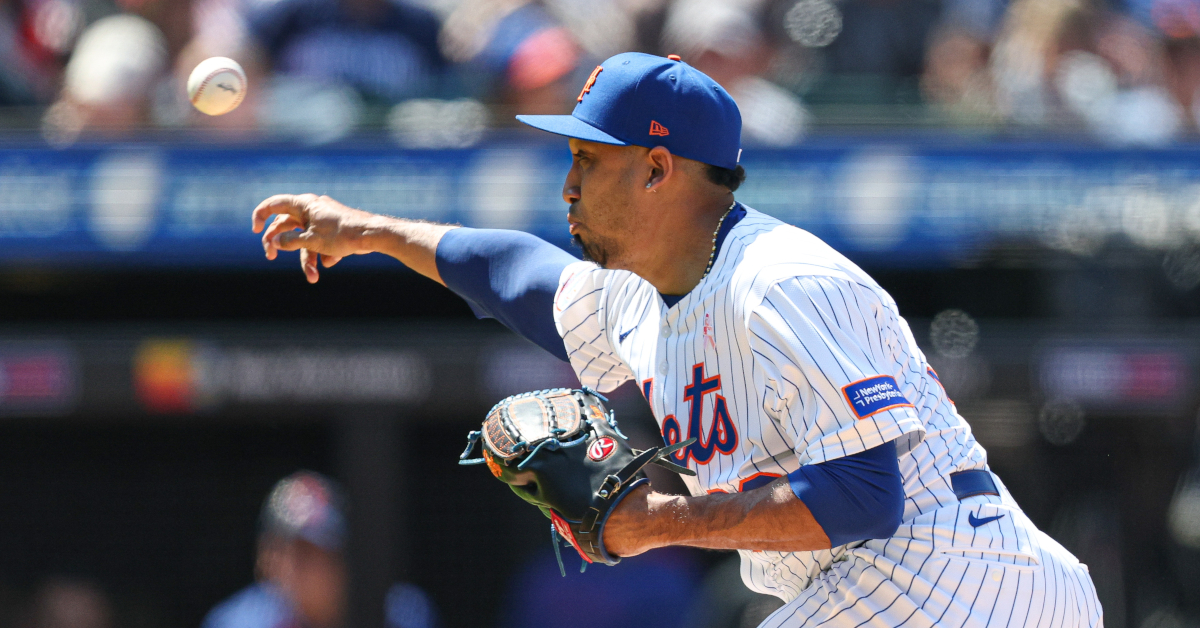
$15-$20 3 Edwin Díaz CL 590.2 9.14
$15-$20 4 Cade Smith CL 643.9 9.04
$15-$20 5 Andrés Muñoz CL 563.3 8.96
$15-$20 6 Jhoan Duran CL 612.2 8.84
$10-$14 7 Devin Williams CL 536.5 8.66
$10-$14 8 Abner Uribe CL? 618.1 8.56
$10-$14 9 David Bednar CL 537.7 8.48
$6-$9 10 Josh Hader INJ 507.6 8.50
$6-$9 11 Ryan Walker CL 498.0 7.95
$6-$9 12 Daniel Palencia CL 481.4 7.91
$6-$9 13 Pete Fairbanks CL 468.0 7.83
$6-$9 14 Raisel Iglesias CL 501.6 7.77
$6-$9 15 Seranthony Domínguez CL 471.5 7.66
$6-$9 16 Emilio Pagán CL 493.8 7.58
$6-$9 17 Bryan Abreu CL 524.7 7.55
$6-$9 18 Ryan Helsley CL 449.4 7.47
$6-$9 19 Jeff Hoffman CL 477.3 7.41
$6-$9 20 Griffin Jax CL? 489.8 7.37
$6-$9 21 Garrett Whitlock SU8 516.4 7.28
$6-$9 22 Adrian Morejon SU8 504.0 7.25
$6-$9 23 Trevor Megill CL? 409.4 7.19
$3-$5 24 Riley O’Brien CL? 447.5 7.83
$3-$5 25 Dennis Santana CL 526.7 7.76
$3-$5 26 Robert Garcia CL 475.3 7.56
$3-$5 27 Clayton Beeter CL? 441.1 7.52
$3-$5 28 Gabe Speier MID 433.2 7.44
$3-$5 29 Carlos Estévez CL 458.1 7.19
$3-$5 30 Grant Taylor SU7 459.6 7.10
$3-$5 31 Matt Brash SU8 404.6 7.06
$3-$5 32 Garrett Cleavinger CL? 441.2 7.04
$3-$5 33 Jeremiah Estrada SU7 493.7 7.01
$3-$5 34 Phil Maton SU8 433.2 6.99
$3-$5 35 Robert Suarez SU8 454.7 6.92
$3-$5 36 Will Vest SU8 465.6 6.90
$3-$5 37 JoJo Romero CL? 401.2 6.50
$3-$5 38 Kenley Jansen CL 353.0 6.15
$1-$2 39 Kevin Ginkel CL? 375.4 7.31
$1-$2 40 Justin Topa MID 425.2 7.16
$1-$2 41 Fernando Cruz SU7 385.7 7.04
$1-$2 42 Taylor Rogers CL 385.8 7.03
$1-$2 43 Hogan Harris CL? 507.1 6.94
$1-$2 44 Hunter Harvey SU7 349.5 6.90
$1-$2 45 Victor Vodnik CL 403.9 6.89
$1-$2 46 Shawn Armstrong SU7 467.4 6.84
$1-$2 47 Jason Adam SU7 384.5 6.81
$1-$2 48 Brendon Little MID 416.1 6.79
$1-$2 49 Paul Sewald CL? 331.2 6.79
$1-$2 50 Alex Vesia SU7 409.2 6.76
$1-$2 51 Matt Svanson CL? 439.8 6.75
$1-$2 52 Camilo Doval SU8 435.6 6.75
$1-$2 53 Jose A. Ferrer SU7 487.7 6.74
$1-$2 54 Aaron Ashby MID 469.2 6.74
$1-$2 55 Brooks Raley 레일리 SU7 337.8 6.73
$1-$2 56 Matt Strahm SU7 423.3 6.70
$1-$2 57 José Alvarado SU8 352.8 6.64
$1-$2 58 Eduard Bazardo MID 471.1 6.59
$1-$2 59 Gregory Soto SU8 390.8 6.58
$1-$2 60 Louis Varland SU7 534.4 6.55
$1-$2 61 Jared Koenig SU7 438.5 6.54
$1-$2 62 Orion Kerkering MID 404.2 6.53
$1-$2 63 Erik Sabrowski MID 327.3 6.46
$1-$2 64 Brad Keller SU7 460.1 6.40
$1-$2 65 Lucas Erceg SU8 385.3 6.38
$1-$2 66 Chris Martin SU8 304.9 6.36
$1-$2 67 Kyle Finnegan SU7 377.0 6.33
$1-$2 68 Tanner Scott SU8 380.0 6.25
$1-$2 69 Luke Weaver SU8 414.9 6.22
$1-$2 70 Hunter Gaddis SU8 430.9 6.14
$0-$1 71 Randy Rodríguez INJ 375.1 7.44
$0-$1 72 Félix Bautista INJ 227.5 7.40
$0-$1 73 Robert Stephenson INJ 398.9 7.39
$0-$1 74 Ronny Henriquez INJ 519.5 7.05
$0-$1 75 Justin Martinez INJ 316.2 7.05
$0-$1 76 Evan Phillips INJ 266.8 6.66
$0-$1 77 Ben Joyce INJ 258.9 6.64
$0-$1 78 A.J. Minter INJ 360.0 6.61
$0-$1 79 Aaron Bummer MID 369.0 6.61
$0-$1 80 Edwin Uceta INJ 475.1 6.58
$0-$1 81 Yimi García INJ 321.9 6.52
$0-$1 82 Drew Pomeranz CL? 347.2 6.50
$0-$1 83 Andrew Kittredge INJ 384.9 6.46
$0-$1 84 Graham Ashcraft SU7 422.0 6.46
$0-$1 85 Joe Jimenez INJ 279.8 6.40
$0-$1 86 Anthony Bender MID 351.0 6.40
$0-$1 87 Caleb Ferguson INJ 383.2 6.37
$0-$1 88 Tyler Kinley MID 414.3 6.33
$0-$1 89 Brant Hurter MID 432.0 6.31
$0-$1 90 Cole Sands SU7 438.9 6.31
$0-$1 91 Bryan King SU8 412.6 6.26
$0-$1 92 Tyler Rogers SU8 454.2 6.18
$0-$1 93 Tony Santillan SU8 431.8 6.17
$0-$1 94 Kirby Yates CL? 295.9 6.00
$0-$1 95 Mason Montgomery MID 384.4 6.09
$0-$1 96 Justin Sterner CL? 381.7 5.98
$0 97 Justin Slaten SU7 312.7 6.13
$0 98 Huascar Brazobán MID 361.1 6.05
$0 99 Nick Mears MID 343.5 6.03
$0 100 José Buttó SU7 392.3 6.01
$0 101 Jordan Leasure SU8 376.8 5.98
$0 102 Mark Leiter Jr. CL? 336.4 5.96
$0 103 Juan Mejia SU7 381.9 5.95
$0 104 Kade Strowd SU7 311.2 5.94
$0 105 Ryan Thompson SU8 315.6 5.93
$0 106 Calvin Faucher SU8 359.7 5.92
$0 107 Brenan Hanifee MID 361.6 5.91
$0 108 Isaac Mattson SU7 345.5 5.91
$0 109 Jimmy Herget SU8 464.4 5.84
$0 110 Yennier Cano SU7 327.4 5.84
$0 111 Tyler Holton MID 439.6 5.81
$0 112 Cole Winn SU7 354.3 5.79
$0 113 Brock Burke MID 354.3 5.74
$0 114 Joel Peguero INJ 312.7 5.66
$0 115 Keegan Akin SU8 364.3 5.64
$0 116 Michael Kopech INJ 357.7 5.61
$0 117 Porter Hodge INJ 277.4 5.57
$0 118 Jordan Romano CL? 283.1 5.49
$0 119 Tommy Kahnle ?? 330.5 5.48
$0 120 Cole Henry CL? 301.5 5.24

Jake Mailhot’s 2026 Tiered Rankings for Ottoneu Points: Catcher

Credit: John E. Sokolowski-Imagn Images

With the two largest position groups out of the way, the Ottoneu rankings push takes a breather with the smallest position group to finish this week. You can find all the information about the format and methodology for these rankings in Chad’s introduction.

Changelog

  • 2/13/2026: Updated projections w/ ZiPS and OOPSY. Added player notes for all players in tier $1-$2 and above. Updated tier placement for eight players (green = moved up, red = moved down).
  • 3/18/2026: Updated tier placement for four players based on 2026 draft results.


Jake Mailhot’s Ottoneu Tiered Rankings for Points Leagues: C | 1B | MI | 3B | OF | SP | RP
Chad Young’s Ottoneu Tiered Rankings for Points Leagues: C | 1B | MI | 3B |OF | SP | RP
Chad Young’s Ottoneu Tiered Rankings for 4×4: C | 1B | MI | 3B | OF | SP | RP


Here are few more notes about my process:

  • Projected points. I’ve been building my own homebrewed projections for the past decade plus, ever since I started playing Ottoneu, and they form the basis for the rankings below. They’re nothing overly complicated; essentially just a MARCEL-esque projection using three years of historical data filtered through a rough aging curve and adjusted for the current run environment. I also include a collection of up to five public projection systems (ZiPS, Steamer, OOPSY, THE BAT, and PECOTA) to provide some additional context. That gives each player a wealth of data sources to form their projection. Currently, the projections below only include Steamer and THE BAT projections. I will update the rankings in February once ZiPS, OOPSY, and PECOTA are released.
  • P/G vs P/PA. Points per game played is the gold standard by which you should be evaluating players in Ottoneu. I won’t argue with that. That measure does have some drawbacks, particularly for players who pinch hit, pinch run, or are used as defensive substitutions often. Those limited appearances can skew a player’s P/G lower than what they’re producing when they’re getting three or four plate appearances when they start a game. To provide a little more context for these kinds of players, I’m projecting players using points per plate appearance. That measure should give us a better idea of how a player produces no matter how he’s used by his team.

Just to reiterate a point that Chad makes in his introduction: yes, these rankings are presented ordinally, but the tier a player appears in is much more important than if they’re ranked 16th or 28th. Within tiers, players are generally ranked by their projected Pts/PA but that doesn’t necessarily mean I think one player is significantly more valuable than another in the same tier. I’ve got notes on the top 20-ish players below and I’ll add more notes when I update the rankings next month. Let’s get into it.

Ottoneu Points C Tiered Rankings
Tier Rank Player Position Projected Pts Pts/PA Notes
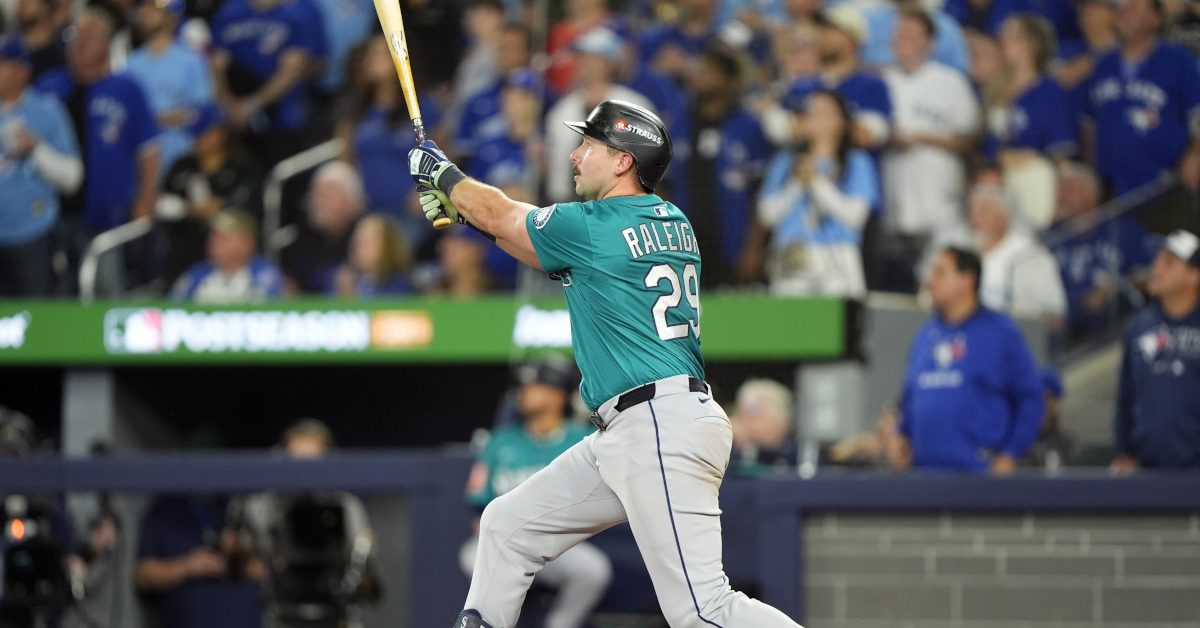
$28-$35 1 Cal Raleigh C 919.6 1.43 Probably won’t hit 60 home runs again but is clearly the best catcher in baseball. Huge power supported by real plate discipline gains in 2025.
$15-$20 2 Will Smith C 636.4 1.32 2025 was his best offensive season since ’20 but it might have been BABIP driven. He did have career-high walk rate and contact quality looked a lot like it did back in ’20.
$15-$20 3 Ben Rice C/1B 644.7 1.31 Huge breakout in 2025. Should get regular at-bats as 1B in New York, but will probably loose C eligibility in 2027.
$15-$20 4 Hunter Goodman C 678.6 1.31 This tier is full of breakout catchers! I like his foundation a little less than the other players in this tier — poor plate approach gives him a low floor.
$15-$20 5 Shea Langeliers C 678.0 1.31 Another huge breakout in 2025. Cut strikeout rate by 7.5 points and absolutely mashed in 2H (176 wRC+).
$15-$20 6 Iván Herrera C 612.7 1.31 Another huge breakout in 2025. Should get regular at-bats as DH in St. Louis and could retain C eligibility for 2027.
$15-$20 7 William Contreras C 802.3 1.27 Played through a fractured finger in 2025 and his power output dropped. Should bounce back if healthy.
$10-$14 8 Drake Baldwin C 602.6 1.27 Very impressive debut in 2025 that earned him ROY honors. Good plate approach and solid contact quality give him a high floor.
$6-$9 9 Gabriel Moreno C 446.1 1.19 Has dealt with a number of injuries over the last few years, but has been productive when healthy.
$6-$9 10 Samuel Basallo C/1B 462.0 1.18 Struggled a bit in his brief call up in 2025 but is still just 21. Position is a question mark but should force his way into the lineup.
$6-$9 11 Alejandro Kirk C 543.4 1.18 High contact approach might be a little BABIP dependent, but improved contact quality significantly in 2025.
$6-$9 12 Francisco Alvarez C 451.3 1.18 Dramatically improved contact quality after returning from midseason demotion but hand injuries derailed his progress.
$6-$9 13 Salvador Perez C/1B 695.4 1.14 The home runs are nice, but that’s about it. He gets regular at-bats whether its at C, 1B, or DH.
$6-$9 14 Adley Rutschman C 613.7 1.13 He’s been below replacement level for a season and a half now but the promise of a huge bounce back is still present.
$6-$9 15 Yainer Diaz C 611.7 1.13 Two straight years of declining production. Aggressive approach means he’s BABIP dependent and power has slid backwards.
$6-$9 16 Carter Jensen C 472.0 1.10 Really impressive late season debut in 2025. Playing time in question, but should take over full-time catching duties soon.
$6-$9 17 Agustín Ramírez C 593.6 1.09 Another young catcher whose debut season in 2025 was a little rocky. Projections think he’ll take a step forward.
$3-$5 18 Ryan Jeffers C 525.3 1.14 Power disappeared in 2025 but plate discipline improved.
$3-$5 19 Tyler Stephenson C 475.1 1.11 Big improvement in contact quality but strikeout rate jumped over 30%.
$1-$2 20 Kyle Teel C 456.6 1.09 Solid debut season in 2025. Will likely fall back to earth a bit when his BABIP regresses, but solid skills to build on.
$1-$2 21 Austin Wells C 465.2 1.08 Should be a good source of power but plate discipline took a big step backwards in 2025.
$1-$2 22 J.T. Realmuto C 522.0 1.08 He’s back in Philadelphia but 2025 was his worst season since his rookie year in 2015. How much longer can he catch 100+ games?
$1-$2 23 Dillon Dingler C 443.8 1.08 Pretty significant breakout in his first full season in the big leagues. Good contact quality but might be a little too dependent on BABIP.
$1-$2 24 Dalton Rushing C 271.2 1.08 Playing time blocked behind Will Smith, but could force his way into at-bats in the outfield mix or as backup catcher.
$1-$2 25 Moisés Ballesteros C 451.7 1.07 Top prospect should get plenty of time as DH in 2026. Promising late season debut, but contact quality is a little lacking.
$1-$2 26 Victor Caratini C/1B 362.0 1.06 Should see plenty of playing time as DH and backup catcher. Decent underlying skills and improved strikeout rate by 2.5 points in 2025.
$0-$1 27 Josue Briceño C N/A N/A
$0-$1 28 Sean Murphy C 373.5 1.09
$0-$1 29 Gary Sánchez C 274.8 1.08
$0-$1 30 Carson Kelly C 387.1 1.07
$0-$1 31 Danny Jansen C 336.4 1.03
$0-$1 32 Joey Bart C 323.4 1.03
$0-$1 33 Luis Campusano C 351.6 1.02
$0-$1 34 Carlos Narváez C 417.8 1.01
$0-$1 35 Kyle Higashioka C 273.6 0.99
$0-$1 36 Edgar Quero C 415.2 0.98
$0-$1 37 Logan O’Hoppe C 434.4 0.98
$0-$1 38 Harry Ford C 363.1 0.97
$0-$1 39 Bo Naylor C 398.6 0.97
$0 40 Ethan Salas C N/A N/A
$0 41 Connor Wong C 324.4 0.99
$0 42 Liam Hicks C/1B 329.3 0.99
$0 43 Miguel Amaya C 254.1 0.96
$0 44 Endy Rodriguez C/1B 247.8 0.95
$0 45 Travis d’Arnaud C 238.1 0.93
$0 46 James McCann C 186.3 0.93
$0 47 Mitch Garver C 282.4 0.92
$0 48 Hunter Feduccia C 250.8 0.90
$0 49 Freddy Fermin C 335.3 0.89
$0 50 Jake Rogers C 217.4 0.88
$0 51 Keibert Ruiz C 328.5 0.86
$0 52 Elias Díaz C 263.2 0.86
$0 53 Pedro Pagés C 290.0 0.86
$0 54 Rafael Marchán C 118.7 0.85
$0 55 Reese McGuire C 153.5 0.85
$0 56 Jose Trevino C 214.6 0.82
$0 57 Patrick Bailey C 362.5 0.82
$0 58 Henry Davis C 225.5 0.81
$0 59 Jonah Heim C 326.7 0.81
$0 60 Jacob Stallings C 161.9 0.80
$0 61 Nick Fortes C 222.2 0.78
$0 62 Korey Lee C 231.0 0.75
$0 63 Ben Rortvedt C 158.8 0.70
$0 64 Christian Vázquez C 171.6 0.69

Ottoneu 2026 Keeper Deadline in Review

Credit: Mark J. Rebilas-Imagn Images

Last Saturday night was the Ottoneu keeper deadline. If you’re like me, you might have spent too much time the last few months weighing which players deserve a spot on your 2026 roster. A handful of last minute offseason trades ahead of the deadline got things in order and then came the chopping block. For better or worse, everything is locked in until draft day arrives for your league.

Before looking ahead towards your draft this spring, let’s take a look at what happened at the keeper deadline. There isn’t much immediately actionable information here since rosters are locked until your league’s draft, but I found it interesting to dig into the players who were cut the most and how average salaries have changed over the course of the offseason.

Most Cut Players — All Ottoneu Leagues
Player Post-Arb Roster% Post Cut Roster% Roster% Delta Post-Arb Avg Salary Post-Cut Avg Salary Avg Salary Delta
Ronny Henriquez 91.7% 12.7% -79.1% $4.82 $3.98 -$0.84
Mookie Betts 89.0% 18.1% -70.9% $56.86 $48.40 -$8.46
Lars Nootbaar 87.2% 16.6% -70.6% $10.92 $10.11 -$0.81
Triston Casas 86.9% 17.5% -69.4% $9.05 $8.38 -$0.67
Shota Imanaga 91.1% 22.9% -68.2% $22.77 $21.58 -$1.19
Austin Hays 90.8% 22.9% -67.9% $4.50 $4.00 -$0.50
Tanner Scott 84.4% 16.6% -67.8% $8.46 $7.80 -$0.66
Ha-seong Kim 78.3% 11.7% -66.5% $5.12 $4.49 -$0.63
Marcell Ozuna 78.3% 12.0% -66.2% $11.61 $10.30 -$1.31
Christian Walker 89.0% 22.9% -66.1% $12.31 $10.22 -$2.09

There aren’t a lot of surprises on the list of most cut players. It’s mostly populated with guys who were either injured in 2025 or who struggled mightily last season. When looking ahead towards this season, the uncertainty surrounding all of these players made them all easy cuts at the deadline.

A spring illness caused Mookie Betts to lose nearly 20 pounds in two weeks and forced him to miss the Dodgers’ two-game series in Japan to start the season. His conditioning never really caught up once the season got underway and he struggled for nearly the entire season. He did finish on a high note, posting a 128 wRC+ in August and September, but the early season damage was already done. As one of the most expensive players in the Ottoneu universe, a lost season from Betts was bound to have repercussions, and he wound up being the second most cut player at the deadline. Still, if we chalk up his struggles in 2025 to his spring illness, then a bounce back season in ‘26 is more than likely. The projections see a wide range of potential outcomes — ZiPS is projecting him at a 131 wRC+ while OOPSY is all the way down at 118 — but his history of production is good enough that you should expect to pay top dollar for him in the draft. His average salary after the cut deadline is nearly $50, though I’d expect that to fall a bit once he’s drafted in all those leagues where he’s available.

I really want to believe in Lars Nootbaar’s skillset. He’s got an excellent approach at the plate and his contact quality is fantastic. He lowered his groundball rate by nearly 15 points in 2025, but despite a hard hit rate of 50%, he didn’t see a big improvement in results on contact. A lot of that added air contact was hit at too high launch angles or hit to the opposite field. In other words, despite embracing “elevate and celebrate,” all that elevated contact wasn’t optimized for damage. To make matters worse, he played through a rib injury for some of the season and then had surgery to correct issues in both of his heels this offseason. I want to believe in Nootbaar, but between the injury issues and the difficulty translating his contact quality into real results, I’m not sold on a bounce back from him.

After a very successful first year in the US, Shota Imanaga took a pretty significant step back in his second season in Chicago. The twin culprits were a strikeout rate that dropped by nearly five points and a groundball rate that fell eight points. With all that extra elevated contact allowed, he saw a corresponding jump in home runs allowed that shot his FIP up by more than a run. Homers are a death knell for any pitcher in Ottoneu and so it’s no surprise to see Imanaga on the chopping block. I think it’s probably reasonable to expect a bit of a bounce back — his SIERA and xFIP were both well below his actual FIP in 2025 — but getting back to his outstanding ‘24 season is probably out of the question. As a fly ball heavy pitcher, his success will wax and wane based on his home run rate which gives him a pretty volatile profile.

Largest Drop in Average Salary — All Ottoneu Leagues
Player Roster% Delta Post-Arb Avg Salary Post Cut Avg Salary Avg Salary Delta
Mookie Betts -70.9% $56.86 $48.40 -$8.46
Ozzie Albies -61.9% $21.07 $15.08 -$5.99
Aaron Nola -58.5% $19.72 $14.83 -$4.89
Zack Wheeler -49.2% $31.61 $27.25 -$4.36
Jose Altuve -61.6% $28.89 $24.76 -$4.13
Mike Trout -58.3% $30.92 $26.81 -$4.11
Freddie Freeman -55.0% $42.93 $38.85 -$4.08
Austin Riley -45.7% $33.53 $29.93 -$3.60
Marcus Semien -35.8% $16.03 $12.44 -$3.59
Zac Gallen -58.6% $19.81 $16.25 -$3.56

The table above lists players who saw their average salaries drop the most after the cut deadline. As you’d expect, there are a bunch of aging stars and once-great players who suffered a sudden dip in performance in 2025.

Man, what happened to Ozzie Albies? You could chalk up his power outage in 2024 to a broken wrist suffered in July of that season. But then he didn’t bounce back in ‘25; his ISO dropped to a career-low .124 and he blasted only 16 home runs. Even though we only have limited bat speed data, Albies’s average bat speed dropped a full tick from 2023 to ‘24 and it didn’t bounce back last year when he was supposedly healthy. His contact quality has never really been all that great but he made the most of it every season until last year. He’s still only 29 years old, but unless he rediscovers an extra gear with his bat speed, I’m afraid his best days are already in the past.

Oh look, another Braves hitter who really struggled last year. At least with Austin Riley, you can point to a hand injury in 2024 and three separate core injuries in ‘25 to explain his struggles. Then again, his production at the plate had already started to decline slightly in 2023, and really reached fever pitch when his plate discipline started slipping in ‘24. It deteriorated further in 2025 when he got more aggressive at the plate while running a slightly higher whiff rate. The good news is that his contact quality was still elite which means the only thing he needs to work on is his approach. Of all the guys on the two lists in this article, Riley is the one I’m most confident in predicting a bounce back this year.

Finally, here’s a long list of players cut in more than 50% of all Ottoneu leagues.

Players Cut in More than 50% of Ottoneu Leagues
Player Post-Arb Roster% Post-Cut Roster% Roster% Delta
Ronny Henriquez 91.7% 12.7% -79.1%
Mookie Betts 89.0% 18.1% -70.9%
Lars Nootbaar 87.2% 16.6% -70.6%
Triston Casas 86.9% 17.5% -69.4%
Shota Imanaga 91.1% 22.9% -68.2%
Austin Hays 90.8% 22.9% -67.9%
Tanner Scott 84.4% 16.6% -67.8%
Ha-seong Kim 78.3% 11.7% -66.5%
Marcell Ozuna 78.3% 12.0% -66.2%
Christian Walker 89.0% 22.9% -66.1%
Coby Mayo 92.4% 28.0% -64.3%
Jesús Sánchez 84.1% 19.9% -64.2%
Luis Arraez 86.5% 22.6% -64.0%
Trevor Larnach 82.6% 19.0% -63.6%
Lucas Giolito 89.9% 26.8% -63.1%
Nick Castellanos 71.3% 9.3% -61.9%
Ozzie Albies 88.4% 26.5% -61.9%
Jose Altuve 92.4% 30.7% -61.6%
Kodai Senga 80.1% 20.8% -59.3%
Cedric Mullins 73.7% 14.5% -59.2%
Bryan Reynolds 90.5% 31.9% -58.6%
Zac Gallen 90.2% 31.6% -58.6%
Aaron Nola 81.3% 22.9% -58.5%
Anthony Volpe 79.5% 21.1% -58.4%
Mike Trout 90.5% 32.2% -58.3%
Justin Verlander 64.8% 6.6% -58.2%
Gavin Lux 74.6% 17.2% -57.4%
Josh Lowe 84.7% 27.7% -57.0%
Luke Weaver 84.4% 28.0% -56.4%
Brandon Pfaadt 75.8% 19.6% -56.3%
Mark Vientos 91.7% 35.5% -56.2%
Tyler O’Neill 72.2% 16.3% -55.9%
José Berríos 68.5% 12.7% -55.9%
Wenceel Pérez 71.9% 16.3% -55.6%
Yusei Kikuchi 70.6% 15.4% -55.3%
Adley Rutschman 87.2% 31.9% -55.2%
Luis Castillo 85.9% 30.7% -55.2%
Isaac Collins 83.8% 28.6% -55.2%
J.T. Realmuto 77.4% 22.3% -55.1%
Freddie Freeman 93.9% 38.9% -55.0%
Grayson Rodriguez 96.9% 42.2% -54.8%
Jeremiah Jackson 67.0% 12.7% -54.3%
Tommy Edman 67.0% 13.0% -54.0%
Shawn Armstrong 65.4% 11.7% -53.7%
Taj Bradley 71.9% 18.4% -53.5%
Teoscar Hernández 93.3% 40.1% -53.2%
Spencer Steer 91.1% 38.0% -53.2%
Max Scherzer 59.0% 6.3% -52.7%
Bryce Harper 96.3% 44.0% -52.4%
Christian Moore 76.8% 24.7% -52.1%
Josh Jung 71.6% 19.9% -51.7%
Bailey Ober 67.0% 15.4% -51.6%
Clayton Kershaw 53.5% 2.1% -51.4%
Tyler Freeman 67.9% 16.6% -51.3%
Nick Gonzales 61.8% 10.5% -51.2%
Michael Kopech 59.0% 7.8% -51.2%
Yu Darvish 55.0% 3.9% -51.1%
Royce Lewis 93.9% 43.1% -50.8%
Dalton Rushing 84.4% 33.7% -50.7%
Chris Bassitt 70.6% 20.2% -50.5%
Matt Strahm 89.3% 38.9% -50.4%
Sean Manaea 77.4% 27.1% -50.3%

Ottoneu: Jake’s 2026 Keep or Cut Decisions at SP

Credit: David Richard-Imagn Images

The Ottoneu keeper deadline is quickly approaching. There’s less than a month left to make your roster decisions before the January 31 cut deadline. I’m going through a handful of difficult keep or cut decisions at every position group to give you a transparent look at my decision making process and hopefully help you with theses specific cases for these specific players. I’ve already covered hitters in three separate articles — corner infielders, middle infielders, and outfielders — now I’m wrapping everything by covering three starting pitchers.

Kodai Senga, SP
Salary: $16, $17
Average Salary: $18
2025 P/G: 4.33
Projected 2026 P/G: 4.16

I’m not sure the Mets know what to do with Kodai Senga so I wouldn’t blame you if you didn’t know what to do with him on your fantasy squad. Injuries cost him nearly all of 2024 and a hamstring injury in June derailed his season a year later. Before that injury, he had put up a 1.47 ERA and a 3.24 FIP in 13 starts. During the rehab from his injury, his mechanics were thrown out of whack, and after he returned to the majors, he produced a 5.90 ERA and 5.76 FIP across nine starts. Ultimately, he was demoted to Triple-A in September to work on those mechanical inconsistencies.

Even if Senga is completely healthy in 2026, there were enough yellow flags in his first-half performance that a rebound back to the level of his excellent 2023 debut isn’t necessarily guaranteed. During those first 13 starts of the season, his strikeout-minus-walk rate was 13.3%, just a hair below league average and well short of the 18.0% K-BB% he posted during his first season in the US. Most of that was driven by a significant drop in strikeout rate.

You could point to his signature pitch, the ghost fork, as the reason why he wasn’t seeing as many swings and misses in 2025. And while that pitch was a little less effective last year, it was his cutter that saw the most dramatic drop in effectiveness. In 2023, his cutter was the fourth most valuable pitch in baseball by Run Value with a 2.9 RV/100, far outpacing his forkball (1.0 RV/100). In 2025, his cutter was exactly neutral with a 0.0 RV/100. Unlike his diving forkball, Senga’s cutter was a contact suppression machine during its peak, but batters made much higher quality contact against that pitch last year. That combination — a forkball that wasn’t getting as many swings and misses and a cutter that wasn’t generating as much weak contact — has me worried that Senga’s ceiling is far lower than we might think.

The projections are picking up on those concerns and see Senga taking a pretty significant step back in 2026. Health concerns aside, there are enough flags in his pitch arsenal that present enough risk to steer clear. And when you add his mechanical issues and injury history back into the picture, it’s a pretty easy call to avoid paying too high a price for Senga in 2026.

Keep or cut?

I’m cutting Senga in both of my leagues where I’m rostering him and I doubt I’ll be looking to redraft him in the spring.

Gavin Williams, SP
Salary: $11, $9, $8
Average Salary: $9
2025 P/G: 4.22
Projected 2026 P/G: 4.03

Through his first 11 starts of the year, Gavin Williams put up a rough 4.27 ERA and 4.65 FIP. It wasn’t terrible, but it was a concerning start to the season after an up-and-down year in 2024. From the beginning of June through the end of the season, his ERA fell by nearly two full runs down to 2.50 but his FIP only dropped to 4.27. His strikeout-to-walk ratio improved slightly during those final four months of the season but the biggest reason his ERA improved was thanks to a .221 BABIP and a 87.5% strand rate. Most of his underlying peripherals pointed to the same pitcher on the mound, but a ton of good batted ball luck helped him flip his season.

For Ottoneu players, an improved ERA shouldn’t necessarily help Williams’s fantasy production and a FIP above four is usually a bad sign. But here’s where understanding the ins and outs of your given format becomes extremely important.

Gavin Williams, Ottoneu Points Performance
Time Period FIP BABIP FGpts/IP SABRpts/IP
Prior to June 4.65 0.323 3.43 3.47
June Onward 4.27 0.221 4.57 3.86

In Ottoneu leagues using the FanGraphs points system — which critically takes hits allowed into account — Williams dramatically improved his production during the later half of the season. In leagues using the SABR points system — using only the inputs for FIP — Williams’s season was frustrating from start to finish.

As for Williams’s pitch arsenal, he was able to develop a very effective sweeper last year that returned a 44.0% whiff rate. That’s an excellent pitch to add to his repertoire, though his lack of command holds him back from really raising his ceiling. That’s sort of the big issue with his profile. He has a good, hard fastball, two excellent breaking balls, but he needed some incredible batted ball luck to turn into an effective pitcher for fantasy. His command was still an issue throughout the season, leading to some pretty inconsistent outings. Still, his Location+ improved from 91 during the first two months to 96 through the end of the year. That’s something to build off of, but until he’s able to make some significant improvements in that area, I fear his excellent stuff will be held back from reaching its maximum potential.

Keep or cut?

Thankfully, all three leagues where I’m rostering Williams use FanGraphs points, so I was able to partially enjoy his second half improvements in 2025. I’m probably keeping him at $8 and $9 but I think I’ll be cutting him at $11. His inconsistencies and command issues make him a risk to roster at a double-digit salary.

Yusei Kikuchi, SP
Salary: $5
Average Salary: $8
2025 P/G: 3.78
Projected 2026 P/G: 4.09

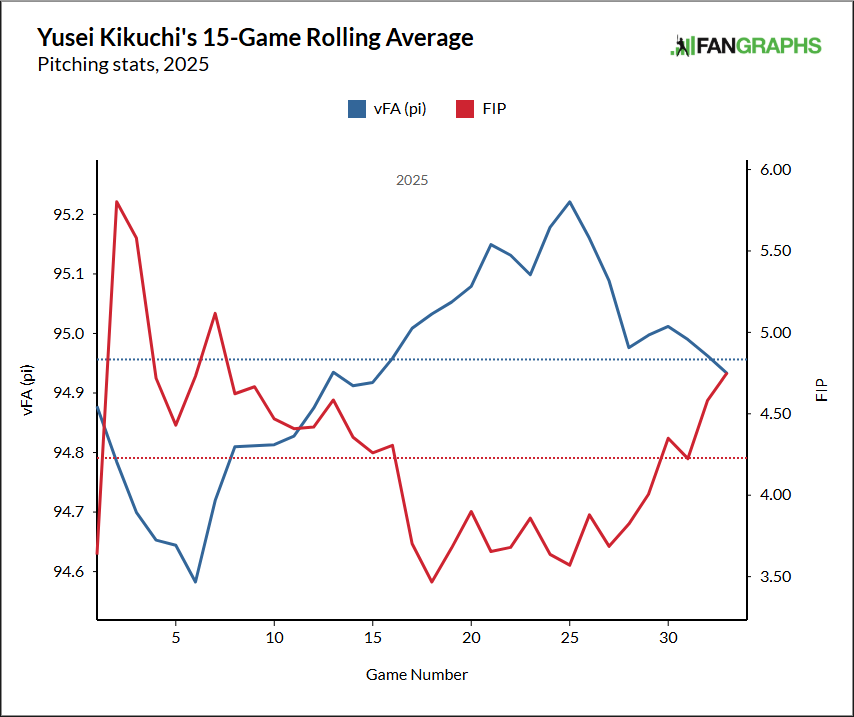
Coming off what seemed to be a mini-breakout during his short 10 start stint with the Astros during the second half of 2024, Yusei Kikuchi latched on with the Angels last year. Even though he was leaving the pitching development powerhouse in Houston, I expected the changes he implemented while he was there to stick in Los Angeles. Unfortunately, they didn’t. Some mechanical issues led to a drop in velocity and a lower arm slot affected the shapes of all his pitches. He spent most of the season working out the kinks in his delivery, slowly raising his arm slot and regaining some of his velocity.

I think the thing that worries me the most is the effectiveness of Kikuchi’s fastball. He’s one of the hardest throwing left-handers in baseball, but he’s entering his age-35 season in 2026. His velocity dropped early last year, and even though he regained it in the middle of the season, it dropped again in August and September and his results tanked along with it.

Last year, he generated the lowest whiff rate on his fastball since his debut season in 2019. Both his slider and changeup were a little less effective at getting swings and misses too. It all added up to a 5.5 point drop in strikeout rate and a much higher walk rate that was more in line with what he was posting during his time in Seattle.

Kikuchi has never been a model of consistency during his career. He’ll have dominant stretches from time to time, but his command issues have often held him back from reaching his ceiling. It looked like he had turned a corner in Toronto and Houston in 2023 and ‘24, but he came crashing back down last year thanks to his mechanical troubles. Steamer projects a small bounce back but he’s getting to the point in his career where the velocity of his fastball is sitting on a knife’s edge; dip just a little and the whole repertoire comes crashing down.

Keep or cut?

$5 is probably the highest I’d want to roster Kikuchi for heading into next season. There’s always the possibility he’ll figure out his mechanics over the offseason and post another strong season like he did in 2024, but there are too many flags to risk anything higher than that. I’ll probably keep him at $5, but he’s a quick cut if his fastball isn’t looking good in the spring.


Ottoneu: Jake’s 2026 Keep or Cut Decisions at OF

Credit: John E. Sokolowski-Imagn Images

The Ottoneu keeper deadline is quickly approaching. There’s less than a month left to make your roster decisions before the January 31 cut deadline. I’m going through a handful of difficult keep or cut decisions at every position group to give you a transparent look at my decision making process and hopefully help you with theses specific cases for these specific players. I started with the corner infielders and middle infielders before the holidays and will wrap up with pitchers later this week.

Teoscar Hernández, OF
Salary: $18, $19, $20
Average Salary: $21
2025 P/G: 4.55
Projected 2026 P/G: 5.04

A big bounce back season during his first year in Los Angeles had me hopeful that Teoscar Hernández’s down year in Seattle in 2023 was a one year blip. A year later, it kind of seems like the bounce back was the blip after Hernández posted a 102 wRC+ in ‘25, slightly worse than the 107 he posted with the Mariners a few years ago. Entering his age-33 season this year, which Hernández should we expect to see in 2026?

Let’s get the good news out of the way first: Hernández’s contact quality looked pretty good despite the underwhelming results. His hard hit rate was still well above average, and even though his barrel rate fell by more than three points, it was still barely outside the top quartile among qualified batters. That drop in barrel rate might have had an outsized effect on his bottom line results however. His expected wOBA on contact fell from .457 in 2024 to .403 in ‘25 despite no significant change to his batted ball mix. He wasn’t pounding the ball into the ground more often, he was simply less productive on the contact he was making. His average bat speed was down a little, but not dramatically which does provide some hope that he can rediscover his knack for barrelling up pitches.

The other concerning trend last year was a walk rate that fell to the lowest it’s been in his career. Hernández has never really been a patient hitter, but his walk rate usually fell right around league average when he was a middle-of-the-order run producer in Toronto. In 2025, it dropped to 4.8%. There were no dramatic changes to his underlying plate discipline metrics which makes his walk rate even more of a mystery. His swing rate in three-ball counts was 72.7%, much higher than his norm and the second highest three-ball swing rate in baseball. That tells me he was trying to swing his way out of his struggles rather than maintaining his measured aggression that served him so well in the past.

Steamer is essentially splitting the difference between Hernández’s down seasons in 2023 and ‘25 and the rest of his productive history. That’s probably a pretty reasonable expectation — he’s getting to the age where power output starts to slide and he doesn’t have the kind of approach that would allow him to thrive once his bat speed falls off a cliff. I think he’s probably got one or two more productive seasons left in his bat and there’s always the possibility he bounces all the way back to his ‘24 level.

Keep or cut?

I think I’m cutting all three of my shares of Hernández. His projection isn’t terrible but two out of the last three years have been extremely disappointing. I’m just not comfortable paying that much salary to see if he can figure things out in 2026 as he enters the decline phase of his career.

Kerry Carpenter, OF
Salary: $15
Average Salary: $10
2025 P/G: 4.44
Projected 2026 P/G: 5.37

How do you evaluate a part-time player who absolutely scorches the ball as the strong side of a platoon but useless when facing same-handed pitching. And what if that part-time player was coming off a down season where many of his offensive metrics took significant steps backwards. That’s the dilemma posed by Kerry Carpenter.

Because he’s the strong side of a platoon, Carpenter’s fantasy performance needs all sorts of context to fully understand. He’s primarily used against right-handed pitching and often pinch hits late in games if he isn’t starting. Those extra appearances off the bench artificially depress his overall points per game, though we can use points per game started, or more simply, points per plate appearance, to cut through some of that noise. Here’s a look at the various lenses we can use to clear up our evaluation of his production:

Kerry Carpenter, Ottoneu Fantasy Production
Year Overall P/G vR P/G Starting P/G Overall P/PA vR P/PA Starting P/PA
2023 5.18 4.61 5.41 1.33 1.39 1.33
2024 5.43 5.61 6.07 1.60 1.78 1.59
2025 4.44 4.07 5.08 1.24 1.31 1.27

When looking at points earned in games he started, Carpenter wasn’t too far off his production from his breakout two years ago and he looks a lot better from a points per plate appearance stand point as well.

The source of his struggles in 2025 seem to stem from a 54 point drop in BABIP and a 3.5 drop in walk rate. All of his underlying batted ball and plate discipline metrics look in line with his established norms and he even posted a career-best 22.8% strikeout rate last year.

Keep or cut?

I’m having a hard time justifying keeping a platoon outfielder for $15, even if he absolutely crushes right-handed pitching. The highs of 2024 are probably a high-water mark for him and Steamer isn’t predicting a big step forward for him in 2026. $10 is a more reasonable value for a really good part-time player like Carpenter, but a $15 salary gets squeezed off the roster.

Trent Grisham, OF
Salary: $7, $5, $4
Average Salary: $5
2025 P/G: 5.35
Projected 2026 P/G: 5.19

After settling in as a defense-first center fielder in San Diego, Trent Grisham enjoyed a huge breakout in New York in 2025. He’s shown he’s capable of producing at the plate in the distant past — he posted a 110 wRC+ across his first two seasons in San Diego in 2020 and ‘21 — but hasn’t hit very well until last year. All of a sudden, he started mashing the ball and wound up blasting a career-high 34 home runs in 2025.

Grisham has always had a patient approach at the plate and his batted ball quality significantly improved after joining the Yankees in 2024. The biggest difference was turning his sometimes overly patient approach into selective aggression on pitches in the zone early in the count. Ambushing pitchers when they tried to steal strikes worked wonders for Grisham and represents a real change in approach for him.

Surprisingly, Steamer believes in the changes Grisham made. It would have been easy to write off his breakout as a one-year blip, but the projections are calling for a solid follow-up season, though not necessarily up to the heights of his breakout.

Keep or cut?

I see the improvements in Grisham’s approach and batted ball quality and I’m willing to bet that they stick around in 2026. I’m keeping all three of my shares.


Ottoneu: Jake’s 2026 Keep or Cut Decisions at MI

Credit: Jerome Miron-Imagn Images

The Ottoneu keeper deadline is quickly approaching. There’s about a month and a half left to make your roster decisions before the January 31 cut deadline. I’m going through a handful of difficult keep or cut decisions at every position group to give you a transparent look at my decision making process and hopefully help you with theses specific cases for these specific players. I started with the corner infielders last week and will have outfield and pitchers after the holidays.

Carlos Correa, SS/3B
Salary: $26, $15
Average Salary: $15
2025 P/G: 4.42
Projected 2026 P/G: 5.19

Carlos Correa’s capacity for greatness still resides somewhere within him. Just a year ago, he posted a 154 wRC+, though he was limited to just 86 games thanks to a significant foot injury. He played through that same issue this year and it’s likely that it seriously affected his ability to perform for most of the season. He limped to a .267/.319/.386 slash line (97 wRC+) through the first half of the season, though he improved on that after being traded back to the Astros at the trade deadline.

The most concerning yellow flag in Correa’s peripherals was a groundball rate that jumped 4.5 points from 2024. He was still hitting the ball with authority, but all that additional contact on the ground meant that his barrel rate fell to 6.8%, the second lowest mark of his career. His top level plate discipline metrics were a little out of whack too; his strikeout rate was mostly stable but his walk rate fell by more than three points. There was nothing really amiss in his underlying metrics; he was a little more aggressive at the plate because he saw more pitches in the zone than ever before but that doesn’t fully explain the drop in free passes.

The projections are a little more pessimistic than I’d expect based on his history, though his excellence in 2024 seems like the outlier when looking at his down seasons in ‘23 and ‘25. It all boils down to how his foot is fairing. If he’s truly healthy heading into next season, it’s reasonable to expect him to beat his projections. There’s also the matter of his position switch. Correa will retain shortstop eligibility next year, but he’ll probably lose it the year after unless something surprising happens in Houston.

Keep or cut?

I’m happy to keep Correa at $15 and I’d probably be comfortable up to $18 or $20 just based on his history of production. There’s a risk that he won’t be healthy, but he was valued around $25 during his abbreviated 2024 season. That’s the upside, even if he misses some time next year. But that same health risk means that I’m probably not keeping my $26 share.

Xander Bogaerts, SS
Salary: $9
Average Salary: $13
2025 P/G: 4.49
Projected 2026 P/G: 4.76

At this point in his career, Xander Bogaerts is a much more valuable real life shortstop than a fantasy one. There’s been a steady drop in offensive production over the last three years, though the good news is that his 2025 was an improvement on his dismal ‘24 season. Even though he’s likely well past the era of posting wRC+’s in the 130s, he’s only a couple of years removed from putting up a 119 wRC+ in 2023. While that first season in San Diego was a step back from his time in Boston, his fantasy value still sat around $20 for his efforts.

Despite the league average results on the field, there were some encouraging signs in Bogaerts’s underlying metrics. Never one to post outrageous batted ball peripherals, his hard hit rate was the highest it’s been since 2022 and his barrel rate, air contact rate, and pull rate the highest they’ve been since 2021. The main reason behind all those improvements? A 1.5 mph increase in his bat speed this year. Those gains in those specific metrics should have resulted in better outcomes but his actual wOBA trailed behind his expected wOBA by 12 points.

Steamer sees a bounce back season in Bogaerts’s future and I think I can see what the computer is picking up on. His down season in 2024 was marred by a serious shoulder injury and the improvements to his bat speed and batted ball peripherals tell me that his body has mostly returned to normal.

Keep or cut?

I’m going to keep at $9 and I think I’d be comfortable keeping up to $12 or $13. There’s some risk of age related decline, but he showed he was healthy last year. Don’t pay for his name recognition or the production you’d expect if he still played in Boston, but he still can be a useful middle infield option for your fantasy squad.

Jackson Holliday, 2B/SS
Salary: $9
Average Salary: $14
2025 P/G: 4.26
Projected 2026 P/G: 5.08

How do you properly assess a 21-year-old phenom who hasn’t lived up to the sky-high hype across his first two seasons in the majors? The scouting reports were so glowing, I imagine plenty of fantasy players paid a pretty penny for Jackson Holliday, hoping that they were getting a future star to anchor their lineups. Holliday could certainly still turn into that star, but he didn’t make the immediate impact many were expecting.

The good news is that Holliday is still exceedingly young and he improved by leaps and bounds during his second taste of the big leagues.His overall batting line was a hair below league average but he made some strides to elevate the ball more often and improved his contact rate by more than eight points. You can still dream on the ceiling because he still has so much more growing to do — both from a physical standpoint and just learning how major league pitchers will approach him — but he could be a year or two away from realizing that potential.

The projections see a small step forward from him in 2026 which is pretty reasonable given his pedigree and age. Still, those improvements only get him to the level of a replacement level middle infielder in fantasy baseball. Could he blow past those projections with a post-hype breakout? Absolutely! Do I want to bank on that happening next year? Eh…

Keep or cut?

I’m probably keeping at $9 though I think that’s probably the highest I’d be comfortable going at this point. Any higher and I’m buying his potential ceiling without any real indicators he’s about to breakout in a meaningful way. I also recognize that your place in your team’s competitive window will have a huge bearing on your willingness to keep Holliday. If you’re in win-now mode, keeping Holliday with a double-digit salary is a tougher pill to swallow than if you’re still rebuilding your roster and looking to compete in a year or two.

Bryson Stott, 2B/SS
Salary: $6, $4
Average Salary: $9
2025 P/G: 4.20
Projected 2026 P/G: 4.49

From July 23 through the end of the season, Bryson Stott posted a .307/.376/.508 slash line, good for a 143 wRC+ and 5.5 P/G. That hot streak corresponded with a pretty dramatic change to his swing mechanics. He was able to improve the quality of his contact while still maintaining the excellent plate discipline that buoyed his value as a batter throughout his career. With a solid approach now enhanced by more hard contact, Stott has all the underlying indicators of a potential breakout in 2026.

The projections aren’t yet picking up on those mechanical changes — to the silicon circuits, his hot streak to end the season was just that, no real signal to affect next year’s projection. But if his improved swing carries over to 2026, there’s real reason to believe he’ll be able to beat those projections easily. The risk is that he falls back to his previous career norms and remains a replacement level middle infielder for fantasy purposes.

Keep or cut?

I’m willing to pay $6 (and $4) to see if his swing changes carry over to next year. Those salaries are low enough that it’s easy to cut bait if he’s the same old Stott next year, but the potential for a huge breakout is real enough that it’s not a problem to carry him on my rosters to start the season. I’m not sure I’d go into double digits to keep him but I do think the ceiling is a lot higher than the projections think it is.


Ottoneu: Jake’s 2026 Keep or Cut Decisions at CI and C

Credit: Eric Hartline-Imagn Images

The Ottoneu keeper deadline is quickly approaching. There’s about a month and a half left to make your roster decisions before the January 31 cut deadline. Over the next few weeks, I’ll be going through a handful of difficult keep or cut decisions at every position group. I’ll start with the four infield positions this week and move on to the outfield and pitchers next week.

Bryce Harper, 1B
Salary: $49, $42
Average Salary: $45
2025 P/G: 6.25
Projected 2026 P/G: 6.45

While Bryce Harper probably isn’t going to hit like he’s one of the top 5 batters in baseball again, he’s still extremely productive as he enters his age-33 season in 2026. A wrist injury in June cost him about a month of the ‘25 season and he’s averaged a little under 130 games played per season over the last five years. While he might not be an iron man, he’s been productive while he’s on the field, putting up a 146 wRC+ during that same five year period. His batted ball peripherals all looked in line with his career norms; his 47.5% hard hit rate and 12.3% barrel rate both look good and his .368 xwOBA was right in line with his actual results on the field.

While his strikeout and walk rates look good on the surface, there are a few yellow flags in his underlying plate discipline stats. His chase rate has significantly jumped over the last few years and it was up to 36.0% in 2025, the second highest mark of his career. He’s being forced to hunt for pitches out of the zone because pitchers simply refuse to give him anything to hit. Since winning his MVP award in 2021, he’s seen the fewest pitches in the strike zone of any batter in baseball by a pretty wide margin. This year, his zone rate was just 42.9%, the lowest in the majors and three points lower than the guy right ahead of him.

Steamer is predicting a bit of a bounce back season for Harper in 2026, though it’s mostly fueled by a jump in BABIP. He’s at the age where power starts waning a bit and the projections see him essentially holding his power numbers steady next year. I guess that’s what worries me. Harper has already slipped a bit from his peak and he’s not getting any younger (no matter how many weird blood procedures he wants to try). If you’re paying a premium in the hopes that he’ll get back to his MVP caliber seasons, you’re likely going to be disappointed.

Keep or cut?

I think Harper’s current average salary of $45 is reasonable for the projected production you’re hoping to get from him in 2026. Like with any aging slugger, there’s some risk involved in paying that much for the downslope of a career. I’m keeping at $42 and I’m shopping my $49 Harper, hoping to pass the buck for that decision to someone else.

Willson Contreras, 1B
Salary: $15, $14
Average Salary: $14
2025 P/G: 5.24
Projected 2026 P/G: 5.14

Now that Willson Contreras finally lost his catcher eligibility, he’s lost a ton of his fantasy value. A catcher who can put up 5.2 P/G is quite useful — just six other catchers surpassed that mark in 2025 — but a 5.2 P/G first baseman is quite another matter. Fifteen other first basemen surpassed that mark this year and eighteen are projected to be better than that in 2026. Instead of being a top tier option at catcher, Contreras is now a third or fourth tier option at first base.

To be fair, his batted ball peripherals all looked good during his first full season out from behind the plate. The biggest reason why his overall value took a hit in 2025 was because his walk rate dropped nearly five points, down to 7.8%. There was nothing amiss in his underlying plate discipline metrics; his chase rate, contact rate, and swing rates all looked normal. The biggest difference, then, was a higher rate of pitches seen in the zone — the highest zone rate of his career — and a corresponding increase in called strikes seen.

Steamer sees a bounce back in walk rate next year, but his BABIP takes a hit, leading to an overall projection a little worse than what he accomplished in 2025. I don’t have any qualms with the projection — it seems like it’s pretty reasonable — so my issue is with his positional eligibility. Right now, I’ve got him ranked in the same tier as Kyle Manzardo, Spencer Torkelson, and Christian Walker. Each of those players is useful in their own way, but I wouldn’t be comfortable with any of them as my primary first baseman in 2026.

Keep or cut?

I’m cutting both of my shares of Contreras. Paying up to $10 for him in next year’s auction is probably reasonable, but getting up to the mid-teens seems like an overpay.

Alec Bohm, 1B/3B
Salary: $11, $9
Average Salary: $11
2025 P/G: 4.66
Projected 2026 P/G: 4.90

An abysmal first month of the season is bringing down Alec Bohm’s overall numbers from 2025. From May 1 through the end of the season, he posted a .308/.356/.453 slash line, good for a 124 wRC+ and 5.4 P/G.

That’s the kind of production we’ve been expecting to see from Bohm since his exciting debut back in 2020. The unfortunate thing about his excellent finish to the season is that it wasn’t really fueled by a change in any underlying batted ball metrics. He was the same hitter he’s always been, just really unlucky for the first month of the season and then a little luckier than normal over the next five months.

So which version of Bohm can we count on in 2026? Probably the same one we’ve come to know over the last few years — the same one who posted around 5.0 P/G in 2023 and ‘24. That’s a useful corner infielder, but not necessarily a high quality starting option. That’s what Steamer sees as the most likely outcome. If there’s one thing to latch onto as a source of hope, it’s that he ran the highest contact rate of his career this year. With his above average hard hit rate, putting the ball in play more often should lead to more positive results. Unfortunately, his ceiling is capped by how often he puts the ball on the ground and his correspondingly low barrel rate. Unless he can make a significant adjustment to start lofting the ball more often, his hot streak from the second half of this season will likely be the best version of Bohm we’ll see.

Keep or cut?

I’m really on the fence about Bohm. He fits better as a third baseman where the pool is a lot shallower than at first base but the roster where I have him rostered for $9 already has third base covered by José Ramírez. I’m not sure I want to keep him at $11 either, but that’s probably about what he’s going to be auctioned for if I end up cutting him. I think it’ll ultimately come down to my salary cap situation on both teams — if there’s room to roster a premium bench CI, then Bohm seems keepable. If not, he’ll end up a casualty of being good enough without a high potential ceiling to boost his value.

Adley Rutschman, C
Salary: $30
Average Salary: $21
2025 P/G: 3.79
Projected 2026 P/G: 5.03

I have no idea what to do with Adley Rutschman. To be fair, I don’t think the Orioles know what to do with him either. He had such a promising start to his career and then suddenly collapsed partway through the 2024 season. There was some hope that an offseason would help him get healthy for this year and he’d find a way to bounce back. That obviously didn’t happen. He suffered through two separate oblique strains, and even when he was healthy, he wasn’t producing at the plate.

The weird thing is that his underlying batted ball metrics aren’t out of whack, his plate discipline is still excellent, but he simply isn’t seeing the results that he enjoyed during his first two seasons in the big leagues. Some of that is a dramatic drop from his BABIP but it’s also a deterioration of his plate approach. His strikeout and walk rates aren’t affected, but his ability to hunt for pitches to do damage against has diminished over the last two years — his SEAGER dropped from 21.1 during his rookie campaign to 11.6 in 2025.

Steamer sees a pretty significant bounce back from Rutschman in 2026, but the projection has hedged against his ceiling based on his struggles these past two years. Like I mentioned with Contreras above, just seven catchers crossed the 5.0 P/G threshold this year. If Rutschman can get back to that level of production, he’ll be one of the best hitting catchers in baseball. There’s so much risk in paying for that projection knowing that he’s been a below average catcher for a season and a half now.

Keep or cut?

I’m obviously cutting at $30. That’s simply far too expensive for any catcher unless his name is Cal Raleigh. I’d be open to keeping Rutschman around $15, but even at that high a salary, you really need him to figure things out next year and hit his projection.