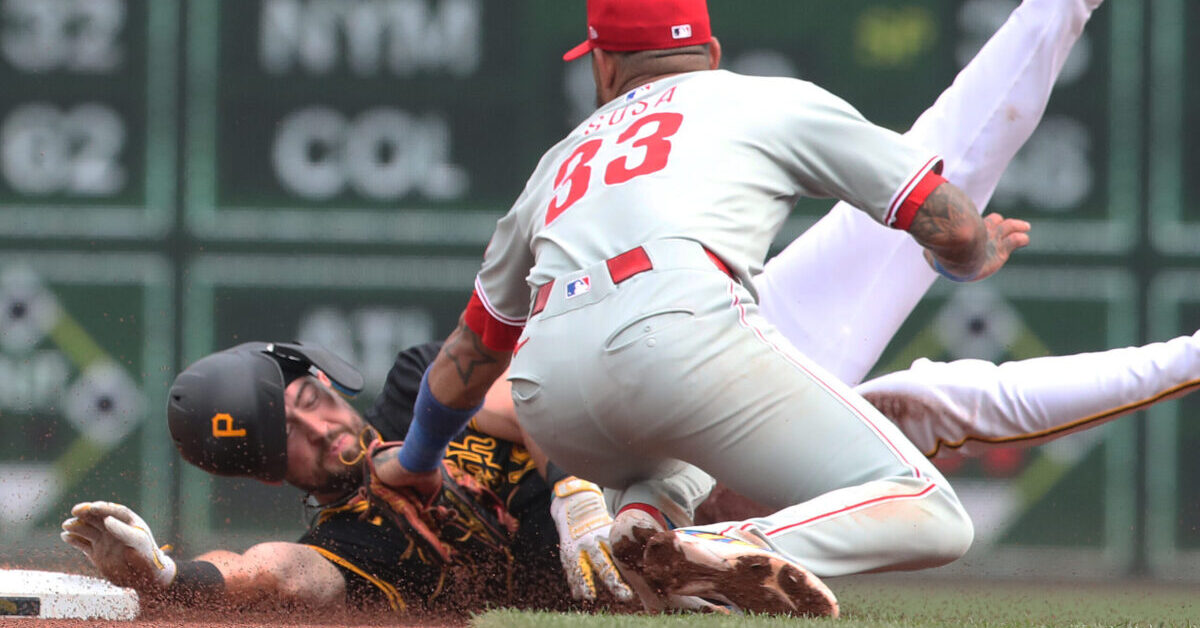
While the NFBC Main Event garners most of the attention, there are a handful of leagues with even larger entry fees ($2.5K to $15K). They are named Elite leagues (previously called High Stakes Leagues), and there are seven of them. With so much money on the line, these fantasy managers try to gain any advantage. Most of the time, these managers will be a week or two ahead of everyone else on their adds. Here are the players and some information on the ones added in five or more leagues. Read the rest of this entry »
For my final article of the preseason, I decided to assign myself the difficult task of identifying my favorite fantasy pick from each Major League team. Some teams have several candidates, while others I have to hold my nose for (cough, cough, the Nats). You’ll see players from throughout the player pool, as my choices aren’t necessarily tied to their market value. They are players I have been targeting and drafting this winter and spring.
Here are the leagues I’m in this season:
22 NFBC Gladiators (roto, 15-team, 23 rounds, no bench)
7 NFBC Draft Champions (roto, 15-team, 50 rounds, draft and hold)
4 NFBC Online Champions (roto, 12-team, 30 rounds, with FAAB)
2 NFBC Main Events (roto, 15-team, 30 rounds, with FAAB)
SCARF (EARTH industry league on NFBC; same setup as the Main Event)
TGFBI (Justin Mason’s industry league on NFBC, same setup as the Main Event)
FSGA Experts Champions League (14-team roto, partnered with colleague Joe Orrico)
Tout Wars (roto, OBP instead of AVG, 15-team, draft and hold)
Yes, I love helping people win at fantasy baseball, but I also love to play it. You might think I’m crazy, but please note that only nine of them are FAAB leagues. The Gladiator is a hybrid best ball format where I don’t even have to set the lineups. I won’t even mention the 100+ best ball leagues I’m in on other sites. Again, no management is necessary – just draft and hope for production and good health luck.
Let’s get into it. Listed with each player is their current NFBC Online Championship and Yahoo average draft positions.
Toronto Blue Jays – Kazuma Okamoto, 1B/3B (NFBC: 196, Yahoo: 166)
Many older players from overseas have a difficult time adjusting to the Major Leagues. If spring training is any indication, Okamoto seems to be adjusting just fine (.316/.435/.632). He’s going to be an integral part of this offense. Oh, and Sporer loves him, too. Honorable mentions to Daulton Varsho (30+ homers if he stays healthy) and Cody Ponce 폰세, though his ADP has leaped over 100 spots over the last month.
I strongly believe that Anthony is a future Hall of Famer and that he will be a top 20 hitter in his first full season as the leadoff hitter for a strong Red Sox offense. Many fantasy analysts and managers believe that 2026 is the Year of the Breakout for Wilyer Abreu and Ceddanne Rafaela. Now imagine if Jarren Duran produces like it’s 2024, Trevor Story avoids fluky injuries, and Willson Contreras exceeds 600 plate appearances for the first time. That’s a lot of “ifs”, but with that pitching staff depth and bullpen, this could be a magical season in Fenway.
New York Yankees – José Caballero, 2B/3B/SS/OF (196, 189)
Most of the Yankees are fairly priced, but fully priced. The New York Fantasy Tax is a real thing – everyone knows proud New Yorkers get their guys. Caballero is a swipes maestro who has been working hard to improve as a hitter this offseason, and is eligible at almost every fantasy position. He’s a great hitter to bring into your lineup when someone in your starting lineup suffers a midweek injury or you need some stolen bases. An honorable mention to Carlos Rodón, who is one of my favorite mid-to-late-round stashes, and is on track to return well before Gerrit Cole.
BaltimoreOrioles – Five-Way Tie
My rule of thumb for 2026 drafts, if you have any remaining: when in doubt, draft the Orioles hitter. In AL Bold Predictions on FTN, I prognosticate that the Orioles will be the fourth team in history to hit 300 home runs. I have a Gunnar Henderson–Pete Alonso 1-2 punch on several teams, and would happily do it again. Colton Cowser, Trevor Rogers, and Shane Baz are the other three O’s I’ve been targeting. Well, I guess I like their pitching too (just not their horrendous bullpen).
Cream rises to the top in real life, and often does in fantasy as well. After a rocky rookie season in 2021 (6.37 ERA in 82 innings, mostly as a starter), Jax has slowly turned into one of the best relievers in the game. Over the last two seasons, only two qualified relievers have a higher swinging-strike rate than Jax’s 18.3% – Josh Hader (20.8%) and Mason Miller (20.3%). With Edwin Uceta ailing and Garrett Cleavinger a lefty, it’s only a matter of time for Kevin Cash to let Jax run with the closer’s job, similar to Pete Fairbanks last year.
Not a team loaded with fantasy goodness, but DeLauter stands out. A healthy DeLauter is a fantasy pick with massive upside, though his price has been steadily rising – out of the 300s and up several rounds, due to a hot spring. Parker Messick is a strong end-game target, though I haven’t been able to land many shares. I wouldn’t be shocked if he out-earns last season’s Major League walks leader, Gavin Williams.
Detroit Tigers – N/A
No offense to Tiger fans, but they are not a very exciting group from a fantasy perspective. Of course, that doesn’t mean that managers won’t be able to squeeze out some fantasy profit from some of these players. Tarik Skubal is the best pitcher in baseball. I have not often been in a position to draft him – and when I have, I usually target the elite first-round hitter. Sadly, I have no Skubal shares. The move to Detroit is a great one for Framber Valdez, on paper, but I don’t have great vibes on him this season. Jack Flaherty can be spectacular in one start, and serve up a half-dozen earned runs in the next – I can’t stomach that volatility. Top prospect Kevin McGonigle made the team and will be an exciting player. This is one I likely missed the boat on – especially recently, as his price continues to soar. The best bangs for the buck are Dillon Dingler and Gleyber Torres, with ADPs in the mid-200s.
I highlighted Vinnie P in my bold predictions article earlier this month, noting that smashing 40 dingers may not be quite so bold. Kauffman Stadium’s outfield fences are moving in being lowered, which should bode well for most of their hitters. In fact, there are quite a few 30+ HR candidates on the squad. Their pitching staff is solid, and the bullpen has been upgraded from last season. The Royals are my pick to win the AL Central.
Would you believe me if I told you that the White Sox player with the highest ADP this season is their new closer who has never been a closer for a full season and posted a 13.8% walk rate last season? I have a couple of Seranthony Domínguez shares, but I don’t feel great about it. I do feel good about a late-round Austin Hays, who should be an everyday hitter and respectable producer in the middle of their lineup.
Wallner is an elite power hitter with some past oblique issues. But Wallner is only focused on the future, which involves soaking those obliques before sleep, and then smashing some baseballs. Wallner and his 16% barrel rate can produce a 30-HR, 85-RBI season as an everyday player for the Twins. Management doesn’t intend to platoon him at this time. Mick Abel has been flying up draft boards, but alas, I have not been able to sneak a share yet. Josh Bell has been a bargain all season (ADP 370), and it’s almost criminal to not click on his name in a draft where you need a CI with power.
There are so many A’s to choose from. We’re expecting the world from the likes of Nick Kurtz, Brent Rooker, Tyler Soderstrom, Shea Langeliers, and even Lawrence Butler and his 94.3% healed knees. This is the type of offense that will keep opposing pitchers awake the night before the game, and give them nightmares in their sleep after the game. Wilson will play his part in disrupting Circadian rhythms as a potential .320-80-17-70-13 bat this season. The AL Batting Title goes through Mr. Wilson this year.
The former Pittsburgh Pirates’ prospect will find himself comfortable down in the Lone Star state. Thankfully, he won’t have to be the lone star in the rotation with ace Hunter Brown there. Some of us were witness to his official breakout, which occurred after the last All-Star break where Burrows produced a 3.27 ERA (3.19 FIP), 1.07 WHIP, 25.1% K, and a 6.4% BB in 10 starts and two multi-relief, piggyback spots. Burrows will make his official Astros debut on Friday against the Angels, as the pitcher slated second in his rotation.
We don’t only need stars to win fantasy baseball leagues, we need support roles as well. In this loaded lineup of stars, Donovan shall be the table-setter; the elite contact rate guy who provides above-average production, just not with a barrage of homers or bag thefts. “Better in real baseball” is what they say about Donovan. I wonder what they’ll be saying this October when the leadoff man scores triple-digit runs and establishes himself as the glue of this offense. Only time will tell and I’ll be ready to listen to the audio book on my long drive to Thanksgiving dinner.
We need to set some thresholds for the Driveline guys, but keep it simple. Can we measure it simply? Like, if O’Hoppe hits 30 home runs, then it’s one point for Driveline, or something like that. For drafters in one-catcher leagues who are light in roto power categories and need to fill their catcher slot before the draft ends might be thrilled with the big bopper, who I am certain has another level of production marinating and ready to be served up in 2026. Wait, we forgot to cook! O’Hoppe will do just that with elite framework for those called third strikes. It’s rumored that LOH knows the ABS blind spot.
Wyatt Langford and Corey Seager need each other. If one is hurt for a prolonged period, the other likely won’t earn or exceed their fantasy value. Both have been big targets, but the Langford price has skyrocketed with his red-hot spring, up to 33 in 12-team NFBC leagues. We saw glimpses of Leiter’s potential and dominance in his first full season and all said, “if only he could cut down on the free passes.” He’s been doing just that in the spring. If he could pull a Pivetta and dip that walk rate down to the 8-9% range, we’ll be laughing all the way to the roto bank.
This was a tough one because this team is loaded with fantasy goodness. Robert Jr. is one of my highest rostered hitters. He’s had a rough few years filled with losing, multiple managers, and myriad of injuries. This is his fresh start. He’s an above average base-stealer, an excellent defender, and likely did not hit 38 homers in 2023 by accident. Devin Williams, Bo Bichette, Freddy Peralta, Francisco Alvarez, Jorge Polanco, and Marcus Semien are other Mets I’ve frequently targeted in drafts. It’s an offense we want to invest in, and they may very well break the curse in 2026.
Acuña produced the best roto season in history (2023) before Shohei Ohtani topped him the following season. With the Braves offensive band healthy and back together, sparks (and balls) should fly. The big issue, of course, is the pitching rotation. Their current “IL staff” with Spencer Strider and Spencer Schwellenbach looks better than the quintet the Braves are rolling out there to begin the 2026 season. I’ve drafted Acuña over Juan Soto at the 4-spot quite frequently this draft season, and even took him over Bobby Witt Jr. at the 1.03 in my latest draft. Austin Riley and Matt Olson have been targets as well.
I’ve had one rule with starting pitchers this winter: don’t leave a draft without a Phillies or Mariners arm. This was a nasty trio last season. Per our Player Rater, Sánchez was the overall SP6, Wheeler the SP14, and Luzardo the SP30. Luzardo’s value was slightly weighed down by his ratios (3.96, 1.22), though he ranked fifth in the Majors in strikeouts with 216.
Though I have a few shares of Jakob Marsee, my favorite Marlins’ target has been Meyer. He only threw seven innings in spring, but they were filthy. He struck out 12, walked one, and did not allow an earned run. Meyer is incredibly talented, but has dealt with his fair share of injuries over the last few years. The key is that he is healthy now. Drafters have taken notice as his ADP has risen over 100 spots (to 257 in OCs) over the last two months.
Washington Nationals – N/A
My only true Nats’ target this winter was Harry Ford, who will undoubtedly crush in Triple-A while Keibert Ruiz keeps his job warm for him. It’s difficult to invest in a third-round James Wood, regardless of the obvious power and upside. His 221 strikeouts in 2025 were the third most ever, behind Mark Reynolds (223 in 2009) and Adam Dunn (222 in 2012). Top prospect Dylan Crews was just optioned to Triple-A, and CJ Abrams might need a chaperone for the evenings before road games, so he can be fully rested for a game of professional baseball. Don’t get me started on the pitchers and their closer committee, led by Clayton Beeter and his 17.3% walk rate last season. Though he’s moving in the right direction this spring (11.5% walk rate, yippee!) Though we all know that anything is possible in the Year of Our (Brad) Lord.
There’s something in the pitching water in Milwaukee, and we all want a taste. Woodruff was an early-draft-season target and Sproat more recently, since being traded to the Brewers. Let’s hope Woodruff can stay healthy and that Sproat can deliver on the promise and hype from his days as a New York Mets’ prospect.
I don’t always target an early second baseman this draft season, but when I do, it’s usually Hoerner around his ADP. It takes the proper power-heavy build through the first few rounds – one where Hoerner is the perfect complement with his assistance in three categories – batting average, runs, and stolen bases.
His price rose, and then it dropped. Now it’s reasonable, especially with us all aware of the Pirates’ front office’s tendencies of being cheap, maximizing service time, and keeping their top prospects down. Griffin is going to make an impact in the big leagues as soon as he is promoted, which I expect to happen sometime in early May. He is one of the few hitters worth stashing on shallow benches, especially if he is available in your last-minute drafts after 200 ADP.
He was a star at UCLA, and a budding star in his rookie season with the Reds in 2023, though his .290 average was clearly inflated by an irregularly high BABIP of .385. He was mostly a bust as a top 100 pick last season, and was hovering in the 180-200 ADP range for most of the winter. Fast forward to this spring where he has been the hottest hitter on the planet (.529/.571/1.020), and suddenly his NFBC ADP is closer to 100. Folks who invested early are pleased. He will go through prolonged slumps and strike out a ton, but has massive upside and potential to out-earn even his current draft cost.
St. Louis Cardinals – Iván Herrera, UT/C (182, 167)
Herrera was an unassuming, slap-hitter in the minors, who gradually improved his power metrics every season since. Last year was the breakout, as he hit .284 with 19 dingers, flexing above-average power (91.2 EV, 11% BRL, 47.4% HH). Health is the biggest question mark, and the one risk with drafting him. I haven’t landed him in drafts as much as I would have liked – he’s my ultimate FOMO guy. Herrera should earn catcher eligibility sometime in late April or early May.
Walker has flown under the radar for most of draft season because there hasn’t been much written about the Giants’ bullpen. His draft cost has been affordable because he wasn’t very good in his first full season as their closer. There isn’t much competition for the ninth-inning gig in San Francisco, and Walker has had a strong spring. Jung Hoo Lee is one of my “one year early” guys – my most rostered hitter last season. Moving back to his original position in the KBO (right field) should make him more comfortable. He won’t wow in any particular category, though he’s a sneaky candidate to hit over .300 this season.
I love Mason Miller as much as anyone, but I’ve haven’t been comfortable drafting him at his second-round ADP, outside of Gladiator contests back in December. King has been my favorite Padres’ target as a 10-round SP3 in 15-team leagues with the potential to help anchor my staff’s ERA and strikeout categories.
Hello, my name is Vlad Sedler – President of the Jordan Lawlar Fan Club. We all have our biases, and Lawlar is one of my biggest. He’s a former top prospect with the potential for five-category contribution and will gain outfield eligibility soon. The knock on him can’t be ignored – the kid has not been able to stay healthy. If he does though, it’s Profit Central.
The only Rockies player in the top 100 ADP is Hunter Goodman. If we scroll down a few rounds, the next man up is Brenton Doyle, who has been reasonably priced all draft season in the 160-200 ADP range. Doyle broke out in 2024 (82 R, 23 HR, 72 RBI, 30 SB), then had a rough follow-up in 2025 as he dealt with a family tragedy early in the season. He looked good after the All-Star break, hitting .282 with 8 HR and 9 SB in 56 games (207 PA), and has had a strong spring.
Saving my home team for last, we all know the fantasy juggernaut that the Dodgers are, though many of them are expensive – six of their players have average draft positions in the top 70. I do believe in a Mookie Betts bounce-back, though I usually target pitchers in his draft range and also usually have a shortstop by the time he’s a draft consideration around his ADP. I have more shares of Roki Sasaki than probably anyone in the NFBC, most from December and January non-FAAB leagues. I can be stubborn, but must also be realistic: he appears broken and unconfident, and may need a stint in the minors to help him. As for my top Dodgers target, that’s newcomer Kyle Tucker, who I believe will stay healthy, hit at least 30 home runs and make a run for the NL RBI crown.
Hope you’ve enjoyed my preseason content, and I look forward to serving you with good advice during the season. Opening Day is almost here, so let’s Play Ball!
“It’s been seven hours and fifteen days / since you took my drafts awayyyy”
Sinead O’Connor may not be a roto savant, but even she might agree that the best part of the fantasy baseball season is research-and-draft season. Every day, from February until Opening Day, is so incredibly thrilling – nonstop spring training news, draft rankings adjustments, and player pool deep-dives – there’s always some rabbit hole of research to go down. As we continue studying and gaining confidence in the fresh player pool and a new year’s ADP, more questions arise, and the more work there is to be done.
Whether in NFBC or best ball contests, high-volume early drafters subconsciously form bad habits in draft rooms. We get too comfortable targeting and drafting the same players over and over. Conversely, we avoid players who have burned us in previous seasons and those we have some subjective bias against. Rarely do we deep dive and reassess those players because we’ve already made up our minds. That’s why it’s crucial to explore every nook and cranny of a positional tier. We have all fallen victim to draft room paralysis, where a decision between several similarly ranked shortstops or starting pitchers becomes gut-wrenching when we’re on the clock. This preseason column aims to help with those tough calls. We will explore some of the most confusing ADP clusters, by position, beyond the simple “I need to boost my batting average, so I’m taking this guy.”
Let’s dive into these ADP pockets logically and systematically, reviewing four analytical components of the players within each cluster. Since this specific article’s topic is starting pitchers, the components have been slightly adjusted:
Health and Durability
Skills: Arsenal, Stuff, Velocity, Command, Control
Roto Ratio Expectations (ERA, WHIP)
Team Context: Defense, Bullpen, Run Support (Wins)
ADP Cluster: Round 16 Upside Starting Pitchers
These are starting pitchers drafted in Round 16 (ADP 180-192) in the NFBC Online Championship (OC) over the last four days (20 drafts).
All in this cluster were highly touted prospects who offer massive fantasy profit potential this season. Horton, McClanahan, and Baz were all real-life former first round draft picks. Bubic and Bibee were top pitching prospects in their respective organizations at one time. Would we be surprised if one or two of them ended up as a top 10 SP in 2026? This is the range Bryan Woo (SP4) was drafted from last spring.
Health and Durability
McClanahan turns 29 next month, and Bubic will be 29 this summer. Bibee just turned 27, Baz turns 27 in June, and Horton will be 25 in August. Bubic and McClanahan are both southpaws.
Kris Bubic was drafted in 2018, made 10 starts in his rookie season (2020), then averaged 130 innings per season from 2021-2022, mostly as a starter with an ERA over 5.00. He had Tommy John surgery early in the 2023 season, and returned late in 2024, missing the majority of both seasons. Previously a starter, Bubic was a dominant reliever in the final two months of 2024, then officially broke out in 2025 (2.55 ERA, 1.18 WHIP in 20 starts) before getting shut down in late July for a left rotator cuff strain. Bubic is healthy heading into the 2026 season. This spring, he has allowed just one run with three walks and 10 strikeouts over three abbreviated starts (eight innings).
Cade Horton has an extensive and serious injury history. He tore his UCL before his freshman year at the University of Oklahoma in 2021. His 2024 season was lost due to a right shoulder strain that May and he did not pitch again until the winter. Last season, he dealt with finger blisters, fractured his right rib by (cough) coughing, and was shut down before the playoffs. Horton’s 118 innings last season was his first time over 90 ever. This spring, he tossed two scoreless innings in his first appearance (February 24), served up six runs and two walks in 3.2 IP on March 9, and struck out 10 with just one run and one walk in latest start earlier this week.
Shane McClanahan last pitched in the Majors in 2023. He missed his freshman year of college recovering from TJS (2016), missed 17 days with back tightness in July of 2023, and had his second TJS in August of that same year. In his final ramp-up start of camp last March, McClanahan suffered a nerve injury in his triceps, and had surgery on it in August. His fastball velocity in Sunday’s exhibition start (94.8 mph) was down (from his previous 97), but he looked dominant, punching out seven Pirates and didn’t allow a hit in 3.2 innings.
Shane Baz has spent more time dealing with or recovering from right elbow troubles than pitching, since being drafted in 2017. He underwent arthroscopic elbow surgery in March of 2022, returned in June, and went back on the 60-day IL the following month. In late September of 2022, he underwent Tommy John surgery. Baz missed all of 2023, and returned in May of 2024. He made 10 starts in Triple-A and 14 for the Rays. Last season, he managed to stay healthy, throwing 166.1 innings over 31 starts.
Tanner Bibee has had the least amount of arm troubles of the bunch. His only IL stint in three Major League seasons was in his rookie year (2023), missing 15 days with right hip inflammation. Bibee dealt with some shoulder tightness in 2024, and has had to leave starts early with severe leg cramps a few times in the last two seasons – an issue that has plagued him since his college days. Bibee has averaged 166 innings per season over the last three, while Baz, McClanahan, and Bubic have averaged 174.1 innings combined over that same span.
If there’s a cluster we don’t need to see health grades for, it’s this one. But if you’re curious, here they are, courtesy of Jeff Zimmerman, from Eno Sarris’ article at The Athletic. McClanahan does not have a health grade listed.
Tanner Bibee – 96%
Cade Horton – 83%
Shane Baz – 74%
Kris Bubic – 72%
Skills: Arsenal, Stuff, Velocity, Command, Control
Roto Ratio Expectations (ERA, WHIP)
With much of this group missing significant time over the last few seasons, it is difficult to compare recent results. I’ll combine skills and ratio expectations into one section here. For this cluster, I’m using ATC’s projections, since it is an aggregate model. Included in the table below are the pitchers’ current ADP and their ADP from February, over 66 NFBC OC drafts.
Upside SP Cluster: NFBC ADP & ATC Projections
Name
Team
ADP (current)
ADP (February)
IP
ERA
WHIP
K%
BB%
Stuff+
Kris Bubic
Royals
188.7
202.6
137
3.75
1.24
23.2%
7.8%
96
Cade Horton
Cubs
189.2
189.1
128
3.91
1.22
20.6%
7.5%
96
Shane McClanahan
Rays
190.2
208.5
114
3.68
1.18
26%
7.4%
N/A
Shane Baz
Orioles
191.5
196.4
155
4.15
1.25
23.5%
8%
104
Tanner Bibee
Guardians
192
187.5
174
3.98
1.22
22.5%
7.1%
98
Bubic is a lefty who utilized a four-pitch mix last season (four-seam fastball, changeup, sweeper, slider), and occasionally threw a sinker. His four primary pitches were all plus offerings, though he doesn’t overpower opposing hitters (92.1 mph FB). Bubic produced a 24.4% strikeout rate and a 8.2% walk rate in his 20 starts – rates in line with his projections for 2026. He is more likely to produce a sub-4.00 ERA than a sub 1.20 WHIP. He allowed only six home runs in 116.1 innings (0.46 HR/9), a feat that would be difficult to repeat in a similar number of innings, particularly with Kansas City moving fences in.
Usually, a 1.4 differential between one’s ERA (2.67) and xFIP (4.27) in the prior season would push fantasy analysts and managers away and bucket a pitcher into the “lucky and due to regress” category. That’s not the case with Horton, who has held steadfastly with a 189 ADP since early February. His underlying metrics against lefties and righties were similar, though the one standout split was BABIP (.291 vs. LHHs, .219 vs. RHHs). He utilized his sweeper primary on righties (.171 BAA, 25.7% K), and his changeup more frequently against lefties (.115 BAA, 32.8% K). Horton averaged nearly 97 mph on his four-seam fastball. He was incredible at Wrigley Field (1.63 ERA, .251 wOBA). He generated league-average swings and misses (11% SwStr), but that mark hovered in the 14-15% range in the minors. Expect some improvement there closer to the 12-13% range in 2026.
Shane Baz has a similar ADP as last draft season. What has kept his ADP stable? Probably his poor ERA (4.87) in 2025, and slight market concern about making half of his starts in Oriole Park instead of Tropicana Field. That ERA was a nearly a full run higher than his xFIP (3.88) and SIERA (3.95), with the majority of the damage occurring at hitter-friendly George Steinbrenner Field (5.90 ERA, .355 wOBA), while posting respectable rates on the road (3.86, .303). He unloaded his four-seamer at a 44% clip close to evenly against righties and lefties with an average velocity of 97 mph. Baz did not fare well with a new cutter last season (.412 wOBA, 16% K), but he mastered his knuckle curve with a sharp downward bite that punched batters out at a rate of 35.2%. Baz developed a two-seam fastball in the offseason.
Tanner Bibee is the least “electric” of the group and has lost quite a bit of market confidence after a disappointing season (4.24 ERA, 1.23 WHIP) where draft helium took him as high as the fourth round of 15-team NFBC leagues last March. Going into last draft season, he was labeled as a dependable SP2 after an impressive first two years in the majors with a high strikeout rate (25.5%), low walk rate (6.6%), and one of only seven qualified pitchers between 2023 and 2024 with an ERA of 3.25 or lower. In 2025, Bibee greatly reduced his FB usage (from 43% to 28%), but that offering was still frequently mashed (47% hard-hit, .372 wOBA). He served up dingers at a higher rate (1.33 HR/9) than the past two seasons (.97) despite a six percent decrease in fly balls.
McClanahan last threw a regular season pitch in August of 2023 and is anxiously awaiting that first start in nearly three years. In his 74 career starts, McClanahan sports a 3.02 ERA (3.15 xFIP), a 1.10 WHIP, 28% strikeout rate and 7.1% walk rate. He will be under a strict innings limit this season, with a target of around 150. He is expected to make his Major League return in the Rays’ fifth game, which will be March 31 in Milwaukee.
Team Context: Defense, Bullpen, Run Support (Wins)
The Cubs defense is projected as one of the best in 2026, which is great for Horton. The Guardians (for Bibee) are expected to be strong defensively, and Progressive Field is an offense-suppressing environment.
The Rays moving back to their pitcher-friendly home stadium doesn’t move the needle much for McClanahan’s market price. If he’s on his A-game, where he pitches doesn’t matter.
Oriole Park at Camden Yards has been tougher on pitchers since they moved the walls in before last season. The HR Park Factor there last season was 121, second highest behind Dodger Stadium (137). Baz won’t stand a chance holding his HR/9 below 1.00, but can still produce a 4.00 ERA and at least a strikeout per inning. The O’s boast a powerhouse offense and should provide ample run support.
The walls moving in Kauffman Stadium shouldn’t impact Bubic’s HR rate as much as someone like his ace rotation-mate, Cole Ragans, but it might be too much to ask for a repeat of Bubic’s masterful, partial season. The Royals’ infield defense on the left side is bolstered by Bobby Witt Jr. and Maikel Garcia, but is questionable at the keystone with Jonathan India expected to move back there full time.
It is difficult to assess these bullpens and how they might move the needle on our valuations of starting pitchers in this cluster. The bullpen I’m most confident in is Kansas City’s. They added Matt Strahm in the offseason, hope to have a full season from Lucas Erceg, and have several other effective arms: lefties Daniel Lynch IV and veteran Bailey Falter, and righties John Schreiber, Nick Mears and possibly a new and improved Alex Lange. The Orioles’ bullpen is scary and include a couple of names even I’ve never heard of.
Recommendation (with target grade)
Talent-wise, this cluster of pitchers is an A-, but if we’re collectively grading them with durability in mind, the grade drops down to a solid B.
Cade Horton (B) is the pitcher who’s risen up my personal rankings the most since November. The more I dig in, the more I want to target him in drafts.
Tanner Bibee (B-) is the most stable of the group, but with the lowest upside. Sometimes that’s a good thing in fantasy.
I’d love to see Shane McClanahan (B-) bounce all the way back. My main issue with him is his recent draft helium, which may soar into the top 120 overall with another solid spring outing.
Kris Bubic (B+) and Shane Baz (A-) are my two favorite targets in this group. The ride might be bumpy with Baz, but I believe 2026 will be his breakout season.
“Don’t it always seem to go, you don’t know what you got ‘til it’s gone.”
Joni Mitchell may not be a roto savant, but even she might agree that the best part of the fantasy baseball season is research-and-draft season. Every day, from February until Opening Day, is so incredibly thrilling – nonstop spring training news, draft rankings adjustments, and player pool deep-dives – there’s always some rabbit hole of research to go down. As we continue studying and gaining confidence in the fresh player pool and a new year’s ADP, more questions arise, and the more work there is to be done.
Whether in NFBC or best ball contests, high-volume early drafters subconsciously form bad habits in draft rooms. We get too comfortable targeting and drafting the same players over and over. Conversely, we avoid players who have burned us in previous seasons and those we have some subjective bias against. Rarely do we deep dive and reassess those players because we’ve already made up our minds. That’s why it’s crucial to explore every nook and cranny of a positional tier. We have all fallen victim to draft room paralysis, where a decision between several similarly ranked shortstops or starting pitchers becomes gut-wrenching when we’re on the clock. This preseason column aims to help with those tough calls. We will explore some of the most confusing ADP clusters, by position, beyond the simple “I need to boost my batting average, so I’m taking this guy.”
Let’s dive into these ADP pockets logically and systematically, reviewing four analytical components of the players within each cluster.
Playing Time (and Role)
Health/Durability
Skills/Categorical Contributions
Context of Team Offense
ADP Cluster: Post-300 Outfielders
ADP from 17 NFBC 12-team Online Championships (OC) drafts over the last five days (March 12 – March 16)
These outfielders are drafted in the Rounds 25-26 of OCs, typically as an OF5. For shallower 12-teamers with 23-25 rounds, some of these hitters may be early-season waiver targets. Carson Benge is the only one here without major league experience. Jasson Dominguez is rumored to start the season in the minors. Cam Smith, Matt Wallner, Cedric Mullins and Jung Hoo Lee are projected as everyday starters in their respective lineups. Domínguez, Smith, Wallner, and Mullins were all utilized as part of a platoon for parts of the 2025 season.
Playing Time (and Role)
For Jasson Domínguez, it’s a matter of when, not if. The former heralded prospect and top 150 ADP selection from 2025 has seen his 2026 draft stock fall over the last couple of months with expectations of starting the season in Triple-A. After all, the Yankees re-signed Cody Bellinger and Trent Grisham, Giancarlo Stanton (the DH) is healthy (for now) and the great Aaron Judge mans right field. Manager Aaron Boone wants Domínguez to be playing every day, but that opportunity doesn’t yet present itself in the majors. Boone’s problem though is that Domínguez has been forcing his hand with exceptional production in spring training – .371/.395/.686, 3 HR, 10 RBI, 3 SB, 170 wRC+ in 38 plate appearances. Domínguez had a decent rookie season (.257/.331/.388, 58 R, 23-of-27 SB in 429 PA), but his playing time was reduced down the stretch and he essentially didn’t play in the playoffs.
For the last couple of months, RosterResource projected Cam Smith as a short side platoon outfielder. That designation has been shifted to full-time right fielder batting eighth on Opening Day. His RosterResource batting order projection will certainly influence his market price these next couple of weeks. What is more important for drafters is to solidify whether they’re buying or fading based on his profile, not projected playing time, because the latter could fluctuate all season like it did in his rookie year. Smith hit lefties better (130 wRC+, .191 ISO) than he did righties (75, .098), but the sample is a small one and not predictive. Jake Myers will be play centerfield, and the other two spots will be split between Smith and lefty bats Joey Loperfido (welcome back to Houston!) and Zach Cole. Smith played 132 games in right field last season.
Matt Wallner can absolutely mash and he may earn the opportunity for full-time at-bats in the context of a weaker lineup that needs him. In 97 plate appearances against lefties last season, Wallner actually had a higher wRC+ (118) than he did against righties (113 in 295 PA) as well as a similar ISO (.247 vs. RHP, .267 vs. LHP). So far this spring, he is hitting .294 with two homers, a stolen base, and a 14.6% walk rate, through 41 plate appearances.
Cedric Mullins signed with the Rays in December in what will the first Opening Day in his career that he doesn’t don an Orioles uniform. A left-handed hitter, Mullins has avoided being platooned for most of his career, but experienced a little bit of it the last two seasons. We expect the Rays to include him in their lineup against both lefties and righties, though if he struggles, this outfield room is loaded with alternatives, including recently acquired rookie prospect, Jacob Melton. Mullins is 31 and has never been an elite defender in center, posting negative UZR’s in all but one season. Mullins dealt with a back flare-up a couple of weeks ago, but appears healthy now. Through his first nine spring games, Mullins has two homers and a swipe.
Carson Benge is the sweet-swinging, lefty-batting, first-round selection of the Mets in the 2024 draft. He is having a strong camp (.367/.406/.433) and is projected to crack the Opening Day roster. Though he will likely begin the year on the strong side of a right field platoon with slick defender, Tyrone Taylor.
Jung Hoo Lee was a KBO star who signed a 6-year ($18.8M AAV) deal with the Giants two years ago, missed most of the 2024 season with injury, and produced mediocre results in 2025. Lee played 147 of 149 games in centerfield last season, but is being moved back to his original position from his KBO days (right field), primarily because of the offseason acquisition of Harrison Bader. Lee was a better hitter against righties (118 wRC+) than lefties (77) last season, though new manager Tony Vitello will likely start him every game. If Lee happens to stumble against lefties around a time when Luis Matos or Jerar Encarnacion heat up, it’s possible for Lee to fall into a platoon, but I wouldn’t bet on it.
Health/Durability
None of the outfielders in this cluster have current injuries to worry about, but most of them have had their fair share of injuries over the years.
Cedric Mullins – The oldest of this group (31), Mullins has had a few lower-body related injury stints over the last few seasons. He missed time with a right hamstring strain last spring and missed over a month with a right groin strain in May of 2023.
Jasson Domínguez – He tore his UCL at the end of the 2023 minor-league season and had Tommy John surgery. He suffered a left oblique strain in the summer of 2024 and missed a couple of games (no IL stint) in June of 2025 with a left thumb contusion.
Jung Hoo Lee – He remained relatively health in his South Korea days, though he broke his ankle and missed half the 2023 season. The following year, his first in the Majors, he dislocated his shoulder crashing into an outfield wall in mid-May and underwent season-ending surgery. He tweaked his ankle in the WBC last week, but it turned out to be a minor issue.
Matt Wallner – He missed five weeks early last season after suffering a left hamstring strain. He also dealt with oblique strains in each of the past two seasons. Not surprising considering the big dude swings hard and carries a big stick.
Carson Benge missed his first season of college at Oklahoma State after an elbow injury caused him to undergo Tommy John surgery. His injury was pitching-related, and the two-way player shifted his focus to hitting and playing the outfield.
Cam Smith does not have an injury history other than minor nicks and bruises.
The two who I’d slightly ding fantasy value for their health and durability are Mullins and Wallner.
Skills/Categorical Contributions
Matt Wallner is in a class of his own here because of his prolific power. Some slight data manipulation here, but Wallner’s 16.1% barrel rate is tied with Mike Trout’s for seventh in the majors among hitters with at least 900 plate appearances since 2023. The guys ahead of him: Aaron Judge (26.2%), Shohei Ohtani (21.5%), Giancarlo Stanton (19.1%), Kyle Schwarber (17.7%), Juan Soto (17%), and Oneil Cruz (16.2%) – elite company, indeed. Wallner hit 22 home runs in 104 games (392 PA) last season, and has 30+ HR upside if he can stay off the IL. His batting average won’t be helpful, but he may throw in a few stolen bases and is one of the rare late-round boons for fantasy squads that might be power deficient.
Cedric Mullins had that magical 30-30 (HR-SB) season in 2021. In his past four seasons, he has swiped at least 30 bags twice, and has averaged 16.5 home runs. He has been a batting average killer though – .228 since 2023. A fair expectation for Mullins in his first season with the Rays would be 12-15 homers, 25 stolen bases, 100-130 R/RBI (combined) and another season with a sub-.240 average.
Jung Hoo Lee has the highest batting average upside of the cluster. He hit .319 in his first 30 games of 2025, went through a rough three-month stretch from May through July (.218), then hit .306 from August 1 until the end of the season. He is capable of hitting .290+ over a full season. His only positive roto category contribution was runs scored (73 in 150 games). He is a solid floor contributor, but you won’t see many projection models bless him with anything more than 10 HR and 10 SB. His allure lies within his potential batting average contributions.
Jasson Domínguez, Cam Smith, and Carson Benge are the three young, upside guys. All would project for double-digit homers and swipes with 500+ plate appearances. Dominguez’s distribution would lie higher on the SBs, though he is capable of 20-plus homers if he earns consistent playing time. Domínguez sported a 49.6% hard-hit rate and stole 23 bases on 28 attempts in 429 plate appearances last season. Smith and Benge have 20-HR, 15-SB potential though neither is likely to get there in 2026. Benge is certainly intriguing as a toolsy prospect with the eventual possibility of being a five-category contributor. Note that he only has 103 plate appearances at Triple-A and he struggled there (.178/.272/.311) after crushing it with a .300+ AVG and .400+ OBP in 92 games at High-A and Double-A.
Context of Team Offense
The best team context here is Domínguez’s with the Yankees, but that is if he is able to earn consistent playing time. Wallner’s team context is sneaky as a middle of the order power hitter, though his counting category contributions hinge on Byron Buxton, Luke Keaschall and Royce Lewis staying healthy, which may be asking a lot. Based on home parks, divisions and other hitters in the lineup, the other four from this cluster have a neutral context.
Verdict (with value grades, A-F)
Jasson Domínguez (A-) may have been overpriced in the 125-150 ADP range last season, but he is being greatly undervalued this draft season, at half the cost, because of lack of role clarity. Dominguez is pushing to crack the Opening Day roster and deserves it, but it would be better if he got the reps in Triple-A. Make the low-cost investment in Dominguez late in your drafts if your roster doesn’t have a bench stash already, and you believe that his everyday role with the Yankees is simply a matter of when.
Jung Hoo Lee (B+) won’t wow us in any category other than potentially batting average. He has a high floor and could easily outproduce his draft cost with another 600+ plate appearances. Perhaps he surprises us with a bit more than what models are projecting.
Matt Wallner (B+) is the ideal power-boost option towards the end of drafts, specifically for folks whose roster construction feel light on power after 20 rounds. I’m less worried about a platoon split than oblique issues or other ailments resurfacing.
Cam Smith (B) and Carson Benge (B-) have the widest range of potential outcomes. Spending a chunk of the season isn’t off the table for either of them, but less so for Smith. Benge rocked a 81% contact rate, and despite last season’s struggles with consistency at the plate in Triple-A, he is less likely than Smith to tank us in the batting average category. Smith could fall into a platoon with Loperfido or Cole, but this is unlikely to happen for a prolonged time period.
Cedric Mullins (C+) may seem like a sneaky and savvy late-round option due to his HR-SB upside, but Tropicana Field is a downgrade from Oriole Park and his projected batting average is a massive detractor to his overall projected value.
Last weekend, the largest national fantasy baseball contest kicked off – the NFBC Main Event. For those unfamiliar, it’s a 30-round, 15-team, 5×5 roto contest with an $1,800 entry fee. This year, 855 teams will be drafted (57 leagues), and only one person will win the overall grand prize of $200,000. Most of these leagues are drafted online. A dozen or so are drafted in person, in Las Vegas, on the weekend of March 20.
I’ve been to Vegas for the Main Event every year since 2014, except for the COVID-shortened season. It’s an incredible experience filled with camaraderie among diehard fantasy baseball enthusiasts, many of us long-time friends. Many of the attendees are incredibly sharp, skilled managers, though not everyone who enters and attends is a fantasy savant. As math would have it, every league has 12 losers, since only the top three cash. For the most part, and of importance to fantasy baseball managers everywhere, is that Main Event drafters are highly invested and motivated. The draft boards and ADP movement in these leagues is worth looking at closely. We can extract actionable takeaways from such highly invested players that can assist with our roto drafts, no matter the entry fee.
Main Event drafters are human. They can be swayed by spring training production and swept away in ADP helium, a chain reaction of pushing players higher and higher in drafts, far beyond their November-February market prices. Last March, Main Event helium rose Cristopher Sánchez by several rounds, from a 175 ADP in January to 101 by Vegas, including a min pick of 63. Obviously, that worked out. A similar thing happened with Nick Pivetta, Robbie Ray, Kris Bubic, but also with Will Warren, Hayden Birdsong, and a slew of out-of-nowhere “closers” who bombed – Luke Jackson, Jordan Romano, and Mike Clevinger. And who can forget the rise of red-hot Astros outfielder Cam Smith? We call it helium because it’s literally akin to a balloon taking you up, up, and away – oftentimes directly into the scorching sun.
One interesting nuance of the Main Event: since there is overall prize money on the line as well, and we’re competing against 800+ others, it does not behoove us to punt roto categories – specifically, pitching ones. One adage is always true here: pitching always gets pushed up in the Main Event. Elite ratios (ERA, WHIP) are a scarce commodity; hence, most NFBC managers focus on anchoring their teams with strong pitching to avoid the inevitable blowups when chasing mediocre two-start pitchers in FAAB during the season. With strong planning, execution, and a bit of luck, we can punt saves in our standalone home leagues. This strategy rarely works in the Main Events, where roto categorical balance is vital and where league-mates research incessantly to make competitive bids every FAAB period for 27 weeks. Teams at the top of the Main Event standings last year didn’t win and do well in pitching because they drafted breakouts like Sánchez, Bryan Woo and/or Hunter Brown alone. Many of them used a first or second round pick on Tarik Skubal, Paul Skenes, or Garrett Crochetand drafted Woo and Pivetta, or Brown and Nathan Eovaldi, and picked up Trevor Rogers in-season for pennies on the dollar in May. A decade ago, the fantasy world would scoff at the idea of drafting starting pitchers or closers early. In the Main Event world in recent years, no one has besmirched their fellow competitors for drafting Skubal with the first pick of the draft or the elite, top closer in the second round.
Many of us enjoy digging deep into pitcher profiles and advanced stats at FanGraphs and other sites, hoping to discover prospect pitchers who are ready to break out, or undervalued “sleeper” pitchers the market is currently undervaluing. We want to be first on the next big thing. We want to draft him before others, and if we can’t, sometimes we’ll grab one of those helium balloons and set some min picks.
Biggest SP Risers
With the first five 2026 Main Event drafts in the books, the fresh ADPs are available for all to peruse (select ‘Main Event’ in the dropdown). The original plan for this piece was to compare the last 10 days of NFBC Draft Champions ADP (50 rounds, no FAAB) to these first five Main Event drafts to see who the biggest risers and fallers were at each position. After a quick visit with my good friend XLOOKUP and building out some comparison tables, my focus (and impetus for this piece) was inspired by the massive helium with starting pitchers after 200 ADP. This is where the action was at, with blasts from our past like Kyle Harrison, Taj Bradley, Luis Gil in all his Ricky Vaughn-esque glory, and even the legend himself, Justin Verlander, who is back with the Tigers.
I sorted and discovered the starting pitchers whose Main Event ADP is at least three rounds higher than where it was just last week in the 50-round Draft Champions format. Pitchers in this group have risen exorbitantly over the last week for various reasons: increased spring velocity, introducing an effective new pitch, having a productive (in some cases, dominant) spring, and the increasing likelihood of an Opening Day rotation spot and aspirations of massive profit from a late-round selection.
The table below consists of 25 starting pitchers – mostly from the middle and late rounds – whose ADPs have risen by at least three rounds (45 picks) from early-March DCs to these first five Main Events. I’ve listed ADPs and their pick differences, the number of 15-team rounds increased by, and the percentage increase.
Justin Wrobleski | River Ryan, Los Angeles Dodgers
If a pitcher has a pulse, wears Dodger Blue, and has a shot at the rotation, expect helium to ensue. Blake Snell will likely spend the first month of the season on the injured list. Most drafters don’t trust Roki Sasaki, whose ADP has fallen from the the low 200’s to the mid 300’s over the past two months. Manager Dave Roberts says he will be in the rotation, which means there will be at least one rotation spot open for Wrobleski or Ryan. Both have been solid in spring – Wrobleski has 0 ER, 0 BB, 4 K in 6 IP and Ryan has a 7:3 K:BB with one earned run allowed, also in six innings. Ryan is the more exciting and dynamic pitcher, but both his and Wrobleski’s ADPs remain close to each other until more definitive news is presented. Whoever is officially announced as the guy joining the rotation should see a spike of 100+ draft slots. For our shallower home leagues, these are names to monitor, but not specifically target.
Both are beneficiaries of the Roki Sasaki spring rollercoaster ride. As the market continues to lose market confidence in Sasaki and Blake Snell’s timetable continues to be pushed, Wrobleski and Ryan’s preseason
Mick Abel | Taj Bradley, Minnesota Twins
Both Abel and Bradley had horrific 2025 seasons and were mostly off our radars this draft season. Bradley had success at this level before, with the Rays in 2024, but owns a career 4.86 ERA in 385 innings. Abel was a promising first-round draft pick of the Phillies whose stock plummeted after his rough 39-inning debut last season (6.23, 1.51). Abel has 13 punchouts and no walks allowed in 10 spring innings. Bradley has a 19:5 K:BB with 7 ER in 14 innings. Given Abel’s pedigree, he is likely to rise up ADP at a higher rate than Bradley, depending on how his next spring starts go. Nevertheless, both pitch for a declining Twins team and run support may be tough to come by. Abel and Bradley’s high ADPs in the Main Event are tough pills to swallow and it might be best to not chase either one.
Kyle Harrison | Brandon Sproat, Milwaukee Brewers
With Freddy Peralta traded and Quinn Priester dealing with nerve issues in his wrist and starting the season on the IL, opportunities arise for the Brewers’ newest, talented young arms, Harrison and Sproat. Both are projected to begin the season in the rotation, though Sproat’s inclusion may depend on the health status of Logan Henderson. Harrison’s ADP has ballooned as it gets close to Round 20 of 15-team Main Events. Sproat’s current price is a bit more palatable, though it too will likely rise over the next two weeks. Both are former impact prospects and familiar names. Fantasy managers usually feel comfortable investing in Milwaukee starters, and this does feel like a great opportunity for both Harrison and Sproat. Harrison is a strong end-game target in shallower non-NFBC leagues as well.
Dustin May | Richard Fitts | Matthew Liberatore, St. Louis Cardinals
It really is comical how much preseason baseball influences the market. Two months ago, fantasy analysts (myself included) preached to avoid Cardinals pitchers outright. Fast forward to March, and the helium begins impacting every potential starting pitcher who looks good in the spring. Liberatore had somewhat of a breakout season in 2025, producing respectably in 29 starts, posting an above-average walk rate of 6.2%. May has teased us for years and there is no doubt he will draw many drafters back in. May finally threw more than 60 innings in a season last year (132.1 between two teams), but the results were poor (4.96 ERA, 4.47 SIERA, 1.42 WHIP. The most important thing to monitor with May this spring is his control. He walked batters at a 9.6% clip last year and has three walks in 6.2 innings so far this spring. Fitts is throwing hard (touching 99 mph) and having a nice spring. It’s possible that he beats out Kyle Leahy for the fifth spot, but is more likely to begin the season in Triple-A. Of the three, Liberatore is the one I’d want to target in deeper drafts. For 12-team drafts, stay away from all three.
Grant Holmes | J.R. Ritchie, Atlanta Braves
Traditionally, Atlanta Braves rotations have been a strong source of March helium – AJ Smith-Shawver anyone? With Spencer Schwellenbach and Hurston Waldrep sidelined for a while, opportunities to snag rotation spots have risen. Holmes is all but locked into a spot, especially after a masterful nine-strikeout performance against the Pirates on Thursday. Holmes did not allow a hit in five innings. Holmes boasted a 25% strikeout rate (22 starts, one relief appearance), though his 11% walk rate was a huge issue. Holmes is capable of reducing it to the 9% range, though don’t expect a helpful WHIP from him. As long as Holmes is healthy, he will be in this rotation. His 358 ADP is very reasonable, though it’s certainly going up after that masterful performance. Ritchie is a stud prospect who returned from Tommy John in June of 2024 and had a strong season in the minors in 2025 (140 IP – 2.64 ERA – 1.01 WHIP – 24.8% K – 9.6% BB). Though he is likely to start the year in Triple-A, he is certainly ready to dominate in the Majors. He is one spring injury away from earning a rotation spot before Opening Day. Both Holmes and Ritchie are strong targets in deeper formats and in the Main Event.
Wrapping It Up
There are other intriguing risers like Shane McClanahan, though we must always proceed with caution chasing massive ADP jumps with pitchers like him and Joe Musgrove who are working their way back after long delays. It’s difficult to field competitive fantasy squads if they’re loaded with injury risks and promising prospects. Hey, it’s great that Cade Cavalli is healthy and looks fantastic this spring. But there’s no chance I’m going to chase a Washington Nationals’ starter into the top 250 ADP when there are oodles of viable, safer options in this draft range. For every few risers, there are fallers. Sometimes players fall because we’re too dialed into small spring samples and missing the forest for the trees.
Though some of the best fantasy players around play the NFBC Main Event, we must remember that no one can predict the future. We can still take occasional risks, but they must be calculated and logical ones. Taking a shot on the Braves and Brewers pitchers who have been rising feel like a sharper move than chasing ADP helium on lesser talented starters who aren’t guaranteed rotation spots and play on worse teams. Good starting pitching is a key to success in all roto formats, but chasing helium blindly will often carry our balloon directly into getting burnt. Stay cool out there.
This past season was one of my worst ever. And about halfway through it, the outcome looked worse than the final results. I was able to focus on a few leagues and salvaged my bankroll. Here are some of the lessons I learned. Read the rest of this entry »
While the NFBC Main Event garners most of the attention, there are a handful of leagues with even larger entry fees ($2.5K to $15K). They are named “High Stakes Leagues,” and there are eleven of them. With so much money on the line, these fantasy managers try to gain any advantage. Most of the time, these managers will be a week or two ahead of everyone else on their adds. Here are the players and some information on the ones added in five or more leagues.
Batters
Dylan Beavers (10): A solid target for any fantasy managers needing help with batting average and/or stolen bases. The 24-year-old outfielder may not have elite power, but it’s non-zero with 15 HR last season and 18 so far this year. He has a great eye and consistently posts a .400 OBP. Being on base that much means he has a chance to steal bases (55-grade speed).
Colby Thomas (10): For fantasy teams needing power, Thomas is the long shot. In the minors, he hit 31 HR in 2024 and 18 HR this season. In the majors, he added 3 HR to the total. He’s even added 2 SB.
His downfall is his 43% K% (21% SwStr%) with a .370 BABIP, maintaining his .241 AVG. Pitchers are getting him to swing-and-miss on four-seam fastballs (17% SwStr%) while secondaries are causing additional issues (slider: 26% SwStr%, change: 35% SwStr%). He’s going to have a short career if he can’t hit fastballs.
Paul DeJong (8) and Adam Frazier (7): You know the options are limited when Frazier and DeJong join the most-added lists.
Yoán Moncada (6): Strong-side platoon bat who is batting .237/.328/.373 in the second half. And not hurt … yet.
Daylen Lile (6): The 22-year-old rookie is playing and seems to be breaking out with a .635 OPS in the first half and .784 OPS in the second half. All the gains are BABIP driven (.258 BABIP to .355 BABIP) with his strikeouts up (14% K% to 20% K%) and walks down (6% to 5%).
Miguel Andujar (5): Starting every day in the cleanup spot for a team that plays in a high school-sized field. Solid add.
Evan Carter (5): Carter gets outfield starts with Adolis Garcia on the IL. While he might not be in a platoon, he should be (.309 OPS vRHP in ’25, .262 OPS for his career). He’s not going to be a positive in power or batting average, but he does have 13 SB.
I’ve been dismissive of Carter, but he’s showing some signs of improvement with a career-low strikeout rate (19% K%) and career-high max exit velocity (111 mph).
Miguel Vargas (5): Off the IL and back on fantasy rosters.
Brett Baty (5): Started in eight of the last nine games with a 109 OPS+. It’s tough to determine who is starting at second and third base since Baty is sharing time with Mark Vientos (88 OPS+) and Ronny Mauricio (95 OPS+).
Gabriel Moreno (5): On a rehab assignment and should be joining the major league team soon.
Miguel Rojas (5): One of the few available Dodger options for their four games in Colorado.
Starters
Nolan McLean (11): Deserves all the love after his first start with 8 K and 0 ER over 5 IP. There are a couple of issues. The first is the excessive walks (4.0 BB/9 in the minors, 6.8 BB/9 in the majors). The STUPH models picked up on this, with both giving him below-average overall grades (high Stuff, low command).
Cristian Javier (11): During his rehab, he posted just as many walks as strikeouts (15). Over the first two starts, his 3.38 ERA looks great, but his ERA estimators point to a 4.50 ERA talent. His STUPH grades think he’s worse (4.91 bot ERA).
Monitor his groundball rate. An 18% GB% points to a 1.9 HR/9. He’s not even limiting hard contact (50% HardHit%).
With so few options, he’s worth adding, but closely monitor his production.
Taijuan Walker (6): It’s nearing the point that Walker is going to be an anchor for the postseason rotation.
Yoendrys Gómez (6): After 12 relief appearances, he’s started twice with a 3.60 ERA (4.74 xFIP), 1.00 WHIP, and 9.0 K/9. He’s thrown six different pitches this year that all grade out as average. He needs the large pitch mix to navigate a lineup.
Bryce Elder (5): The career 4.78 ERA “talent” faced the White Sox this week and rewarded his fantasy managers with 8 ER, 9 H, 2 BB, and 3 K in 4 IP. Bryce Elder and his career 4.78 ERA and 1.40 WHIP are never the answer.
Luis Morales (5): Let’s start with two stats: 1.86 ERA and 8.4 K/9. Not bad. Even add in a 3.73 FIP. Then there is the 7.5 BB/9, 1.66 WHIP, 4.67 botERA, and 5.93 xFIP. Just the 1.66 WHIP did as much ratio damage as a 6.46 ERA.
Relievers
Victor Vodnik (6): Fantasy managers with a Rockies closer …
… and after a three Save week …
Bryan Abreu (5): Great reliever who is now the closer on a good team. Added for top dollar in leagues where he was not already rostered.
While the NFBC Main Event garners most of the attention, there are a handful of leagues with even larger entry fees ($2.5K to $15K). They are named “High Stakes Leagues,” and there are eleven of them. With so much money on the line, these fantasy managers try to gain any advantage. Most of the time, these managers will be a week or two ahead of everyone else on their adds. Here are the players and some information on the ones added in five or more leagues.
Batters
Jakob Marsee (11): Added for his playing time (Marlins’ centerfielder) and ability to steal bases (51 SB in ’24, 47 in ’25). An .833 BABIP and 29% BB% makes his current slash line look insane (.500/.647/1.167)
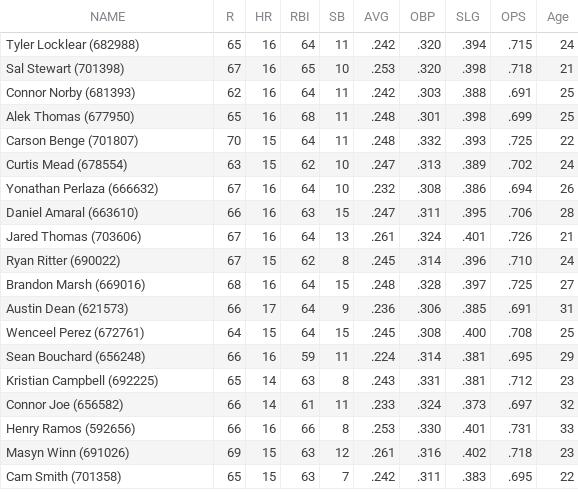
Tyler Locklear (10): I’m not sure Locklear is an improvement over other waiver wire first basemen. Here are his Steamer600 comps.
If a manager is eyeing Curtis Mead, then maybe Locklear should be on their radar.
Eli White (9): The 31-year-old White has six straight starts with Acuna on the IL. White has been a fine injury replacement with 7 HR, 7 SB, and a .254 AVG in 222 PA. I wonder if most of his demand came from his two-homer race track game on Sunday.
Jonny DeLuca (8): For any Ray, dissecting the playing time is the most important factor. DeLuca has started in eight of 11 games since coming off the IL. He sat against three righties (started against five righties).
Over his three major league seasons, he has hit .236/.291/.353 (84 wRC+) with 8 HR and 23 SB in 463 PA. While the stolen bases would be helpful in fantasy, he needs to continue hitting and play every game to become fantasy-relevant.
Blake Perkins (7): The 28-year-old outfielder is in his third major league season. In 656 PA, he has 12 HR and 31 SB with a .235 AVG (similar to DeLuca). A speedster with non-zero power and some contact issues. Since Jackson Chourio got hurt, Perkins started five straight in centerfield.
For a player with his profile, he needs to play all the time to get the required Runs and RBI. Check in on his playing time once Chourio returns.
Joey Loperfido (6): Since being called up, the 26-year-old is batting .389/.436/.542 (.500 BABIP) with 3 HR and 1 SB in 79 PA. I found two changes from last year’s .614 OPS campaign. First, he’s increased his Contact% from 67% to 73%. Second, he cut his swinging-strike rate against sliders from 21% to 11%.
The Jays have noticed and started him in nine of the last 10 games. Over a full season, he projects for 15 HR, 10 SB, and a .240 AVG. Streaming option at best.
Brooks Lee (6): With Correa traded away, Lee has started every game at shortstop. Over a full season, he projects for 15 HR, 6 SB, and a .240 AVG. Almost the same as Loperfido. Another streaming option.
Nolan Gorman (6): Gorman started in five of the last six games as he fills in for Nolan Arenado. Gorman has been a solid source of power (10 HR in 244 PA) but a drag in speed (1 SB) and a .224 AVG. Short-term fill-in.
Daniel Schneemann (6): The 28-year-old middle infielder has been on a hot streak ( .364/.378/.705 , 1 HR, 2 SB) since the break, driven by a .394 BABIP.
Casey Schmitt (6): Starts five games and then sits for one or two. Showing signs of 20 HR power (6 HR in 189 PA). Contact% and avgEV are at career highs. Good real-life hitter.
Warming Bernabel (5): Starting to cool down (in a 2 for 12 stretch), but still has a sexy triple slash line: .400/.415/.775 (.394 BABIP). He’s hacking at everything (1 BB in 41 PA), so pitchers aren’t giving him anything to hit. Regression comes, but when will his talent stabilize?
Abraham Toro (5): Ever since Mayer (wrist) went on the IL, Toro started all 11 games. The 28-year-old is another 15 HR and .250 AVG talent with no upside. A bench streamer at best.
Ty France (5): France went from starting most days in Minnesota to being an unrosterable part-time DH in Toronto.
His results, STUPH, and projections point to a high-4.00 ERA talent with a ratio-killing WHIP. I guess the matchup against Washington is enticing.
Jameson Taillon (6): Injury stash for a pitcher with a 4.44 ERA (4.30 xFIP), 1.11 WHIP, and 7.0 K/9.
Davis Martin (6): Martin’s opponents are decent for the next two weeks (at SEA, vs CLE, at KC). All season-long indicators (projections, STUPH, results) point to him being a low-4.00 ERA talent.
One issue, since coming off the IL (forearm), he’s lacked control with a 5.9 BB/9 and a 39% Ball% (equivalent of 4.2 BB/9). I understand teams need to take a chance, and this is a big one.
Logan Henderson (5): Finally back in the rotation with Misiorowski on the IL. The excitement has quelled a bit on Henderson with K%-BB% in AAA dropping from 25% to 17% between stints. Our two STUPH both think he’s the same pitcher. Maybe he got bored in AAA.
Aaron Civale (5): Since the break, he’s thrown three shutouts with a 10.4 K/9, 1.6 BB/9, and 50% GB% (2.45 xFIP). The obvious improvement is that he’s attacking the strike zone. Before this stretch, he had a 3.8 BB/9. Additionally, he’s upped his curveball (12% SwStr%, highest among his pitches) usage from 17% to 24%.
They point to a league-average pitcher, and that has some fantasy value.
Taj Bradley (5): Now in AAA, hopefully finding where the strikeouts went. Each season, his strikeouts have dropped from 11.1 K/9 to 10.0 K/9 to 7.7 K/9. And this season, he has a career-high 3.6 BB/9. I’m not sure what people are hoping for? He’s never been a league-average pitcher.
Tomoyuki Sugano (5): I’m always interested in why subpar pitchers are added. With Sugano, managers are likely chasing his next two starts (vs ATH, vs SEA). He’s been horrible this season with a 4.42 ERA (4.64 xFIP), 1.32 WHIP, and just a 6.0 K/9. Desperate teams could be better off with a well-placed middle reliever option.
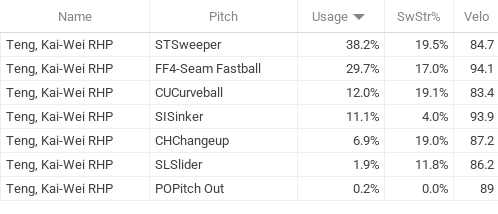
Kai-Wei Teng (5): The 26-year-old righty struggled in his first MLB action this year, allowing 5 ER in 3 IP with 5 K, 3 BB, 1 HBP, and 4 H. His struggles center around walking too many batters. In his combined 14 MLB innings, he has a 6.9 BB/9. His 41% Ball% over that stretch is equivalent to 5.4 BB/9. Here are his last four minor league walk rates.