
Yeah, It’s Another Post About Robbie Ray and BABIP
Robbie Ray is already shaping up to be one of 2017’s most contentious starting pitchers headed into draft day. (This isn’t even my first time writing about him in the last half-year.) His 28-percent strikeout rate (K%) and 3.45 xFIP scream of an elite starter, but his 4.90 ERA and 1.47 WHIP, sustained during more than 170 innings pitched, seem to say otherwise.
Analysts and laymen who have expressed optimism about Ray have done so in regard to his alleged hittability. That 1.47 WHIP didn’t come from nowhere: his .352 batting average on balls in play (BABIP) got him there. You’ll hear a variety of arguments: he struggles on his third time through the zone; he lacks a quality third, or maybe even second, pitch; and so on. I’m not here to argue the validity of those sentiments.
I want to talk exclusively about Ray’s BABIP. Well, his sinker, too. And maybe even his strand rate (LOB%)… But mostly his BABIP. Please, have a seat. I don’t want to fluster you.
Ray’s .352 BABIP in 2016 was the second-worst of the last 15 years. That’s out of 1,281 individual player-seasons posted by qualified starting pitchers. His BABIP was historically bad — strange, you’d think, for a pitcher who has quickly demonstrated a lot of promise. So, I want to approach this whole BABIP thing in a vacuum. Let’s just look at the facts — not even alternative facts, but real facts!

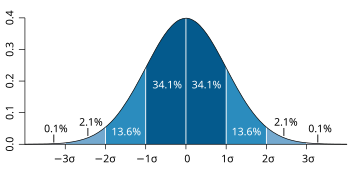
Those 1,281 player-seasons comprise a pretty normal-looking distribution. A .352 BABIP is more than three standard deviations greater than the mean (.290*) and median (also .290, which is good, because that’s what a normal distribution would expect it to be). That Ray would have posted such a troubling BABIP was highly improbable in the first place. It doesn’t necessarily mean he didn’t “earn” a bad BABIP, but it’s a helpful place to start.
*Lower than the league’s .300, as you may have noticed. This is likely the result of two things:
- I simply averaged individual BABIPs (outcomes) rather than aggregating each player’s stats (inputs) prior to calculation, which is a bit of a shortcut but (probably) does not produce a dramatically different result; and
- Selection bias: pitchers who qualify for the ERA title likely are more talented pitchers who simply do a better job of suppressing hitter contact quality (just as the league’s better hitters tend to hit for better-than-average BABIPs).
Somewhat conveniently, a round .330 BABIP represents roughly the two-standard-deviation cutoff for our distribution. It’s a mark met or exceeded only 37 times — 2.9 percent of the time, for those wondering how uncharted this territory is for Ray and Major League Baseball — in the last 15 years. Only two pitchers show up multiple times therein: Kevin Millwood and Rick Porcello. Only Millwood posted consecutive seasons of historically bad BABIPs: .340 in 2007 and .355 (the only mark worse than Ray’s .352 in the entire sample) in 2008. Yet, after Millwood’s 2008 catastrophe, he posted a .273 BABIP in almost 200 innings of work in 2009.
These things aren’t as predictable as they may seem.
Loosening the restrictions a bit, 10 pitchers have posted a BABIP of .320 or worse more than once. (Such player-seasons still only comprise 7.7 percent of the sample.) Among them, only six such streaks of consecutive bad-BABIP seasons exist:
- Andy Pettitte, 2006-08: .324, .322, .333
- Jason Hammel, 2009-10: .326, .328
- Jason Jennings, 2003-04: .327, .326
- Livan Hernandez, 2008-09: .344, .326
- Paul Maholm, 2009-10: .325, .327
- Millwood
You’re probably wondering where Michael Pineda is; he fell just short of qualifying for the ERA title in 2015, so he doesn’t show up as a streak here. He’s currently our best comparison for Ray, too: he has what appears to be crazy-good and crazy-bad stuff at the same time. Jeff Zimmerman touched on both of their issues with failing to throw their breaking balls for strikes. It’s more anecdotal than rigorous, but it provides an interesting glimpse into one of possibly many facets of their issues. And, also, the reason we probably don’t see more streaks is the aforementioned selection bias: pitchers who repeatedly get hit around typically don’t last a full season.
Still, we have historical evidence, in a vacuum, that suggests Ray won’t be anywhere near as bad as he was in 2016 — and, given we don’t have a single three-peat of .330+ BABIPs in the last 15 years, that Pineda might actually turn in a good season in 2017. Again, in a vacuum. Everything I have presented ignores pitcher quality. Yet sometimes BABIP seems to do that on its own.
I think that’s the important part of which we’ve lost sight: while some pitchers are inherently more hittable than others, sometimes baseball has a funny way of working itself out.
I understand the arguments being made against Ray. And I don’t think I’m going to try to invest too heavily in him on draft day (although NFBC ADP data suggest I won’t have to). But history tells us Ray has as good a chance to bounce back as anyone; in fact, it’s highly unlikely he’ll post another egregiously bad BABIP, statistically speaking. History is on his side.
So, maybe I will buy a lot of shares of Ray in shallower formats at his current price. I’m a fan of playing the odds, especially when they appear to be heavily in my favor. Such is an appropriate gamble to make come draft day, where the expected return on investment is immense and its potential realization is not as far-fetched as the collective perception makes it seem.
If Ray did want my unsolicited advice on how to improve, though…

His sinker, which he threw most often behind his four-seamer, was the bane of his existence last year, allowing atrociously bad batting averages month after month. (Ignore the change-up’s marks; that pitch was awful, but by the end of the season, he had stopped throwing it… for good reason.) While his sinker is his best ground ball pitch, it also induced whiffs least often. It would make him more of a fly ball pitcher in a hitter’s ballpark, though, so honestly, I don’t know what the solution is here. But a cursory look at his batting averages allowed suggest to me that he should ditch the sinker and move toward a fastball-slider-curve arsenal. If there’s any merit to the BABIP it allowed being so excruciatingly high, that is.
Two-time FSWA award winner, including 2018 Baseball Writer of the Year, and 8-time award finalist. Featured in the print edition of Baseball Prospectus since 2022 (2026 edition out now). Biased toward a nicely rolled baseball pant.
Who was the worst?
Kevin Millwood, .355 in 2008. He ended up posting a .273 in 2009.
Amazing article title
Auction calc has both Pineda and Ray as comfortably top 100 players in a 5×5. NFCB ADP has them outside the top 200. Truly this will be the battle of man vs. machine
He also seemed to always give up a 3run homer in his last inning of work, or at least every time i watched him he did. He would have a good start going and then go from 2 ER to 5 ER in the last couple batters to balloon his era
The strand rate is atrocious. This is purely anecdotal, but from watching how people value pitchers coming off a bad year, they seem to always disrespect the sometimes-crazy volatility of the strand rate. If his ERA was 4.30 instead of 4.90, would thinking of him as a breakout candidate be so contentious? Incredible how our cognition affects our perceptions.
DBacks fan here and I would echo this. It wasn’t even always the last inning, sometimes he would mix it up and give up 3 it he 1st and then shut the other team down for 5 innings.
However, he is the worst example of the 3rd time penalty maybe ever. Ray just took that to an incredible extreme last year:
– 1st time: .579 OPS
– 2nd time: .787 OPS
– 3rd time: 1.030 OPS
He turned every hitter into “worse than Adeiny Hechavarria” the 1st time through and made them all “slightly better than David Ortiz” the 3rd time through.
Another fact on Ray, I found since my article ran. The Yasmany Tomás lead D-Back’s allowed the 5th highest team BABIP value since 2002. They were Cubs-like dominant, but in the opposite way.: http://www.fangraphs.com/leaders.aspx?pos=all&stats=pit&lg=all&qual=0&type=8&season=2016&month=0&season1=2002&ind=1&team=0,ts&rost=0&age=0&filter=&players=0
Shelby Miller also was cursed with a BABIP spike last season. After posting BABIPs of .280, .256, and .285 in his first full three seasons, he posted a .340 BABIP last season. Another under-the-radar bounceback candidate in AZ.
Everyone assumes AZ’s starting pitching sucks and after last year, I don’t blame them. But they’re somewhat sneakily projected for the 14th-best fWAR in the MLB next season. Might be good to buy low in the desert, especially if their defense is improved (potentially average or better defense at every position except RF next season).
“Potentially” is a vague word. Dbacks fan here and I’m worried about the D:
– Clearly they should be better in CF with a full season of Pollock and pretty clearly the effort was made to upgrade catcher defense/framing replacing Castillo with Ianetta/Mathis
– I don’t know that I would count on Peralta being average or better – his career defensive numbers are kind of a mixed bag and he’s a big guy (6-2/210) on the wrong side of the aging curve (though he’s certainly not old at 29 most of next year)
– Lamb scuffled badly last year but was good the year before so who knows
– Marte for Segura at 2B is probably an even swap defensively
– SS will depend heavily on whether they go with Ahmed’s great glove/no bat or Owings’ potentially good bat but below average glove. My guess is both get a decent amount of time.
– Middle infield will probably end up being a lot of mix/match with Drury and Gosselin getting time at 2B and Owings and Marte sliding over to SS. Drury is awful, Gosselin is averageish.
– No reason to think Goldy (good) and Tomas (bad) won’t be about the same next year.
Net it all out and only Pollock, Goldschmidt and Ahmed (if they commit to him) are likely to be above average. Everyone else is average to bad depending on exactly which position they play.
I don’t think anyone really thinks he’s a 350 BABIP guy, but I still think he’s overrated by some fantasy drafters chasing strikeouts. Ray probably IS a minus BABIP guy, at least to a a some extent. His hard contact problem is well documented. He also plays in the second-worst park for BABIP and a top 5 bad park for homers. He will inevitably underperform his peripherals.
All of that is priced into his current ADP. There’s a massive gap between his Steamer projection and the cost to actually get him on draft day