
Second Half Expectations from First-Round Busts
Every baseball and fantasy season brings wonderful surprises and massive disappointments. Among the top hitters in our Fantasy Player Rater are two Nationals (James Wood, CJ Abrams), post-200 ADP breakouts Otto Lopez and Jordan Walker, and Liam Hicks, a catcher added off FAAB and waivers in April. We know that it takes more than just our first-round selection to win our leagues, and we strive to avoid traps and busts, but it’s impossible to know who those are ahead of time. That’s why we play the game. We can break down first-rounders into three groups: those who return first-round value ($25+), those who don’t return it, but don’t sink our squad ($15-$24), and those who outright destroy us. Over the last decade, only 35-45% annually return first-round value or come close to it. Last season was a positive outlier in this regard. Aaron Judge and Shohei Ohtani were the top producers ($40+). Juan Soto, José Ramírez, Bobby Witt Jr., Fernando Tatis, and Corbin Carroll easily returned first-round value. Elly De La Cruz was on the bubble ($24.8, 16th hitter per the 12-team Player Rater) and technically counts as a hit. Fernando Tatis Jr. had a Round 2 ADP in 12-team leagues and was a borderline first-rounder in 15s. He, too, earned $24 and change. We also had the unique occurrence of the first three pitchers off the board — Tarik Skubal, Paul Skenes, and Garrett Crochet — all ending the season as the top three fantasy pitchers.
When players fall way short of returning full value on their high draft capital, it is almost always injury-related, as we rarely see significant skill declines. Kyle Tucker was on a torrid pace for the Chicago Cubs through the first two months of last season. He suffered a hairline fracture in his right finger in early June and played through the injury instead of allowing it to heal properly. He later missed most of September with a calf strain. Tucker earned $18 in 12-team roto, though much of that value was earned in the first few months.
Vladimir Guerrero Jr. played a full season and was among the league-leaders in batting average (.296), but he fell short of expectations in other categories (HR, R, RBI) and finished 33rd among hitters. In 2024, Mookie Betts was a locked-in first-rounder who missed 46 games and only earned $15. That season Freddie Freeman and Matt Olson, both borderline first-rounders in 15-team leagues, failed to come close to replicating their elite 2023 campaigns. Olson roto stat line wasn’t horrible (.247-78-29-98-0; $13), but it was a massive disappointment in relation to the previous year (.283-127-54-139-1; $42). Olson played 162 games in 2024, but most of their other top hitters were hamstrung by long-term injuries. Injuries are the number one factor that derails early-rounders, but reduction of offensive team context and supporting cast is usually second.
Here are top 15 hitters of 2026, in order of their preseason NFBC ADP. Outside of obvious injury-stricken hitters whose values have been hampered (Aaron Judge), let’s dive into the obvious underperformers to determine if there are positive signs that signal “buy” for these final 2.5 months, or if it’s better to sell at reduced values. Those two are Tucker and Gunnar Henderson.
| ADP Rank | Player | Team | POS | ADP | PA | AVG | RBI | R | SB | HR | Dollars |
|---|---|---|---|---|---|---|---|---|---|---|---|
| 1 | Shohei Ohtani | LAD | DH | 1.3 | 386 | .294 | 55 | 61 | 6 | 19 | $25.8 |
| 2 | Aaron Judge | NYY | OF | 1.9 | 261 | .248 | 38 | 43 | 5 | 17 | $11.4 |
| 3 | Bobby Witt Jr. | KCR | SS | 3.1 | 374 | .292 | 36 | 48 | 30 | 12 | $26.2 |
| 4 | Juan Soto | NYM | OF | 4.7 | 308 | .301 | 46 | 41 | 7 | 19 | $20.7 |
| 5 | Ronald Acuña Jr. | ATL | OF | 5.3 | 236 | .251 | 22 | 31 | 15 | 7 | $2.6 |
| 6 | José Ramírez | CLE | 3B | 6.3 | 314 | .239 | 33 | 42 | 24 | 10 | $14.3 |
| 7 | Elly De La Cruz | CIN | SS | 8.5 | 312 | .272 | 41 | 44 | 13 | 13 | $15.4 |
| 8 | Julio Rodríguez | SEA | OF | 9.5 | 378 | .259 | 40 | 46 | 12 | 14 | $15.5 |
| 9 | Gunnar Henderson | BAL | SS | 12.5 | 413 | .223 | 40 | 51 | 7 | 16 | $8.7 |
| 10 | Kyle Tucker | LAD | OF | 13.1 | 363 | .252 | 45 | 53 | 6 | 7 | $11.3 |
| 11 | Fernando Tatis Jr. | SDP | 2B/OF | 14 | 389 | .282 | 34 | 41 | 21 | 5 | $14.7 |
| 12 | Corbin Carroll | ARI | OF | 14.1 | 372 | .265 | 45 | 51 | 9 | 13 | $17.4 |
| 13 | Junior Caminero | TBR | 3B | 16.5 | 385 | .284 | 56 | 57 | 1 | 26 | $29.1 |
| 14 | Vladimir Guerrero Jr. | TOR | 1B | 18.1 | 363 | .263 | 35 | 46 | 6 | 4 | $2.4 |
| 15 | Cal Raleigh | SEA | C | 18.7 | 254 | .164 | 28 | 22 | 2 | 9 | ($1.7) |
Kyle Tucker
He’s in the best lineup in baseball and he’ll fit right in, they said. A no-brainer at the end of the first round, they said. They is me, and I’ve been profoundly humbled.
The Dodgers signed Tucker to the biggest AAV deal in history, though most of it is deferred. Expectations were high, but there were also factions of fantasy fanatics who were apprehensive after two injury-shortened seasons. Over his first three full seasons, Tucker was a quiet superstar. He averaged .278-84-30-104-23 from 2022-2024, then crushed 23 dingers in half a season, in the year of the mysterious calf injury.
Though Tucker is on pace for over 90 runs and 80 runs batted in, it wouldn’t be a particularly impressive feat for a hitter in key lineup spots on baseball’s best offense, loaded with elite talent. Tucker has just seven home runs, with career lows in isolated power (.135), average exit velocity (88.8 mph), and hard-hit rate (38.3%). His 5.4% barrel rate is about half of his career rate, and his already below-average bat speed is down a tick (72 to 71 mph). His sprint speed, typically in the 26-27 ft/sec range, has always been below average. Tucker has always picked his spots wisely. He’s 6-for-6 this season and rocks a career 88.7% success rate. The Dodgers aren’t built on speed; they have the fifth-fewest swipes in the Majors since last season (123), but we were hoping for at least 20 from Tucker.
As for his struggles in his first year with the Dodgers, Tucker has had a myriad of mild excuses, but it’s clear that he’s been pressing and isn’t fully comfortable at the plate like he’s been for most of his big-league career. His O-Swing% is at 24.6%, a significant jump from the 17.5% over the previous two seasons. He dealt with back spasms during the Twins series two weeks ago, which is an issue he’s dealt with a few times over the years. When a player doesn’t produce to the level we’re accustomed to and we hear he was “playing hurt” during the season, we usually only then remember those bread-crumb news nuggets that we chose to ignore during the season. Tucker hasn’t homered or stolen a base since the middle of June, but his bat hasn’t been completely lifeless. Tucker has four multi-hit efforts in his last 10 games, including four hits against the Padres on Thursday and three against the Rockies on Monday. If I were a fantasy soothsayer, I’d predict Tucker pulls his .252 batting average up, but doesn’t reach 20 homers or stolen bases, and spends at least a minimum 10-day stint on the injured list. I also predict that next season, Tucker provides the type of production that we paid for this year, and that it won’t come at much of a discount because the market is much too sharp and he’s on the Dodgers.
Gunnar Henderson
Talk about confidence, I was quite literally the captain of the 2026 Gunnar MVP train back in January:
It’s not outside the realm of possibilities that Gunnar Henderson goes .288 – 132 – 40 – 111- 36, wins the AL MVP and leads the Orioles to a division title.
Consider that my early bold call. https://t.co/sGF5fAryzm
— Vlad Sedler (@RotoGut) January 11, 2026
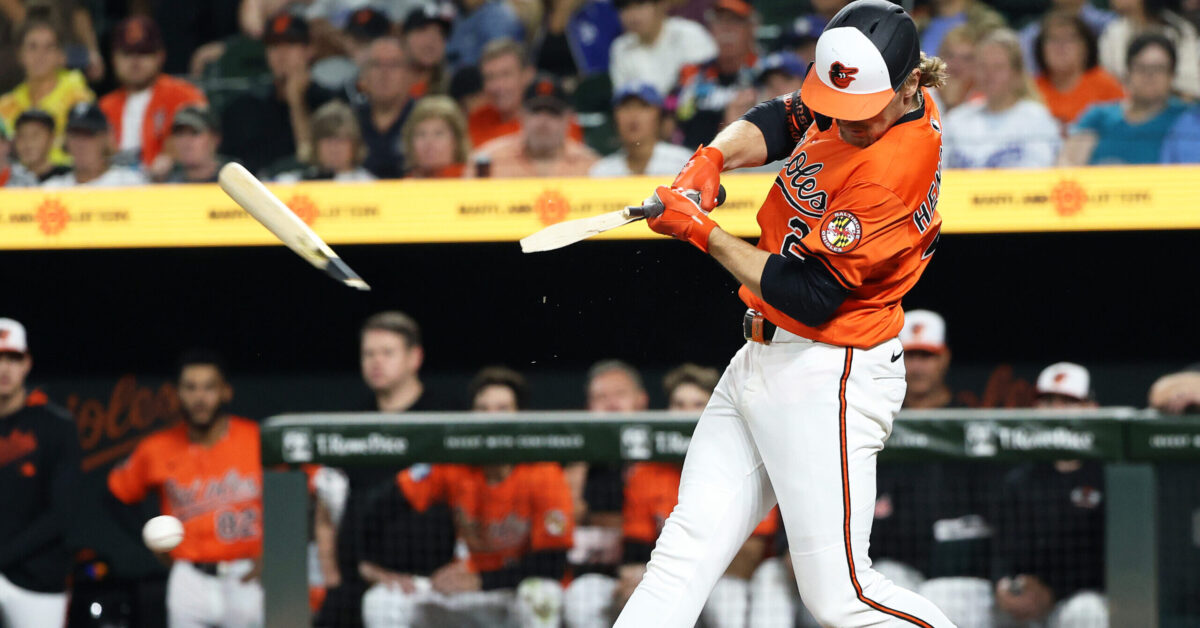
Henderson isn’t going to win the AL MVP and he probably won’t return first-round value, but his fantasy season can still be salvaged. There wasn’t much concern early on. Henderson stole three bases and hit six home runs through the first 2.5 weeks of the season, and his .242 average was negligible given the ultra-small sample. By the end of April, it was down to .214 and his abnormally high strikeout rate (30.3%) became a cause for concern. Whiffs haven’t been an issue since then (18.3%), but the power metrics have been.
Since May 1, Henderson has a .137 ISO, down over 100 points from his healthy 2023 and 2024 seasons (.243). Though his barrel rate has always been closer to league average (10%), it’s been hovering around six percent for the last two months. His average exit velocity is down three ticks this season, under 90 mph for the first time in his career. One noticeable difference is that he’s been much more pull-happy and appears to be selling out for more power — 47% this season, 39.3% in his 3.5 prior seasons. He’s also struggled against four-seam fastballs like never before, slugging a mere .250 with a .196 xBA against the pitch.
Henderson seems to be going through identity crisis with his approach at the plate and volatile metrics shifts. One approach to his rest-of-season fantasy value is to blindly “bet on talent” and hope for the best, but there is great risk in that. What is most actionable to me going forward is that Henderson recently swapped lineup spots with Taylor Ward and is back to leading off, which is the lineup spot he’s been most productive at over his young career. He’s only been back there for six games, but appears to be more comfortable. Over those 28 plate appearances, he has six hits (two doubles), six runs, a stolen base, and four walks to just two strikeouts. This is a miniscule sample so we can’t take it face value, but his pull rate of 40.9% over that span lines up with the Gunnar we know and love. I believe leading off helps his fantasy value for the rest of the season because of the increase in runs and potential stolen base opportunities. And Gunnar Henderson isn’t going to just stop hitting home runs.
Between Tucker and Henderson, I have more rest-of-season faith in the Orioles shortstop. He’s younger, healthier, has less pressure on his shoulders, has more overall value upside due to the stolen base category and I believe that leading off again helps him properly reset and finish the season off strong. I wouldn’t advise to outright sell on Tucker, though. It’s doubtful someone would trade Tucker to you for $20+ earners Bryan Reynolds, Alec Burleson, or Brandon Marsh, but I’d hit accept on such an offer in a heartbeat.
Vlad writes for RotoGraphs and is the head of fantasy baseball content at FTN Fantasy. He is a Tout Wars Expert League champ, member of the CDM Fantasy Sports Hall of Fame and has been nominated for FSWA writing awards six times. Vlad has been playing fantasy baseball since 1995, winning 42 NFBC leagues since 2012 and ranking in the top percentile in NFBC’s Online Championship contest (33% win rate, 52% cash rate; 64 leagues). Much to the chagrin of his colleagues and most baseball aficionados, Vlad is a lifelong Dodgers fan who claims his first gut call at age 9 was Kirk Gibson’s 1988 World Series home run. You can follow him on X and BlueSky @RotoGut.
If I have Tucker, I’m finding the guy who has Gunnar and offer an even-Steven trade?
Is Kwan for Matz an even-Steven trade? I kind of think so. . . . .
I’ve been a little leery of Gunnar since last year after I realized he has a bit of the same problem as Vlad & Tatis – for guys that we want to be 1st rounders, they all hit more grounders than you’d like. Not extreme, but all are over the 1.10 GB/FB average. Gunnar has bumped up his FB% this year but it’s come entirely at the expense of LD% which isn’t ideal. His GB% is pretty similar to the last 4 years.
A cursory review of the leaderboards shows that most of the top guys hit more FB than GB. Sure, Soto makes it work but his GB numbers are hardly extreme and none of Gunnar/Vlad/Tatis are Soto (& Soto has always left me with the impression that maybe he could be a bit more if he hit a few more FB, but then, why mess with elite talent). James Wood had the same GB issue the last 2 years but fixed it this year and now he’s a 1st rounder. A big part of Jordan Walker’s breakout this year is turning some GB into LD (he hasn’t really boosted his FB but he’s now close to a 1.00 GB/FB and if he does start elevating even more, look out).
As to Gunnar this year, he had a 0.89 GB/FB and .267 ISO through Apr 30th but since then? A 1.35 GB/FB and .135 ISO. I’d feel a lot more confident once I see him elevating a little more