
Fantasy Update: 2026 Re-Draft and Dynasty Prospects to Know
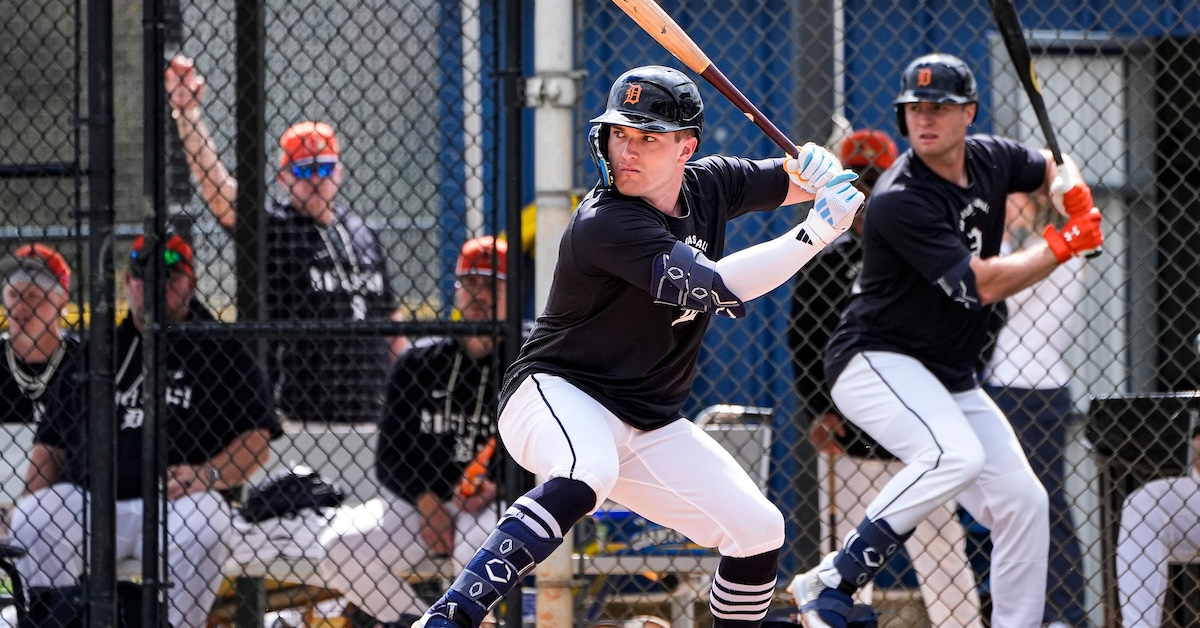
Prospects have become increasingly important to winning re-draft fantasy leagues. Of course, they have always been major in-season acquisitions, but now they’re making their presence felt at the draft table, too. With more fantasy managers aware of the prospects who are likely to have an impact in a given season, the battle for their services has become much more fevered, leading some managers to stash desirable prospects for a month or two rather than try to pluck them off the wire once they are called up and risk missing out.
These guys aren’t draftable in every format, but I cast a wide net so that the list has utility across many formats and can be revisited when those players who don’t break camp on a big league roster are called up. All of them should be in the majors for a substantial portion of the 2026 season. It is worth familiarizing yourself with them now so that you’re ready to bid on the ones who aren’t draftable in your particular league.
You can find these players ranked on the 2026 Fantasy Rankings tab of The Board, along with my Top 200 Dynasty Rankings!
Average Draft Positions (ADP) are taken from the last 20 NFBC Draft Champions leagues as of February 15, 2026. These drafts run 50 rounds deep, so they hit a lot of prospects and give us some sort of market to view players through as spring training ramps up.
I’ve given an upside and downside look for the top guys below. The downside outlooks will avoid focusing on injury because that is the obvious worst case scenario for anyone.
Rookies from Japan
While most outlets have taken to no longer ranking overseas stars as prospects given their experience advantages over those in the minor leagues, they are still rookies, and as such get lumped into a lot of “prospect” portions of drafts. They also feature prominently in First Year Player Drafts for dynasty leagues.
Tatsuya Imai | HOU | 169 ADP
Projected Role: Starting Rotation
Outlook: The Astros came off the top rope for this signing, all but sealing the fact that Framber Valdez wouldn’t be returning (he signed with the Tigers a few months later). Imai has transformed himself from a no. 5 or 6 starter into a stud the last few seasons, improving his walk rates every year since 2020 — he was down to 7% in 2025, which is still just OK for NPB.
Upside: Imai holds a lot of the 19% K-BB we saw across 2024-25, with the nastiness of his stuff fueling the high-end home run (his 0.37 HR/9 ranked fifth) and hit suppression (.191 AVG ranked second) en route to a Top 30 starting pitcher season — something like a low-3.00s ERA, sub-1.20 WHIP, and at least 25% K% in at least 130 innings.
Downside: His old control issues return and his HR/9 success proves to be more HR/FB overperformance (5%) than skill driven. He ends up accumulating undesirable innings with a high-4.00s ERA and 1.30s WHIP, but enough high-K starts to keep bouncing from waiver wire to new team every couple weeks.
Munetaka Murakami | 1B, CHW | 221 ADP
Projected Role: First Baseman
Outlook: Murakami is a power monster who is first in home runs in NPB since 2019 (the no. 2 guy is coming up next!) by a mile, with his 245 long balls giving him a 31-homer edge — and he did it in 215 fewer plate appearances. His growing strikeout issues haven’t stopped him from succeeding, posting a league-high 29% K% since 2023, but counterbalancing it with the fourth-best wRC+ (164), and of course, the most homers in that span (86) too! The power should be there regardless of the whiffs, but the question is where will the batting average land? In our projection suite, the various systems range from a .206 out of THE BAT to a .234 by ZiPS.
Upside: Murakami doesn’t see a major surge in strikeouts, instead just being among the leaders (about 26-28%) as opposed to the leader (something north of 30%). He exceeds even the highest projections with 40 home runs, a .250 AVG, and a .370 OBP.
Downside: He can’t stem the tide on his strikeout rate, which balloons into the mid-30% range en route to struggles reminiscent of ByungHo Park, who posted just a 79 wRC+ on the heels of back-to-back 50-plus home run seasons in the KBO. Similar to Imai’s downside, it could wind up being volume that you wish wasn’t so plentiful given the damage it inflicts upon your team’s AVG.
Kazuma Okamoto | 3B, TOR | 247 ADP
Projected Role: Third Baseman
Outlook: He’s second only to Murakami in homers since 2019 with 214 – third-place has 189, they crushed the field – and Okamoto did so with a much better swing-and-miss profile. He has made significant cuts to his K% in each of the last two seasons, down five points to just 11% for 2025, albeit in a shortened 293-PA sample. Okamoto indirectly replaces Bo Bichette, and certainly has the skills to replicate the production the Jays came to expect from Bichette (120 career wRC+).
Upside: Okamoto’s plate skills fully translate (his 0.71 BB/K over the last three years would be top 20 in MLB) and allow him to flex a well-rounded profile that sees a .275 AVG with 25-30 homers.
Downside: MLB’s velocity proves to be too much, resulting in an Alec Bohm-lite season with something like a .250 AVG and 12-14 homers.
—
Expected To Make the Team
This group has major league experience and is currently expected to make the Opening Day roster. I will group pitchers and hitters separately, sorting by their ADP.
Pitchers
This whole group is susceptible to extreme spring helium if they’re throwing well, so be ready to pay up if you like them.
Nolan McLean | NYM | 97 ADP
Projected Role: Starter
Outlook: A brilliant 48-inning debut (2.06 ERA/1.04 WHIP/22% K-BB) has sent McLean soaring up the board into being a Top 100 pick. His electric 117 Stuff+ lends a lot of credence to his 30% K%, and his depth of arsenal (six pitches vs. lefties; four vs. righties) gives him many paths to avoiding the dreaded sophomore slump. After 162 total innings last year, there’s no need to heavily curate the 24-year-old’s workload, either.
Upside: Essentially a full season of what we saw last year: elite ratios and strikeouts on a contending team. That would no doubt put McLean in contention for a Top 10-15 starting pitcher season.
Downside: McLean isn’t quite the ready-made ace we think, as his 95 Location+ ends up being more indicative of control issues than originally thought. He reverts back to the double-digit walk rate he posted during his 2025 minor league work (11%), resulting in more five-and-dive outings than expected and an elevated WHIP approaching the 1.30s.
Bubba Chandler | PIT | 154 ADP
Projected Role: Starter
Outlook: Chandler’s electric debut (22% K-BB in 31 innings) tamped down concerns that arose from a 12% walk rate in Triple-A. Maybe he was just bored racking up 100 inning down there when he was clearly ready for The Show. He has three pitches but features only two against each side – fastball/slider vs. righties; fastball/changeup vs. lefties – which does lower his margin for error if he can’t expand the arsenal.
Upside: Powered by a 99-mph fastball, Chandler’s two pitches per side are enough, as he puts up sparkling ratios in 150 innings with at least a strikeout per inning. Let’s get real crazy with it, and say that both he and Paul Skenes also tally 14 wins, which would make them the first Pirates to do so since 2018, when both Jameson Taillon and Trevor Williams did it. The Pirates have just five double-digit Wins seasons since: two by Skenes and Mitch Keller, and one by Joe Musgrove.
Downside: The lack of arsenal depth leaves Chandler needing to be perfect with his fastball too often because any time the slider and changeup aren’t at their best, he struggles. The result ends up being an inconsistent, low-100s-inning season that shows flashes of his upside but not enough to make him a roster mainstay in anything but the deepest of leagues.
Trey Yesavage | TOR | 155 ADP
Projected Role: Starter
Outlook: The 20th overall pick from 2024 ripped through a four-level season, becoming an instrumental piece in the playoffs for the American League champs. Armed with a premium splitter – the same no. 1 pitch as team ace Kevin Gausman – Yesavage’s October run has many dreaming of him being the next great arm for the Jays. Surrounded by veterans, including offseason signing Dylan Cease, the 22-year-old righty doesn’t have to be an ace for the Jays, but his price at the draft table will require some useful stats to pay off for fantasy managers. Both he and Chandler are going around where established arms like Nathan Eovaldi, Michael King, and Sandy Alcantara are, so there is real opportunity cost to drafting them.
Upside: Yesavage’s elevated walk rate is due more to his approach of attacking hitters and the nastiness of his stuff, not a lack of command and control à la peak Blake Snell. As such, he hews closer to the 2.35 FIP than the 3.87 SIERA we saw in his late-season sample, thanks in part to a Snellian 30% K%.
Downside: Well, this one’s pretty easy – the walks are just too much, and Yesavage ends up not quite being ready for primetime. He still mixes in enough gems to put up a superficially decent ERA (about 4.50) that masks a terrible WHIP (>1.35).
Logan Henderson | MIL | 267 ADP
Projected Role: Starter
Outlook: Henderson impressed in limited looks last year (3.20 SIERA/25% K-BB in 25 innings) before a flexor strain ended his season in early August. He’s fully healthy as of late October, putting him in line for a rotation spot to open 2026. We have him penciled into the fifth spot on RosterResource, but that could become a battle, with Robert Gasser and newcomers Brandon Sproat and Kyle Harrison all fighting for one spot. That also assumes Chad Patrick is locked into the fourth starter role, which I agree with, but I guess isn’t a guarantee after just one good year. Gimme whoever wins the spot, with Gasser being my favorite (he’s no longer prospect-eligible) and Henderson right behind him.
Upside: Henderson falls right in line as the next great Brewers Breakthrough, following Tobias Myers in 2024 and the aforementioned Patrick last year. Henderson could combine the best of both, resulting in a K-BB rate north of 20% for 125-plus innings.
Downside: Henderson is overshadowed in spring and never gets an extended look, as the studs stay relatively intact while Jacob Misiorowski and Chad Patrick improve upon their 2025 seasons in at least 125 innings apiece. There’s a skill-related downside for Henderson, too, as he doesn’t overpower batters (92.9 mph fastball as a righty) or have a deep arsenal (2.5 pitches: three vs. lefties, and two vs. righties), but I see a stable skills floor, so I looked at the playing time angle for his downside.
Andrew Painter | PHI | 354 ADP
Projected Role: Starter
Outlook: Still just entering his age-23 season, Painter maintains huge upside, though some questions have crept in after a bumpy return from two years off (4.81 FIP in 118 innings). His skills regularly shone through, but hot streaks were consistently broken up by Duds (five-plus earned run outings). It’s an important year for Painter, but far from a make-or-break season. I wouldn’t even be overly concerned if he fails to break camp and heads back to Triple-A for more seasoning.
Upside: Painter immediately closes the development gap, with his bat-missing ability driving solid mid-rotation success. There’s a chance he’s an ace immediately, but I’m aiming for more realistic upside as opposed to just the 99th- or 100th-percentile outcome. If we got 130-plus innings of mid-3.00s ERA/sub-1.25 WHIP/26%+ K%, that’d be great for his price.
Downside: Painter isn’t quite ready yet and spends more time in Triple-A than the majors. The season ends up being a developmental step forward for him, but underwhelming on the fantasy landscape.
Hitters
While a hot spring can also boost the draft price of these guys, it usually takes more sustained success that it does for the pitchers, who can skyrocket off a great start or two with elite Statcast data behind ‘em.
Samuel Basallo | C, BAL | 182 ADP
Projected Role: Catcher-eligible DH
Outlook: A premium bat-first catcher who stumbled in a late-season look from mid-August on (55 wRC+ in 118 PA), Basallo returns poised to break out in his first full season. An eight-year, $67 million extension all but locks his Opening Day spot, though it’s a narrow fit as the starting DH and backup catcher now that Pete Alonso has joined the team. Non-catching catchers are fantasy gold, and ideally, Basallo gets just enough starts behind the dish to stay C-eligible in 2027 (20 starts are needed in most leagues).
Upside: There’s no need to reinvent the wheel here, I’ll crib the prospect team’s tagline directly: Gary Sánchez from the left side, a comp that adequately explains his entire range of outcomes. A .280 AVG and 35-plus homers in 600 PA, like the Sánchez of 2016-17…
Downside: …or a .210 AVG and 25 homers in 600 PA, like the Sánchez we’ve seen since that fast start to his career. Even with the contract in hand, Basallo won’t get endless playing time if he’s running this cold, as it’d likely come with a sub-.300 OBP and a trip back to Norfolk.
Carter Jensen | C, KC | 201 ADP
Projected Role: Catcher-eligible DH
Outlook: Jensen faces a nearly identical situation to Basallo, where he’s blocked off at catcher and first base, but has a good enough bat to take the DH spot in a full-time capacity. Where he splits from Basallo is that his cup of coffee came with a nice 159 wRC+ in 69 PA.
Upside: There’s sneaky five-category potential here if Jensen can bring his minor league stolen base prowess to the majors (12 per 500 PA; 82% success rate); he could pop off for something like a .290 AVG/25 HR/15 SB plus solid R/RBI output.
Downside: The elite BABIP we saw last year (.361 in the minors; .333 in the majors) comes back to earth, and Jensen’s 2025 proves to be more of a hot streak than a preview. He maintains fringe relevance in two-catcher formats meandering to something like a .230 AVG/14 HR/3 SB season.
Sal Stewart | 1B, CIN | 202 ADP
Projected Role: First Baseman
Outlook: The return of Eugenio Suárez narrows Stewart’s playing time path to just first base, but he seems to hold the inside track on Spencer Steer and Christian Encarnacion-Strand. He clocked five homers in just 58 PA last year, though with a .255/.293/.545 slash that leaves room for improvement. Stewart showed much better plate skills coming up, with a 0.85 BB/K compared to just 0.20 in his cup of coffee (0.38 is league average), and we should see the more refined hitter over extended playing time. He could easily outrun the stolen base projections, which sit at nine per 600 PA. That’s just half his minor league rate, achieved at an 82% clip.
Upside: Stewart builds on his tremendous 2025 minor league season with a .300 AVG/20 HR/20 SB season in 600-plus PA. Only six first base-eligible players had 10-plus stolen bases last year, so that can help him standout if they let him run. The next Josh Naylor?
Downside: Stewart chases homers too much, becoming an all-or-nothing slugger with a yellow light on the bases limiting him to single digit stolen bases.
Chase DeLauter | OF, CLE | 314 ADP
Projected Role: Center Fielder
Outlook: Cleveland punted the offseason, instead betting on internal development to improve the lineup. DeLauter has been ravaged by injuries and has yet to play 60 games in a regular season, twice playing in the Arizona Fall League just for the volume. The Guardians are hoping he can be their first truly dynamic outfield bat since Michael Brantley posted a 151 wRC+ in 2014.
Upside: There is .280 AVG/30 HR potential here, as DeLauter has been able to show plus power with a 0.87 BB/K (only seven big league hitters topped that last year).
Downside: The power ends up being more of the 5:00 pm variety, and DeLauter is too passive at plate in an attempt to sustain a high walk rate, which comes at the expense of the rest of his line (.230 AVG/10-12 HR).
Dylan Beavers | OF, BAL | 320 ADP
Projected Role: Right Fielder vs. RHP
Outlook: A massive 19% walk rate sustained Beavers’ 137-PA debut (.227/.375/.400) after an incredible run at Triple-A (18 HR/23 SB/152 wRC+ in 94 games). Tyler O’Neill is making a lot of money, but he hasn’t posted a .700-plus OPS vs. righties since 2021, giving Beavers a path to about 450 PA as the primary right fielder.
Upside: With 54 stolen bases and an 87% success rate the last two seasons, Beavers could be free to run at will, which puts a 15 HR/25 SB in play, even if he caps out around 500 PA.
Downside: The biggest risk is AVG, as we’re not that far from Beavers’ 2024 season, during which he hit .242 in 531 PA. He could still mitigate the damage of a bad AVG if he runs enough, but a sub-.240 AVG with nine or 10 home runs is in his range of outcomes.
Owen Caissie | OF, MIA | 377 ADP
Projected Role: Right Fielder vs. RHP
Outlook: Picked up in the Edward Cabrera trade this offseason, Caissie hopes to follow in the footsteps of Kyle Stowers and Jakob Marsee as the Marlins’ traded-for outfield gems. Lefties haven’t completely overmatched Caissie in the minors, so while we have him penciled him as the strong-side right fielder, he could get full burn, at least to start the season.
Upside: Caissie holds his own vs. lefties (.700-plus OPS) and cooks righties (.900-plus OPS) in a picture-perfect replica of Stowers’ season (.288 AVG/25 HR).
Downside: Too much swing-and-miss undercuts Caissie’s work vs. righties and tanks him in limited looks vs. lefties, resulting in an uneven 350-400 PA that yields an 85-90 wRC+ with some pop, but little else.
Bryce Eldridge | UT, SFG | 384 ADP
Projected Role: Designated Hitter
Outlook: Eldridge is a premier power prospect who ripped 25 home runs in 102 games, tearing up Double-A (147 wRC+) before a substantial dip in Triple-A (105). He’s penciled into the starting lineup as the DH, and the team construction essentially boxes him into that role with established bats at first base and in the outfield corners. With just 74 games of Triple-A experience heading into his age-21 season, he isn’t a lock to break camp and could be sent out to work on his whiffs if he’s running a mid-30s K% rate deep into spring.
Upside: Some of his struggles last season prove to be the result of a spring wrist injury that caused him to miss time and required offseason surgery, and Eldridge brings his strikeout rate down to a palatable 25-26%, allowing his power to shine through without hemorrhaging AVG, resulting in a 30 HR/.250 AVG rookie campaign in 600-plus PA.
Downside: This is another straightforward one, where the swing-and-miss will play the biggest role in Eldridge’s 2026 success. If he’s striking out north of 30%, it will put a big burden on his HR/FB rate to overperform and sustain his homers. The 10 batters who struck out that much last year (min. 450 PA) averaged 21% HR/FB, with nine of 10 eclipsing the 12% league average.
Moisés Ballesteros | UT, CHC | 387 ADP
Projected Role: Designated Hitter
Outlook: Our third catcher-turned-DH, though unlike Basallo and Jensen, Ballesteros won’t be backing up the primary catcher, nor does he have C-eligibility for 2026 like they do. He can rake, though! A plus hitter all the way through the minors, he impressed during a brief 66-PA sample (143 wRC+) with the Cubs. Terrible work against lefties in two of the last three seasons could put him into a platoon role.
Upside: Limiting Ballesteros’ time vs. lefties helps keep his AVG high as he cooks righties to the tune of a .285 AVG and 15 home runs.
Downside: Ballesteros doesn’t fully launch against righties, with a .250s AVG and 10-12 home runs, and can’t hold the role all year.
Zach Cole | OF, HOU | 492 ADP
Projected Role: Right Fielder vs. RHP
Outlook: Houston remains hungry for outfielders, which opens an avenue for Cole despite his obvious flaws. He had 19 HR/18 SB in 416 minor league PA and added another 4 HR/3 SB in 52 major league PA. The issue was a whopping 36% K%, and if not for an elite BABIP at Triple-A (.418) and a good one in the majors (.348), his AVG would’ve been a problem. Plus speed (83rd-percentile sprint speed) helps him to an above-average BABIP, but if he’s not at .350 or better, it’s hard to see an AVG north of .240 for Cole.
Upside: If I have to choose between another extreme BABIP and actually making a substantive cut to his K%, the former feels more likely for Cole, so while I can see a 20/20 season pretty easily if the Astros commit to him, it feels like it’ll come with a .240s type AVG.
Downside: This is another obvious one, where the downside is just that Cole can’t overcome the obscene K% despite a double-double in HR/SB. Think something like Matt McLain’s 2025: .220 AVG/15 HR/18 SB in 577 PA.
Jhostynxon Garcia | OF, PIT | 567 ADP
Projected Role: Outfielder vs. LHP
Outlook: Acquired from the Red Sox over the offseason, “The Password” is likely initially angling for a short-side platoon role, as fellow newcomer Ryan O’Hearn and team star Bryan Reynolds have the corners locked up against righties. Garcia has solid skills across the board, but no carrying tool to make him a fantasy star even in the best case scenario.
Upside: Injury or underperformance elsewhere gives Garcia full-time burn for most of the year, and he grinds his way to a decent .245 AVG/20 HR/10 SB season in 550 PA, becoming a sneaky play in deeper leagues where playing time alone can drive value.
Downside: The O’Hearn/Spencer Horwitz/Marcell Ozuna trio stays healthy and limits Garcia to a short-side platoon as a fourth outfielder who can’t make a dent on the fantasy landscape.
George Valera | OF, CLE | 646 ADP
Projected Role: Right Fielder vs. RHP
Outlook: Another part of the Guardians’ internal outfield revolution, like DeLauter, Valera has repeatedly been slowed by injuries during his ascent. His star has dimmed from his Top 100 prospect days, but even as a platoon bat, there is still a ceiling to chase here thanks to his power.
Upside: Valera keeps the strikeouts in check (<=25%) and clubs 25 homers as a strong-side right fielder.
Downside: The holes in Valera’s swing are exposed to the tune of a 30% K%, and he clocks fewer than 300 PA.
Alex Freeland | 2B, LAD | 687 ADP
Projected Role: Reserve Infielder
Outlook: Freeland has been relegated to the bench largely because he’s on the best team in baseball — he would get a shot to start on many other teams as a highly skilled middle infielder. Early-career strikeout issues cropped back up in his 97-PA debut, which has some small sample leniency but also hints at his downside. Hyeseong Kim isn’t immovable at second base, though only if Freeland is the 22% K% guy of his last two minor league seasons instead of the 36% guy from his big league sample.
Upside: Freeland has peak Chris Taylor vibes, with more stolen bases upside and less positional flexibility, though I’m sure Freeland could handle the outfield if asked.
Downside: The strikeouts don’t subside and plague Freeland in limited playing time that includes some trips back to Triple-A.
—
NRIs Fighting For a Spot
These are premium prospects who got an invite to spring training with an opportunity to make the Opening Day roster if they have an explosive camp. They are still long-shots at this point, though, and their ADPs reflect that for the most part. If they excel and put themselves in a position to break camp, their ADPs will skyrocket. Conversely, the prices will plummet if/when they are sent down to minor league camp. Since they aren’t on the 40-man roster yet, I’m not running a Projected Role for this group.
Konnor Griffin | SS, PIT | 189 ADP
Outlook: Nick Gonzales was stretched at second base, but is now penciled into the starting shortstop job despite just 30 big league games there. In other words, the Pirates are giving our no. 1 prospect a real shot at the role, despite his 20th birthday coming a month into the season. Griffin showed off all five tools in a three-level, 122-game pro debut. Elite speed and plus power with the chance for more could make him an immediate star if he is able to make the leap after just 21 games at Double-A (51 at High-A, 50 at Low-A).
Upside: A lighter version of rookie Corbin Carroll’s exquisite debut, something like a .270 AVG/18 HR/50 SB as Pittsburgh’s shortstop from Day 1. Carroll went .285/25/54, was two years older than Griffin is now, and had a month of work at Triple-A, which is why I shaved the numbers down a bit, but this would still be an amazing season in every way.
Downside: Griffin isn’t quite ready and needs some real seasoning at Triple-A, leading to a summer debut and possibly just a September call-up.
JJ Wetherholt | SS, STL | 266 ADP
Outlook: Brendan Donovan’s trade to Seattle seems to clear the way for Wetherholt to win the starting second base job in camp. He was better at each stop during a three-level season that culminated in a 156 wRC+ in 47 games at Triple-A. He displayed some punch (17 home runs), efficient stealing (23 stolen bases, 89% success rate), and excellent plate skills (1.0 BB/K), which helped him to a .306 AVG in 496 PA.
Upside: A bat like his predecessor Donovan (.282 AVG, 12 HR per 600 PA) with meaningful stolen base contributions (13-15, with upside if the Cardinals let him go), adding a much-needed impact player to the thin second base pool. Wetherholt will start with just shortstop eligibility at most outlets until logging a few weeks at the keystone.
Downside: Wetherholt’s power and speed lag behind his contact, and he winds up with an empty .265-.270 AVG. The floor is quite high if he brings anything close to that 1.0 BB/K with him to the majors, though. Only one player with a 0.75 BB/K or better (min. 450 PA) had a sub-100 wRC+ (Steven Kwan at 99) last year, as the 19 qualifiers had a 126 wRC+ combined.
Justin Crawford | OF, PHI | 287 ADP
Outlook: With an explosive, speed-focused profile, Justin cuts a figure similar to his dad Carl and appears to have the inside edge on the center field job heading into spring training. Carl was a sneaky consistent double-digit power guy during his peak, and while Justin could evolve into that, it’s hard to see 10-plus right away, even in 600 PA.
Upside: An outfield version of Nico Hoerner’s 2025: .297 AVG/7 HR/29 SB with 40 stolen base potential, as Philly isn’t afraid to let their burners run.
Downside: The power is a complete no-show, the walk rate reverts back to his 2024 level (6%), and Crawford can’t get on base enough to make the speed a weapon. Throw in some bad BABIP luck, and he’s stumbling his way to a replica of Isiah Kiner-Falefa’s 2025: .262 AVG/2 HR/15 SB in 459 PA.
Robby Snelling | SP, MIA | 303 ADP
Outlook: I remember fielding questions last year about Snelling as a potential September pickup in hopes of a call-up that never came despite his pure brilliance at Triple-A (2.62 FIP/26% K-BB in 64 innings). That makes his road a smidge tougher in 2026 since he isn’t on the 40-man, but the Marlins will make room if he shows up to the Grapefruit League with last year’s skills. Like so many players these days, work at an offseason facility – Maven Baseball Lab in this case – helped put the young prospect back on track ahead of his breakout season in 2025. The Marlins aren’t shy about trusting their young arms when they show readiness.
Upside: The innings progression has Snelling ready for 28-30 starts even though he’s just 22 years old, and a full season of these skills (20% K-BB, upper-20%s K%) would be fantastic. Chris Paddack isn’t an impediment to him making the Opening Day rotation. He has huge helium potential, as he could rise nearly 150 picks with a big spring and guaranteed role, putting him in the Bubba Chandler/Trey Yesavage range.
Downside: Snelling gets stuck in Triple-A longer than he should and falls back into some pre-2025 habits, resulting in 60-70 uninspiring innings and his launch being delayed a year.
Kevin McGonigle | SS, DET | 304 ADP
Outlook: A key part of Detroit’s internal offensive improvement plan, McGonigle destroyed High- and Double-A with a combined 182 wRC+ in 397 PA, and sits poised to be a key part of the lineup… at some point. He could force his way onto the Opening Day roster, shifting Zach McKinstry to a super-utility role, but he’ll likely get a few weeks of finishing school at Triple-A before getting the call. Stretched defensively at short, he’s also the most obvious fit there outside of McKinstry, so he’s likely to get thrown into the fire with the hope that a double-plus bat obscures an average (or just below) glove.
Upside: McGonigle breaks camp and immediately joins the heart of the order as an on-base force, something this team has severely lacked since Miguel Cabrera’s heyday. Combining the best hit tool in the minors with great walk rates could give the Tigers their first .360-plus OBP in 400 PA since Justin Upton did it in 2017. Only four guys have even reached .350 since then, too!
Downside: McGonigle debuts in the summer and runs an empty .260 AVG with no fantasy juice behind it.
Parker Messick | SP, CLE | 307 ADP
Outlook: Messick is fighting for a rotation spot with Slade Cecconi and Logan Allen. All three have options, so that can’t be used against Messick, who is clearly the most talented. He flashed a 4% walk rate in his 40-inning debut, half his minor league rate across 354 pro innings. Even regressing back to 8% leaves room for success if he’s missing bats, and his deep arsenal creates multiple paths to success, too.
Upside: Messick’s walk rate gains are fully legit, and he pushes toward his 28% minor league strikeout rate in a full-scale breakout: 3.30 ERA/1.20 WHIP/20% K-BB in 26-28 starts.
Downside: He gets buried behind the guys with more seniority and ends up being just OK when he arrives (4.50 ERA/1.30 WHIP/14-16% K-BB), which would still be a fine outcome for Cleveland, just not very fantasy relevant.
Carson Benge | OF, NYM | 369 ADP
Outlook: Despite being plenty active throughout the offseason, the Mets never blocked off right field for Benge. They have internal options in case he’s not ready, but they have been talking him up since November. After dominating High- and Double-A, he stalled out in a 24-game Triple-A sample (53 wRC+) but is still getting a clear shot to beat out Tyrone Taylor for the role, or at least the strong side, as they make for an obvious platoon.
Upside: Benge’s speed-forward profile helps him find his footing quickly, and he hits in the .260s with 25 stolen bases and a low double-digit home total in about 450 PA.
Downside: Benge starts in Triple-A and an MJ Melendez rebirth delays his debut until the summer, during which he puts up 6-7 HR/8-10 SB in about 70 games.
Ryan Waldschmidt | OF, ARI | 471 ADP
Outlook: A college bat, Waldschmidt feasted in a two-level full season debut split evenly between High- and Double-A: 18 HR/29 SB/.289 AVG/.419 OBP/.473 SLG in 601 PA. His power upside got him tagged with 30-homer potential in his Top 100 write-up. The projections think he’s closer to 15-16 stolen bases in 600 PA, more than enough to be a fantasy force with his pop.
Upside: Waldschmidt forces his way into the lineup with Corbin Carroll recovering from hamate surgery and shows his power immediately, emulating Cody Bellinger’s 2025 line: 29 HR/13 SB/.272 AVG.
Downside: The playing time doesn’t materialize and Waldschmidt spends most of the year at Triple-A.
—
In-Season Impact and Summer Specs
This is a mix of guys on the 40-man roster (many of whom have already debuted) and guys with non-roster invites to spring training that include a likely return trip to the minors on the backend. There’s no clear spot for them right now, making them in-season waiver pickups instead of draft targets. Some could even still break camp with a huge spring, but we’ll know more in mid-March when draft season is peaking. With unclear paths and more minor league seasoning likely coming, I decided against the Upside/Downside format, as there are too many unknowns to have confidence in them. Instead, I put them all in a table!
| Player | Position | Team | ADP | On-40? | NRI | Outlook |
|---|---|---|---|---|---|---|
| Connelly Early | SP | BOS | 257 | x | Excellent arm who’d break camp with so many teams, but Boston’s staff is crowded after a busy offseason. | |
| Jonah Tong | SP | NYM | 365 | x | Flashed impressive stuff, but still a work in progress who needs to refine his command and control. | |
| Payton Tolle | SP | BOS | 389 | x | Excellent arm who’d break camp with so many teams, but again, Boston’s staff is crowded after a busy offseason. | |
| Harry Ford | C | WAS | 394 | x | AVG is his path to fantasy stardom, unless being with the Nats brings back his stolen bases (7 in ’25; avg of 27 in ’22-24) | |
| Aidan Miller | SS | PHI | 396 | x | Electric talent is firmly blocked off up the middle, so he’ll head to Triple-A after just eight games there last year. | |
| Thomas White | SP | MIA | 403 | x | I personally favor Snelling, but neither is on the 40-man and either could impress enough to break camp. | |
| Colt Emerson | SS | SEA | 407 | x | Like Miller, got just a week of Triple-A time last year, so being blocked and headed back there is just fine. | |
| Jacob Melton | OF | TBR | 427 | x | Trade pickup is a nice power-speed option w/AVG concerns; not sure Fraley/Simpson have him blocked off. | |
| Joshua Baez | OF | STL | 442 | x | The Cards’ full embrace of in-house players favors a 2026 call-up, but not without some Triple-A seasoning first | |
| Joe Mack | C | MIA | 444 | x | A far better glove than Agustín Ramírez, so the pitching will improve on Mack’s arrival, too. | |
| Brandon Sproat | SP | MIL | 458 | x | Could be this year’s Quinn Priester – picked up from another good org, but blossoms with the Brewers. | |
| Carson Williams | SS | TBR | 475 | x | Easily their best shortstop option, but he had rough debut (54 wRC+) and their love affair with Taylor Walls seemingly knows no bounds. | |
| Jett Williams | SS | MIL | 479 | x | Getting third base reps in spring training. The Luis Rengifo signing makes Opening Day tough, especially as an NRI. | |
| Walker Jenkins | OF | MIN | 494 | x | Injuries have slowed his rise, but he still hit at Triple-A at age-20; tons of upside in his bat, plus sneaky stolen bases if they let him run. | |
| Rhett Lowder | SP | CIN | 497 | x | Washed out 2025 saw him fire just nine innings while the Reds developed a strong rotation, leaving him as the no. 6/7 starter coming into 2026. | |
| Elmer Rodriguez | SP | NYY | 501 | x | Only five innings in Triple-A after crushing High- and Double-A, so he’ll start there; presence on 40-man could aid in a quicker call-up. | |
| Brice Matthews | 2B | HOU | 521 | x | Backed up 2024 breakout with a solid Triple-A campaign (17 HR/41 SB/118 wRC+), but no clear role and high K% likely sends him back to Triple-A. | |
| Travis Bazzana | 2B | CLE | 524 | x | The no. 1 pick from 2024 was limited to 84 games; great when playing (137 wRC+), but likely too passive with a 24% walk rate at Triple-A. | |
| Robert Gasser | SP | MIL | 529 | x | My sneaky favorite to emerge as the Milwaukee Outta Nowhere Guy of the Year: mid-3.00s ERA/sub-1.25 WHIP for 100-plus innings. | |
| River Ryan | SP | LAD | 553 | x | Missed all of 2025 recovering from TJ and will get some opportunities once fully healthy. | |
| Spencer Jones | OF | NYY | 574 | x | Incredible 35 HR/29 SB breakout in Double- and Triple-A helped obscure worrisome 35% K%; .371 BABIP only netted a .274 AVG due to the strikeouts. | |
| Emmanuel Rodriguez | OF | MIN | 581 | x | No longer a Top 100 guy, OBP-focused profile hasn’t evolved, as 32% K% has become an issue; has 40-man edge over Jenkins. | |
| Max Clark | OF | DET | 583 | x | Explosive Top 10 prospect could still spend all of 2026 in Triple-A and be fine, but if Parker Meadows stumbles again… | |
| Hunter Barco | SP | PIT | 599 | x | Hard-throwing strikeout arm with double-digit walk rates all the way up; presence on 40-man could make him first man up. | |
| Abimelec Ortiz | 1B | WAS | 605 | x | Power bat who came over in the MacKenzie Gore deal, joining a team with no clear first baseman; could break with a big spring. | |
| Jaxon Wiggins | SP | CHC | 620 | x | Double-digit walk rate at every stop suggests caution for long-term projection, but 98 mph heater and 31% K% keep interest high. | |
| Noah Schultz | SP | CWS | 644 | x | Live-armed 22-year-old lefty who doubled his walk rate to 14% in Double- and Triple-A last season while losing nine points off his K%; needs time and the Sox can let him breathe. | |
| Nelson Rada | OF | LAA | 658 | x | Rabbit profile on the classic Angels’ fast track, reaching Triple-A at age-19; double-digit walk rate takes some burden off his BABIP for OBP, but lack of power curbs upside. | |
| George Klassen | SP | LAA | 669 | x | Finished with a single start at Triple-A after a solid Double-A season that deserved better results (5.35 ERA/3.29 FIP); walk rate will be key to success. | |
| Brody Hopkins | SP | TBR | 680 | x | Younger arm than age (24) suggests, with just a couple years of serious pitching; remember the name when he gets the call. | |
| Kade Anderson | SP | SEA | 681 | x | Talent alone may push the pace on last year’s no. 3 overall pick despite no clear need in Seattle right now; he’ll be a call away for most of the year. | |
| Tanner McDougal | SP | CWS | 686 | x | Big strikeout rate profile who sliced his walk rate at Double-A (down five points to 8%); if the gains are real, he could spend 3-4 months in Chicago. | |
| Braden Montgomery | OF | CWS | 704 | x | Sharp three-level debut (137 wRC+/12 HR/14 SB in 517 PA); whiffs are clear downside, but could also hit instantly in wide open White Sox outfield. |
Focusing on Logan Henderson’s FB velo doesn’t really tell the story. His command is above avg to plus and the pitch plays up because the changeup is that good.
The cutter and slider are well below average, If either one were even a 45 he’d have 3/4 upside. He’s better off hoping for a trade to a less competitive rotation.
I think it tells the story when the critique is that he doesn’t *overpower* guys. 93 doesn’t overpower anyone. Doesn’t make him a bad pitcher, just not a high-powered arm
I think the real downside of Henderson is that elbow inflammation scare from last year is a tear this year and he misses the whole season.
Just want to say that this was a tremendously helpful article — prospect week or not!
Between the CBA rule providing an incentive for teams to start prospects in the majors and the MLB-wide trend toward younger players, knowing these names will be essential at fantasy drafts and during the season.
Exc article Paul! Lots of good nuggets, adding these to my draft sheet now.
Parker Messick pitched last year, but he’s listed as a NRI. He’s gotta be on the 40 man roster already, doesn’t he?
Can we revisit at the end of the year? It seems like the upsides are all above this year’s ceiling while the downsides are the most probable outcome. Without knowing Painter’s fastball shape yet, his is the only upside that I could see being reached.
Love the overall structure of this, Paul, great stuff
This is a kick-ass article. Great overviews and descriptions of what u can dream on and potential downsides. Extremely well-done, Paul . . .
I too am rooting for Robert Gasser to get innings. Lots of arms in Milwaukee. We shall see.
This is top notch stuff Paul!
Love it.
This article was already awesome… and then the “in season” table including designations for on the 40 man? was just a fantastic add at the end. Thanks for all you do!