Optimal ADP Clusters: 2B Punts
© Sam Navarro-Imagn Images
“Don’t it always seem to go, you don’t know what you got ‘til it’s gone.”
Joni Mitchell may not be a roto savant, but even she might agree that the best part of the fantasy baseball season is research-and-draft season. Every day, from February until Opening Day, is so incredibly thrilling – nonstop spring training news, draft rankings adjustments, and player pool deep-dives – there’s always some rabbit hole of research to go down. As we continue studying and gaining confidence in the fresh player pool and a new year’s ADP, more questions arise, and the more work there is to be done.
Whether in NFBC or best ball contests, high-volume early drafters subconsciously form bad habits in draft rooms. We get too comfortable targeting and drafting the same players over and over. Conversely, we avoid players who have burned us in previous seasons and those we have some subjective bias against. Rarely do we deep dive and reassess those players because we’ve already made up our minds. That’s why it’s crucial to explore every nook and cranny of a positional tier. We have all fallen victim to draft room paralysis, where a decision between several similarly ranked shortstops or starting pitchers becomes gut-wrenching when we’re on the clock. This preseason column aims to help with those tough calls. We will explore some of the most confusing ADP clusters, by position, beyond the simple “I need to boost my batting average, so I’m taking this guy.”
Let’s dive into these ADP pockets logically and systematically, reviewing four analytical components of the players within each cluster.
- Playing Time (and Role)
- Health/Durability
- Skills/Categorical Contributions
- Context of Team Offense
ADP Cluster 2: Second Base Punts
ADP from NFBC 12-team Online Championships (OC) over the last two weeks (2/6-2/19)
If there is one position we can afford to punt this season, it’s second base. It’s the thinnest position by a wide margin. There are only three in the top 100 – Jazz Chisholm Jr. (ADP 20.7), Ketel Marte (31.8), and Brice Turang (52.4) – before it drops off to Nico Hoerner (105.8) and a few other questionable options in the 120-180 range. Unless we have a strong urge to target one of the top guys, most of us will inevitably wait until the second half of a 30-round draft to secure the services of a second baseman. Carefully navigating late-round options at the keystone is imperative. We want to get the most bang for a buck, and avoid hitters we might be tempted to quickly replace on the waiver wire or FAAB. The ADP 180-300 range is the best place to shop for our second baseman, so let’s zone in on a few clusters to help us score some of that sweet, sweet profit.
Semi-Punts
- Matt McLain, Cincinnati Reds (ADP 179.8)
- Xavier Edwards, Miami Marlins (181.3)
- Bryson Stott, Philadelphia Phillies (184.4)
- Brandon Lowe, Pittsburgh Pirates (189.2)
- Jorge Polanco, New York Mets (213.9)
NFBC drafters have pulled Matt McLain into the top 200 over the last few weeks. Unironically, his rise is probably related to the mid-January news about him adding 12 pounds of muscle. The former UCLA standout and Reds’ first-round pick from 2021 was an all-around disappointment as a top 100 fantasy draft pick in 2025. Despite some massive slumps and spending half of his at-bats hitting eighth and ninth, McLain scored 73 runs, hit 15 home runs, and swiped 18 bags on 20 attempts. He strikes out a ton (career 28.8%) and won’t help with batting average, but McLain is a shoo-in to improve in his second full season following a lost 2024 due to a left shoulder injury. Great American Ball Park ranks fourth in overall Park Factor, and McLain could work his way into the two-hole, ahead of Elly De La Cruz.
Death, taxes, and Brandon Lowe hitting bombs when healthy. Lowe boasts a career .234 ISO, and his 17.4 AB/HR ranks 16th since 2023 – a higher rate than Eugenio Suárez and Rafael Devers. Moving to PNC Park is rarely ideal for hitters, but it’s slightly better for lefty bats, and of course, half of his games are away from PNC. Lowe should thrive hitting in the top third of this lineup. If he avoids the injured list and hits behind top prospect Konnor Griffin, fantasy profit shall be unlocked.
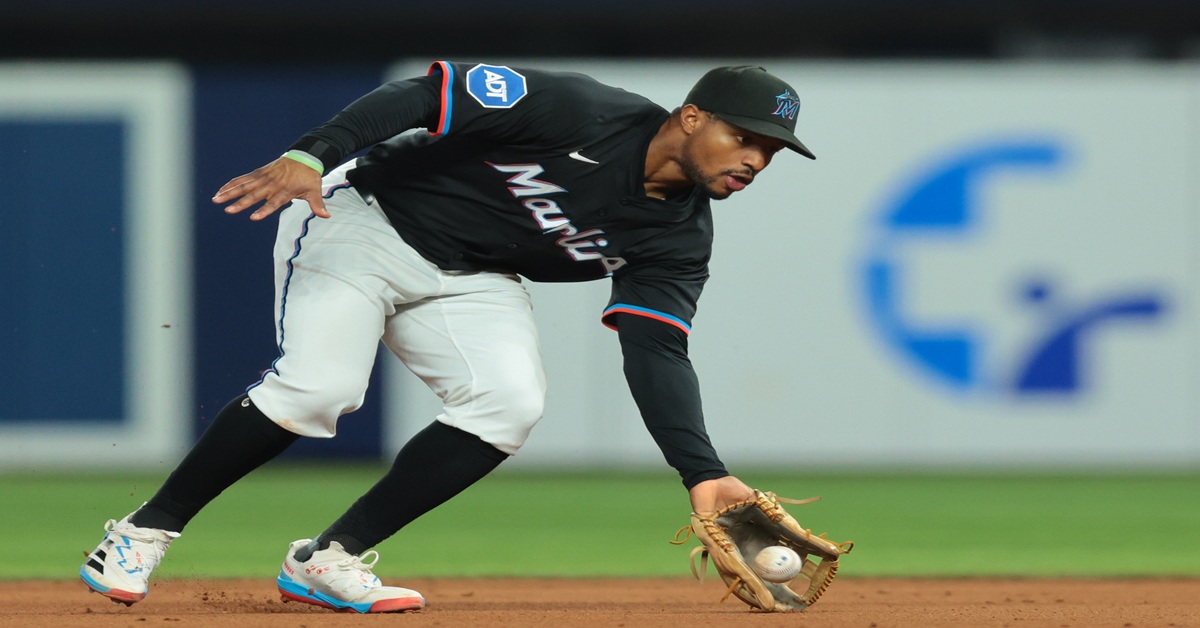
Xavier Edwards and Bryson Stott are the two speed-friendly picks in this cluster. Stott is an asset on defense, but he is a below-average hitter (career .127 ISO, 4.4% BRL), particularly against lefties (61 wRC+ in 2025), which puts him at risk of being platooned again this season. Don’t let the fact that Edwards only managed to barrel four balls in 619 plate appearances deter you from drafting him in a power-heavy build. He’s an elite bat-to-ball guy – one of seven with a Contact rate over 89% last season. Between his unique skill set and the improved team context (full seasons from Jakob Marsee, Agustín Ramírez, and Kyle Stowers), Edwards can benefit fantasy managers in three roto categories. The 95th percentile outcome is .320, 85 runs and 42 stolen bases.
Jorge Polanco is slightly outside of this cluster, but is quickly gaining steam, moving up 1.5 rounds (ADP 230) since January. Despite his slightly boring fantasy profile, Polanco’s offensive environment is superior to the others in this cluster, especially if he can spend a good chunk of the season hitting fourth behind Francisco Lindor, Juan Soto, and Bo Bichette. Polanco’s .229 ISO last season was his second time over .200 (.235 in 2021 when he hit 36 homers), and his 45.8% HardHit rate was a career high. He will earn first base eligibility early in the season, though fantasy managers should start him at second. The key to profit is avoiding the IL. He has only surpassed 650 plate appearances twice, and is on the wrong side of 30, turning 33 right before the All-Star break. A .255 average with 22 HR and 70 RBI would make him a worthwhile investment at the current price.
Medium Punts
- Otto Lopez, Miami Marlins (ADP: 226.4)
- Luis García Jr., Washington Nationals (244.6)
- Gleyber Torres, Detroit Tigers (250.6)
- Marcus Semien, New York Mets (255.4)
Otto Lopez got comfortable in his second full big-league season, producing a respectable .246-66-15-77-15 roto line in 594 PAs. The homers were a tad fluky based on a few metrics like launch angle (8.4 degrees), barrel rate (7.1%), and hard-hit rate (38.3%), but low double-digit dingers are certainly attainable. Lopez is a tough cat to punch out (15.3% strikeout rate over the last two seasons), and he offers coverage at second base and shortstop. I’ve noticed that several NFBC sharps are bullish on him, but I’d be surprised if he bests any of last season’s roto categories outside of stolen bases and possibly average.
We can’t target everyone under the sun, and Luis García Jr. happens to be one of those guys I’m not very fond of. He’s a solid 15/15 guy who shouldn’t negatively impact the BA category, but he’s a dud against southpaws (22 wRC+ in 2025). Perhaps we should avoid platoon infielders in formats with shallow benches.
Gleyber Torres and Marcus Semien don’t excel in any one fantasy category these days, though they are very good at one important thing: racking up plate appearances. Since 2018, no one has more than Semien, who has averaged 697 per season over that span. Torres missed 17 games last season, but averages 655 since 2023. Torres has produced a $10+ season in each of the last four, and his plate discipline in his first season with the Tigers was impressive – 13.5% walk rate, 16.1% strikeout rate. He probably won’t hit more than 20 homers or steal double-digit bases, but he will find a way to return another $10 or more in his age-29 season.
Semien has oddly never barreled balls at a rate over 10%, yet has a 33 and 45 home run season on his resume (shout out Dunedin and Buffalo!). He missed 35 games with a fractured left foot last season – his first time playing fewer than 159 games in a non-COVID year since 2016. His surface stats regressed mightily, and we can’t blame it on his “feud” with Corey Seager, nor his injury, since it occurred in late August. Perhaps this revamped Mets’ offense, with its positive team context and fresh faces of leadership, can help jumpstart Semien into a profitable fantasy season at this depressed cost. I haven’t targeted or drafted Semien in several years, but I’m absolutely on board with him as a second base punt in 2026.
Full Punts
There are several potentially viable punts after ADP 250, though most are best utilized as reserve and depth bats. Willi Castro (278.6) should resume earning everyday at-bats in a fresh shade of purple and should score his third straight season of double-digit dingers and swipes. Andrés Giménez (327.1) and Luisangel Acuña (341.4) are SB-specific picks. Jeff McNeil (354.3) should not yet be proclaimed roto-dead. The 33-year-old has a bit of juice left, especially with this strong A’s lineup and the home park boost in Sacramento. Finally, there’s Brendan Donovan, who may just be the steal of the late rounds. The contact savant takes his talents to sleepy Seattle. He will earn third base eligibility in no time, and is projected to lead off for the Mariners, with Cal Raleigh, Julio Rodríguez, and Josh Naylor hitting behind him. Donovan is a career .282 hitter who can score 100 runs with 650-plus plate appearances.
Recap
Undervalued: Jorge Polanco, Marcus Semien, Brendan Donovan
Overvalued: Bryson Stott, Luis García Jr
Speed Punts: Xavier Edwards, Andrés Giménez, Luisangel Acuña
Power Punts: Brandon Lowe
Top 50 Overall Upside: Matt McLain