
Sonny Gray Returns to AL, Heads to Beantown
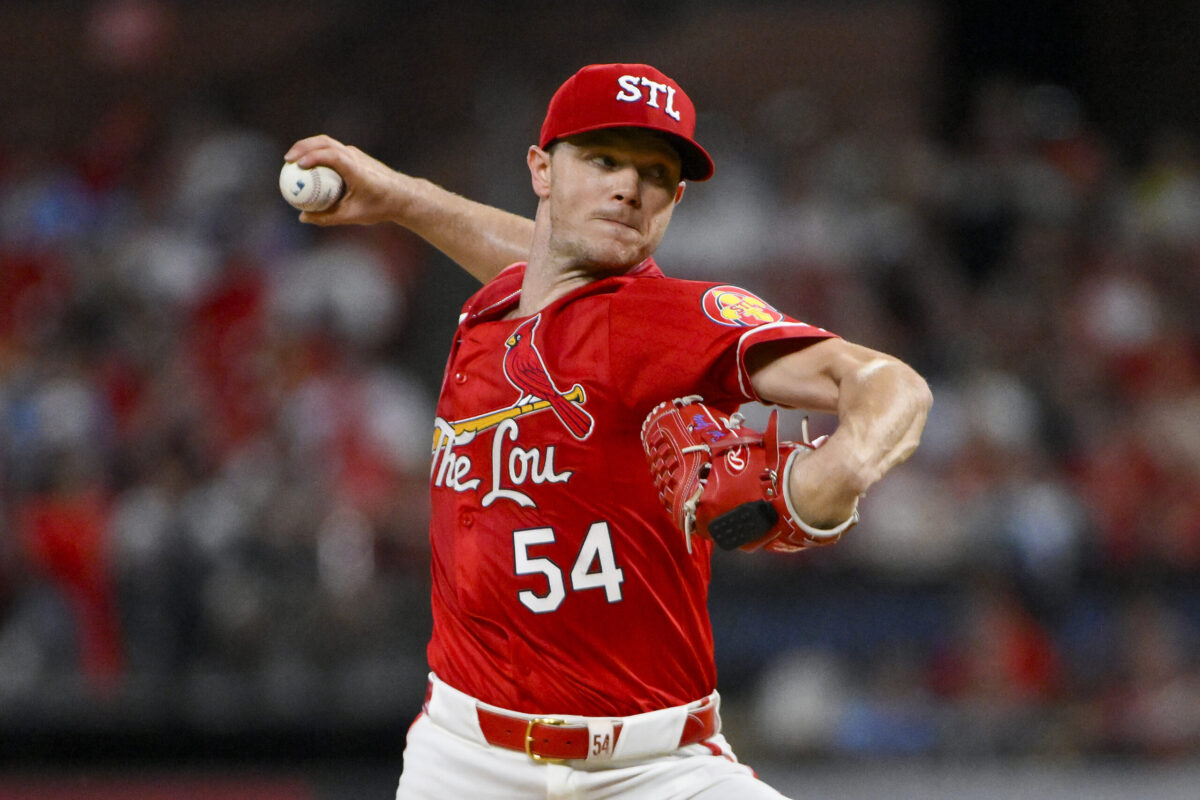
Last Tuesday, the Red Sox acquired Sonny Gray from the Cardinals, allowing him to don his sixth uniform in 10 seasons. It’s pretty surprising to see a guy with a career ERA- of 87 to be constantly packing his bags to join a new team, but perhaps the positive spin is that so many organizations want him! After spending two seasons calling Busch Stadium home, let’s dive into the park factors to find out how the move to Fenway Park might impacts his results.
Gray is coming off his highest ERA since 2018, and while SIERA suggests it was a heaping of poor fortune that inflated that mark, his xERA was also its highest since that same year, though it wasn’t quite as high. The latter suggests that perhaps he was somewhat deserving of the career high BABIP and third highest HR/FB rate allowed of his career.
We’ll start off by comparing the three year rolling park factors.
| Team | Venue | H | BB | OBP | HR | SO | R | Park Factor |
|---|---|---|---|---|---|---|---|---|
| Cardinals | Busch Stadium | 103 | 96 | 101 | 87 | 91 | 100 | 100 |
| Red Sox | Fenway Park | 107 | 97 | 105 | 89 | 97 | 108 | 104 |
Gosh, this comparison doesn’t seem to bode well for Gray’s Red Sox career! Let’s dive in.
Fenway has significantly inflated total hits, while Busch has marginally inflated them. Fenway ranks second and Busch is tied for the fifth highest H factor in baseball over these past three seasons, so both parks are hit friendly. Gray owns a better than league average BABIP mark for his career and has only posted a mark over .300 three times, so it’ll be interesting to see how he fares in one of baseball’s most hit-happy parks.
One of those .300+ BABIP marks came during this past season when he posted a career worst mark. Maybe the lowest fastball velocity of his career made him more hittable, but it’s hard to prove it. He did allow the highest Barrel% of his career and second highest HardHit% of his career, but those correlate more with ISO allowed than BABIP and might therefore better explain his HR/FB rate. Still, you have to at least assume some improvement off his career worst mark, even though he’s going to an even worse park for BABIP.
Moving on to walk factors, both parks have suppressed them and sit with near identical factors. Early in Gray’s career, he mostly posted league average or slightly above league average walk rates, but he has dramatically reduced that mark the past two seasons. He actually posted the lowest walk rate of his career last year. The funny thing is, he actually posted a lower walk rate on the road than at home while with the Cardinals! The park switch isn’t likely to impact his walk rate, so it’ll come down whether he’s able to sustain his gains the past two seasons or he regresses back closer to his career average.
Since Fenway is less pitcher friendly for both hits and walks, it follows that it’s also less friendly in OBP. That means more baserunners allowed, which typically leads to more runs allowed.
Next up are the home run factors, which are fairly close. Both parks have dramatically suppressed the long ball, as Fenway ranks just 22nd and Busch 24th. Gray’s recent splits makes sense here, as he has posted a 10.2% HR/FB rate at Busch, but a meaningfully higher 20.3% mark on the road the last two years. That’s a massive difference, so it’s a good thing he’s not moving to a drastically better home run park. I can’t imagine he would post another 20%+ HR/FB rate anywhere again, so you might expect his HR/FB rate improves next year, whether or not his fastball velocity returns.
Moving along to strikeouts, we finally see Fenway benefiting pitchers more. Both parks suppress punchouts, but Fenway has had less of an influence. Sure enough, Gray has posted a lower strikeout rate at Busch than on the road, which is not something you see often, but can likely be chalked up to the park’s strikeout-suppressing ability. That’s good news for his strikeout potential in Boston.
Finally, we end up at the runs scored and overall park factors. Unsurprisingly given the near rout in factors benefiting pitchers by Busch, Fenway is overall hitter friendly, while Busch has been exactly neutral. In fact, Fenway ranks second, well behind Coors Field in first, in both Runs and Park Factor in the last three years. That’s not exactly good news for a pitcher who lost nearly a mile per hour on his fastball and posted his highest ERA and xERA since 2018. However, since he did manage strong underlying skills and mostly suffered from a high BABIP and low LOB%, you have to assume significant ratio improvement this year, even in a less forgiving home park.
Before saying farewell, I think it’s also worth a quick review of the one year park factors. While these are likely far less predictive, sometimes it could indicate a change that’s here to stay, and might be more relevant for 2026 than what happened in 2023, the first year included in the three year rolling factors.
| Team | Venue | H | BB | OBP | HR | SO | R | Park Factor |
|---|---|---|---|---|---|---|---|---|
| Cardinals | Busch Stadium | 103 | 90 | 98 | 77 | 90 | 94 | 97 |
| Red Sox | Fenway Park | 105 | 101 | 105 | 84 | 93 | 106 | 103 |
Yikes, if the three year factors looked ominous for Gray, the one year factors look even worse!
Though the gap in hits factors did narrow slightly, the walks factor gap dramatically expanded, increasing the difference in OBP factors. Even the home run factor gap increased, with both parks suppressing them more and Busch dropping to the second toughest park in baseball to hit a dinger in. Furthermore, Fenway lost half its strikeout factor advantage, the only advantage it had. All these changes in 2025 led to increased runs scored and Park Factor gaps, with Fenway looking even more hitter friendly relative to Busch.
Obviously, no matter how you spin it or what range of years you use to compare park factors, the switch is a negative for Gray’s ratio projections, though perhaps it benefits his strikeout rate forecast. I think monitoring his fastball velocity during spring training is paramount, as he’ll be at risk for posting an inflated HR/FB rate again and it’s possible the BABIP doesn’t rebound as significantly as his history suggests it could. That said, he might still end up quite undervalued coming off that 4.28 ERA, as I can’t foresee him posting another 4.00+ ERA despite any negative impact from the park switch.
Mike Podhorzer is the founder of ProjectingX IQ, an advanced fantasy baseball analytics platform that transforms projection data and in-season performance signals into actionable intelligence. He is the 2015 Fantasy Sports Writers Association Baseball Writer of the Year and three-time Tout Wars champion. He is the author of the eBook Projecting X 2.0: How to Forecast Baseball Player Performance, which teaches you how to project players yourself. Follow Mike on X@MikePodhorzer and contact him via email.
Huh?
Welp, that was embarrassing! My brain started off in Boston, then got Dylan Ceased and switched to Toronto. Post has been updated.