
Pete Alonso Signs With Orioles — Polar Bear Becomes Polar Bird
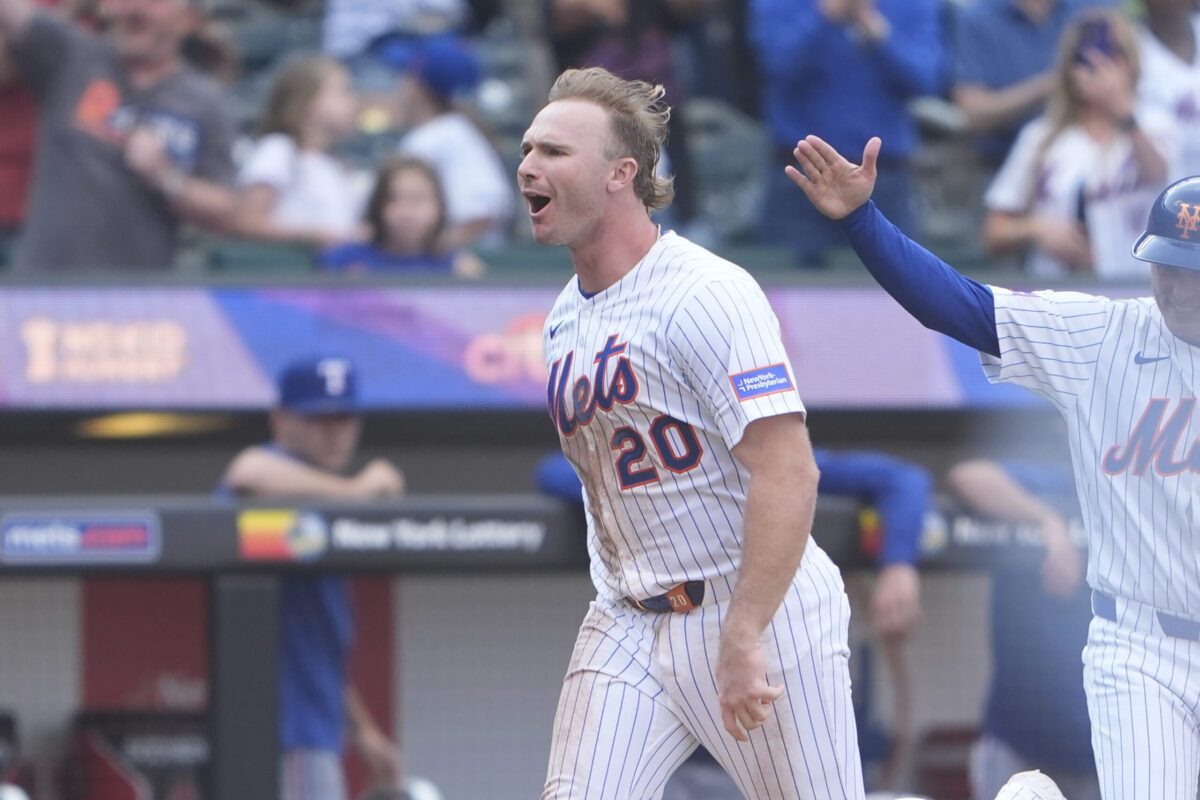
You’ve no doubt heard by now that last Thursday, Pete Alonso signed a five-year, $155 million contract with the Orioles. That’s going to annoy those still rooting for Coby Mayo, but is obviously a big move for the team. It’s hard to picture the lifelong Met donning a different uniform, but we’re going to get used to it eventually. For now, let’s consult the park factors to find out how the move from New York’s Citi Field to Baltimore’s Oriole Park at Camden Yards might impact his results.
| Time Period | Team | Venue | 1B | 2B | 3B | HR | H | BB | OBP | SO | R | Park Factor |
|---|---|---|---|---|---|---|---|---|---|---|---|---|
| 3 Years | Mets | Citi Field | 93 | 87 | 83 | 109 | 94 | 110 | 99 | 102 | 98 | 99 |
| 1 Year | Mets | Citi Field | 97 | 80 | 98 | 95 | 93 | 101 | 96 | 101 | 90 | 95 |
| 1 Year | Orioles | Oriole Park at Camden Yards | 96 | 99 | 98 | 108 | 99 | 87 | 96 | 106 | 96 | 98 |
This is a tricky comparison. Prior to 2022, Oriole Park was hitter friendly, ranking tied for second in right-handed Park Factor and tied for first in HR factor from 2019-2021. Then for the 2022 season, the left-field wall was pushed back and raised, in an effort to make the park more neutral. It did accomplish that overall, as its Park Factor dropped to 99, just below neutral, from 2022-2024, but its HR factor plunged to just 79, ranking 27th. So in an effort to rectify the extreme effect created for right-handed home runs, the left-field wall was moved in a lowered for the 2025 season.
As a result, a three-year rolling park factor can’t be used for Oriole Park. Instead, I’ll primarily be comparing the three-year Citi Field factors to the one-year Oriole Park factors, but I’ve also included the one-year Citi Field factors as well.
Let’s begin with the hit type factors. It’s nearly a clean sweep for Oriole Park, as it features higher factors for singles, doubles, and triples. This a real positive for Alonso, who owns just a .270 career BABIP, including a lower .265 mark at home. Both parks suppress hits though, so it’s not like he’s suddenly going to be threatening to lead the league in BABIP or hit .300. But a couple more singles and particularly doubles should boost that BABIP and could also result in more runs batted in, if all else was equal.
Although Citi Field has been inferior for the non-home run hit types over the past three seasons, that wasn’t the case for just 2025. The park had a slightly higher singles factor than Oriole Park this season and the triples factor was tied, though that’s pretty meaningless for Alonso. The doubles factor actually declined, resulting in an even larger gap between parks, but Alonso hit 10 more doubles than he had in any previous season, so we would be expecting some regression there regardless of what park he moved to.
Next up is the home run park factors, which are quite interesting to see. Oriole Park is back to inflating right-handed home runs, but over the past three years, Citi Field was surprisingly slightly better. Oddly, the park suppressed right-handed home runs this year, suggesting another big boost for Alonso if those effects stuck. Driving the big difference between Citi’s three year and one year HR factor is it suddenly ranked third highest in baseball in 2024. I have no idea what caused that as it seems like a fluke given its history. The fact that Alonso has posted a higher HR/FB rate on the road than at home also suggests he should benefit from the move from a HR/FB rate perspective.
Next up are walk and strikeout factors. Both of the factors show Oriole Park weaker for hitters, as it ranked 29th in right-handed walk factor this year, but tied for sixth highest in strikeout factor. That’s a massive difference in walk factors, and while there’s a gap in strikeout factors, it’s not nearly as meaningful. Over his career, Alonso did post a higher walk rate and lower strikeout rate at home, but not by dramatic margins, so you have to assume much of that is simply the tendency to perform better at home. It’ll be interesting to see if he does walk less often at Oriole Park than on the road in 2026.
Though Oriole Park has been better for hits than Citi Field, the walk factor difference pushes the latter higher when comparing OBP factors. However, if only looking at the one-year Citi factor, we see a tie, with both parks reducing OBP. Alonso probably hasn’t posted as high an OBP as you might expect as a premier power hitter, but the move is unlikely to make much of a difference there.
Finally, we land on the runs scored and overall Park Factor. Perhaps surprisingly (and likely influenced by Citi’s fluky 2024 HR factor), Oriole Park was slightly more pitcher friendly this season than Citi has been over the past three seasons. If we just look at this year, though, Oriole Park was actually less pitcher friendly, and therefore friendlier to hitters than Citi.
So there you have it, a confusing comparison between a park with an adjusted left-field wall and another with a potentially fluky set of factors in 2024 affecting the comparison. I would guess that this is a slight positive for Alonso’s BABIP and batting average and a larger positive for his HR/FB rate.
From a team perspective, he’ll no longer get to hit behind Juan Soto’s NL-leading OBP. But, the Orioles are trotting out a mostly young and exciting lineup, so the upside is there to surround Alonso with a strong cast that could result in a 100+ RBI and 90+ runs scored. Just don’t expect him to finish second in baseball in RBI again! Maybe Alonso’s projected fantasy value is bumped up by a buck or two, but the move shouldn’t have much more of an effect than that.
Mike Podhorzer is the founder of ProjectingX IQ, an advanced fantasy baseball analytics platform that transforms projection data and in-season performance signals into actionable intelligence. He is the 2015 Fantasy Sports Writers Association Baseball Writer of the Year and three-time Tout Wars champion. He is the author of the eBook Projecting X 2.0: How to Forecast Baseball Player Performance, which teaches you how to project players yourself. Follow Mike on X@MikePodhorzer and contact him via email.
Maybe it’s my reading comprehension but it’s not immediately apparent that the table is Right handed park factors only (I think). I see RH referenced in relation to previous OPACY factors in the paragraph after but not in direct relation to the table.
It’s not, I haven’t been labeling the factors since I assumed it’s implied. He’s a righty so it’s right-handed factors.