
Optimal ADP Clusters: Starting Pitchers, Rounds 18-20
“Don’t it always seem to go, you don’t know what you got ‘til it’s gone.”
Joni Mitchell may not be a roto savant, but even she might agree that the best part of the fantasy baseball season is research-and-draft season. Every day, from February until Opening Day, is so incredibly thrilling – nonstop spring training news, draft rankings adjustments, and player pool deep-dives – there’s always some rabbit hole of research to go down. As we continue studying and gaining confidence in the fresh player pool and a new year’s ADP, more questions arise, and the more work there is to be done.
Whether in NFBC or best ball contests, high-volume early drafters subconsciously form bad habits in draft rooms. We get too comfortable targeting and drafting the same players over and over. Conversely, we avoid players who have burned us in previous seasons and those we have some subjective bias against. Rarely do we deep dive and reassess those players because we’ve already made up our minds. That’s why it’s crucial to explore every nook and cranny of a positional tier. We have all fallen victim to draft room paralysis, where a decision between several similarly ranked shortstops or starting pitchers becomes gut-wrenching when we’re on the clock. This preseason column aims to help with those tough calls. We will explore some of the most confusing ADP clusters, by position, beyond the simple “I need to boost my batting average, so I’m taking this guy.”
Let’s dive into these ADP pockets logically and systematically, reviewing four analytical components of the players within each cluster. Since this specific article’s topic is starting pitchers, the components have been slightly adjusted:
Health and Durability
Skills: Arsenal, Stuff, Velocity, Command, Control
Roto Ratio Expectations (ERA, WHIP)
Team Context: Defense, Bullpen, Run Support (Wins)
ADP Cluster 4: Starting Pitchers, Rounds 18-20
These are starting pitchers drafted in the 205-240 ADP range in the NFBC Online Championship (OC) over the last seven days.
- Aaron Nola, Philadelphia Phillies (ADP 212)
- Joe Musgrove, San Diego Padres (213)
- Jack Flaherty, Detroit Tigers (214)
- Matthew Boyd, Chicago Cubs (215)
- Ryan Weathers, New York Yankees (218)
- Andrew Abbott, Cincinnati Reds (227)
- Zac Gallen, Arizona Diamondbacks (229)
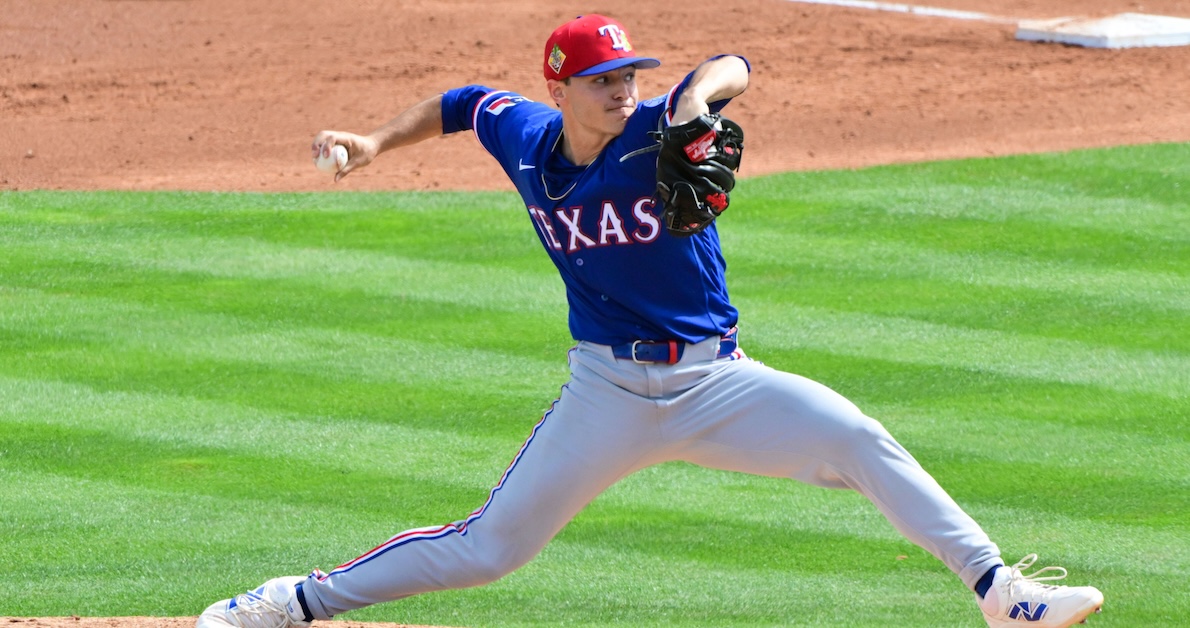
- Jack Leiter, Texas Rangers (239)
Health and Durability
Five of the eight are seasoned veterans over the age of 30 – Nola, Musgrove, Flaherty, Boyd, and Gallen. At 35, Boyd is the elder statesman of the group. Abbott (26) has averaged 25 starts over his first three seasons. Leiter was a rookie last season, starting 29 games. Weathers has been in the league since 2021, the year he set his career high for innings pitched (94.2). Weathers turned 26 in December, and Leiter will turn 26 in April.
Aaron Nola has been the poster boy of durability over the last decade. Since 2017, his first full season, no pitcher has thrown more innings than (1,527). Last season was his first time on the IL, missing just over three months with a right ankle injury. Before that, he only spent two brief stints on the COVID-IL, in 2021 and 2022.
Zac Gallen missed three-plus months in 2021 with various injuries (fractured forearm, elbow sprain, hamstring strain) and one month with a hamstring injury in 2024. Since 2022, Gallen is third in innings pitched (734) behind Logan Webb (820) and Framber Valdez (768).
Jack Flaherty has averaged nearly 29 starts over the last three seasons, despite a relatively low innings-per-season average of 155.2, though Flaherty hasn’t been on the IL since 2022.
Andrew Abbott missed six weeks with a shoulder injury in 2024 and nearly three weeks with a shoulder strain in 2025.
Before Matthew Boyd’s 179.2 innings in 2025, he spent 380 days on the IL since 2021, and last pitched a full season in 2019. Boyd dealt with a variety of serious arm-related injuries and underwent Tommy John surgery in 2023.
Joe Musgrove missed half the season in 2023 (fractured big toe, right shoulder inflammation), half the season in 2024 (elbow), and all of last with Tommy John. Musgrove had his first bullpen session last August, has no strict innings cap for 2026, and sat at 94-95 with his fastball in his first exhibition game, against Team Great Britain on Wednesday.
Ryan Weathers has spent nearly 250 days on the IL over the last two seasons with finger, forearm and lat injuries. Weathers returned in the final month of 2025 to mixed results, but flashed strong velocity gains. Now with the New York Yankees, Weathers has our fantasy juices flowing in a late-February exhibition game where he topped out at 99.8 mph with his four-seam fastball.
Here are Jeff Zimmerman’s health grades in Eno Sarris’ pitching piece on The Athletic from February 3:
- Andrew Abbott (90%)
- Zac Gallen (90%)
- Jack Flaherty (86%)
- Jack Leiter (84%)
- Aaron Nola (81%)
- Matthew Boyd (72%)
- Ryan Weathers (65%)
- Joe Musgrove (N/A)
If I were to bet on anyone to pitch 180+ innings, it’s Nola, followed by Gallen. Musgrove won’t be restricted, but I’d be shocked if he threw more than 155 innings (which is OOPSY’s projection). ATC and THE BAT project 133, FGDC, ZiPS and Steamer are between 156-159 and I’ve got him for 150 at FTN. I have Nola for 181, and Gallen and Leiter in the 170s. Abbott, Boyd and Flaherty are in the 160s. Weathers (148, which might be generous) is the biggest red flag, given his health history and substantial uptick in velocity.
Skills: Arsenal, Stuff, Velocity, Command, Control
Below is a two-year sample for our cluster. SIERA is my preferred ERA indicator, and I’ve included and ERA-SIERA differential. Note that Abbott’s -1.21 differential signified being the “luckiest” of the group. Last season, that differential was 1.33 (2.87 ERA, 4.20 SIERA). Aaron Nola’s 0.63 differential was the unluckiest. He posted a 4.35 ERA where his SIERA of 3.72 was nearly in line with his career ERA (3.74 through 2024). Strikeout percentage and walk percentage are the preeminent stats for pitcher analysis. The various groundball rates are interesting to review as well. Notice the odd man out there – Abbott at 32.7%.
| Name | ADP | IP | K% | BB% | ERA | SIERA | ERA-SIERA | GB% | vFB | Stuff+ |
|---|---|---|---|---|---|---|---|---|---|---|
| Aaron Nola | 212 | 293.2 | 24% | 6.4% | 4.35 | 3.72 | 0.63 | 43.9% | 91.9 | 110 |
| Joe Musgrove | 213 | 99.2 | 24.6% | 5.6% | 3.88 | 3.62 | 0.26 | 41.3% | 92.9 | 108 |
| Jack Flaherty | 214 | 323 | 28.7% | 7.3% | 3.90 | 3.38 | 0.52 | 38.1% | 93.1 | 98 |
| Matthew Boyd | 215 | 219.1 | 22.6% | 6.2% | 3.12 | 4.00 | -0.88 | 36.8% | 93 | 93 |
| Ryan Weathers | 218 | 125 | 22% | 6.8% | 3.74 | 4.00 | -0.26 | 45.6% | 96 | 101 |
| Andrew Abbott | 227 | 304.1 | 20.7% | 7.5% | 3.25 | 4.46 | -1.21 | 32.7% | 92.8 | 96 |
| Zac Gallen | 229 | 340 | 23.1% | 8.4% | 4.31 | 4.07 | 0.24 | 44.7% | 93.7 | 92 |
| Jack Leiter | 239 | 187.1 | 21.9% | 10.3% | 4.80 | 4.52 | 0.28 | 37.9% | 96.9 | 107 |
There are no truly elite control arms here, though Joe Musgrove (career 6% BB) and Aaron Nola (6.4%) are most reliable in this regard. Jack Leiter and Ryan Weathers have the nastiest stuff and throw the hardest. Leiter’s control has been his Kryptonite throughout his minor league days. Harnessing and reducing it will be the key for the former second-overall draft pick to fully break out and provide the most fantasy profit among starters in this range. Rangers’ new pitching coach Jordan Tiegs has been with the organization since 2019 and is considered to be a key driver in Leiter evolving as a big-league pitcher. It surely doesn’t hurt having veteran hurlers Jacob deGrom and Nathan Eovaldi in your corner.
All of these arms except Musgrove rely primarily on their four-seam fastball (between 48-51% usage in 2025). Musgrove has the most diverse pitch mix. He gradually increased his cutter and slider usage over his last four seasons with the Padres. Flaherty is primarily a fastball-curveball-slider guy. His curve was outstanding in 2024 (.175 wOBA, .219 SLG, 40% K). He upped his usage on it in 2025 (from 21% to 25%) and punched batters out at a 41% clip, though it did not fare quite as well – a .281 wOBA, .380 SLG.
Roto Ratio Expectations (ERA, WHIP)
Projections models and personal opinions will all differ, but the one thing we all seem to agree on is that Andrew Abbott is due for some major ratio regression. Abbott posted that magical 2.87 ERA last season, after two seasons of 3.77. FanGraphs models project ERAs between 4.17 (FGDC) and 4.65 (THE BAT X). The lone outlier is ZiPS at 3.80. The most baffling stats were Abbott’s home splits. The fly ball-leaning lefty managed a 2.39 ERA in his home park – extra hitter-friendly Great American Ball Park. Abbott did reduce his walk rate last season (from 8.9% to 6.3%), but remained a below-average in strikeouts (19.5% in 2024, 21.8% in 2025). His WHIP is likely to land somewhere in the 1.23-1.28 range. He posted a 1.15 WHIP in 2025, 1.30 in 2024 and 1.32 in 2023.
The usually dependable Zac Gallen was a tough player to roster last year. Hitters bashed him to the tune of a 5.40 ERA before the All-Star break, which he cleaned up in the final 2.5 months (3.97). He also served up home runs at an above-average rate (1.45 HR/9) after four consecutive seasons in the 0.73-0.94 range. His velocity didn’t drop last season, but his strikeout rate did – 21.5% after four seasons of 26%. Gallen is a difficult arm to project for 2026 as there is a wide band for ERA and WHIP. A 3.50/1.15 season probably wouldn’t surprise us. Neither would 4.25/1.25. My personal expectations for him are right in the middle.
Jack Leiter throws certifiable heat. His 3.86 ERA was respectable, but a 1.28 WHIP, partially fueled by a 10.8% walk rate, was not. Ryan Weathers throws just as hard, but has done a better job at limiting free passes, keeping his walk rate under 7% over his 125 innings since 2024. These are the two highest-upside pitchers in the cluster, though each come with the most risk and the risk with Weathers is higher, especially as his draft price continues to rise.
Matthew Boyd managed a splendid 3.20 ERA despite higher peripherals (4.09 SIERA, 4.22 xFIP). Boyd was especially solid in his home starts:
- Home: 89.2 IP – .257 wOBA – 2.51 ERA – 0.90 WHIP – 23.2% K – 4.1% BB
- Road: 90 IP – .315 wOBA – 3.90 ERA – 1.28 WHIP – 19.9% K – 7.4% BB
Boyd was mostly disaster proof before the All-Star break, allowing no more than three earned runs in 18 of 19 starts. He allowed four or more in six of his final 12 starts. He did not allow more than five runs in any of his starts, and there’s something to be said about drafting boring, late-round veteran arms who reduce our fantasy staff’s volatility. I wouldn’t be surprised if Boyd followed up with another sub-3.50 ERA, but it’s most likely to end up in the 3.65-3.90 range. We can work with that.
Joe Musgrove has the highest ratio upside of the group. His home park is a hit-suppressor factory and he’ll line up for several starts against subpar offenses in his division (COL, ARZ). Among starting pitchers with 500 or more innings pitched since 2021, Musgrove’s 3.20 ERA is tied for ninth lowest. Just stay healthy, Joe.
Team Context: Defense, Bullpen, Run Support (Wins)
Poor Jack Flaherty finished last season with an 8-15 record for a team that was 12 games over .500 and almost won their division. Matthew Boyd’s Cubs won five more games (92 to 87) and Boyd started 31 games just as Flaherty did, but ended up with better run support overall and a 14-8 record. Reviewing Flaherty’s game logs helps paint the picture. He served up at least four earned runs in 9-of-31 starts, including three horrific outings (7 ER vs. CIN, 8 ER at TB, 8 ER vs. KC). The Cubs boasted a top-tier defense last season and project for much of the same in 2026. The Tigers are about league average. This information adds additional insight to their differences in the wins category last season, and likely portends our 2026 expectations.
Aaron Nola would be the safest bet for most wins among this cluster. Ironically, high win totals have eluded the him. Despite six consecutive seasons between 32 and 34 starts, Nola has won more than 14 games in a season once – 17 in 2018. Among pitchers in this cluster, Nola’s Phillies have the highest projected win total (89.5), and the Cubs are next (88.5). The Diamondbacks have the lowest (79.5), and it doesn’t help that the Diamondbacks bullpen was a dumpster fire last year (third worst) and don’t expect A.J. Puk and Justin Martinez back anytime soon. It’s doubtful that Kevin Ginkel and Paul Sewald hold down the fort in the meanwhile. Wins are the least projectable standard roto category, so we’ll all probably just laugh about it come October if Abbott wins 16 of 33 starts and Nola just 9 of 31.
Recommendation (with target grade)
Aaron Nola (B) – Buy back in on the “King of Even Years”. Plus strikeouts, a low walk rate, decent defense, and good run support from a team with a high win total.
Andrew Abbott (D) – Tough home park for pitchers, a tough hitting division, below-average strikeouts, and the Regression Monster knocking on his door. I’ll pass.
Matthew Boyd (C) – Ceiling is low, but the floor is stable. On a team with a strong offense and top-notch defense of mostly grounded veterans. Likely a pass, but I’d draft him 1-2 rounds after his ADP.
Joe Musgrove (B+) – Intrigued, but if his spring continues to flow flawlessly, the price will rise to the 140-160 range and our margin for profit has sunk. Currently a target.
Jack Flaherty (C+) – Derives value from strikeout output potential based on recent seasons flirting with the 30% K mark. Too much volatility in his profile for me to stomach.
Zac Gallen (C) – Defense projects among the top five, but the bullpen seems wonky, offense is weaker, and Gallen has become the human rollercoaster. Not a target but would consider him.
Ryan Weathers (B) – New high velocity, health history, and durability are all concerning factors. Ideal breakout candidate based on skills and new environment. Beware the rising price. I’d consider.
Jack Leiter (A-) – Ironically, the most affordable per current ADP is my favorite target. Healthy, elite pedigree, killer stuff, pitcher-friendly home park, and the boys in his ear (deGrom, Eovaldi)
The most important takeaway is one that hasn’t been introduced yet – that there are over a dozen starters in the Rounds 21-25 range who are comparable to the arms in this cluster. If we’re comfortable with those later targets, then we don’t have to spend much time shopping in this range. To recap, Leiter is a strong target, Musgrove and Weathers are also, albeit the latter comes with a high risk factor. Boyd, Flaherty and Gallen are considerations, but only after their ADPs. I won’t have Andrew Abbott on any of my teams this season.
Vlad writes for RotoGraphs and is the head of fantasy baseball content at FTN Fantasy. He is a Tout Wars Expert League champ, member of the CDM Fantasy Sports Hall of Fame and has been nominated for FSWA writing awards six times. Vlad has been playing fantasy baseball since 1995, winning 42 NFBC leagues since 2012 and ranking in the top percentile in NFBC’s Online Championship contest (33% win rate, 52% cash rate; 64 leagues). Much to the chagrin of his colleagues and most baseball aficionados, Vlad is a lifelong Dodgers fan who claims his first gut call at age 9 was Kirk Gibson’s 1988 World Series home run. You can follow him on X and BlueSky @RotoGut.
iNvErTeD w!!!!1!!