
Optimal ADP Clusters: Second Tier Aces
“Don’t it always seem to go, you don’t know what you got ‘til it’s gone.”
Joni Mitchell may not be a roto savant, but even she might agree that the best part of the fantasy baseball season is research-and-draft season. Every day, from February until Opening Day, is so incredibly thrilling – nonstop spring training news, draft rankings adjustments, and player pool deep-dives – there’s always some rabbit hole of research to go down. As we continue studying and gaining confidence in the fresh player pool and a new year’s ADP, more questions arise, and the more work there is to be done.
Whether in NFBC or best ball contests, high-volume early drafters subconsciously form bad habits in draft rooms. We get too comfortable targeting and drafting the same players over and over. Conversely, we avoid players who have burned us in previous seasons and those we have some subjective bias against. Rarely do we deep dive and reassess those players because we’ve already made up our minds. That’s why it’s crucial to explore every nook and cranny of a positional tier. We have all fallen victim to draft room paralysis, where a decision between several similarly ranked shortstops or starting pitchers becomes gut-wrenching when we’re on the clock. This preseason column aims to help with those tough calls. We will explore some of the most confusing ADP clusters, by position, beyond the simple “I need to boost my batting average, so I’m taking this guy.”
Let’s dive into these ADP pockets logically and systematically, reviewing four analytical components of the players within each cluster. Since this specific article’s topic is starting pitchers, the components have been slightly adjusted:
- Health and Durability
- Skills: Arsenal, Stuff, Velocity, Command, Control
- Roto Ratio Expectations (ERA, WHIP)
- Team Context: Defense, Bullpen, Run Support (Wins)
ADP Cluster 3: Starting Pitcher – Tier 2 Ace
ADP from NFBC 12-team Online Championships (OC) from the last 10 days, through 2/26
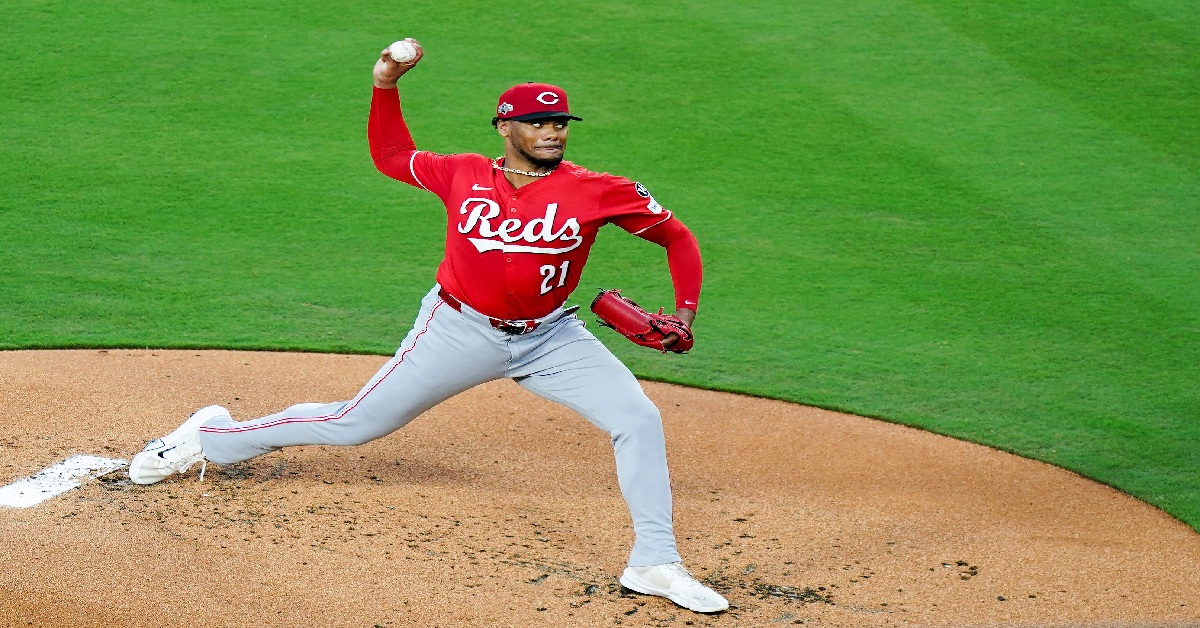
- Hunter Greene, Cincinnati Reds (ADP 42.1)
- Cole Ragans, Kansas City Royals (46.5)
- Jacob deGrom, Texas Rangers (47.3)
- Max Fried, New York Yankees (54)
- Freddy Peralta, New York Mets (59.4)
- Logan Webb, San Francisco Giants (62)
These stud pitchers are the overall SP10 through SP16, typically drafted in the fourth and fifth rounds of 12-team leagues. They are all viable fantasy rotation anchors, specifically for managers who want to start with 2-3 hitters or who aren’t locked in on an elite ace. There will be managers who prefer early pitcher-heavy builds, so one of these guys might be someone’s SP2. For most, one of these six is likely to be the pitcher we build our staff around.
A strong argument for targeting starting pitchers from this cluster is their projected value relative to arms in the tier just above – let’s call them the Tier 1B’s. Cristopher Sánchez, Bryan Woo, and Hunter Brown have all leapfrogged ahead of this group based on exceptional 2025 results. Logan Gilbert missed several starts with injury for the first time as a pro, and Chris Sale is 36 with one season of 25+ starts since 2018. Yoshinobu Yamamoto threw 211 innings (including playoffs) and is heading right back out there in the WBC. No pitcher is ever inherently “safe” by virtue of what they do, but are we certain the Tier 1B group options are that much more comfortable than this next group that we’re willing to bypass a top 25 hitter for them?
Health and Durability
Max Fried was drafted in 2012, had Tommy John surgery in 2015, and made his major league debut in 2017. He has spent time on the IL for a variety of issues (back spasms, hamstring strains, a forearm strain) and has missed time with finger blisters four times in his career. Fried has earned 28-32 starts in five of seven big league seasons.
Cole Ragans was drafted by the Rangers in 2016, had two Tommy John surgeries (2018, 2019, the second repaired a torn graft), debuted in 2023, had two stellar, healthy seasons before his troubling 2025 season (groin injury and rotator cuff strain).
Jacob deGrom averaged 207.1 innings between 2017 and 2019. He remained healthy and dominant through 2020 and the first half of 2021, then proceeded to toy with the emotions of Mets fans and fantasy managers for the next three years. deGrom returned from Tommy John in September of 2024 (three regular-season starts), then blessed us with 172.2 innings (30 starts) last season.
Hunter Greene is also part of the TJS club (2019), two years after the Reds drafted him second overall. He made his debut in 2022 (125.2 IP, 24 GS) and over the next three seasons, started 22, 26, and 19 games. He missed time in his rookie year with a right shoulder strain, spent 63 days on the IL in 2023 following right hip surgery, missed six weeks in 2024 with right elbow soreness, and was out for a little over two months with a right groin strain last season.
Freddy Peralta has made at least 30 starts over his last three seasons, averaging 173 innings per season. The last time Peralta had health concerns was in 2022, when he missed nearly three months with a strained right lat. He dealt with shoulder discomfort later in the year and shoulder inflammation the previous season. Peralta has long since wiped away his injury risk tag. One concern I pointed out in my SP Tiers piece at FTN is Peralta’s low efficiency rate in his starts – just two of his 33 starts last season lasted more than six innings. In 2024, only two of 32. I’d take the over on two with the Mets in 2026.
There is no pitcher more durable or reliable than Logan Webb. He has averaged 205 innings over the last four seasons. Webb’s 820 since 2022 leads the majors and is 53 more than no. 2 on the list, Framber Valdez. Though Webb has only started two more games than Dylan Cease over that span (132 to 130), Webb has logged over 100 more innings, and is the only qualified pitcher averaging over six innings per start. That’s as durable as it gets.
All six pitchers had healthy offseasons and are gearing up for Opening Day. Here are Jeff Zimmerman’s health grades, from an Eno Sarris article in The Athletic from early February:
- Logan Webb – 97%
- Max Fried – 87%
- Freddy Peralta – 86%
- Cole Ragans – 78%
- Hunter Greene – 73%
- Jacob deGrom – 53%
I don’t know what Jeff’s secret sauce is, but I’d bet the house that it’s all formula-based. Reviewing this group’s injury history more in depth increases my concern about Greene in this price range, and less concern about deGrom, given how he purposely dialed down his velocity last season and made it through unscathed.
Skills: Arsenal, Stuff, Velocity, Command, Control
Hunter Greene and Cole Ragans have filthy, nasty stuff and deGrom-esque upside. Would many be shocked if either were the Cy Young winner, league strikeout leader, or the overall fantasy SP1 this season? No starting pitcher throws harder so consistently than Greene, who’s 124 Stuff+ last season was the highest mark among starters with 100+ innings pitched. Ragans’ 14.6% swinging-strike rate ranks fourth (tied with Dylan Cease) among starters with 250+ innings in the last three seasons. Here are some key stats for this category, from the last two seasons, combined:
| Name | IP | Stuff+ | vFA | SwStr% | K-BB% |
|---|---|---|---|---|---|
| Hunter Greene | 258.0 | 117 | 98.4 | 14.0% | 21.1% |
| Cole Ragans | 248.0 | 110 | 95.4 | 14.7% | 23% |
| Jacob deGrom | 183.1 | 111 | 97.5 | 14.2% | 22.6% |
| Max Fried | 369.2 | 108 | 94.5 | 10.8% | 16.3% |
| Freddy Peralta | 350.1 | 101 | 94.6 | 13.0% | 18.6% |
| Logan Webb | 411.2 | 107 | 92.7 | 9.6% | 17.7% |
Jacob deGrom was a master of control yet again, producing a 5.5% walk rate. Greene’s walk rate dropped to 6.2% last season, from 9.3% and 9.6% the previous two seasons. Fried’s career rate is 6.7% (6.4% in 2025), and Webb’s is a pristine 5.7%, though he pitches to contact and serves up more hits than anyone in the majors. Ragans and Peralta have career walk rates over nine percent, 9.1% and 9.3%, respectively.
Stuff-wise, we can rank Greene, Ragans and deGrom as elite, Fried and Peralta as great and Webb, above average. Peralta has three straight seasons of 200+ strikeouts and owns a 29.9% career strikeout rate. Fried punches out about a batter per inning, but that 23-24% strikeout rate is subpar for an ace. He earns his ace status with elite ratios. We can call Webb the guy who’s with this group because he gets extra credit (elite innings/volume) by taking night classes and going to summer school.
Roto Ratio Expectations (ERA, WHIP)
Four from this group produced ERAs under 3.00 in 2025. Ragans’s 4.67 is excluded for now, since he played less than half the season, though he earned a 3.14 ERA in 32 starts in 2024. Webb’s 3.22 last year was nicely supported by a lower SIERA (3.14) and xFIP (2.78). Greene’s was under 3.00 two years in a row, albeit with plenty of missed time. Fried has done it three of the last four seasons, leaving his 3.25 from 2024 his most recent blemish. deGrom has been the sub-3.00 master for over a decade and Peralta brought his under 3.00 (2.70) for the first time since 2021 after three seasons (2022-2024) between 3.58 and 3.86, still respectable, but not ace-like. If my primary goal is to target ERA and find the guy to most likely earn a sub-3.00 rate, I’d draft deGrom.
If looking for the best projected WHIP, deGrom would be a good bet yet again. Webb is on the opposite end of the spectrum, likely netting us in the 1.15-1.25 range. Ragans and Peralta are likely to land in the 1.10-1.20 range, though I’d cast a wider projection net there to 1.02-1.27. Expect Fried in that 1.10-1.18 range as well. If Greene’s walk rate gains carry over into the new season, a sub-1.00 WHIP wouldn’t be surprising. Many from this cluster are capable of outperforming the ratios of some of the arms in the tier above, though not on the level of The Big 3 (Tarik Skubal, Paul Skenes, Garrett Crochet) or a rejuvenated Zack Wheeler.
Team Context: Defense, Bullpen, Run Support (Wins)
Wins are the toughest roto category to project, but we can more accurately predict more of them for a 150-inning pitcher on the Dodgers than a 150-inning guy on the Nationals. Any of our six Tier 2 Aces can lead this group with 17 wins this season, though Max Fried and Freddy Peralta would have the best odds since they play for teams tied with the second highest projected win totals in MLB, with 90.5. The Royals, Reds, Giants and Rangers all have projected win totals of 7-10 games fewer.
None of their teams boast top rated defenses, though the Mets could be one this season if Bo Bichette figures third base out quickly. Two of their worst offending defenders (Pete Alonso, Brandon Nimmo) are gone, and Marcus Semien and Luis Robert Jr. are both plus defenders. The Rangers are replacing Semien with weak defensive second baseman, Josh Smith. The main way for this defense to surprise and help with run prevention is to find a way to keep Corey Seager and Josh Jung on the field all season – both are stout defenders at their respective positions.
None of these teams have elite bullpens either. The Yankees’ pen comes close and could be a top five group. The bullpen staff of the Giants has some unique talent and horsepower, but many of them are new to the team and have had volatile careers. Bottom line here is that many of these bullpens will absolutely blow a handful of games for our Tier 2 aces, but it’s not worth trying to factor this element into our decision about whether to spend our fourth-round pick on Fried or Webb. All of the other things matter much more.
Recommendation
Hopefully, this semi-deep dive helps bring clarity to confidently make draft decisions on this cluster of excellent arms. Risk-averse and so-called boring drafters might be more comfortable with Fried, Peralta or Volume King and Jesse Plemons doppelgänger, Logan Webb. Though I’d want an SP1 before Webb or a quick SP2 right after him. If we’re going for the gusto, love roller coasters and don’t mind heartbreak, then we’re riding the train of Greene, Ragans or deGrom. If there are hitters you love in the second and third rounds, go ahead and draft them instead of the Woo/Gilbert mini-tier and focus on our Tier 2 instead. The arms I am most comfortable drafting in this cluster are Ragans and Peralta.
Vlad writes for RotoGraphs and is the head of fantasy baseball content at FTN Fantasy. He is a Tout Wars Expert League champ, member of the CDM Fantasy Sports Hall of Fame and has been nominated for FSWA writing awards six times. Vlad has been playing fantasy baseball since 1995, winning 42 NFBC leagues since 2012 and ranking in the top percentile in NFBC’s Online Championship contest (33% win rate, 52% cash rate; 64 leagues). Much to the chagrin of his colleagues and most baseball aficionados, Vlad is a lifelong Dodgers fan who claims his first gut call at age 9 was Kirk Gibson’s 1988 World Series home run. You can follow him on X and BlueSky @RotoGut.
Killer synopsis of various strengths and potential downsides in this elite group of pitchers. As for Logan Web’s win potential, he only needs 2 innings of relief most games, yet I look at the Giants’s bullpen and see a train wreck . . .
It does look very trainwrecky!