
NFBC Main Event: Starting Pitcher Helium
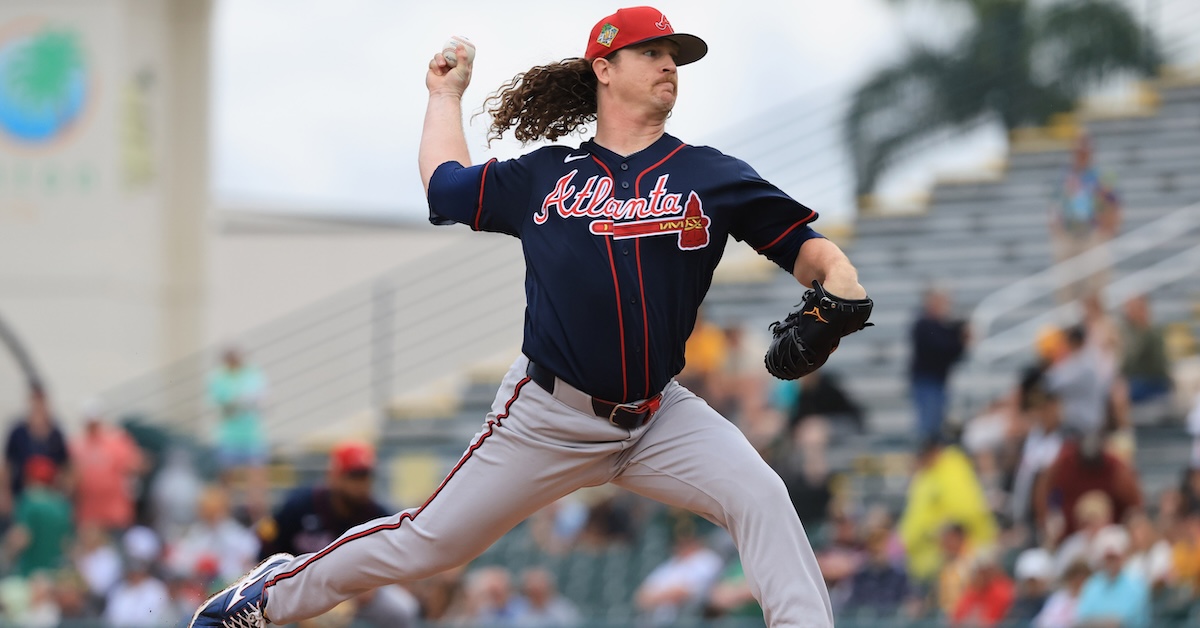
Last weekend, the largest national fantasy baseball contest kicked off – the NFBC Main Event. For those unfamiliar, it’s a 30-round, 15-team, 5×5 roto contest with an $1,800 entry fee. This year, 855 teams will be drafted (57 leagues), and only one person will win the overall grand prize of $200,000. Most of these leagues are drafted online. A dozen or so are drafted in person, in Las Vegas, on the weekend of March 20.
I’ve been to Vegas for the Main Event every year since 2014, except for the COVID-shortened season. It’s an incredible experience filled with camaraderie among diehard fantasy baseball enthusiasts, many of us long-time friends. Many of the attendees are incredibly sharp, skilled managers, though not everyone who enters and attends is a fantasy savant. As math would have it, every league has 12 losers, since only the top three cash. For the most part, and of importance to fantasy baseball managers everywhere, is that Main Event drafters are highly invested and motivated. The draft boards and ADP movement in these leagues is worth looking at closely. We can extract actionable takeaways from such highly invested players that can assist with our roto drafts, no matter the entry fee.
Main Event drafters are human. They can be swayed by spring training production and swept away in ADP helium, a chain reaction of pushing players higher and higher in drafts, far beyond their November-February market prices. Last March, Main Event helium rose Cristopher Sánchez by several rounds, from a 175 ADP in January to 101 by Vegas, including a min pick of 63. Obviously, that worked out. A similar thing happened with Nick Pivetta, Robbie Ray, Kris Bubic, but also with Will Warren, Hayden Birdsong, and a slew of out-of-nowhere “closers” who bombed – Luke Jackson, Jordan Romano, and Mike Clevinger. And who can forget the rise of red-hot Astros outfielder Cam Smith? We call it helium because it’s literally akin to a balloon taking you up, up, and away – oftentimes directly into the scorching sun.
One interesting nuance of the Main Event: since there is overall prize money on the line as well, and we’re competing against 800+ others, it does not behoove us to punt roto categories – specifically, pitching ones. One adage is always true here: pitching always gets pushed up in the Main Event. Elite ratios (ERA, WHIP) are a scarce commodity; hence, most NFBC managers focus on anchoring their teams with strong pitching to avoid the inevitable blowups when chasing mediocre two-start pitchers in FAAB during the season. With strong planning, execution, and a bit of luck, we can punt saves in our standalone home leagues. This strategy rarely works in the Main Events, where roto categorical balance is vital and where league-mates research incessantly to make competitive bids every FAAB period for 27 weeks. Teams at the top of the Main Event standings last year didn’t win and do well in pitching because they drafted breakouts like Sánchez, Bryan Woo and/or Hunter Brown alone. Many of them used a first or second round pick on Tarik Skubal, Paul Skenes, or Garrett Crochet and drafted Woo and Pivetta, or Brown and Nathan Eovaldi, and picked up Trevor Rogers in-season for pennies on the dollar in May. A decade ago, the fantasy world would scoff at the idea of drafting starting pitchers or closers early. In the Main Event world in recent years, no one has besmirched their fellow competitors for drafting Skubal with the first pick of the draft or the elite, top closer in the second round.
Many of us enjoy digging deep into pitcher profiles and advanced stats at FanGraphs and other sites, hoping to discover prospect pitchers who are ready to break out, or undervalued “sleeper” pitchers the market is currently undervaluing. We want to be first on the next big thing. We want to draft him before others, and if we can’t, sometimes we’ll grab one of those helium balloons and set some min picks.
Biggest SP Risers
With the first five 2026 Main Event drafts in the books, the fresh ADPs are available for all to peruse (select ‘Main Event’ in the dropdown). The original plan for this piece was to compare the last 10 days of NFBC Draft Champions ADP (50 rounds, no FAAB) to these first five Main Event drafts to see who the biggest risers and fallers were at each position. After a quick visit with my good friend XLOOKUP and building out some comparison tables, my focus (and impetus for this piece) was inspired by the massive helium with starting pitchers after 200 ADP. This is where the action was at, with blasts from our past like Kyle Harrison, Taj Bradley, Luis Gil in all his Ricky Vaughn-esque glory, and even the legend himself, Justin Verlander, who is back with the Tigers.
I sorted and discovered the starting pitchers whose Main Event ADP is at least three rounds higher than where it was just last week in the 50-round Draft Champions format. Pitchers in this group have risen exorbitantly over the last week for various reasons: increased spring velocity, introducing an effective new pitch, having a productive (in some cases, dominant) spring, and the increasing likelihood of an Opening Day rotation spot and aspirations of massive profit from a late-round selection.
The table below consists of 25 starting pitchers – mostly from the middle and late rounds – whose ADPs have risen by at least three rounds (45 picks) from early-March DCs to these first five Main Events. I’ve listed ADPs and their pick differences, the number of 15-team rounds increased by, and the percentage increase.
| # | Name | Team | DC ADP | Main ADP | Total Rise | Round Rise | % Rise |
|---|---|---|---|---|---|---|---|
| 1 | Justin Wrobleski | Dodgers | 515 | 379 | 136 | 9 | 26% |
| 2 | J.T. Ginn | Athletics | 577 | 444 | 133 | 9 | 23% |
| 3 | Kyle Harrison | Brewers | 437 | 322 | 115 | 8 | 26% |
| 4 | River Ryan | Dodgers | 486 | 375 | 111 | 7 | 23% |
| 5 | Steven Matz | Rays | 499 | 391 | 107 | 7 | 22% |
| 6 | Rhett Lowder | Reds | 411 | 316 | 95 | 6 | 23% |
| 7 | JR Ritchie | Braves | 515 | 423 | 92 | 6 | 18% |
| 8 | Richard Fitts | Cardinals | 522 | 431 | 91 | 6 | 17% |
| 9 | Justin Verlander | Tigers | 461 | 374 | 87 | 6 | 19% |
| 10 | Braxton Garrett | Marlins | 390 | 306 | 84 | 6 | 22% |
| 11 | Mick Abel | Twins | 365 | 288 | 77 | 5 | 21% |
| 12 | Taj Bradley | Twins | 404 | 329 | 75 | 5 | 19% |
| 13 | Cade Cavalli | Nationals | 342 | 270 | 71 | 5 | 21% |
| 14 | Dustin May | Cardinals | 397 | 326 | 71 | 5 | 18% |
| 15 | Grant Holmes | Braves | 425 | 358 | 67 | 4 | 16% |
| 16 | Jose Soriano | Angels | 328 | 271 | 57 | 4 | 17% |
| 17 | Luis Gil | Yankees | 350 | 298 | 52 | 3 | 15% |
| 18 | Zack Littell | Nationals | 490 | 438 | 52 | 3 | 11% |
| 19 | David Peterson | Mets | 357 | 307 | 51 | 3 | 14% |
| 20 | Shane Baz | Orioles | 199 | 150 | 49 | 3 | 25% |
| 21 | Johan Oviedo | Red Sox | 387 | 339 | 49 | 3 | 13% |
| 22 | Shane McClanahan | Rays | 211 | 162 | 49 | 3 | 23% |
| 23 | Matthew Liberatore | Cardinals | 410 | 361 | 49 | 3 | 12% |
| 24 | Brandon Sproat | Brewers | 471 | 423 | 48 | 3 | 10% |
| 25 | Mike Burrows | Astros | 277 | 232 | 45 | 3 | 16% |
Justin Wrobleski | River Ryan, Los Angeles Dodgers
If a pitcher has a pulse, wears Dodger Blue, and has a shot at the rotation, expect helium to ensue. Blake Snell will likely spend the first month of the season on the injured list. Most drafters don’t trust Roki Sasaki, whose ADP has fallen from the the low 200’s to the mid 300’s over the past two months. Manager Dave Roberts says he will be in the rotation, which means there will be at least one rotation spot open for Wrobleski or Ryan. Both have been solid in spring – Wrobleski has 0 ER, 0 BB, 4 K in 6 IP and Ryan has a 7:3 K:BB with one earned run allowed, also in six innings. Ryan is the more exciting and dynamic pitcher, but both his and Wrobleski’s ADPs remain close to each other until more definitive news is presented. Whoever is officially announced as the guy joining the rotation should see a spike of 100+ draft slots. For our shallower home leagues, these are names to monitor, but not specifically target.
Both are beneficiaries of the Roki Sasaki spring rollercoaster ride. As the market continues to lose market confidence in Sasaki and Blake Snell’s timetable continues to be pushed, Wrobleski and Ryan’s preseason
Mick Abel | Taj Bradley, Minnesota Twins
Both Abel and Bradley had horrific 2025 seasons and were mostly off our radars this draft season. Bradley had success at this level before, with the Rays in 2024, but owns a career 4.86 ERA in 385 innings. Abel was a promising first-round draft pick of the Phillies whose stock plummeted after his rough 39-inning debut last season (6.23, 1.51). Abel has 13 punchouts and no walks allowed in 10 spring innings. Bradley has a 19:5 K:BB with 7 ER in 14 innings. Given Abel’s pedigree, he is likely to rise up ADP at a higher rate than Bradley, depending on how his next spring starts go. Nevertheless, both pitch for a declining Twins team and run support may be tough to come by. Abel and Bradley’s high ADPs in the Main Event are tough pills to swallow and it might be best to not chase either one.
Kyle Harrison | Brandon Sproat, Milwaukee Brewers
With Freddy Peralta traded and Quinn Priester dealing with nerve issues in his wrist and starting the season on the IL, opportunities arise for the Brewers’ newest, talented young arms, Harrison and Sproat. Both are projected to begin the season in the rotation, though Sproat’s inclusion may depend on the health status of Logan Henderson. Harrison’s ADP has ballooned as it gets close to Round 20 of 15-team Main Events. Sproat’s current price is a bit more palatable, though it too will likely rise over the next two weeks. Both are former impact prospects and familiar names. Fantasy managers usually feel comfortable investing in Milwaukee starters, and this does feel like a great opportunity for both Harrison and Sproat. Harrison is a strong end-game target in shallower non-NFBC leagues as well.
Dustin May | Richard Fitts | Matthew Liberatore, St. Louis Cardinals
It really is comical how much preseason baseball influences the market. Two months ago, fantasy analysts (myself included) preached to avoid Cardinals pitchers outright. Fast forward to March, and the helium begins impacting every potential starting pitcher who looks good in the spring. Liberatore had somewhat of a breakout season in 2025, producing respectably in 29 starts, posting an above-average walk rate of 6.2%. May has teased us for years and there is no doubt he will draw many drafters back in. May finally threw more than 60 innings in a season last year (132.1 between two teams), but the results were poor (4.96 ERA, 4.47 SIERA, 1.42 WHIP. The most important thing to monitor with May this spring is his control. He walked batters at a 9.6% clip last year and has three walks in 6.2 innings so far this spring. Fitts is throwing hard (touching 99 mph) and having a nice spring. It’s possible that he beats out Kyle Leahy for the fifth spot, but is more likely to begin the season in Triple-A. Of the three, Liberatore is the one I’d want to target in deeper drafts. For 12-team drafts, stay away from all three.
Grant Holmes | J.R. Ritchie, Atlanta Braves
Traditionally, Atlanta Braves rotations have been a strong source of March helium – AJ Smith-Shawver anyone? With Spencer Schwellenbach and Hurston Waldrep sidelined for a while, opportunities to snag rotation spots have risen. Holmes is all but locked into a spot, especially after a masterful nine-strikeout performance against the Pirates on Thursday. Holmes did not allow a hit in five innings. Holmes boasted a 25% strikeout rate (22 starts, one relief appearance), though his 11% walk rate was a huge issue. Holmes is capable of reducing it to the 9% range, though don’t expect a helpful WHIP from him. As long as Holmes is healthy, he will be in this rotation. His 358 ADP is very reasonable, though it’s certainly going up after that masterful performance. Ritchie is a stud prospect who returned from Tommy John in June of 2024 and had a strong season in the minors in 2025 (140 IP – 2.64 ERA – 1.01 WHIP – 24.8% K – 9.6% BB). Though he is likely to start the year in Triple-A, he is certainly ready to dominate in the Majors. He is one spring injury away from earning a rotation spot before Opening Day. Both Holmes and Ritchie are strong targets in deeper formats and in the Main Event.
Wrapping It Up
There are other intriguing risers like Shane McClanahan, though we must always proceed with caution chasing massive ADP jumps with pitchers like him and Joe Musgrove who are working their way back after long delays. It’s difficult to field competitive fantasy squads if they’re loaded with injury risks and promising prospects. Hey, it’s great that Cade Cavalli is healthy and looks fantastic this spring. But there’s no chance I’m going to chase a Washington Nationals’ starter into the top 250 ADP when there are oodles of viable, safer options in this draft range. For every few risers, there are fallers. Sometimes players fall because we’re too dialed into small spring samples and missing the forest for the trees.
Though some of the best fantasy players around play the NFBC Main Event, we must remember that no one can predict the future. We can still take occasional risks, but they must be calculated and logical ones. Taking a shot on the Braves and Brewers pitchers who have been rising feel like a sharper move than chasing ADP helium on lesser talented starters who aren’t guaranteed rotation spots and play on worse teams. Good starting pitching is a key to success in all roto formats, but chasing helium blindly will often carry our balloon directly into getting burnt. Stay cool out there.
Vlad writes for RotoGraphs and is the head of fantasy baseball content at FTN Fantasy. He is a Tout Wars Expert League champ, member of the CDM Fantasy Sports Hall of Fame and has been nominated for FSWA writing awards six times. Vlad has been playing fantasy baseball since 1995, winning 42 NFBC leagues since 2012 and ranking in the top percentile in NFBC’s Online Championship contest (33% win rate, 52% cash rate; 64 leagues). Much to the chagrin of his colleagues and most baseball aficionados, Vlad is a lifelong Dodgers fan who claims his first gut call at age 9 was Kirk Gibson’s 1988 World Series home run. You can follow him on X and BlueSky @RotoGut.
If a team takes Skubal first, what would their strategy be for hitters the rest of the draft? Losing out on those premium bats early are harder to find off the wire.
A person planning to draft Skubal needs a strong built around him. I like the pre-planning process of “mapping out” where I populate a spreadsheet with the top 10 rounds (rows) and positions (columns) then list out all the targets per position and see who might be available in each subsequent round. There were many NFBC league winners last season who took Skubal first. Some of them didn’t wait a long time to draft their SP2 either. Part of this is getting comfortable with underpriced targets in the middle of the player pool.