
How League-Relative Statcast Power Metrics Forecast Next Year’s Rates
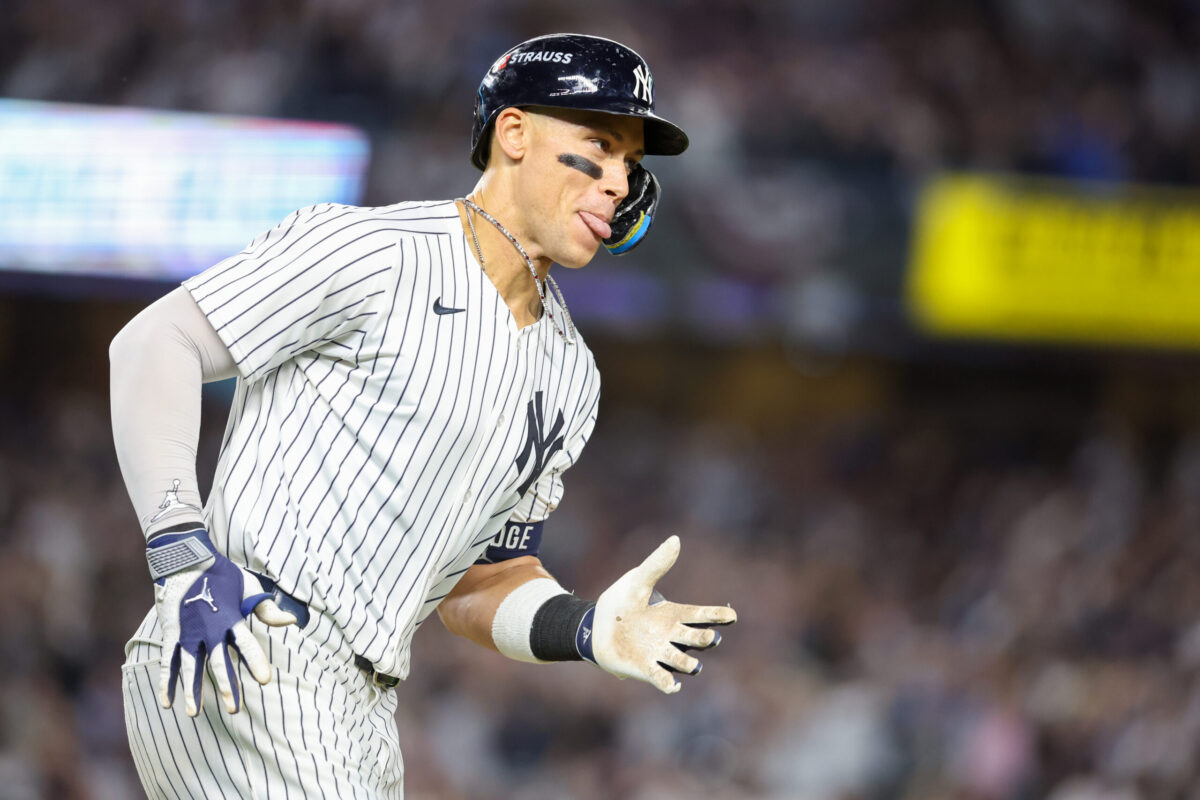
Over the years, I’ve thought about so many different ways to try predicting which hitters might see a jump or decline in power and HR/FB rate. Whether it was using ESPN Home Run Tracker, building an xHR/FB rate equation, using Statcast’s Home Runs leaderboard and its xHR calculation, or countless other ways, I left no stone unturned when attempting to find an edge. So are you ready for a new method?! Sure, you are!
Recently, I have been thinking about hitters with better than league average maxEV and HardHit% marks, but below league average Barrel% marks, and vice versa. These aren’t common combinations, but suggest players that clearly own the raw power typically held by hitters with higher Barrel% marks, but for whatever reason, didn’t pair that exit velocity with an optimal path to deliver barrels, and usually, home runs, at the rates we would expect. On the other hand, the vice versa group has managed to hit barrels at a higher rate than we would expect given below league average maxEV and HardHit% marks, totally optimizing the power they do own.
I had a feeling that this first group, Group A, the non-optimal group with the raw power, might have a better chance of increasing their Barrel% the following year with HR/FB rate to follow. Similarly, I was skeptical that the optimal group, Group B, could continue posting Barrel% marks above what their raw power typically matched with, increasing their HR/FB rate downside.
Rather than immediately posting an article identifying these players and slapping on the potential HR/FB rate upside and downside labels for this year, I decided to do the actual research to find out if my feelings were correct.
So I pulled every hitter with at least 300 PAs since 2015, the first year we have these Statcast metrics. I then asked Microsoft Excel’s Copilot, which is incredible the two times I’ve used it, to analyze the dataset by determining what percentage of hitters in each of the groups saw increases and decreases in their Barrel% and HR/FB rates the following year, while comparing those changes to every player season pair in the dataset.
I cheered when I saw the results, because they confirmed my feeling all along. So let’s dive in.
| Group | Season Pairs | Barrel% Up | Barrel% Down | HR/FB% Up | HR/FB% Down |
|---|---|---|---|---|---|
| A | 133 | 72.2% | 27.8% | 63.9% | 36.1% |
| B | 61 | 36.1% | 63.9% | 36.1% | 63.9% |
| Full Dataset | 1625 | 53.4% | 46.5% | 48.9% | 51.0% |
Well what do ya know?! These are precisely the results I was hoping for.
The season pair sample size in the groups aren’t massive as not a whole lot of players meet the criteria sets each season. But given how the data compares to the baseline, it’s certainly actionable.
Beginning with Barrel%, we find that a whopping 72.2% of hitters in the non-optimal Group A increased their mark the following season versus just 53.4% of the entire dataset. Meanwhile, the optimal group saw just 36.1% of hitters increase their Barrel%, while almost 64% suffered declines. That’s a massive gap between the two groups and the marks are meaningfully different than the baseline as well, suggesting we definitely have something here.
Moving along to HR/FB rate yields similar findings. Group A’s rate jumps the following year at a dramatically higher frequency than the entire dataset, while Group B’s dip frequency is the same as Barrel%.
From this data and with Copilot’s help, it seems pretty definitive to me:
- a high maxEV and HardHit%, but low Barrel% suggests a better than average chance of increased Barrel% and HR/FB rate the following year
- a low maxEV and HardHit%, but high Barrel% suggests a better than average chance of reduced Barrel% and HR/FB rate the following year
No fancy equations needed. Simply look at a hitter’s maxEV (league average is around 111-112 MPH) and HardHit% (league average available on FanGraphs and varies by year) in combination and then at Barrel%. Do the metrics all align? MaxEV and HardHit% usually do because EV drives HardHit%. But Barrel% won’t always align, so that misalignment could provide actionable insight into the following year’s mark, which could also impact HR/FB rate in the same direction.
I know you’re dying for 2025 names that fall into Group A and Group B, but you’ll have to wait until next week!
Mike Podhorzer is the founder of ProjectingX IQ, an advanced fantasy baseball analytics platform that transforms projection data and in-season performance signals into actionable intelligence. He is the 2015 Fantasy Sports Writers Association Baseball Writer of the Year and three-time Tout Wars champion. He is the author of the eBook Projecting X 2.0: How to Forecast Baseball Player Performance, which teaches you how to project players yourself. Follow Mike on X@MikePodhorzer and contact him via email.