
Dylan Cease Returns to AL, Heads to Blue Jays
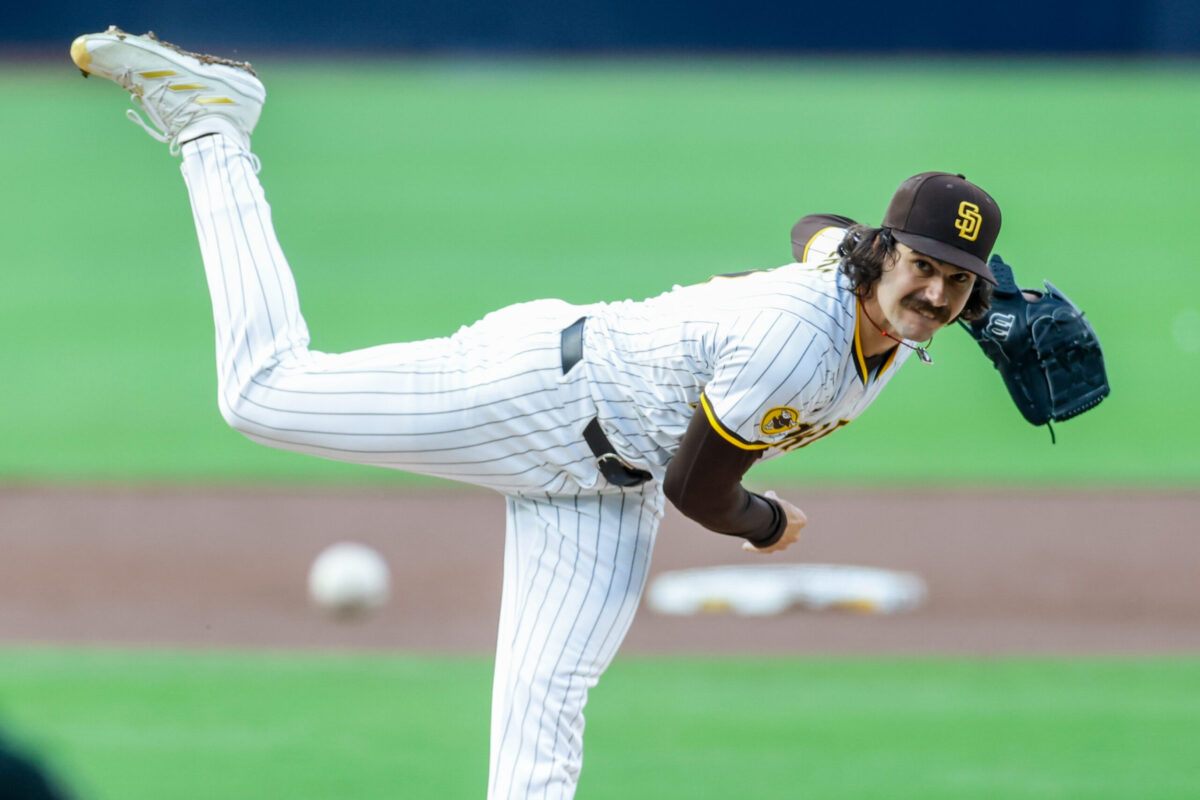
Just before Thanksgiving, the Blue Jays signed Dylan Cease to a seven-year, $210 million contract. He now returns to the American League, where he spent five seasons with the White Sox before joining the Padres for two seasons. Coming off the second worst ERA over a full season in his career, how might his new park affect his results? Let’s consult the park factors to find out.
| Team | Venue | H | BB | OBP | HR | SO | R | Park Factor |
|---|---|---|---|---|---|---|---|---|
| Padres | Petco Park | 96 | 103 | 98 | 102 | 102 | 94 | 97 |
| Blue Jays | Rogers Centre | 99 | 100 | 100 | 104 | 98 | 100 | 100 |
Welllll, that’s not great, Bob!
Let’s begin with the hit factors. Both parks have suppressed hits over the last three seasons, but Rogers has had a less dramatic effect. That’s bad news for Cease’s BABIP, which has been extremely inconsistent from year to year. Over his five full seasons since 2021, he has posted two marks right around .260, and then three marks over .300. It’s hard to believe that his hit suppression skills have actually swung that violently each season, so he’s likely a pretty good example of the effects of team defense and good old lady luck. However, it’s interesting to note that the two seasons with a suppressed BABIP featured LD% marks below 18%, while the three above .300 were driven by LD% marks over 20%. So some of the BABIP swings seem to be deserved, but it’s bizarre his LD% would yo-yo like that to begin with.
Moving along to walk factors, we find the only factor in which Rogers is more advantageous to pitchers, as it has been neutral, while Petco has inflated them. Cease has never exactly exhibited strong control and after improving his walk rate in 2024, it bounced back up to nearly double digits again this season. The park factor difference here isn’t so significant to think it’ll help him bring that walk rate back below 9%, so he’ll just have to rediscover his 2024 magic.
Because Rogers sits close to or at neutral in both the hits and walk factors, it’s no surprise to find a neutral factor for OBP. That’s slightly above Petco’s OBP factor, which means the park switch alone could result in a slightly higher number of baserunners allowed.
Next up is home runs, and color me surprised by the fact that Petco has actually inflated them. I was sure it suppressed the long ball! That said, it’s still slightly less inflationary than Rogers, but obviously the difference isn’t huge. Unlike his BABIP, Cease’s HR/FB rate has been relatively stable over the years, oscillating between around league average and just into single digits. With a FB% over 40% for his career, it’s important to control that HR/FB rate or home runs could become a real issue.
We hop over to strikeout factors now and find the parks on either side of neutral, with Rogers slightly suppressing them and Petco slightly inflating them. Cease’s best skill has been striking out hitters and that didn’t change during this year’s disappointing season. With a strong fastball and elite slider, he has essentially been a two-pitch pitcher, with the occasional knuckle curve thrown in. Even with few choices for batters to hone in on, he still manages to post elite SwStk% marks each season.
Finally, we finish with the runs scored and overall park factors. Rogers has been a yawnfest with neutral marks again, resulting in an almost perfectly league average park across the board. Unfortunately, Petco has reduced runs and has been pitcher friendly, meaning Cease’s performance would be marginally hindered by his new park.
So what have we learned? All else equal, the park switch is a slight negative for Cease’s BABIP, WHIP, strikeouts, and home runs allowed, which would affect his ERA. So basically, his projection should get just a bit worse after the move.
Of course, there are many more factors at play here than the park switch, particularly the fact that he massively underperformed both his SIERA and xERA. The pull of better fortune is going to have a much bigger effect no his results than the park switch.
Now let’s take a quick look at just the 2025 factors to see if anything changed drastically.
| Team | Venue | H | BB | OBP | HR | SO | R | Park Factor |
|---|---|---|---|---|---|---|---|---|
| Padres | Petco Park | 92 | 110 | 97 | 91 | 104 | 90 | 95 |
| Blue Jays | Rogers Centre | 102 | 101 | 101 | 118 | 94 | 106 | 103 |
Same green cells, but different gaps between factors.
Looking solely at 2025 factors, we find the gaps widen, making Rogers even more hitting friendly compared to Petco, which was more pitcher friendly. Specifically, the hit factors moved in opposite directions, though because Petco’s walk rate factor surged, the OBP factor gap only ever so slightly increased.
What’s crazy is the home run factors this year! Rogers went from slightly inflationary to the third best home run park in baseball, while Petco went from also inflating dingers to one that significantly reduced them. To make matters worse, Rogers’ strikeout factor fell, while Petco’s increased.
All these one-year changes made Rogers tied for the fifth most hitter friendly park, while Petco was tied for the third most pitcher friendly park. It’s quite scary for Cease if the 2025 trends continue.
Mike Podhorzer is the founder of ProjectingX IQ, an advanced fantasy baseball analytics platform that transforms projection data and in-season performance signals into actionable intelligence. He is the 2015 Fantasy Sports Writers Association Baseball Writer of the Year and three-time Tout Wars champion. He is the author of the eBook Projecting X 2.0: How to Forecast Baseball Player Performance, which teaches you how to project players yourself. Follow Mike on X@MikePodhorzer and contact him via email.
The big swing in HR factors at Rogers Centre from ’24 (100) to ’25 (118) is weird, kinda makes you wonder if weather effects and the retractable roof was part of it.
10+ mph seems to be a generally accepted speed at which wind significantly affects fly balls. Using FG’s splits leaderboards, I set the criteria as follows:
Ballpark: Rogers Centre
Type: Roof open
Wind: 10+ mph
Wind direction: Blowing out (LF, CF, RF)
There were 26 PA in 2024 that matched this criteria and 295 (!!) PA in 2025.
While the HR/FB rates for each season are:
2024 Dome open: 11.2%
2024 Dome closed: 11.1%
2025 Dome open: 13.9%
2025 Dome closed: 12.9%
So the open air in ’24 didn’t seem to help much at all at first glance, but I think that can be chalked up to such a sizeable discrepancy in opportunities. I think a sample as small as 26 PA is mostly noise, while nearly 300 includes signal.
While I don’t believe wind accounts for all of the HR factor increase (the Dome closed numbers were still much higher) I do believe it accounts for some.