
Argh…Brandon Lowe, the Pirate
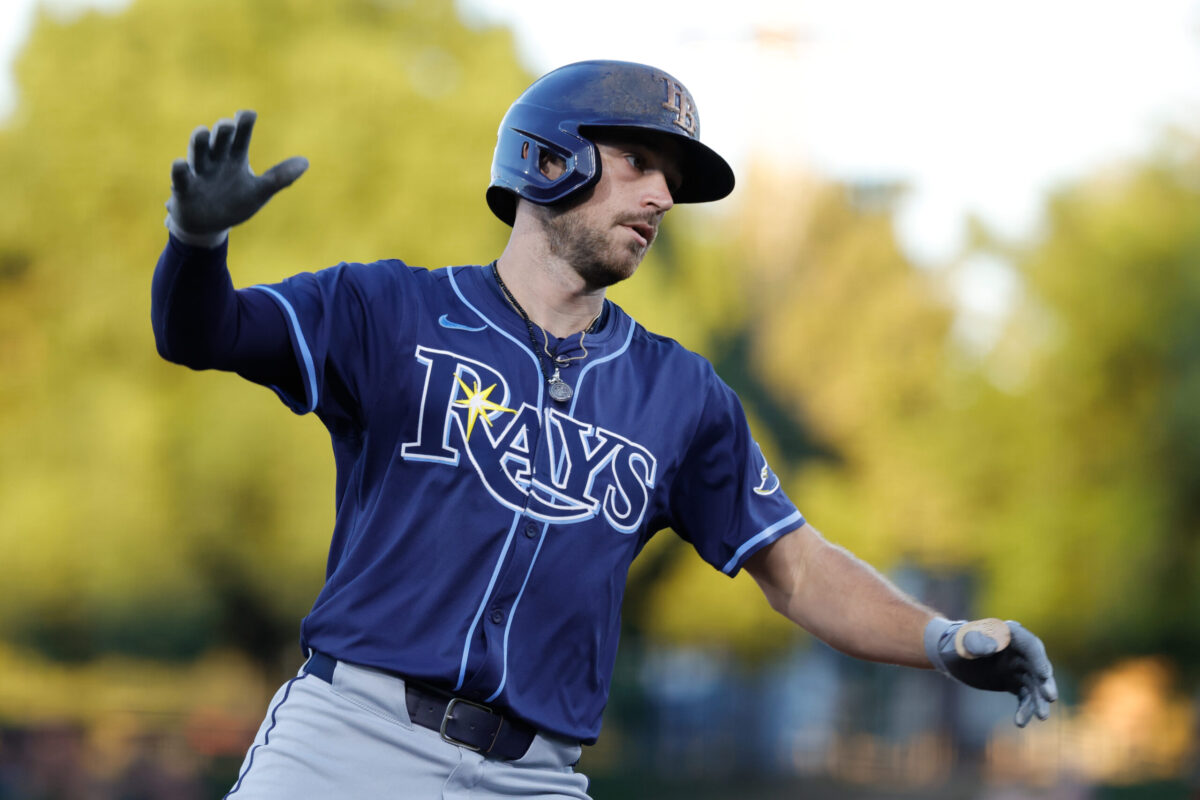
A couple of weeks ago, the Pirates acquired second baseman Brandon Lowe from the Rays as part of a three-team trade. The 31-year-old had spent his entire career in Tampa Bay, so it’ll take some getting used to seeing him don a new uniform and in a new league. He’s coming off the second best fantasy season of his career. Let’s dive into the park factors to determine how the park switch might impact his results.
| Team | Venue | 1B | 2B | 3B | HR | H | BB | OBP | SO | R | Park Factor |
|---|---|---|---|---|---|---|---|---|---|---|---|
| Rays | George M. Steinbrenner Field* | 109 | 91 | 42 | 96 | 102 | 85 | 97 | 104 | 94 | 97 |
| Pirates | PNC Park** | 98 | 121 | 78 | 87 | 101 | 100 | 101 | 97 | 100 | 100 |
**3-year LHH factors
Well this is quite surprising. When we learned that the Rays would be playing their home games at George M. Steinbrenner Field this season, it was assumed it would be extremely favorable for home runs. That’s because the dimensions are identical to Yankee Stadium, one of the best home run parks in baseball. That didn’t end up being the case, though, and interestingly, all the park factors differed from Yankee, reminding us that events are influenced by far more than just ballpark dimensions.
In these comparisons, I would typically compare the rolling 3-year factors, but since Steinbrenner Field was only in use this year, I’m comparing its 1-year factors to the 3-year PNC Park factors.
Lowe has been incredibly consistent the past three seasons, somehow posting either a .334 or .335 wOBA each year. He’s coming off the second highest PA total of his career, thanks to his proneness to injury that has constantly cost him a chunk of each season previously.
Let’s begin with the hit type factors. Here we find huge gaps between the factors, with PNC slightly suppressing singles, but with a dramatically lower factor than at Steinbrenner. That’s usually bad news for BABIP, which isn’t great for Lowe. He sports about a league average .294 BABIP over his career and the last time he posted a mark above just .297 was back in 2020, the short COVID season. So he certainly can’t afford to go to a park that hampers his already middling BABIP.
Naturally, his BABIP splits this year were completely opposite the factors, as he posted a .270 mark at home, versus a .329 mark on the road. That’s a massive difference! That said, from a forecasting standpoint, you have to ding his BABIP due to the park switch.
Moving on to doubles and triples, we find that PNC takes back the advantage in convincing fashion for both these hit types. It’s too bad Lowe isn’t much of a doubles guy. He hit 31 back in 2021, but only 19 this year, to go along with zero triples. The advantages might net him an extra double or two and maybe result in a triple, but that’s not going to move the needle much.
Next up is arguably the most important factor for Lowe — home runs. This is where it gets scary. With an unhelpful batting average and limited speed, Lowe’s fantasy value is driven almost entirely by his home run prowess. So it’s unfortunate that he moves to a home park that ranks 26th in baseball in left-handed home run factor. If there’s a saving grace, it’s that Tropicana Field, his former home, sported an almost identical HR factor from 2022-2024. Yet, he posted near identical HR/FB marks home and away over that time period.
This year, he posted a meaningfully higher HR/FB rate on the road compared to at home, which actually matches with the park factors for a change. He has also pulled his fly balls at a higher than league average rate for the last three years, so I would be very surprised if PNC didn’t cut into his HR/FB rate.
Though PNC was worse for both singles and home runs, it still slightly inflated total hits, along with Steinbrenner, which did so a bit more effectively. Remember that hits are the result of both BABIP and strikeout rate inputs, so I’ll still stand by PNC being worse for his BABIP, though as we’ll see next, perhaps it won’t result in a lower batting average.
Next up at the walk, strikeout, and OBP factors. Both walk and strikeout factors dramatically favor PNC. It’s not often you see such huge swings between parks in these factors. For some reason, Lowe has become far more swing-happy these past two years, as his Swing% has spiked and walk rate plummeted. It’s a good thing he’ll be moving to a more neutral park for walks, as he walked at a far higher clip on the road last season. Pivoting to strikeouts, he actually struck out less at home, despite its inflationary factor. Lowe swings and misses a lot, but since he swings so often, it hasn’t led to sky-high strikeout rates. The lower strikeout factor at PNC could help here and offset a reduced BABIP.
Combining the hit, walk, and strikeout factors to come up with OBP, we find that PNC has slightly inflated the rate, while Steinbrenner slightly suppressed it. With Lowe’s OBP hitting a career low, he could really use any help he could get.
Finally, we end up with the runs scored and overall park factor. Both factors favor PNC as a completely neutral park, with Steinbrenner having been pitcher friendly.
Although the better overall home park would seem to be a positive for Lowe, I would argue that the move is actually a negative, thanks to the importance of home runs in fantasy. Without a big home run total, Lowe isn’t much of a fantasy contributor, and he’s moving to one of the worst parks in baseball for left-handed dingers.
At the moment, our Roster Resource page doesn’t identify Lowe as part of a platoon, despite his 49 wRC+ against lefties last season and 92 wRC+ against them over his career. Full-time PAs would definitely boost his fantasy value solely due to the increase in counting stats, which should more than offset a drop in batting average.
With a flurry of moves this offseason, the Pirates are now ever so slightly more interesting offensively than they have been, but still figure to be among the weaker offenses, which won’t help his runs scored and RBI totals. He’s now a bottom tier starting MI in shallow mixed leagues, with added risk from annual health issues.
Mike Podhorzer is the founder of ProjectingX IQ, an advanced fantasy baseball analytics platform that transforms projection data and in-season performance signals into actionable intelligence. He is the 2015 Fantasy Sports Writers Association Baseball Writer of the Year and three-time Tout Wars champion. He is the author of the eBook Projecting X 2.0: How to Forecast Baseball Player Performance, which teaches you how to project players yourself. Follow Mike on X@MikePodhorzer and contact him via email.