
2026 Preview: Potential Batter HR/FB Rate Surgers & Decliners
Let’s dive into Statcast’s Home Runs Leaderboard to identify and discuss the hitters with the largest gaps, both positive and negative, between actual and expected home runs. I’m using the default “Adjusted” type which applies an environmental variable to the xHR total to account for ballpark effects. Also note that this leaderboard includes postseason home runs, which made me do a double take since I definitely didn’t remember Cal Raleigh hitting 65 home runs and Shohei Ohtani also clearing 60 homers!
| Name | HR/FB* | HR** | xHR** | HR-xHR |
|---|---|---|---|---|
| Salvador Perez | 13.8% | 30 | 34.1 | -4.1 |
| Roman Anthony | 14.8% | 8 | 12.1 | -4.1 |
| Vinnie Pasquantino | 14.3% | 32 | 35.5 | -3.5 |
| Gabriel Arias | 12.6% | 11 | 14.4 | -3.4 |
| Masyn Winn | 5.7% | 9 | 12.4 | -3.4 |
| Jesús Sánchez | 11.5% | 14 | 17.4 | -3.4 |
| Bryan Reynolds | 13.4% | 16 | 19.3 | -3.3 |
| Lenyn Sosa | 12.9% | 22 | 25.3 | -3.3 |
| Christopher Morel | 14.5% | 11 | 14.2 | -3.2 |
| Jordan Walker | 6.6% | 6 | 9.2 | -3.2 |
**Includes postseason ABs, if any
Even after 1,383 games and 11,590 innings at catcher, Salvador Perez is still doing his thing offensively. This past year, his HR/FB rate was right in line with his previous three seasons, but he actually posted the highest maxEV and second highest Barrel% of his career. That’s impressive for a 35-year-old with that much wear and tear. As such, Statcast calculates he was actually deserving of four more home runs than he hit. The 30 homers was already the second highest total of his career, so it’s not like fantasy owners were complaining. While perhaps he did deserve a bit better, I would guess those Statcast metrics regress a bit this coming season and better match his HR/FB rate, as opposed to his HR/FB rate rising to meet his 2025 levels.
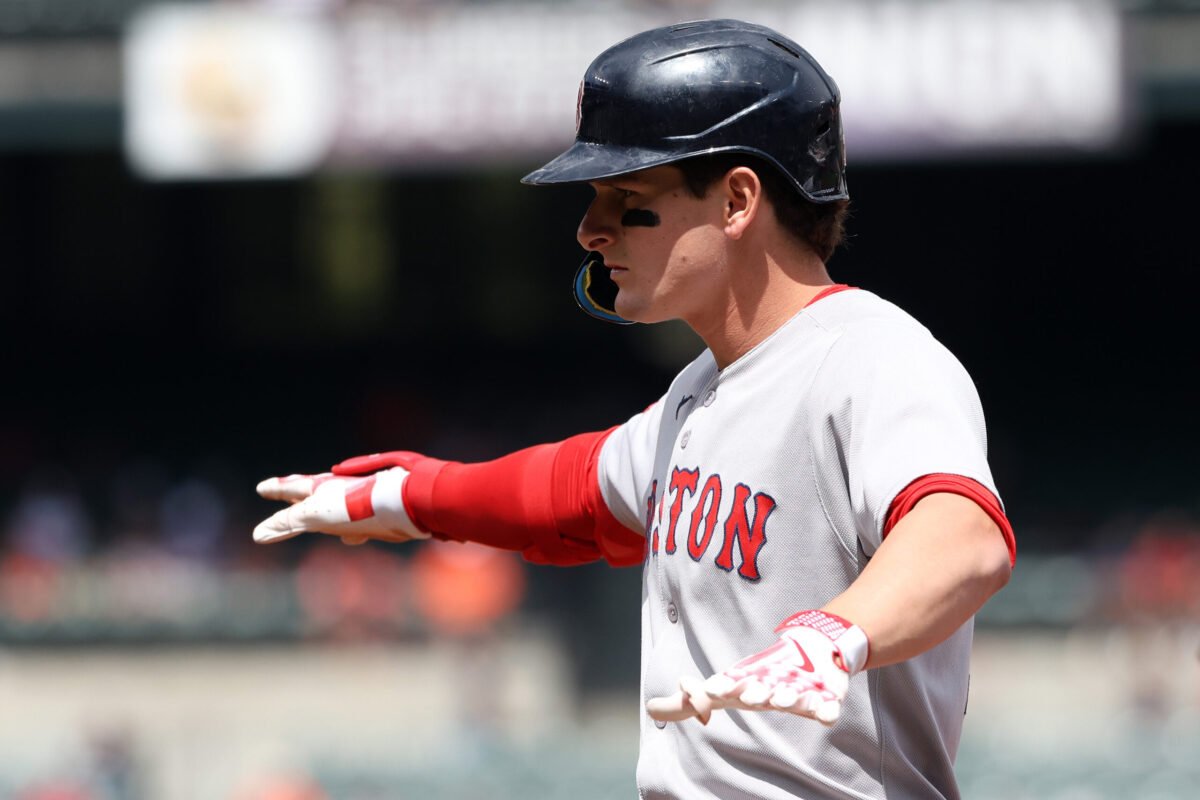
The Red Sox top prospect and second overall, Roman Anthony was one of the most anticipated debuts in 2025. While he may have disappointed slightly for fantasy owners with just eight home runs in about half a season, he posted a .376 wOBA, which has to be described as a fantastic rookie campaign. The home run total was driven by a 14.8% HR/FB, but Statcast’s xHR calculation suggests it should have perhaps been around 50% higher given his underperformance. That’s thanks to an absurd 60.3% HardHit%, which led every hitter in baseball with at least 100 PA, a strong maxEV, and an elite Barrel%. Those rates might not be repeated over a full season, but he should definitely enjoy a meaningful HR/FB rate surge this year. Unfortunately, his FB% isn’t quite high enough to make a major home run impact and his minor league history doesn’t suggest that’s due to change. At least all those grounders are boosting his BABIP though.
Vinnie Pasquantino finally had the bust out fantasy season I had been expecting, though a strikeout rate spike offset some of the ~40% jump in HR/FB rate. Amazingly, Statcast thought the home run output should have been even higher, thanks to a surge in Barrel%. The only thing really missing right now is the BABIP, which has been below average the past three seasons. His home park also really hurt him in 2025, as he posted just an 11.6% HR/FB rate at home, versus a 17.5% mark on the road. His career splits aren’t nearly as dramatic, though.
Though he swings and missed and strikes out a ton, we have Gabriel Arias penciled in as the Guardians’ starting second baseman. Though a higher FB% would help his home run output, he still displays excellent power with pretty impressive Statcast metrics, including his first double digit Barrel%. Because of his inability to get on base, he’s a major playing time risk, but his combination of power, with upside, and some speed, makes him worthy of attention in deep leagues.
Masyn Winn’s HR/FB rate has been stuck in single digits and his implied xHR/FB rate is still lower than his 2024 mark. He did increase his HardHit% and Barrel%, but the latter remains painfully low. The above average maxEV and high FB% provides some hope he could push for 20 homers eventually.
Gosh was Jesús Sánchez’s time with the Astros a disaster, as he posted just a .270 wOBA after a .321 mark with the Marlins. The good news is that if anything, it should reduce his cost in drafts this year, even though he’s in a much better situation for his fantasy output. Sánchez’s HR/FB rate hit a career low, but his Statcast metrics were mostly stable, including another double digit Barrel%. There’s no way this combo of metrics should produce just an 11.5% HR/FB rate on the year. He’s an excellent bounceback candidate likely to be undervalued.
Man, I held onto Bryan Reynolds all season long as I was seduced by the calculations telling me he was massively underperforming. He did have a stronger second half that was much more in line, or better, than his history, but it included just six home runs since he went all of July without one. Of course, Statcast thought he should have been much better, as all his metrics were in line or better than his history, yet his HR/FB rate fell to a career low. Unfortunately, along with the power decline came a strikeout rate spike and the lowest FB% of his career, so there were several issues hampering his fantasy value. He should bounce back somewhat, but he’ll need to rebound in several metrics to get back to the solid all-around fantasy contributor he had been.
Even after Lenyn Sosa’s career best HR/FB rate and major fantasy breakout, Statcast calculates it could have been more! It’s too bad the White Sox’s signing of Munetaka Murakami looks to have knocked him out of a starting job, so he’ll take his sub-.300 OBP back to the bench.
I was actually quite surprised that Christopher Morel’s power didn’t dramatically rebound this year, and the poor performance, along with a big strikeout rate spike, led to a DFA by the Rays and his joining the Marlins. That’s a poor landing spot, but we’re projecting him to serve on the short-side of a platoon anyway, so it hardly matters on which team he serves in that role. That said, the Statcast power metrics remain excellent and I fully expect a surge in HR/FB rate. Perhaps that rewards some NL-Only owners.
Jordan Walker underperformed according to Statcast and visited Driveline Baseball over the offseason?! That’s it, 2026 breakout confirmed. In all seriousness, how do you post the trio of Statcast power metrics that Walker did and finish the season with just a 6.6% HR/FB rate? It’s crazy! There are a lot of issues here that need correcting, but the power potential might be a lot higher than most realize.
| Name | HR/FB* | HR** | xHR** | HR-xHR |
|---|---|---|---|---|
| Cal Raleigh | 25.3% | 65 | 56.1 | 8.9 |
| Kyle Schwarber | 28.6% | 58 | 50 | 8.0 |
| Isaac Paredes | 14.0% | 20 | 13.2 | 6.8 |
| Jose Altuve | 13.6% | 26 | 19.2 | 6.8 |
| Taylor Ward | 18.2% | 36 | 29.3 | 6.7 |
| Lawrence Butler | 16.3% | 21 | 14.6 | 6.4 |
| Shea Langeliers | 18.6% | 31 | 24.6 | 6.4 |
| Shohei Ohtani | 29.4% | 63 | 56.7 | 6.3 |
| Trent Grisham | 21.5% | 34 | 27.9 | 6.1 |
| Brent Rooker | 15.2% | 30 | 24.1 | 5.9 |
**Includes postseason ABs, if any
This list looks wayyyyy more exciting than the first one! But that’s because what goes up, usually comes down, and vice versa. We’re seeing that effect here.
It shouldn’t surprise anyone to find Cal Raleigh on this list. After a historic season, every reasonably experienced fantasy owner is going to assume some regression, and perhaps significant regression at that. His Statcast metrics were excellent, but most of his HR/FB rate spike was driven by a huge 19.5% Barrel%, which ranked fourth among qualified hitters. He’s always been good at barreling baseballs, but never this good. What also really helped here was a career best 57.7% FB%, which led qualified hitters…by far. In fact, the second highest was just 51.9%. The odds are heavily against him recording that high a FB% again. So that means projections should assume a lower FB% and HR/FB rate, which could really take down his home run total. Oh, and he also posted his lowest ever strikeout rate, despite his highest SwStk% in three seasons. So that might jump back up again as well. Clearly, there’s significant room for decline here, though that won’t necessarily mean he’ll be overvalued in drafts, as catchers as a group, particularly the top tier, are typically undervalued compared to their forecasted values.
Kyle Schwarber just tied his career high in HR/FB rate at age 32, so yeah, most will assume some regression entering his age 33 season, even if Statcast didn’t think he overperformed in 2025. The Statcast metrics are insanely good though so there’s no imminent decline phase. One thing to watch out for is similar to Raleigh — his FB% has fluctuated, going from 49.5% in 2023 to 40.1% to 48% this past season. His career mark is at 44.2%. So the odds would be that FB% declines a bit, which combined with a regression in HR/FB rate should have him back in the 40-home run range.
It seems like every year, Isaac Paredes is overperforming his Statcast metrics thanks to an extreme pulled FB%. However, I assume the Statcast xHR metric accounts for horizontal direction. Then again, Paredes has overperformed his xHR every year, though only truly significantly in 2023, and this past season. Paredes’ Statcast metrics remained underwhelming this season, but his Pull% on his flyballs hit a career high. The problem now is he’s slated to open the season on the short side of a platoon, so that’s going to kill his fantasy value.
Jose Altuve…overperforming some expected metric?! NEVER! The joke here is that Altuve is notorious for overperforming his xwOBA, which he’s done every single season since we have data for beginning in 2015, with the exception of the short 2020 season. From a Statcast metric perspective, it looks like the same as he has always done and his HR/FB rate doesn’t stand out as looking particularly fluky. But in a recurring theme, his FB% jumped to a career high, and it’s anyone’s guess where it’ll land in 2026. Note also that he posted the lowest xwOBA of his career, excluding 2020, since 2015, so he seems riskier than usual.
Taylor Ward hit 36 home runs?! Both his HR/FB rate and FB% spiked, though it was mostly the former driving the home run surge. His Barrel% did improve marginally from 2024, but nothing else really changed. For his career, he has posted similar home and road HR/FB rates, but his new park is significantly worse for right-handed home runs. He might revert right back to his 2024 self.
Despite suffering a decline in HR/FB rate and hitting one less home run in 157 more at-bats, Lawrence Butler apparently deserved even fewer home runs. That’s slightly surprising given pretty good Statcast metrics, though his HardHit% and maxEV are more impressive than his Barrel%, which slipped back into single digits. I actually think there are multiple avenues for a home run total increase (strikeout rate or FB% rebound, Barrel% spike fueling higher HR/FB rate), rather than a decline.
Shea Langeliers did almost exactly what he did in 2024 from both a Statcast metric and HR/FB rate perspective, so it’s surprising to find his name on this list. I definitely wouldn’t expect any sort of meaningful decline there, but a potential regression in strikeout rate is something to be worried about. He did reduce his SwStk%, but that strikeout rate improvement was so massive, it’s hard to believe it’ll be sustained. Or at least, the question is how much he’ll sustain.
Shohei Ohtani was lucky?! Maybe some of the gap here is being driven by his 40% HR/FB rate in the postseason, which obviously isn’t sustainable. His Statcast metrics all remain at or near league-leading and yet he hasn’t even cleared a 30% HR/FB rate since 2023. At some point age might rear its head and we’ll see some decline, but there’s obviously no sign of it.
I guess after a 34-homer season, double his previous career high, it should surprise no one that maybe Trent Grisham got a bit lucky. But still, an xHR calculation of nearly 28 is darn good as well! What’s weird here is his HardHit% was identical to 2024 and his maxEV finished well below his peak years, but he still managed to boost his Barrel% to a career high in the mid-teens, which is excellent. I doubt everything goes right again on the home run front, and since he stopped stealing bases and has never hit above .251, he’s not exactly an appealing fantasy option.
Brent Rooker couldn’t quite follow-up his massive 2024 breakout, but he was still plenty good, hitting 30 home runs for a third straight year. However, his hardHit% and Barrel% both fell, though they did remain strong. Like his teammate Langeliers above, Rooker significantly reduced his strikeout rate, but the SwStk% improvement wasn’t as dramatic to support it. I would actually expect his HR/FB rate to rebound somewhat, but be partially offset by a strikeout rate jump, cutting into his home run rebound.
Mike Podhorzer is the founder of ProjectingX IQ, an advanced fantasy baseball analytics platform that transforms projection data and in-season performance signals into actionable intelligence. He is the 2015 Fantasy Sports Writers Association Baseball Writer of the Year and three-time Tout Wars champion. He is the author of the eBook Projecting X 2.0: How to Forecast Baseball Player Performance, which teaches you how to project players yourself. Follow Mike on X@MikePodhorzer and contact him via email.
Thank you for the useful information, Mike. I hope you find the time to compare the park factor changes for Bregman. I always look forward to those assessments.
Absolutely! Those analyses also really help me adjust values and are often eye opening as sometimes the factors don’t match what we thought.